June 19, 2026

Understanding the Strategic Importance of Maritime Energy Chokepoints
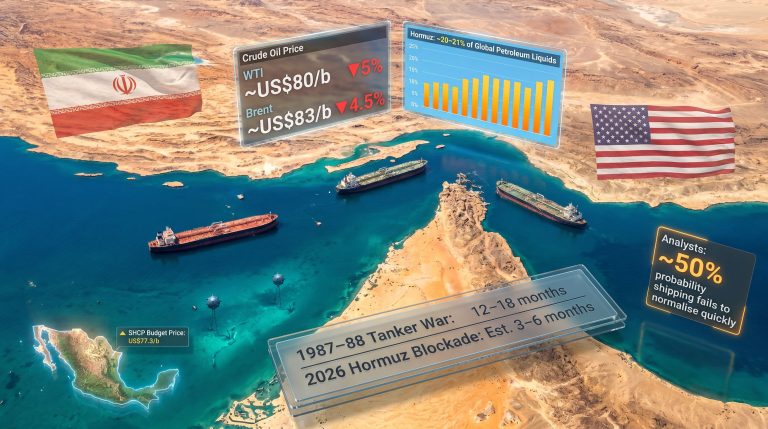
The concentration of global energy flows through a handful of maritime bottlenecks creates systemic risks that modern economies struggle to hedge effectively. Oil price stagnation concerns arise when these chokepoints face disruption, as exemplified by the Strait of Hormuz disruption, which handles approximately 21% of global petroleum liquids transit through a waterway spanning merely 21 miles at its narrowest point.
This geographic concentration means that disruptions create immediate supply constraints that cannot be rapidly substituted through alternative routes. The physical infrastructure required to reroute energy supplies around Africa adds approximately 10-14 additional days to voyage times, consuming extra fuel and dramatically increasing transportation costs.
Recent market events demonstrate how quickly these vulnerabilities materialise into price volatility. However, analysts warn that potential oil price rally scenarios could emerge when tensions escalate. Oil prices have roughly doubled since the onset of the year, with West Texas Intermediate reaching $114 per barrel during peak trading sessions. European diesel futures climbed above $200 per barrel for the first time since 2022, highlighting how refined product markets experience even greater stress than crude oil during supply disruptions.
Geographic Vulnerabilities and Infrastructure Dependencies
The strategic importance of maritime chokepoints extends beyond simple cargo volume calculations. These waterways represent irreplaceable infrastructure nodes where alternative routing options require fundamental changes to global shipping patterns and logistics networks.
Key vulnerability factors include:
• Physical geography constraints that limit simultaneous tanker traffic
• Insurance and security considerations that increase operational costs during regional conflicts
• Refining capacity limitations in alternative supply regions
• Storage infrastructure bottlenecks that prevent rapid inventory redistribution
The current crisis demonstrates that even partial restrictions on traffic management create market uncertainty extending far beyond the immediate disruption zone. Iranian state media reports of protocols to monitor strait traffic generated immediate market responses, showing how sensitive energy markets have become to chokepoint access issues.
Historical Precedents and Economic Ramifications
Previous chokepoint disruptions provide valuable context for understanding economic transmission mechanisms. The 1973 and 1979 oil shocks created recession conditions globally, with oil price increases contributing to 0.5-1.0 percentage point reductions in global GDP growth rates.
During the 1980-1988 Iran-Iraq War, tanker attacks in the Persian Gulf demonstrated how maritime conflicts directly impact global energy pricing. The "Tanker War" period saw oil prices fluctuate dramatically based on shipping insurance costs and perceived security risks, even when physical supply disruptions remained limited.
More recent examples include:
• 2019 Strait of Hormuz tensions that created temporary price spikes without sustained supply interruption
• 2021 Ever Given Suez Canal blockage that demonstrated alternative chokepoint vulnerabilities
• 2022 Russian energy supply constraints that forced European energy market restructuring
When big ASX news breaks, our subscribers know first
What Economic Mechanisms Drive Oil Price Volatility During Chokepoint Crises?
Energy market volatility during chokepoint disruptions reflects complex interactions between physical supply constraints, financial market positioning, and psychological risk assessment by market participants. The speed and magnitude of price movements often exceed what fundamental supply-demand calculations would suggest.
Market Psychology and Risk Premium Calculations
The current crisis reveals exceptional market stress through unprecedented volatility metrics. WTI's prompt spread reached more than $16 per barrel, representing the widest premium on record compared to normal spreads ranging from $0.50 to $2.00 per barrel.
This extreme spread indicates that markets are pricing significant concern about near-term supply availability. When prompt spreads widen dramatically, it typically signals that immediate supply tightness exceeds longer-term concerns, characteristic of genuine supply crises rather than speculative rallies.
Market psychology amplifies these movements through position unwinding. Energy specialists noted rapid unwinding of bearish positions that had anticipated quick conflict resolution. When investors positioned for de-escalation scenarios were forced to reverse positions suddenly, the resulting concentrated buying pressure temporarily drove prices to exceptional levels.
Risk Premium Transmission Mechanisms
Geopolitical risk premiums adjust rapidly when policy signals shift from de-escalation to escalation expectations. The 13.8% single-day WTI surge occurred without any change in physical supply flows, demonstrating pure risk premium expansion in response to escalatory rhetoric.
Several factors influence risk premium calculations:
• Duration uncertainty regarding disruption timeline
• Escalation probability based on political rhetoric and military positioning
• Alternative supply availability from strategic reserves and substitute sources
• Insurance market responses affecting shipping costs and route selection
The relationship between crude oil and refined product pricing reveals market structure dynamics during crises. European diesel futures exceeded crude oil-equivalent pricing, indicating that downstream capacity constraints prevent rapid refining of available crude into needed products.
Futures Market Positioning and Liquidity Dynamics
Commodity futures markets experience unique stresses during chokepoint crises as physical delivery concerns interact with financial market positioning. The current disruption created conditions where "overseas buyers rush for American crude," according to market specialists, demonstrating how physical supply geography influences futures market dynamics.
Backwardation versus contango relationships shift rapidly during supply disruptions. The extreme prompt spread widening reflects a market structure where immediate delivery commands substantial premiums over future delivery dates, indicating tight current supply with uncertainty about whether constraints will persist.
| Market Indicator | Normal Conditions | Current Crisis | Significance |
|---|---|---|---|
| WTI Prompt Spread | $0.50-$2.00/barrel | $16.00/barrel | Unprecedented supply tightness |
| Price Volatility | 1-3% daily moves | 13.8% single day | Extreme position unwinding |
| Brent-WTI Differential | $2-5/barrel | Variable | Geographic arbitrage stress |
How Do Energy Disruptions Cascade Through Global Economic Systems?
Energy disruptions create economic impacts that extend far beyond petroleum markets, triggering cascading effects through interconnected industrial systems, transportation networks, and consumer price structures. These secondary impacts often prove more economically damaging than the initial energy cost increases.
Immediate Sectoral Impact Analysis
Transportation fuel markets experience immediate vulnerability because diesel serves foundational economic functions in freight transportation, agricultural operations, and commercial logistics. Unlike crude oil, diesel cannot be stored practically by most end-users, making fleet operators and commercial enterprises vulnerable to rapid price increases.
Current diesel pricing above $200 per barrel creates immediate cost inflation for:
• Long-haul trucking and freight transportation
• Agricultural machinery operation and food production
• Commercial aviation through jet fuel price correlations
• Construction and mining equipment operation
Manufacturing sectors dependent on petrochemical feedstocks face dual pressures from both energy costs and raw material availability. Chemical production, plastics manufacturing, and synthetic materials industries experience immediate margin compression when crude oil prices double within short timeframes.
Furthermore, the disruption's impact extends beyond traditional energy markets. The US-China trade war effects compound these challenges, as supply chain vulnerabilities become more apparent during energy crises.
Supply Chain Elasticity and Geographic Arbitrage
The disruption forces immediate supply chain reorganisation as buyers source from alternative suppliers at whatever prices those suppliers demand. Cargoes sailing thousands of miles demonstrate how supply constraints force inefficient routing and geographic arbitrage.
Alternative routing through the Cape of Good Hope creates several cost multipliers:
• Additional voyage time increases working capital requirements
• Extra fuel consumption by tanker vessels
• Higher insurance premiums for alternative routes
• Opportunity costs from delayed cargo delivery
Regional price differentials emerge as different geographic markets experience varying degrees of supply constraint. Asian markets, heavily dependent on Middle Eastern energy imports, typically experience greater price impacts than regions with more diversified supply sources.
Secondary Economic Transmission Channels
Energy cost increases transmit through the economy via multiple channels with varying time lags. Consumer goods prices typically increase 60-90 days after energy cost increases due to supply chain delays and inventory turnover cycles.
Food system costs increase through both direct and indirect channels:
• Direct energy inputs including fertiliser production and food processing
• Transportation costs for food distribution
• Cold chain logistics and refrigeration energy requirements
• Agricultural equipment operation and fuel costs
Central bank policy responses typically lag several months due to quarterly meeting schedules and data collection delays. However, forward guidance from central banks shifts immediately, with increased hawkish rhetoric regarding inflation risks appearing within days of major energy price movements.
What Are the Macroeconomic Multiplier Effects of Energy Supply Shocks?
Energy supply shocks create macroeconomic impacts that compound through multiple transmission channels, affecting GDP growth trajectories, labour markets, and consumer spending patterns. The magnitude of these effects depends on the size of energy import bills relative to GDP, availability of substitute energy sources, and monetary policy flexibility.
GDP Growth Trajectory Modelling
Historical analysis of oil price shocks provides frameworks for estimating macroeconomic impacts. Oil price increases of the current magnitude historically correlate with 0.5-1.0 percentage point reductions in global GDP growth rates, with effects typically lagging 2-4 quarters from the initial shock.
Regional vulnerability varies significantly based on energy import dependence:
• Asia-Pacific economies face particular vulnerability due to limited domestic energy resources
• European economies experience substantial impact through manufacturing sector exposure
• Americas show greater resilience given US net energy exporter status
The current price level approaching $114 per barrel compares unfavourably with previous crisis periods. In 2008, oil reached $147 per barrel before contributing to recession conditions. The 2011 period with prices averaging above $100 per barrel coincided with global growth slowdowns.
Moreover, these disruptions highlight broader energy security challenges that governments must address through strategic planning and infrastructure investment.
Input-Output Analysis and Industrial Interdependencies
Energy-intensive industries experience disproportionate impacts through direct cost increases and reduced competitiveness. Steel production, aluminium smelting, and chemical manufacturing face margin compression that can trigger capacity reductions and employment impacts.
Multiplier effects emerge through industrial interdependencies:
- Primary impact on energy-intensive manufacturing
- Secondary impact on supplier industries and logistics providers
- Tertiary impact on service sectors dependent on industrial activity
- Quaternary impact through reduced consumer spending power
Labour Market and Consumer Spending Impacts
Real wage erosion through energy cost inflation creates consumer spending pressures that amplify economic slowdowns. When transportation fuel and heating costs increase rapidly, consumers reduce discretionary spending to maintain essential consumption patterns.
Employment effects vary by sector and timeline:
• Immediate impacts in transportation and logistics sectors
• Short-term impacts in energy-intensive manufacturing
• Medium-term impacts in consumer-facing service sectors
• Long-term structural shifts toward energy-efficient industries
Consumer discretionary spending reallocation patterns show households prioritising essential energy consumption over retail purchases, restaurant spending, and entertainment activities.
In addition, analysts anticipate that natural gas forecasts will reflect these changing consumption patterns as households and businesses adapt to volatile energy markets.
Which Nations and Economic Blocs Benefit from Energy Chokepoint Disruptions?
Energy supply disruptions create clear winners alongside the more visible economic victims, as alternative suppliers capture market share premiums and geopolitical leverage shifts toward energy-exporting economies. Understanding these dynamics reveals how chokepoint crises reshape global economic relationships.
Strategic Winners in Supply Disruption Scenarios
Alternative energy suppliers outside the disruption zone experience windfall revenues from elevated pricing and increased market share. Non-Persian Gulf oil exporters particularly benefit when Middle Eastern supply faces constraints.
Primary beneficiaries include:
• North American producers capturing premium pricing for domestic crude
• West African exporters serving European markets seeking supply diversification
• Latin American suppliers benefiting from increased Asian demand
• Russian energy sectors despite existing sanctions frameworks
Shipping and logistics companies experience mixed impacts. While higher fuel costs create operational pressures, route diversification and emergency cargo movements generate premium freight rates that often exceed additional costs.
Renewable Energy Investment Acceleration
Energy security crises consistently accelerate renewable energy investment as governments and corporations recognise the strategic vulnerability of fossil fuel dependence. Current disruptions reinforce policy arguments for energy transition investments.
Investment flow acceleration occurs in several areas:
• Solar and wind capacity expansion projects
• Energy storage systems for grid stabilisation
• Electric vehicle infrastructure reducing transportation fuel dependence
• Green hydrogen production for industrial energy applications
Geopolitical Economic Leverage Dynamics
Energy exporters maximise revenue opportunities during supply constraints through strategic pricing and allocation decisions. Countries with excess production capacity or strategic reserves gain substantial negotiating leverage with importing nations.
The United Arab Emirates appeal to the United Nations for intervention measures demonstrates how regional stakeholders recognise the extreme economic stress from sustained disruption and seek multilateral solutions to restore energy flows.
Trade relationship restructuring accelerates around energy security priorities, with importing nations seeking long-term supply agreements that reduce chokepoint exposure.
How Do Financial Markets Price Long-Term Energy Security Risks?
Financial markets struggle to accurately price tail risks associated with energy chokepoint disruptions, as these events combine low probability occurrence with extremely high impact scenarios. Market pricing mechanisms must balance immediate supply concerns against longer-term structural risks.
Investment Flow Reallocation Patterns
Portfolio managers face complex decisions during energy crises as traditional diversification strategies prove inadequate for managing correlated risks across multiple asset classes. Energy disruptions simultaneously impact equity markets, bond yields, currency values, and commodity prices.
Strategic asset allocation shifts include:
• Energy sector equity overweighting capturing supply shortage premiums
• Infrastructure investment in alternative energy transmission systems
• Commodity exposure increase through direct investments and inflation hedges
• Geographic diversification toward energy-secure economies
Sovereign wealth funds from energy-exporting nations experience substantial asset value increases during prolonged disruptions, providing capital for strategic investments in alternative energy infrastructure and technology development.
Currency and Commodity Market Interconnections
Currency markets experience divergent impacts based on energy trade balances. Oil-importing economies face current account deterioration and potential currency depreciation pressure as energy import bills increase substantially.
Petrodollar recycling disruption creates complex currency market dynamics:
• Dollar demand increases from oil purchases denominated in US currency
• Energy exporter currencies strengthen relative to importer currencies
• Emerging market debt stress emerges in countries with dollar-denominated external debt
• Safe-haven asset demand increases during prolonged geopolitical uncertainty
Gold and other safe-haven assets typically experience increased demand during energy crises, as investors seek assets uncorrelated with industrial commodity markets and geopolitical risks.
Corporate Hedging Mechanisms and Derivative Market Responses
Energy-intensive corporations employ sophisticated hedging strategies to manage price volatility, but extreme market conditions can overwhelm traditional risk management approaches. Derivative markets experience liquidity constraints during peak volatility periods.
| Hedging Strategy | Normal Market | Crisis Conditions | Effectiveness |
|---|---|---|---|
| Futures Contracts | Liquid, low spread | High volatility, wide spreads | Reduced |
| Options Strategies | Reasonable premiums | Extreme implied volatility | Expensive |
| Physical Storage | Moderate costs | Limited availability | Strategic value |
| Financial Swaps | Counterparty available | Credit risk concerns | Variable |
The next major ASX story will hit our subscribers first
What Policy Tools Can Mitigate Economic Damage from Energy Disruptions?
Governments possess several policy instruments for managing economic damage from energy supply disruptions, ranging from immediate crisis response mechanisms to longer-term structural resilience building. Effectiveness depends on coordination between domestic policy tools and international cooperation frameworks.
Coordinated International Response Mechanisms
International Energy Agency emergency response protocols provide frameworks for coordinated strategic petroleum reserve releases amongst member nations. These mechanisms can temporarily offset supply disruptions whilst diplomatic solutions are pursued.
Strategic reserve deployment effectiveness depends on:
• Collective action scale sufficient to influence global pricing
• Release timing coordination to maximise market impact
• Replenishment strategies that avoid long-term reserve depletion
• Communication strategies that influence market expectations
G20 coordination on strategic responses can amplify individual nation efforts through synchronised policy implementation. Previous crisis responses demonstrate that uncoordinated national policies often prove less effective than multilateral approaches.
Domestic Economic Stabilisation Measures
Targeted fiscal support for energy-intensive industries can prevent cascading business failures during prolonged supply disruptions. However, subsidy programmes require careful design to avoid market distortions and fiscal sustainability concerns.
Temporary fuel subsidy programmes face inherent trade-offs:
• Consumer protection versus fiscal burden and market efficiency
• Universal coverage versus targeted assistance to vulnerable populations
• Price signal preservation versus affordability objectives
• Exit strategy planning to prevent permanent subsidy dependence
Accelerated depreciation schedules for renewable energy investments provide long-term resilience building whilst offering immediate economic stimulus during crisis periods.
Monetary Policy Responses and Inflation Management
Central banks face complex challenges during energy-driven inflation episodes. Traditional monetary policy tools may prove inadequate when supply shocks create stagflation conditions combining economic slowdown with persistent inflation.
Policy frameworks must balance:
- Short-term inflation control through interest rate adjustments
- Economic growth support during recession risks
- Financial system stability amid volatile energy markets
- Exchange rate management for energy-importing economies
Forward guidance becomes particularly important during energy crises, as central bank communication can influence inflation expectations independent of actual policy rate changes.
How Do Energy Chokepoint Crises Reshape Long-Term Economic Structure?
Sustained energy disruptions accelerate structural economic transformations that extend far beyond temporary price adjustments. These crises serve as catalysts for supply chain reorganisation, industrial policy shifts, and technological innovation patterns that reshape competitive dynamics for decades.
Structural Economic Transformation Drivers
Supply chain regionalisation accelerates during energy crises as companies recognise the vulnerability of globally dispersed production networks to transportation cost volatility. Near-shoring and friend-shoring strategies gain economic justification when energy security concerns override pure cost optimisation.
Industrial policy shifts toward energy independence create new comparative advantages amongst nations. Countries with domestic energy resources or advanced renewable energy capabilities gain strategic positioning in energy-intensive manufacturing sectors.
Investment prioritisation changes include:
• Domestic energy infrastructure reducing import dependence
• Industrial capacity in energy-secure locations
• Transportation efficiency minimising fuel consumption requirements
• Technology development for energy substitution capabilities
Innovation and Technology Investment Patterns
R&D spending surges in alternative energy technologies receive both public and private sector acceleration during energy security crises. The economic justification for clean energy investment strengthens when fossil fuel supply reliability becomes questionable.
Digital infrastructure investment for energy efficiency gains strategic importance as organisations seek to reduce overall energy consumption through technological optimisation. Smart grid technologies, energy management systems, and industrial automation receive enhanced investment priority.
Strategic materials diversification extends beyond traditional energy sources to critical minerals required for renewable energy technologies. Supply chain security concerns broaden to encompass lithium, rare earth elements, and other materials essential for energy transition technologies.
For instance, recent analysis from the World Economic Forum examines how UNCTAD research demonstrates the broader economic implications of such disruptions on global trade networks.
Economic Complexity and Export Diversification
Nations pursue economic diversification strategies that reduce vulnerability to single-sector supply shocks. Economic complexity theory suggests that countries with diverse, sophisticated export portfolios demonstrate greater resilience during commodity market disruptions.
Portfolio theory applications to national energy security emphasise:
• Supply source diversification across geographic regions and energy types
• Strategic inventory management balancing cost against security objectives
• Alternative energy investment as economic insurance policies
• Regional cooperation frameworks for mutual energy security
Building Economic Resilience Against Future Energy Disruptions
Long-term economic resilience requires systematic approaches that address both immediate vulnerability reduction and adaptive capacity building. Successful strategies integrate energy security considerations into broader economic development frameworks rather than treating energy as an isolated policy domain.
Strategic Economic Diversification Frameworks
Diversification strategies must balance efficiency gains from specialisation against resilience benefits from redundancy. Optimal approaches vary based on national resource endowments, geographic constraints, and existing industrial capabilities.
Effective diversification includes:
• Energy supply portfolio optimisation balancing cost, reliability, and security
• Industrial base diversification reducing dependence on energy-intensive sectors
• Export market diversification minimising exposure to single-region disruptions
• Technology capability development enabling rapid adaptation to supply changes
Regional economic integration serves as a risk mitigation tool by creating larger, more diversified economic zones that can absorb individual country or sector shocks more effectively than isolated national economies.
Infrastructure Investment for Economic Stability
Infrastructure investment priorities must incorporate energy security considerations alongside traditional economic efficiency metrics. Projects that enhance energy system redundancy and flexibility provide economic insurance value during crisis periods.
Critical infrastructure investments include:
- Alternative energy transmission systems connecting diverse supply sources
- Strategic storage facilities for energy and critical materials
- Transportation network resilience reducing dependence on single modes or routes
- Digital infrastructure enabling rapid economic adaptation to supply disruptions
Human capital development in emerging energy sectors creates workforce capabilities essential for economic transition toward more resilient energy systems. Educational investments in renewable energy technologies, energy efficiency engineering, and related fields provide long-term competitive advantages.
International Cooperation Mechanisms
Multilateral cooperation frameworks offer mechanisms for sharing both the costs and benefits of energy security investments. Successful international energy cooperation typically requires institutional structures that align individual nation incentives with collective security objectives.
Crisis prevention strategies emphasise diplomatic engagement and economic interdependence that raises the costs of supply disruption for all parties involved. Trade relationships structured around mutual benefit create incentives for maintaining energy flow stability.
Emergency response coordination mechanisms enable rapid collective action during crisis periods, but require advance institutional development and regular testing to ensure effectiveness when needed.
Investment decisions during energy crises carry substantial risks and potential rewards. This analysis is for educational purposes and should not be construed as investment advice. Energy markets remain highly volatile and subject to geopolitical developments that can change rapidly. Readers should conduct their own research and consult qualified financial advisors before making investment decisions.
Ready to Navigate the Next Energy Market Disruption?
Energy chokepoint crises create exceptional market volatility, but they also generate significant opportunities for investors who can identify the right assets at the right time. Discovery Alert's proprietary Discovery IQ model delivers real-time alerts on critical ASX mineral discoveries, helping subscribers capitalise on market movements before broader recognition occurs — particularly valuable during periods of heightened energy and resource market uncertainty like these.