August 7, 2026
Understanding Critical Maritime Energy Vulnerabilities
The global energy infrastructure operates through a network of critical chokepoints that can reshape economic landscapes within hours. When examining the intersection of geopolitical tensions, energy security, and international trade, few maritime passages carry as much systemic risk as the waterway connecting the Persian Gulf to international markets. Understanding these vulnerabilities requires analysing not just immediate supply disruptions, but the broader macroeconomic forces that drive energy dependencies across major economies.
Recent diplomatic developments highlight how energy security transition concerns transcend traditional bilateral relationships, forcing major powers to navigate competing interests whilst maintaining access to vital resources. The interconnected nature of global energy markets means that regional tensions can quickly translate into worldwide economic impacts, affecting everything from inflation rates to currency stability.
When big ASX news breaks, our subscribers know first
What Makes the Strait of Hormuz Critical to Global Energy Security?
Understanding the World's Most Strategic Chokepoint
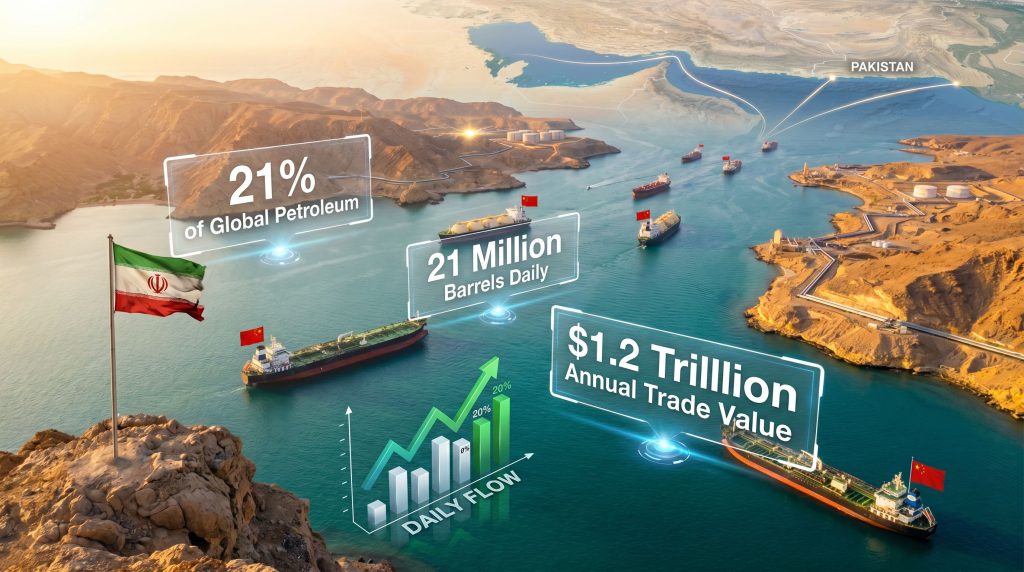
The China Iran Strait of Hormuz represents one of the most concentrated points of global energy vulnerability, functioning as the primary gateway for approximately 21 million barrels per day of crude oil and petroleum products. This waterway, measuring approximately 54 kilometres at its narrowest point, facilitates roughly 20-21% of global petroleum liquids trade, according to the U.S. Energy Information Administration.
The strategic significance extends beyond raw volume statistics. Furthermore, the Strait serves as the only viable maritime route for energy exports from multiple major oil-producing nations, creating a natural bottleneck that cannot be easily bypassed. Alternative routing through the Cape of Good Hope adds approximately $0.50-$1.50 per barrel in additional shipping costs whilst extending transit times by several weeks.
Key operational statistics demonstrate the Strait's critical role:
• Annual vessel transits: 10,000-15,000 ships traverse the waterway yearly
• Oil tanker traffic: Approximately 5,000-6,000 crude oil carriers annually
• LNG transport: 15-20% of global liquefied natural gas shipments
• Economic value: Over $1 trillion in annual trade value passes through the corridor
Strategic Importance Beyond Oil Flows
The concentration of global energy dependency on this single geographic chokepoint creates what the International Monetary Fund classifies as a critical infrastructure bottleneck. During the 2019 tanker incidents, Brent crude prices exhibited immediate volatility spikes of 4-7% within 24 hours, demonstrating the market's sensitivity to disruption risks.
Maritime insurance markets provide another lens for understanding Strait vulnerability. In addition, war risk insurance premiums for tankers transiting the waterway can increase from approximately 0.025% of vessel value during normal periods to 0.15-0.25% during heightened tensions, effectively adding millions in additional costs for large crude carriers.
The waterway operates under international maritime law provisions that guarantee transit rights, yet coastal state sovereignty creates ongoing tension points. Under the United Nations Convention on the Law of the Sea, whilst vessels maintain transit rights, coastal states retain authority over safety and environmental regulations within their territorial waters.
How Do US-Iran Maritime Tensions Affect Global Energy Markets?
Market Response Mechanisms to Strait Disruptions
Energy markets demonstrate remarkable sensitivity to geopolitical developments affecting the China Iran Strait of Hormuz, with oil futures contracts incorporating what analysts term the "Hormuz Risk Premium." This embedded cost reflects not only current disruption probability but also expectations of recurring supply shocks.
Consequently, the oil price rally patterns become particularly pronounced during periods of regional instability. Historical analysis reveals consistent patterns in market responses:
• Immediate price volatility: 5-15% risk premiums appear within hours of credible disruption threats
• Futures market impacts: Both WTI and Brent crude contracts show heightened volatility during Strait-related tensions
• Sector rotation effects: Energy equities typically exhibit 1.5-2.5x market average volatility during disruption periods
• Insurance cost escalation: Hull insurance premiums can increase 50-300% depending on threat assessment levels
The April 2020 oil market collapse, whilst primarily driven by COVID-19 demand destruction, illustrated how Strait security concerns prevent prices from reaching theoretically predicted lows. Despite WTI briefly trading at negative $37.63 per barrel, structural concerns about Middle Eastern supply routes maintained price floors above fundamental supply-demand calculations.
Economic Ripple Effects of Naval Blockades
Strategic Petroleum Reserve utilisation patterns provide insight into how major economies respond to supply disruption risks. However, the U.S. maintains approximately 370-400 million barrels of crude oil capacity, whilst China's Strategic Petroleum Reserve is estimated at 700-800 million barrels across multiple facilities.
During the 2022 energy crisis, the Biden administration released approximately 180 million barrels over 180 days, averaging 1 million barrels per day into markets. This demonstrates the scale of intervention required to offset major supply disruptions and highlights the limited duration such measures can sustain.
Shipping route economics reveal the broader implications of Strait disruptions. Current estimates suggest that 80% of daily transits through the waterway lack economically viable alternative routes, creating systemic vulnerability that extends far beyond immediate energy costs to affect global manufacturing and supply chain disruptions.
Why Is China's Energy Security Dependent on Iranian Oil Flows?
China's Strategic Energy Import Portfolio
China's position as the world's largest crude oil importer, with approximately 510-530 million tons imported annually, creates significant vulnerability to Middle Eastern supply disruptions. The China Iran Strait of Hormuz energy relationship represents a critical component of Beijing's energy security strategy, though Iranian crude currently comprises 4-8% of total Chinese imports, varying with sanctions enforcement.
The geographic concentration of China's energy imports reveals systemic risk factors:
• Middle Eastern sources: 45-50% of total crude imports
• Russian supplies: Additional 20-25% of import portfolio
• Iranian crude volumes: 300,000-500,000 barrels per day during current period
• Strategic reserve capacity: 400-450 million barrels across multiple facilities
Pre-sanctions levels demonstrated the potential scale of China Iran Strait of Hormuz energy flows, with Iran supplying approximately 20-22% of China's crude oil during 2010-2011. Current reduced levels reflect sanctions constraints rather than economic or strategic preferences.
Economic Vulnerabilities in China's Energy Mix
China's payment mechanisms for Iranian crude have evolved to circumvent U.S. sanctions, involving sophisticated financial engineering through state banks, foreign exchange swaps, and trade credit arrangements. These mechanisms, whilst effective, add operational complexity and costs that ultimately impact China's energy security calculations.
The cost differential favouring Middle Eastern crude, typically $3-8 per barrel cheaper than alternatives, creates structural incentives for continued reliance despite geopolitical risks. Furthermore, energy economists characterise this as a fundamental tension between economic efficiency and supply chain resilience.
Belt and Road Initiative energy infrastructure investments, totalling approximately $75-100 billion across participating nations, represent China's attempt to diversify supply sources. However, most Chinese energy BRI investments in Iran face continuing U.S. sanctions constraints, limiting their immediate impact on China Iran Strait of Hormuz dependencies.
A reported 25-year oil agreement discussed between China and Iran, with estimates ranging from $240-400 billion, illustrates the scale of potential energy cooperation, though sanctions enforcement complicates implementation timelines and verification of current execution status.
What Role Does Pakistan Play in Regional Energy Diplomacy?
Pakistan as Energy Transit Mediator
Pakistan occupies a unique position in China Iran Strait of Hormuz energy dynamics, simultaneously serving as a potential transit route and diplomatic mediator. The China-Pakistan Economic Corridor has allocated approximately $54-62 billion across energy infrastructure projects, though direct Iran-China pipeline connections remain constrained by sanctions considerations.
The Iran-Pakistan Gas Pipeline project, initiated in 1995, represents a decades-long effort to establish overland energy connectivity. Iran has completed its section of approximately 1,000 kilometres, whilst Pakistan has finished 780 kilometres of pipeline infrastructure. However, U.S. sanctions pressure and financing challenges continue to delay project completion.
Current diplomatic developments highlight Pakistan's mediating role. Recent reports indicate Pakistani Field Marshal Asim Munir leading mediation efforts between the U.S. and Iran regarding Strait of Hormuz navigation rights, demonstrating Islamabad's continued relevance in regional energy diplomacy.
Economic Incentives for Pakistani Mediation
Pakistan's geographic position provides theoretical advantages for energy transit, particularly through the deep-water Gwadar Port facility completed in 2015 and operated by Chinese interests. However, current throughput remains limited due to ongoing regional tensions and sanctions constraints.
The economic incentives driving Pakistani mediation include:
• Transit fee potential: Revenue opportunities from China Iran energy trade
• Infrastructure utilisation: Maximising returns on CPEC investments
• Energy import costs: Pakistan imports 30-35% of energy from Middle Eastern sources
• Diplomatic leverage: Balancing relationships with major powers for economic benefits
Pakistan's mediation efforts reflect broader South Asian concerns about energy security disruptions. For instance, the nation's own energy import dependency creates strong incentives for maintaining stable regional energy flows, regardless of broader geopolitical tensions.
How Do Maritime Chokepoint Disruptions Impact Global Trade?
Broader Economic Implications Beyond Energy
The Strait of Hormuz significance extends beyond petroleum products to encompass broader trade flows worth over $1.2 trillion annually. Container shipping route disruptions can force diversions that add 2-3 weeks to Asia-Europe transit times, creating cascading effects throughout global supply chains.
Manufacturing sector vulnerabilities become apparent during chokepoint disruptions. Asia-Pacific industrial production, particularly in energy-intensive sectors like steel and petrochemicals, faces immediate cost pressures when energy transportation costs increase. Historical analysis suggests that sustained 10% increases in energy transportation costs can reduce regional manufacturing output by 2-3% within quarters.
Currency market impacts follow predictable patterns during Strait of Hormuz tensions. Consequently, petrodollar recycling mechanisms slow when energy trade disruptions occur, affecting exchange rates for energy-importing economies. The Japanese yen and South Korean won typically weaken 2-5% against the dollar during sustained Middle Eastern energy supply concerns.
Risk Assessment for International Investors
Portfolio managers increasingly incorporate chokepoint risk into asset allocation decisions. Energy sector equities show heightened correlation during Strait of Hormuz tension periods, reducing diversification benefits within traditional energy portfolios.
Sector-specific exposure analysis reveals vulnerability patterns:
• Energy companies: Direct exposure through supply chain disruptions
• Shipping firms: Both risk and opportunity from route diversions
• Manufacturing: Cost pressure from increased energy and transportation expenses
• Airlines: Fuel cost volatility affecting operating margins
• Emerging markets: Currency and inflation pressures from energy import costs
Geographic risk distribution shows concentration in Asia-Pacific economies, where energy import dependencies create the highest vulnerability to China Iran Strait of Hormuz disruption scenarios. Japan, South Korea, and India face particularly acute exposure due to limited domestic energy production and strategic reserve capacities.
The next major ASX story will hit our subscribers first
What Are the Long-Term Strategic Implications?
Structural Changes in Global Energy Architecture
The recurring nature of Strait of Hormuz tensions drives structural changes in global energy infrastructure investment patterns. Major consuming nations increasingly prioritise supply route diversification, even at higher costs, to reduce chokepoint dependencies.
Alternative energy route development receives accelerated investment during tension periods. The Northern Sea Route through the Arctic, Central Asian pipeline networks, and expanded strategic reserve facilities all benefit from chokepoint risk concerns. However, these alternatives typically require 5-10 year development timelines and substantial capital commitments.
Technology investment priorities shift toward energy security enhancement during chokepoint disruptions. Moreover, maritime monitoring systems, satellite surveillance capabilities, and predictive analytics for supply chain management receive increased funding from both government and private sources.
Economic Modelling for Future Scenarios
Scenario analysis suggests that complete Strait of Hormuz closure would create global economic impacts comparable to major recession triggers. The trade war effects compound these risks significantly. Conservative estimates indicate:
• 30-day closure: Global GDP impact of 0.5-0.8%
• 60-day closure: Potential recession in energy-importing economies
• 90-day closure: Systemic financial market stress requiring coordinated central bank intervention
These projections assume current strategic reserve capacities and alternative route utilisation. Improved reserve management and infrastructure development could reduce impact severity, though elimination of chokepoint vulnerability appears structurally impossible given geographic constraints.
Long-term energy security partnerships increasingly reflect chokepoint risk considerations. Consequently, the U.S.-Japan-India-Australia Quad framework includes energy security cooperation specifically designed to reduce collective vulnerability to Middle Eastern supply disruptions.
How Should Investors Position for Chokepoint Risk?
Portfolio Risk Management Strategies
Investment strategies must account for the asymmetric risk profile that Strait of Hormuz tensions create across global markets. Traditional correlation models break down during geopolitical energy crises, requiring more sophisticated risk management approaches.
Furthermore, the natural gas forecast demonstrates how interconnected energy markets amplify chokepoint risks. Effective portfolio positioning involves:
• Energy sector diversification: Balancing Middle Eastern exposure with alternative sources
• Geographic spread: Reducing concentration in energy-import-dependent economies
• Currency hedging: Protection against energy-driven exchange rate volatility
• Strategic reserve plays: Investments in companies with significant inventory holdings
• Alternative infrastructure: Exposure to non-chokepoint-dependent energy projects
Volatility trading strategies often prove profitable during China Iran Strait of Hormuz tension periods, though timing requirements and leverage risks make these approaches suitable primarily for sophisticated investors with appropriate risk management capabilities.
Sector-Specific Investment Opportunities
Infrastructure investment opportunities emerge from chokepoint risk mitigation efforts. Pipeline companies developing alternative routes, port facilities outside traditional chokepoints, and strategic storage operators all benefit from diversification investments.
Energy security technology represents a growing investment theme. Companies developing maritime monitoring systems, predictive analytics for supply chain management, and alternative energy transportation methods receive increased attention during tension periods.
The China Iran Strait of Hormuz relationship creates specific investment considerations for emerging market funds. Exposure to Asian energy importers requires careful balance between growth opportunities and supply security risks.
According to recent reports from Al Jazeera, the strategic partnership between Iran and China in the Strait of Hormuz region poses significant challenges to U.S. dollar hegemony in global energy markets. Additionally, analysis from the South China Morning Post reveals China's position that keeping the Strait of Hormuz open serves crucial global interests.
Disclaimer: This analysis contains forward-looking statements and risk assessments that involve uncertainty and speculation. Investment decisions should consider multiple factors beyond geopolitical risk analysis. Energy market volatility can result in significant losses, and past performance does not guarantee future results. Readers should conduct independent research and consult qualified financial advisors before making investment decisions.
Ready to Capitalise on Critical Energy Market Opportunities?
Discovery Alert's proprietary Discovery IQ model delivers real-time alerts on significant ASX mineral discoveries, instantly empowering subscribers to identify actionable opportunities in energy security and critical minerals ahead of the broader market. Begin your 14-day free trial today at Discovery Alert and secure your market-leading advantage during these volatile energy transition periods.