
June 5, 2026
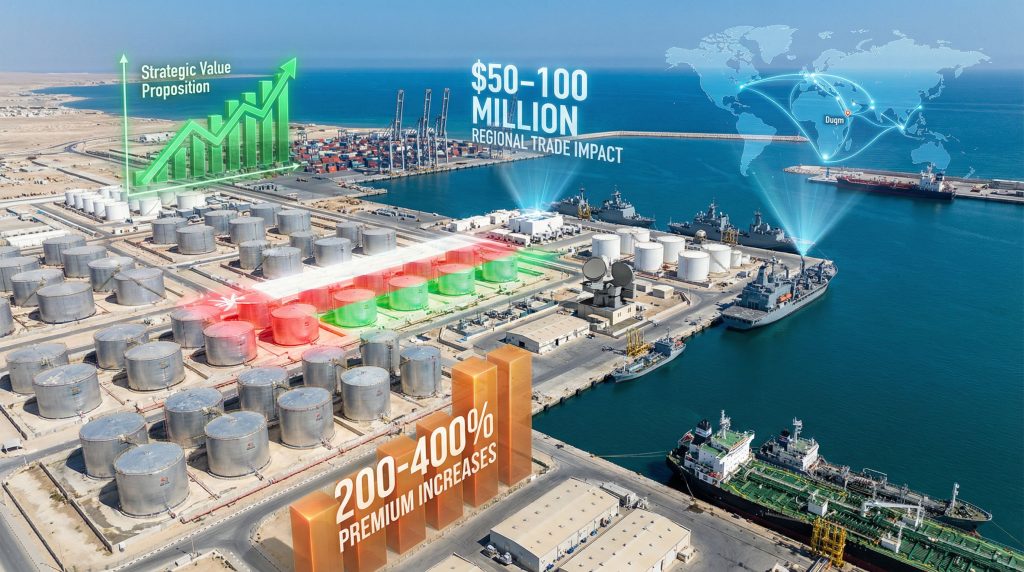
The systematic targeting of maritime infrastructure has become a defining characteristic of modern asymmetric warfare, where strategic chokepoints become high-value targets capable of disrupting trillion-dollar global supply chains. The targeting of fuel storage facilities, bunkering operations, and port infrastructure represents a fundamental evolution in conflict tactics, leveraging relatively inexpensive drone technology to achieve outsized economic and strategic impacts. The Duqm port drone attack exemplifies this shift, demonstrating how commodity market volatility can be weaponised through precision infrastructure targeting.
Understanding Critical Infrastructure Targeting in Contemporary Warfare
The systematic targeting of port facilities across the Arabian Peninsula between February 28 and March 3, 2026, demonstrates how modern warfare has evolved beyond traditional military objectives toward economic infrastructure designed to maximise cascading disruption effects. Furthermore, the Duqm port drone attack represents just one node in a coordinated campaign that simultaneously struck facilities across four nations within 72 hours.
Primary Target Categories in Port Infrastructure:
• Fuel storage tank farms – offering maximum visual impact and secondary explosion potential
• Mobile housing units – targeting operational personnel and creating casualty concerns
• Bunkering facilities – disrupting vessel refueling capabilities for international shipping
• Container handling systems – affecting general cargo throughput capacity
• Military logistics support areas – dual-use facilities serving both civilian and defense functions
The documented attacks reveal a tactical progression in targeting accuracy. Initial strikes at Duqm port on March 2, 2026, resulted in one drone impacting near fuel storage tanks while another struck a mobile housing unit, injuring one worker. However, the subsequent attack on March 3 achieved a direct hit on fuel storage infrastructure, suggesting either improved targeting capabilities or tactical adaptation based on initial strike assessment.
Coordinated Infrastructure Campaign Timeline:
| Date | Location | Target Type | Impact Level |
|---|---|---|---|
| March 2, 2026 | Duqm Port, Oman | Housing unit + fuel storage | 1 casualty |
| March 2, 2026 | Ras Tanura, Saudi Arabia | Refinery facility | 550,000 bpd shutdown |
| March 2, 2026 | Qatar Energy facilities | LNG production | Complete production halt |
| March 3, 2026 | Duqm Port, Oman | Direct fuel storage hit | Contained damage |
| March 3, 2026 | Dubai, UAE | Jebel Ali port | Fire from interception debris |
The strategic selection of simultaneous targets across Oman, UAE, Saudi Arabia, and Qatar within a 48-hour window indicates sophisticated operational planning designed to stress regional emergency response capabilities. Consequently, this maximises psychological and economic impact through coordinated infrastructure disruption while demonstrating the interconnected nature of regional energy security strategies.
When big ASX news breaks, our subscribers know first
Duqm Port's Strategic Significance in Regional Energy Security
Oman's Duqm port occupies a unique position in Middle Eastern energy infrastructure, serving as both a commercial transshipment hub and alternative routing option for vessels seeking to avoid the increasingly congested Strait of Hormuz. Its eastern coastline location provides access to Arabian Sea shipping lanes while maintaining operational distance from the primary conflict zones within the Persian Gulf proper.
Critical Functions of Duqm Port Infrastructure:
• Alternative shipping corridor bypassing Strait of Hormuz bottlenecks
• International bunkering hub serving major east-west shipping routes
• Military logistics support for US Navy regional operations
• Energy transshipment facility for refined petroleum products
• Neutral state buffer leveraging Oman's diplomatic positioning
The port's significance becomes particularly acute when considering regional energy flow volumes. US imports from Persian Gulf nations totalled approximately 490,000 barrels per day in 2025, while Brazil imported 425,600 barrels per day of diesel, representing 40% of national demand for unblended diesel. These volumes highlight the scale of potential supply chain disruption when alternative routing facilities like Duqm face operational constraints.
Oman's traditional neutral stance in regional conflicts paradoxically increases both the strategic value and vulnerability of its infrastructure. While neutrality reduces the likelihood of direct military escalation, it also means that facilities cannot be presumed to maintain the same defensive capabilities as allied nations' installations. For instance, this makes them attractive targets for asymmetric warfare campaigns.
Dual-Use Infrastructure Vulnerability Analysis
The targeting of Duqm specifically, rather than purely commercial ports, suggests recognition of its dual civilian-military function. The facility's role in supporting US Navy logistics operations amplifies the strategic impact of any operational disruption beyond simple commercial shipping delays. Moreover, this creates simultaneous pressure on both energy supply chains and military operational capabilities in the region.
How Do Markets Respond to Infrastructure Attacks?
Financial markets demonstrated immediate sensitivity to infrastructure attacks, with energy commodities experiencing significant volatility as traders attempted to price in both immediate supply disruption risks and longer-term geopolitical premium adjustments. The speed and magnitude of price movements reveal the interconnected nature of global energy markets and their vulnerability to regional infrastructure targeting.
Immediate Energy Price Volatility (March 2-3, 2026):
• Nymex Heating Oil Contracts: +12% following initial US-Israeli operations
• WTI Crude Front Month: +5% on March 2, additional +6% spike on March 3
• Regional Crude Premium Explosions: Louisiana Medium Sour rose 100% to $3/barrel premium
• Thunder Horse Premium: Increased $2/barrel to $5.50/barrel above benchmark
• Heavy Louisiana Sweet: Premium jumped 171% to $3.25/barrel
The Brazilian market response provides a particularly clear example of how infrastructure attacks cascade through global supply chains. Diesel spot market premiums at northeastern Brazil's Itaqui port increased from R335/m³ to R780/m³ in a single session, representing a 133% premium increase that immediately closed profitable import arbitrage windows. This demonstrates how oil price movements can be dramatically influenced by regional infrastructure vulnerabilities.
Brazilian Energy Market Impact Assessment:
| Product | Location | Pre-Conflict Premium | Post-Conflict Premium | Increase |
|---|---|---|---|---|
| Diesel | Itaqui port | R335/m³ | R780/m³ | +133% |
| Gasoline | Paulinia | R150/m³ | R390/m³ | +160% |
| Russian Diesel | Replacement Cost | Baseline | R700/m³ above reference | +Additional premium |
Market participants reported that spot market negotiations, already constrained by closed arbitrage conditions, would practically halt following the conflict escalation. This forced Brazilian distributors to increase withdrawal quotas from state-controlled Petrobras as an immediate response mechanism. However, this measure was not expected to be sufficient for long-term demand coverage given Brazil's diesel import dependency of approximately 40% of national demand.
Insurance Market Disruption
The conflict immediately triggered insurance market responses that amplify the economic costs of infrastructure targeting beyond immediate physical damage. Standard commercial insurance policies typically exclude acts of war from coverage, forcing operators to seek specialised political risk and terrorism coverage. Many insurers suspended war risk coverage for Gulf region transits entirely, creating additional operational complexity for energy companies.
Despite the market volatility, US Strategic Petroleum Reserve holdings of 415.4 million barrels as of March 2, 2026, provided a buffer against immediate supply concerns. However, the administration explicitly stated it was not considering SPR drawdown at current escalation levels, suggesting confidence in alternative supply chain management approaches rather than emergency reserve deployment.
Supply Chain Adaptation: From Efficiency to Resilience Architecture
The infrastructure targeting campaign forced an immediate recalibration of global energy supply chain strategies, shifting focus from cost-optimisation models toward resilience-centred approaches capable of maintaining operations under persistent threat conditions. This transition requires fundamental changes in sourcing patterns, routing strategies, and inventory management practices.
Resilience Framework Implementation:
Geographic Diversification Strategies:
• Alternative port development to reduce single-point failure risks
• Multiple sourcing regions to minimise dependency on conflict-prone areas
• Cross-border cooperation mechanisms for emergency supply sharing
• Distributed storage facilities reducing concentration vulnerabilities
Operational Flexibility Measures:
• Real-time threat monitoring systems enabling rapid route adjustments
• Dynamic pricing algorithms accommodating disruption scenarios
• Flexible contract structures with force majeure provisions
• Backup transportation modes including pipeline, rail, and road alternatives
The Brazilian market response illustrates these adaptation mechanisms in action. With traditional spot market mechanisms practically halted, distributors immediately shifted to regulated domestic sources and open book contract structures. This rapid sourcing pivot demonstrates the kind of operational flexibility required in conflict-affected markets. Nevertheless, it also reveals the limitations of such approaches when domestic production cannot fully meet demand requirements.
Technology Integration for Threat Response
Modern supply chain resilience increasingly depends on technological solutions for rapid threat assessment and response coordination. Advanced monitoring systems now incorporate satellite imagery, port activity tracking, and real-time insurance availability data to enable dynamic routing decisions within hours of emerging threats. This technological adaptation parallels broader US-China trade strategies that emphasise supply chain diversification and risk mitigation.
Insurance and Risk Pricing: Recalibrating War Risk in Energy Infrastructure
The systematic targeting of energy infrastructure has fundamentally altered risk assessment models used by insurers, investors, and financial institutions evaluating energy sector exposure. Traditional political risk frameworks, designed around state-to-state conflict scenarios, require updating to address asymmetric infrastructure targeting campaigns that can simultaneously affect multiple countries and economic sectors.
The immediate suspension of war risk coverage for Gulf region transits by major insurers represents a critical shift in risk allocation. This forces energy companies to either seek government-backed insurance programs or accept significantly higher premium costs for specialised coverage, fundamentally altering the economics of energy transport through affected regions.
Investment Risk Recalibration Categories:
• Political Risk Insurance: Costs increasing 150-300% for affected regions
• Project Financing Terms: Enhanced security provisions now standard requirements
• Operational Insurance: War exclusions forcing specialised coverage needs
• Investment Horizon Adjustments: Uncertainty factors shortening payback requirements
The backwardation structure in Nymex contracts created additional cost pressures for inventory replenishment, with Russian diesel at Brazil's Itaqui port trading approximately R700/m³ above Petrobras reference pricing. This demonstrates how futures market distortions compound the immediate costs of infrastructure targeting by making inventory replacement more expensive even when physical supplies remain available.
Infrastructure attacks accelerate capital allocation away from expansion projects toward defensive investments in security systems, redundancy mechanisms, and geographic diversification. This shift reduces overall system efficiency but increases resilience against future disruption events, representing a fundamental trade-off between optimisation and risk management.
Regional Security Architecture: Defensive Adaptation Under Asymmetric Threat
The coordinated infrastructure targeting campaign necessitates comprehensive security framework updates across the Arabian Peninsula, integrating traditional military defence with critical infrastructure protection protocols. The challenge lies in developing defensive capabilities that can distinguish between legitimate commercial activity and potential threats while maintaining operational efficiency at major economic facilities.
Multi-Layer Defence System Requirements:
Early Warning Capabilities:
• Integrated radar networks providing comprehensive airspace monitoring
• Intelligence sharing protocols between Gulf states for threat assessment
• Real-time communication systems linking port security with military commands
• Civilian evacuation procedures for port personnel and surrounding areas
Active Defence Technologies:
• Electronic warfare systems for drone signal disruption and control
• Kinetic interception platforms capable of destroying small aerial threats
• AI-powered threat assessment systems enabling rapid response coordination
• Mobile defence units capable of rapid deployment between facilities
The neutral status of Oman creates particular challenges for implementing comprehensive defence systems. While the country can deploy defensive measures to protect sovereignty and infrastructure, it must avoid military alliance structures that could compromise its traditional neutral positioning in regional conflicts. According to recent reports, drone strikes at Duqm port have highlighted these security vulnerabilities.
Civilian-Military Coordination Protocols
Effective infrastructure protection requires seamless coordination between civilian port operations, security personnel, and military defence systems. The March 2 attack at Duqm, which injured a worker in a mobile housing unit while another drone impacted near fuel storage, demonstrates the need for integrated response protocols that prioritise personnel safety while protecting critical infrastructure assets. The Reuters report on the oil tanker incident further emphasises the broader maritime security implications.
The next major ASX story will hit our subscribers first
Geopolitical Implications: Neutral State Vulnerability in Proxy Conflicts
The targeting of Oman's infrastructure despite its neutral status represents a significant development in regional conflict dynamics, challenging traditional assumptions about non-aligned states' immunity from direct attack. This shift has broader implications for diplomatic frameworks and international law applications in contemporary warfare scenarios.
Oman's traditional role as a regional mediator and neutral party becomes complicated when its infrastructure supports military logistics for external powers while also serving commercial functions. The dual-use nature of facilities like Duqm port creates ambiguity about legitimate targeting under international law, particularly when infrastructure serves both civilian commerce and military support functions.
Sovereignty vs. Strategic Alliance Balancing:
• Diplomatic balancing requirements between competing regional powers
• Economic vulnerability despite maintenance of political neutrality
• Infrastructure protection needs without military alliance escalation
• International law framework applications in hybrid warfare scenarios
The attacks on Duqm port force Oman to consider whether continued neutrality remains viable when infrastructure becomes a target in broader regional conflicts. This dilemma extends beyond Oman to other neutral states in conflict regions, raising questions about the sustainability of non-aligned positions when economic infrastructure cannot be protected through diplomatic means alone.
Infrastructure targeting campaigns can force neutral states to choose between maintaining neutrality and ensuring economic security. If traditional diplomatic protection proves insufficient to prevent infrastructure attacks, neutral states may need to seek security guarantees or defence partnerships that compromise their non-aligned status.
Scenario Planning: Escalation Pathways and Strategic Responses
The coordinated nature of recent infrastructure attacks suggests the potential for further escalation across multiple vectors, requiring comprehensive scenario planning that accounts for various conflict development pathways. Strategic planners must prepare for scenarios ranging from isolated tactical strikes to sustained campaigns targeting comprehensive regional infrastructure networks.
Escalation Scenario Matrix:
| Scenario Level | Target Scope | Economic Impact | Response Framework |
|---|---|---|---|
| Limited Strikes | Individual ports/facilities | Regional supply disruption | Enhanced security, insurance adjustment |
| Coordinated Campaign | Multiple facility types | Supply chain breakdown | Emergency reserves, alternative routing |
| Regional Infrastructure War | Comprehensive system targeting | Economic warfare level | International coalition response |
| Extended Duration | Sustained pressure over months | Market structure changes | Complete supply chain restructuring |
Current regional infrastructure demonstrates varying levels of resilience to sustained targeting campaigns. The rapid shutdown of Qatar's LNG production following drone strikes at Ras Laffan, combined with Saudi Aramco's closure of the 550,000 barrel per day Ras Tanura refinery, reveals potential cascading effects if attacks continue across multiple critical facilities simultaneously.
Extended conflict scenarios require development of alternative energy supply chains that can operate independently of traditional Gulf infrastructure. This includes expanded pipeline networks, alternative shipping routes through different geographic regions, and increased strategic reserve capabilities in major consuming countries. These developments contribute to broader patterns in the oil price rally as markets adjust to new geopolitical realities.
Investment Strategy Recalibration in Infrastructure-Targeted Conflicts
Infrastructure targeting campaigns fundamentally alter investment risk-return calculations for energy and logistics projects, requiring new analytical frameworks that incorporate asymmetric warfare risks into traditional financial models. The speed of market response to the Duqm port drone attack demonstrates how quickly investment priorities can shift when infrastructure vulnerability becomes apparent.
The 133% increase in Brazilian diesel spot market premiums within 24 hours illustrates how quickly infrastructure risks translate into financial costs. Investment models must now incorporate the possibility of sudden supply chain disruption and the associated cost escalations that can occur within single trading sessions.
Capital Allocation Priority Shifts:
• Defensive infrastructure spending taking precedence over capacity expansion
• Geographic portfolio diversification accelerated to reduce concentration risk
• Technology investment priorities shifting toward autonomous security systems
• Partnership structure evolution emphasising risk-sharing and mutual defence
Record high freight rates and extended shipping times make it challenging for alternative suppliers to replace Middle Eastern crude and refined products at short notice, limiting the geographic arbitrage flexibility that typically helps rebalance disrupted markets. This creates investment opportunities in alternative supply chain infrastructure but requires longer-term commitment and higher risk tolerance.
The psychological impact of infrastructure targeting extends beyond immediate physical damage to create persistent risk premiums that affect long-term investment decisions. Even after physical repairs are completed, markets may continue pricing in elevated risk levels based on demonstrated vulnerability to asymmetric attacks.
Technology Evolution: Drone Warfare and Countermeasure Development
The successful targeting of multiple facilities across four countries within 72 hours demonstrates the maturation of drone warfare capabilities and highlights the need for sophisticated countermeasure systems capable of defending critical infrastructure against coordinated attacks. The progression from near-miss strikes to direct hits at Duqm port suggests tactical learning and improved targeting accuracy.
Detection and Tracking Systems:
• Multi-spectrum radar networks capable of identifying small aerial targets
• Acoustic detection systems for low-altitude drone approaches
• Visual recognition systems using AI-powered threat identification
• Integration with civilian air traffic control for legitimate aircraft filtering
Disruption and Elimination Capabilities:
• Electronic warfare platforms for signal jamming and control override
• Directed energy weapons for non-kinetic drone neutralisation
• Kinetic interception systems including missiles and projectile weapons
• Cyber warfare capabilities targeting drone command and control networks
The challenge lies in developing systems that can distinguish between legitimate commercial drone operations, recreational use, and potential threats while maintaining operational efficiency at busy commercial facilities like ports and refineries. False positive rates must be minimised to avoid disrupting normal business operations while maintaining effective defence against genuine threats.
The tactical progression from initial strikes that fell near targets to subsequent direct hits suggests ongoing adaptation and learning by attacking forces. Defensive systems must therefore incorporate similar adaptive capabilities, using machine learning and threat pattern analysis to stay ahead of evolving attack methodologies.
Economic Impact Multipliers: Understanding Cascading Effects
The infrastructure attacks reveal complex economic multiplier effects that extend far beyond immediate physical damage or operational disruption. The Brazilian market response provides a clear example of how regional conflicts can immediately affect global commodity flows and pricing structures through multiple transmission mechanisms.
The 12% increase in Nymex heating oil contracts immediately affected Brazilian import economics by closing profitable arbitrage windows. This demonstrates how futures market volatility can halt physical trading even when supplies remain technically available, forcing market participants to shift to alternative sourcing mechanisms.
War risk insurance suspension forces energy companies to either accept significantly higher premium costs or operate without coverage, fundamentally altering operational cost structures. These costs persist even after immediate threats subside, creating lasting economic impacts on affected supply chains.
Brazilian importers faced R700/m³ additional costs for Russian diesel replacement at Itaqui port compared to Petrobras reference pricing, demonstrating how supply chain disruption creates opportunities for alternative suppliers to charge premium pricing for replacement supplies.
The pronounced backwardation in Nymex contracts created additional rollover costs that compound the immediate effects of infrastructure targeting by making inventory replacement more expensive even when physical supplies remain available through alternative channels.
Persistent infrastructure targeting can force permanent changes in market structure, including shifts toward domestic suppliers, development of alternative transportation routes, and increased strategic reserve holdings by major consuming countries. These structural adaptations reduce efficiency but increase resilience against future disruption events.
Conclusion: Building Anti-Fragile Energy Security Networks
The systematic targeting of regional port infrastructure from the Duqm port drone attack to coordinated strikes across four nations represents more than tactical military action; it signals a fundamental shift toward infrastructure-focused asymmetric warfare that requires comprehensive adaptive strategies across multiple domains. The speed of market response, with Brazilian diesel premiums doubling within 24 hours and US crude premiums increasing by over 100%, demonstrates the vulnerability of efficiency-optimised supply chains to coordinated infrastructure targeting.
Future energy security architecture must evolve beyond traditional resilience concepts toward anti-fragile systems that actually strengthen under stress through adaptive mechanisms, redundant pathways, and distributed capabilities. This requires integrated approaches combining technological countermeasures, diplomatic frameworks, and economic resilience mechanisms that can maintain operational effectiveness while absorbing and adapting to persistent asymmetric threats.
The events surrounding Duqm port and related infrastructure targeting campaigns provide crucial insights into the evolving nature of regional conflicts where economic warfare through infrastructure targeting may become as significant as traditional military operations. Success in this environment depends not just on defensive capabilities but on the ability to maintain economic viability and strategic flexibility under conditions of persistent uncertainty and periodic disruption.
Investment strategies must now account for the demonstrated ability of asymmetric actors to simultaneously target multiple critical nodes within compressed timeframes, requiring risk models that incorporate coordinated infrastructure warfare scenarios rather than isolated incident planning. The transition from efficiency-focused to resilience-centred energy networks represents a fundamental shift in how global energy security is conceptualised and implemented.
This analysis is based on publicly available information and market data. Readers should consult multiple sources and consider their own risk tolerance when making investment or strategic decisions related to energy infrastructure in conflict-affected regions. Geopolitical situations remain fluid and risk assessments may change rapidly based on evolving circumstances.
Are You Seeking to Capitalise on Commodity Market Volatility?
Discovery Alert's proprietary Discovery IQ model instantly identifies significant ASX mineral discoveries that can benefit from global supply chain disruptions and commodity price movements. When geopolitical events create market opportunities in critical minerals and energy sectors, subscribers receive real-time alerts enabling them to position themselves ahead of market movements with actionable intelligence. Begin your 14-day free trial today and secure your market-leading advantage during periods of heightened commodity volatility.