May 14, 2026
Maritime Infrastructure Vulnerabilities and Global Trade Dependencies
Maritime transportation networks form the backbone of international commerce, with approximately 90% of global trade moving through oceanic routes that depend on a handful of critical chokepoints. These narrow waterways, while geographically small, carry disproportionate strategic importance for energy security, manufacturing supply chains, and economic stability across continents. When these corridors experience operational disruptions or security threats, the ripple effects cascade through interconnected global markets with remarkable speed and scale.
The complexity of modern supply chain dependencies means that even temporary restrictions in key shipping lanes can trigger widespread logistical recalculations, inventory shortages, and price volatility across multiple sectors simultaneously. Understanding how complete chokepoint closures manifest economically requires examining both immediate transit impacts and longer-term strategic adjustments that reshape global trade flows.
When big ASX news breaks, our subscribers know first
What Does a Complete Maritime Chokepoint Shutdown Mean for Global Trade?
Defining Critical Maritime Infrastructure Paralysis
Complete maritime chokepoint shutdowns represent scenarios where commercial vessel transits drop to zero for extended periods, fundamentally different from reduced-capacity operations or selective restrictions. Recent maritime tracking data from March 2026 demonstrated this phenomenon when the Strait of Hormuz experienced its first full day without confirmed commercial traffic since regional conflicts began, marking a significant departure from the previous seven-day average of 2.57 daily transits.
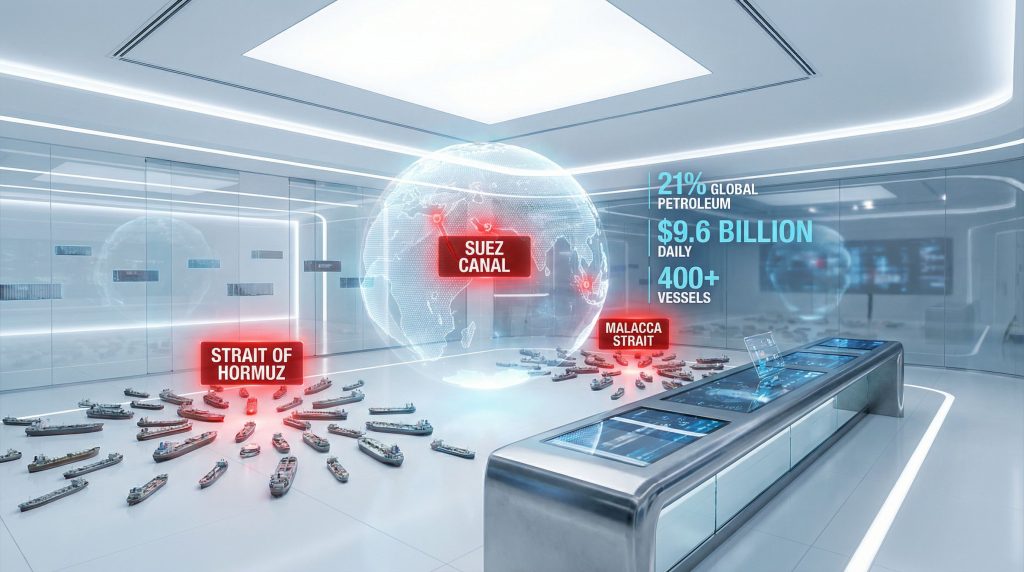
The distinction between selective access restrictions and complete paralysis becomes crucial for economic impact assessment. When approximately 400 vessels positioned themselves in the Gulf of Oman rather than dispersing to alternative routes, this clustering pattern suggested market expectations of corridor reopening rather than permanent closure acceptance.
Economic Ripple Effects of Zero-Transit Days
Zero-transit events through major chokepoints create immediate disruptions across multiple economic sectors, with energy markets typically experiencing the most acute impacts. The concentration of vessel traffic outside closed corridors represents significant capital tied up in delayed cargo, with maritime analytics indicating that such clustering often reflects cargo values in the billions awaiting passage clearance.
Key Economic Disruption Indicators:
• Energy Supply Chain Interruptions: Petroleum product deliveries face immediate delays, affecting regional fuel availability and pricing structures
• Container Shipping Bottlenecks: Manufactured goods experience extended transit times, impacting just-in-time manufacturing processes
• Port Congestion Effects: Alternative routing destinations face sudden capacity pressures as traffic redistributes
• Insurance Market Volatility: Maritime insurance premiums adjust rapidly to reflect elevated chokepoint risks
Historical Precedents and Recovery Patterns
Previous chokepoint closures provide frameworks for understanding recovery timelines and economic adjustments. Historical analysis reveals that complete closures typically generate immediate alternative routing behavior, with vessel operators making rapid decisions based on cargo value, delivery deadlines, and fuel cost calculations for extended routes.
The decision-making process during closures often involves complex risk assessments where shipping companies weigh waiting costs against rerouting expenses. Vessels carrying time-sensitive or high-value cargo tend to pursue alternative routes immediately, while bulk commodity shipments may opt to wait for corridor reopening if expectations suggest relatively short closure durations.
How Do Shipping Companies Navigate Complete Corridor Closures?
Fleet Repositioning Strategies During Crisis Events
Maritime operators implement sophisticated contingency protocols when major shipping lanes become inaccessible. The repositioning process involves real-time assessment of cargo priorities, fuel reserves, crew scheduling limitations, and alternative port capabilities. Companies must rapidly recalculate delivery schedules while managing customer communications and contractual obligations.
Fleet management during closures requires coordination across multiple operational dimensions simultaneously. Vessels approaching closed chokepoints face immediate decisions about whether to maintain position, seek alternative routing, or return to previous ports for cargo redistribution. These decisions carry significant financial implications, as extended voyages increase fuel consumption, crew costs, and potential contract penalties.
Alternative Route Economics and Cost-Benefit Analysis
Alternative routing calculations involve comprehensive cost modeling that extends beyond simple fuel expenditure analysis. The Cape of Good Hope alternative route, for example, adds approximately 7,000 nautical miles to typical Middle East to Europe transits, translating to additional weeks of voyage time and substantial operational cost increases.
Comparative Route Analysis Factors:
| Consideration | Primary Route | Alternative Routing | Impact Differential |
|---|---|---|---|
| Transit Duration | 7-14 days | 21-35 days | 200-250% increase |
| Fuel Consumption | Standard baseline | 40-60% additional | Major cost escalation |
| Port Scheduling | Established patterns | Emergency coordination | Schedule disruption |
| Insurance Coverage | Standard rates | Crisis premiums | 150-300% increase |
Insurance and Risk Management Protocols
Maritime insurance frameworks include specific provisions for chokepoint closures, with policies typically distinguishing between political risk coverage and operational delay protection. Insurance activation during complete corridor closures involves detailed documentation of closure circumstances, alternative routing decisions, and associated cost increases.
Risk management protocols require shipping companies to maintain updated contingency plans that specify decision trees for various closure scenarios. These protocols must account for cargo type considerations, as hazardous materials or perishable goods may face additional regulatory restrictions when rerouting through alternative corridors or ports.
What Are the Immediate Supply Chain Disruptions from Maritime Blockades?
Energy Sector Vulnerabilities and LNG Supply Chains
Energy supply chains exhibit particular vulnerability to maritime chokepoint disruptions due to the specialized infrastructure required for petroleum and liquefied natural gas transportation. When no ships crossing strait of hormuz scenarios develop, energy markets experience immediate price volatility as traders anticipate supply shortages and delivery delays.
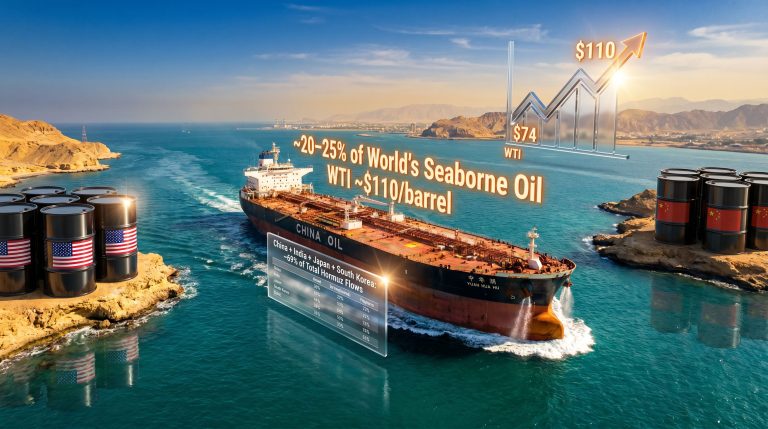
The Strait of Hormuz carries approximately 21% of global petroleum flows, making complete closures significant events for international energy security. LNG carriers, with their specialized refrigeration requirements and scheduled delivery commitments, face especially complex operational challenges during rerouting situations. Furthermore, the opec production impact becomes magnified when major shipping routes face disruption.
Critical Energy Supply Chain Statistics:
When major chokepoints experience zero-transit conditions, energy markets typically see immediate price increases of 3-8% as traders factor in delivery delays and potential supply shortages. LNG spot prices often experience the highest volatility due to storage limitations and inflexible delivery schedules.
Container Shipping Bottlenecks and Port Congestion
Container shipping networks experience cascading disruptions when major chokepoints close, as standardized container schedules depend on precise timing coordination across multiple ports. The redistribution of container traffic to alternative routes creates sudden capacity pressures at ports not originally designed to handle increased throughput volumes.
Port congestion effects multiply during chokepoint closures as facilities face unexpected vessel arrivals, equipment shortages, and storage capacity limitations. Container dwell times increase significantly when ships arrive off-schedule, disrupting the synchronized logistics that enable efficient port operations.
Regional Manufacturing Dependencies
Manufacturing sectors with just-in-time production models face immediate disruptions when maritime supply chains experience complete chokepoint closures. Automotive, electronics, and pharmaceutical industries typically maintain minimal inventory buffers, making them particularly susceptible to shipping delays and component shortages.
Regional manufacturing clusters often concentrate around specific trade routes, creating vulnerability concentrations when those routes experience disruption. Asian manufacturing centers dependent on Middle Eastern energy inputs, for example, face compounded disruptions when both raw material supplies and finished product export routes encounter simultaneously restricted access.
How Do Geopolitical Tensions Transform into Maritime Risk Assessment?
Threat Level Classifications and Vessel Authorization Protocols
Maritime security assessment frameworks involve sophisticated analysis of political developments, military positioning, and diplomatic communications to evaluate chokepoint accessibility risks. These assessments inform vessel authorization protocols that determine which ships receive passage clearance during periods of selective access restrictions.
Recent maritime tracking data revealed selective authorization patterns where vessels linked to specific countries received passage approval while others remained restricted. Ships connected to Pakistan and Turkey demonstrated successful corridor transits under what maritime analysts characterized as special authorization circumstances, illustrating how diplomatic relationships influence maritime access during crisis periods.
Additionally, the broader context of trade war oil prices demonstrates how geopolitical tensions create cascading effects throughout global energy markets.
Flag State Considerations and Diplomatic Immunity
Flag state registration plays crucial roles in determining vessel treatment during chokepoint disruptions, as diplomatic relationships between controlling authorities and vessel registration countries influence passage authorization decisions. This dynamic creates strategic considerations for shipping companies regarding optimal flag selection for vessels operating in geopolitically sensitive regions.
The complexity of modern vessel ownership structures, where beneficial ownership, flag registration, management companies, and cargo interests may involve different jurisdictions, adds layers of diplomatic consideration to passage authorization protocols. Maritime authorities must navigate these multi-jurisdictional relationships when making transit permission decisions.
Military Escort Coordination and International Waters Navigation
Military coordination becomes essential during chokepoint crises, as naval forces from multiple countries may provide escort services or security guarantees for merchant vessels. These arrangements require complex coordination between military commands, merchant operators, and diplomatic channels to ensure safe passage protocols.
International waters navigation during chokepoint disruptions involves careful adherence to freedom of navigation principles while respecting legitimate security concerns. Military escort procedures must balance commercial shipping needs with operational security requirements and international maritime law compliance. According to recent reports from The Guardian, understanding these chokepoint dynamics is crucial for assessing global trade security.
What Economic Indicators Signal Recovery from Maritime Disruptions?
Vessel Clustering Patterns as Market Confidence Metrics
Maritime analysts utilise vessel positioning data as leading indicators of market expectations regarding chokepoint reopening timelines. When approximately 400 vessels maintained positions outside closed corridors rather than dispersing globally, this clustering behaviour suggested collective market confidence in relatively rapid resolution.
Vessel clustering analysis provides insights into commercial decision-making during uncertainty periods. Ships that remain positioned outside closed chokepoints indicate operators' assessment that waiting costs remain lower than alternative routing expenses, reflecting expectations of corridor reopening within economically acceptable timeframes.
Market Confidence Indicators Through Vessel Behaviour:
• Tight Clustering: High confidence in rapid reopening (typically 1-3 days expected)
• Moderate Positioning: Mixed expectations with contingency planning (3-7 days projected)
• Global Dispersal: Low confidence requiring immediate alternative routing (7+ days anticipated)
• Port Returns: Crisis escalation expectations with indefinite closure possibilities
Freight Rate Volatility and Shipping Cost Projections
Freight rate movements provide real-time indicators of market expectations regarding disruption duration and severity. Rates for affected routes typically spike immediately upon closure announcements, with sustained elevation levels reflecting trader assessments of likely resolution timeframes.
Shipping cost projections during chokepoint closures incorporate multiple variables including fuel price escalation, alternative route premiums, insurance surcharges, and delay penalties. These comprehensive cost models help predict when economic pressures will drive resolution efforts or major supply chain restructuring decisions.
Regional Port Capacity Adjustments
Port capacity utilisation patterns shift dramatically during chokepoint disruptions as traffic redistributes to alternative corridors. Ports along the Cape of Good Hope route, for example, experience sudden increases in vessel calls and cargo handling requirements when Middle Eastern chokepoints close.
Recovery indicators include port throughput normalisation, container dwell time reductions, and vessel scheduling return to regular patterns. These operational metrics often provide earlier signals than formal corridor reopening announcements, as port operators receive advance notice of resumed traffic expectations.
The next major ASX story will hit our subscribers first
Which Alternative Shipping Routes Become Critical During Closures?
Cape of Good Hope Traffic Volume Analysis
The Cape of Good Hope route serves as the primary alternative for vessels avoiding Middle Eastern chokepoint closures, despite adding significant distance and transit time to typical shipping schedules. Traffic volume increases along this route provide quantifiable measures of chokepoint disruption severity and global supply chain adaptation patterns.
Maritime tracking data during recent closure events showed measurable traffic increases around the Cape of Good Hope as vessels implemented alternative routing strategies. This traffic redistribution demonstrates the global shipping network's capacity for rapid route adjustments, albeit at substantial additional cost and time requirements.
Suez Canal Capacity Limitations During Rerouting
Paradoxically, Suez Canal transits experienced sharp decreases during Strait of Hormuz closures, indicating that vessels chose the longer Cape route rather than attempting to reach European markets through the Red Sea corridor. This routing preference suggests risk assessment calculations that favour distance over potential security concerns in multiple chokepoint regions.
Suez Canal capacity limitations become relevant when considering large-scale rerouting scenarios, as the canal's daily transit capacity constraints could create additional bottlenecks if massive traffic redistribution occurred. The canal's ability to handle increased throughput depends on vessel scheduling coordination and pilot availability for expanded operations.
Regional Feeder Route Optimisation Strategies
Regional feeder routes connecting major shipping lanes to local markets face significant recalibration requirements during chokepoint closures. These shorter routes must adjust schedules, capacity allocation, and hub port connections to accommodate disrupted main-line services and altered cargo flow patterns.
Feeder route optimisation during disruptions involves complex coordination between main-line carriers and regional operators to maintain connectivity to smaller markets. Container consolidation strategies may require adjustment as hub ports experience altered traffic patterns and capacity constraints.
How Do Energy Markets React to Maritime Infrastructure Disruptions?
Petroleum Product Price Volatility Patterns
Energy markets exhibit immediate price responses to maritime chokepoint closures, with volatility patterns reflecting both supply constraint concerns and speculation regarding disruption duration. Petroleum products experience differentiated price impacts based on regional consumption patterns, strategic reserve availability, and alternative supply source accessibility.
The Strait of Hormuz's role in global petroleum distribution means that no ships crossing strait of hormuz scenarios create immediate market uncertainty, even when strategic petroleum reserves and alternative suppliers can theoretically compensate for temporary disruptions. Price volatility often exceeds actual supply impact due to speculative trading and precautionary inventory building.
Natural Gas Supply Security Implications
Liquefied natural gas markets face particular vulnerability during maritime disruptions due to the specialised infrastructure requirements and limited storage flexibility compared to crude oil systems. LNG carriers must maintain specific temperature and pressure conditions, making extended voyages or route changes technically complex and expensive.
The implications extend beyond immediate shipping concerns, as shown in the us natural gas forecast, which highlights how supply disruptions can influence regional pricing dynamics.
Global Energy Chokepoint Dependencies:
| Region | Primary Route | Backup Options | Supply Risk Level |
|---|---|---|---|
| Asia-Pacific | Strait of Hormuz | Russian Pipeline | High |
| Europe | Multiple Routes | North Sea/Norway | Medium |
| North America | Domestic Production | Strategic Reserves | Low |
Strategic Petroleum Reserve Activation Protocols
Strategic petroleum reserve systems serve as critical buffers during maritime chokepoint disruptions, with activation decisions based on supply shortage projections and market stability considerations. These reserves typically maintain 60-90 day supply equivalents, providing temporary cushioning against extended shipping disruptions.
Reserve activation protocols involve complex coordination between government agencies, market regulators, and commercial distribution networks. The timing of reserve releases influences market psychology, with early activation potentially calming price volatility while delayed responses may exacerbate speculation and panic buying.
What Long-term Strategic Implications Emerge from Maritime Crises?
Infrastructure Investment Priorities and Port Development
Maritime chokepoint crises highlight infrastructure investment needs and drive long-term port development strategies designed to enhance supply chain resilience. These events demonstrate the economic value of alternative routing capabilities and redundant transportation infrastructure that can accommodate traffic redistribution during disruptions.
Port development priorities shift following major chokepoint disruptions, with increased investment in facilities along alternative routes and enhanced capacity for emergency traffic handling. These infrastructure improvements require years to implement but provide strategic advantages for managing future disruptions.
Moreover, the tariffs impact on investments demonstrates how trade policy changes can further influence infrastructure investment decisions during periods of maritime uncertainty.
Trade Route Diversification Strategies
Long-term trade route diversification emerges as a strategic priority following chokepoint crises, with countries and companies developing alternative supply chain pathways to reduce dependency on single corridors. These diversification strategies involve both physical infrastructure development and diplomatic relationship building to ensure multiple viable routing options.
Diversification strategies must balance efficiency optimisation with resilience enhancement, as multiple routing options typically involve higher baseline costs but provide insurance against future disruptions. The economic calculation involves weighing increased operational expenses against reduced disruption risks and associated cost volatility.
International Maritime Security Cooperation Frameworks
Maritime security cooperation frameworks evolve following major chokepoint disruptions, with international organisations developing enhanced coordination protocols for managing future crises. These frameworks involve military cooperation, diplomatic coordination mechanisms, and standardised response procedures for maintaining commerce during security disruptions.
Cooperation frameworks must address the complex intersection of commercial shipping needs, national security interests, and international law compliance. Successful frameworks balance the freedom of navigation principles with legitimate security concerns while providing predictable protocols for commercial operators.
Building Resilience in Global Maritime Infrastructure
Lessons Learned from Zero-Transit Crisis Events
Zero-transit crisis events provide valuable insights into global supply chain vulnerabilities and adaptation capabilities. The March 2026 Strait of Hormuz closure demonstrated both the immediate economic impacts of complete chokepoint shutdowns and the maritime industry's capacity for rapid operational adjustments through alternative routing and strategic positioning.
Maritime analytics revealed that vessel clustering patterns outside closed chokepoints serve as reliable indicators of market expectations regarding resolution timeframes. This behavioural analysis provides stakeholders with leading indicators for decision-making during future crisis situations and demonstrates the collective intelligence embedded in commercial shipping operations.
Future-Proofing Strategies for Supply Chain Security
Future-proofing strategies must address the fundamental tension between efficiency optimisation and resilience enhancement in global supply chains. Companies increasingly recognise the value of diversified routing capabilities, strategic inventory positioning, and alternative supplier relationships that provide flexibility during chokepoint disruptions.
Supply chain security enhancement requires coordinated efforts across multiple stakeholders, including shipping companies, port operators, government agencies, and international organisations. These collaborative approaches must balance commercial competitiveness with collective resilience building to ensure sustainable global trade flows.
Additionally, the global coal reserves outlook demonstrates how energy security considerations extend beyond petroleum to encompass multiple fuel sources that could mitigate maritime disruption impacts.
International Cooperation Frameworks for Maritime Stability
International cooperation frameworks for maritime stability must evolve to address the growing complexity of global supply chain dependencies and geopolitical tensions affecting critical shipping corridors. These frameworks require diplomatic, military, and commercial coordination mechanisms that can respond rapidly to emerging crises while maintaining long-term strategic relationships.
Effective cooperation frameworks balance national sovereignty with collective security interests, providing predictable protocols for managing chokepoint access during crisis periods. The development of these frameworks requires ongoing dialogue between maritime nations, commercial stakeholders, and international organisations to ensure comprehensive coverage of potential disruption scenarios.
Recent developments underscore the urgency of such cooperation, as shadow tankers continue operating even when conventional shipping faces restrictions, highlighting the complex nature of modern maritime trade.
When no ships crossing strait of hormuz situations occur, the global economy faces immediate challenges that require coordinated international responses. However, these crises also present opportunities to strengthen maritime infrastructure resilience and develop more robust supply chain alternatives.
This analysis is based on publicly available maritime tracking data and industry reports. Maritime situation assessments involve inherent uncertainties, and readers should consult multiple sources when making commercial or strategic decisions related to shipping route planning and supply chain management.
Seeking Your Next Market-Moving Discovery?
Discovery Alert's proprietary Discovery IQ model delivers instant notifications on significant ASX mineral discoveries, empowering subscribers to identify actionable opportunities ahead of broader market awareness. Begin your 14-day free trial today and discover why historic mineral discoveries can generate substantial market returns when identified early.