July 24, 2026
Global trade networks face unprecedented challenges as geopolitical tensions disrupt established commercial corridors. The interconnected nature of modern supply chains means that localised conflicts can trigger cascading disruptions across continents, affecting everything from commodity flows to manufacturing schedules. These vulnerabilities become particularly acute when trade routes pass through strategic maritime chokepoints, where a single disruption can paralyse billions of dollars in commerce, similar to recent tariff impacts on markets.
How Maritime Trade Networks Respond to Regional Instability
Strategic Significance of Africa-Gulf Commerce Corridors
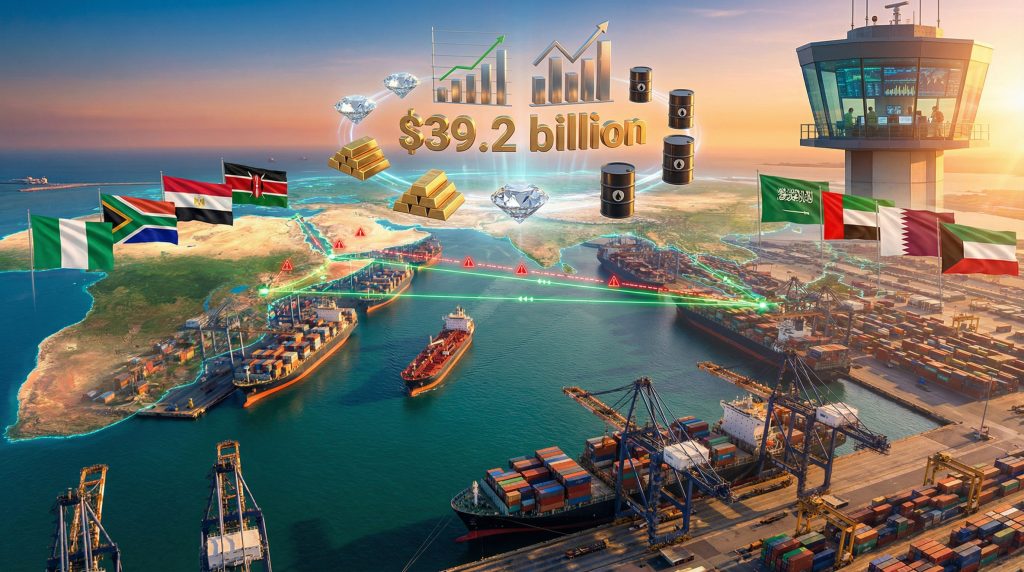
The commercial relationship between African nations and Gulf states represents a critical component of global trade infrastructure, with bilateral exchange volumes reaching substantial proportions by 2022. African exports to the UAE totalled approximately $17.6 billion, whilst UAE exports to Africa reached $21.6 billion, creating a combined trade relationship worth $39.2 billion annually.
This trade relationship encompasses diverse commodity categories that highlight the complementary nature of these economies:
- Minerals and precious metals from major African producers
- Agricultural products meeting Gulf region food security needs
- Petroleum derivatives and refined products
- Manufactured goods from Nigeria, Egypt, and Kenya
- Industrial raw materials supporting Gulf manufacturing sectors
The concentration of these trade flows through specific maritime corridors creates inherent vulnerabilities. When shipping companies like Hapag-Lloyd suspends Africa Upper Gulf cargo operations, the ripple effects extend far beyond immediate logistics concerns. The suspension affects shipments bound for the United Arab Emirates, Iraq, Kuwait, Qatar, and Saudi Arabia's eastern province, encompassing some of the region's most critical commercial hubs.
Maritime Chokepoint Dependencies in Global Commerce
The Strait of Hormuz represents one of the world's most strategically important maritime passages, with its narrow waterway serving as a critical conduit for international shipping. This geographic bottleneck exemplifies how physical geography can create systemic risks for global commerce, particularly when geopolitical tensions escalate in surrounding regions, often requiring complex US–China trade war strategies to navigate disruptions.
Historical analysis reveals consistent patterns of commercial disruption during regional conflicts. Shipping companies implement increasingly sophisticated risk assessment frameworks to evaluate threats, but the fundamental challenge remains: major trade routes often pass through regions where political stability cannot be guaranteed.
The decision-making process employed by major container shipping companies reflects multi-layered risk evaluation criteria. Companies must balance operational continuity with crew safety, insurance considerations, and contractual obligations to customers across multiple continents.
When big ASX news breaks, our subscribers know first
Corporate Risk Management During Geopolitical Crises
Escalation Response Protocols in International Shipping
The sequence of events leading to comprehensive route suspensions typically follows predictable patterns. Initial conflicts trigger preliminary risk assessments, followed by graduated responses as threat levels increase. Hapag-Lloyd's decision process exemplifies this staged approach: the company first paused container vessel transits through the Strait of Hormuz, then expanded restrictions to include all cargo bookings from Africa to the Upper Gulf region.
This escalation occurred following joint US and Israeli strikes on Iran during early March 2026, which reportedly targeted senior Iranian leadership. According to shipping industry reports, Tehran's subsequent response involved drone and missile strikes aimed at Israel and Gulf countries hosting U.S. military assets, creating a rapidly evolving security environment that shipping companies had to navigate in real-time.
The timeline demonstrates how quickly commercial operations can be affected by geopolitical developments:
- Weekend strikes on Iranian targets (March 1-2, 2026)
- Iranian retaliation against Israel and Gulf states
- Initial shipping restrictions through Strait of Hormuz
- Comprehensive suspension of Africa-Upper Gulf cargo bookings by March 4, 2026
Insurance and Operational Cost Implications
Maritime insurance markets typically respond rapidly to elevated geopolitical risks, with war risk surcharges becoming standard practice during regional conflicts. These additional costs must be absorbed by either shipping companies or passed through to customers, creating pricing pressures throughout supply chains.
The financial implications extend beyond immediate insurance costs. Route diversification requires additional time and fuel, whilst alternative ports may lack the infrastructure capacity to handle diverted cargo efficiently. These operational challenges compound the direct costs of avoiding high-risk areas.
Container shipping companies also face complex contractual considerations when suspending services. Customer relationships built over decades can be jeopardised by service interruptions, even when those interruptions result from circumstances beyond the company's control.
Regional Economic Impact Assessment
Africa's Export Dependency Vulnerabilities
The suspension of cargo services affects multiple African economic sectors with varying degrees of severity. Countries with significant export dependencies on Gulf markets face immediate challenges in maintaining foreign exchange earnings and meeting contractual obligations, particularly those dealing with energy export challenges.
| Sector | Primary Impact | Affected Countries |
|---|---|---|
| Mining & Precious Metals | Contract delivery delays | South Africa, Ghana, Mali |
| Agricultural Products | Perishable goods spoilage | Kenya, Ethiopia, Egypt |
| Petroleum Products | Refinery output diversions | Nigeria, Algeria, Angola |
| Manufacturing | Supply chain disruptions | Egypt, Morocco, Tunisia |
The Upper Gulf region's substantial reliance on African imports creates potential for significant ripple effects across multiple sectors. Disruptions could compromise commodity deliveries, food product supplies, and industrial raw material flows, whilst simultaneously elevating costs and decelerating regional trade movements.
South African diamond and gold exports represent particularly high-value trade flows that require secure transportation networks. Any prolonged disruption to these shipments could affect global precious metals markets and compromise producer revenue streams.
Manufacturing Supply Chain Vulnerabilities
African manufacturers dependent on Gulf-sourced inputs face immediate production planning challenges. Raw material inventories typically maintained for 30-90 day periods may prove insufficient during extended shipping disruptions, forcing production slowdowns or temporary facility closures.
The automotive sector in countries like Morocco and South Africa demonstrates these vulnerabilities clearly. Component suppliers serving European manufacturers often source specialised materials from Gulf petrochemical producers, creating dependencies that become apparent only during supply chain disruptions.
Textile manufacturing in Egypt and Ethiopia similarly relies on Gulf-sourced synthetic fibres and dyes. Production schedules calibrated for just-in-time delivery can be severely disrupted when shipping routes become unreliable, forcing manufacturers to seek alternative suppliers at potentially higher costs.
Alternative Route Development and Logistics Adaptation
Contingency Planning in International Trade
The suspension of traditional shipping routes accelerates the development of alternative trade corridors. African exporters must rapidly evaluate options including longer sea routes, overland transportation, and alternative port facilities to maintain market access during disruptions, whilst commodity trading giants reassess their strategic positioning.
East African ports like Mombasa and Dar es Salaam may experience increased cargo volumes as shippers seek alternatives to Gulf-routed transportation. However, these facilities face capacity constraints and may require significant infrastructure investments to handle diverted trade flows efficiently.
Overland transportation through North Africa presents another alternative, though this approach involves higher costs and longer transit times. Road and rail infrastructure limitations in many regions compound these challenges, making overland alternatives viable only for high-value, low-volume cargo categories.
Technology Integration in Crisis Response
Modern supply chain management increasingly relies on digital platforms that enable real-time cargo tracking and route optimisation during disruptions. Predictive analytics systems help companies anticipate disruptions and implement contingency plans before situations become critical.
Blockchain-based documentation systems facilitate rapid rerouting by ensuring cargo documentation remains valid across different transportation modes and jurisdictions. These technological solutions prove particularly valuable during crisis periods when traditional communication channels may be compromised.
Furthermore, artificial intelligence applications in logistics management can process vast amounts of data to identify optimal alternative routes, considering factors such as cost, transit time, security risks, and destination port capacity simultaneously.
Macro-Economic Implications for Regional Development
Currency and Foreign Exchange Effects
Export-dependent African economies face immediate foreign exchange pressures when major trade routes become disrupted. Countries relying heavily on Gulf markets for foreign currency earnings may experience balance of payments difficulties if shipping disruptions persist for extended periods, compounding existing energy security concerns.
The timing of these disruptions relative to seasonal trade patterns can amplify economic impacts. Agricultural exporters, for example, may miss critical planting or harvest season revenue if alternative shipping arrangements cannot be established quickly.
Central banks in affected countries must consider whether currency interventions or other monetary policy adjustments become necessary to maintain financial stability during trade disruptions.
Employment and Social Impact Analysis
Port facilities, logistics companies, and export-oriented manufacturers across Africa face immediate employment pressures when cargo volumes decline suddenly. Temporary layoffs in logistics sectors often precede more significant economic adjustments if disruptions continue.
The social impact extends beyond direct employment effects. Communities dependent on export-related economic activity may experience reduced consumer spending, affecting local businesses and service providers throughout the economic chain.
Government social safety nets face increased pressure during trade disruptions, as unemployment benefits and other support programmes experience higher demand precisely when government revenues from trade-related taxes may be declining.
Strategic Industry Responses and Adaptation Mechanisms
Corporate Supply Chain Redesign
The current disruption accelerates existing trends toward supply chain diversification and resilience planning. Companies that previously relied on single-source suppliers or concentrated shipping routes recognise the need for more robust contingency planning.
Multi-modal transportation strategies become increasingly important, with companies developing capabilities to seamlessly transition between sea, air, and land transportation modes based on real-time risk assessments and cost considerations.
In addition, long-term contracting practices may evolve to include more sophisticated force majeure clauses and risk-sharing mechanisms between suppliers, shippers, and customers, distributing the costs of disruptions more equitably across supply chain participants.
Regional Trade Agreement Implications
The African Continental Free Trade Area (AfCFTA) framework may gain increased relevance as companies seek alternatives to disrupted international trade routes. Intra-African trade development could accelerate as businesses recognise the risks of over-dependence on external markets.
Regional economic communities across Africa may expedite infrastructure development projects designed to enhance trade connectivity and reduce dependence on potentially vulnerable international shipping routes.
Government policy responses might include increased investment in port facilities, transportation networks, and logistics infrastructure to support alternative trade routes and enhance economic resilience.
The next major ASX story will hit our subscribers first
Long-term Structural Changes in Africa-Gulf Commerce
Trade Relationship Evolution Patterns
Historical analysis suggests that major shipping disruptions often catalyse permanent changes in trade patterns. Some cargo flows may never return to original routes even after immediate security concerns subside, particularly if alternative arrangements prove more cost-effective or reliable.
The development of new trade relationships during disruption periods can create lasting commercial partnerships. African exporters forced to seek alternative markets may discover opportunities that persist long after traditional routes resume operations.
Consequently, investment patterns may also shift, with Gulf-based companies potentially reducing African investments due to perceived supply chain risks, whilst companies from other regions may increase their African presence to serve markets previously dominated by Gulf suppliers.
Infrastructure Development Priorities
Port capacity expansion projects across alternative trade corridors likely will receive accelerated attention from both government and private investors. Strategic infrastructure investments designed to support diversified trade routes may become regional development priorities.
Transportation network investments connecting inland production areas to alternative port facilities could receive increased funding as governments recognise the economic security benefits of route diversification.
Digital infrastructure supporting supply chain management, cargo tracking, and international trade documentation may also receive enhanced investment priority as stakeholders seek to improve system resilience and responsiveness.
Risk Mitigation Frameworks for Global Commerce
Early Warning System Development
The current situation highlights the value of sophisticated geopolitical risk monitoring systems that can provide advance warning of potential trade disruptions. Intelligence gathering capabilities that combine political analysis, security assessment, and economic impact modelling become increasingly important for international businesses.
Collaborative information sharing between government agencies, shipping companies, and major exporters can enhance the effectiveness of early warning systems by providing multiple perspectives on evolving risk situations.
Predictive modelling systems that can simulate the potential impacts of various disruption scenarios enable better contingency planning and more rapid response when situations develop.
What are the Best Practices for Commercial Resilience?
Companies developing robust supply chain resilience strategies typically implement multiple complementary approaches:
- Geographic diversification of suppliers and customers to reduce concentration risks
- Multi-modal transportation capabilities enabling flexible routing based on current conditions
- Enhanced inventory management with strategic buffer stocks for critical materials
- Flexible contracting terms that accommodate force majeure situations
- Regular scenario planning exercises to test response capabilities
The most resilient supply chains often incorporate redundancy at multiple levels, accepting higher operational costs in normal periods to maintain functionality during disruptions.
Communication protocols that enable rapid coordination between supply chain participants during crisis periods prove essential for minimising disruption impacts and maintaining customer relationships.
Future Implications for International Trade Architecture
Regulatory Framework Evolution
International trade regulations may evolve to better address the challenges posed by geopolitical disruptions to commercial shipping. Enhanced cooperation between maritime authorities across different regions could improve coordination during crisis periods.
Insurance market regulations might also adapt to ensure adequate coverage availability for trade routes through volatile regions, whilst maintaining reasonable cost structures that support continued commerce.
However, international arbitration mechanisms for trade disputes arising from force majeure situations may require updating to address the unique challenges posed by modern supply chain complexity and geopolitical risk factors.
Technology Integration Acceleration
The current disruption likely will accelerate adoption of advanced supply chain technologies across African export industries. Blockchain documentation systems, IoT tracking devices, and AI-powered logistics optimisation may become standard tools rather than competitive advantages.
Digital trade platforms that facilitate rapid partner identification and contract negotiation could become increasingly important as companies seek to quickly establish alternative business relationships during disruptions.
Virtual coordination systems enabling real-time collaboration between suppliers, shippers, and customers across different time zones and regulatory jurisdictions may prove essential for maintaining supply chain effectiveness during crisis periods.
The intersection of geopolitical risk and international commerce continues evolving as global trade networks adapt to an increasingly complex security environment. As Hapag-Lloyd's official statement demonstrates, companies and governments that invest in resilience, diversification, and technological sophistication will be best positioned to navigate future disruptions whilst maintaining competitive advantages in international markets.
Disclaimer: This analysis discusses current geopolitical situations and their potential economic impacts based on available information as of March 2026. Geopolitical situations can change rapidly, and readers should consult current sources and professional advisers for up-to-date information when making business or investment decisions. Economic projections and scenario analyses presented here are speculative in nature and should not be considered as definitive forecasts of future events.
Looking to Capitalise on Market Disruptions from Global Trade Challenges?
Discovery Alert's proprietary Discovery IQ model delivers real-time alerts on significant ASX mineral discoveries, helping investors identify actionable opportunities when geopolitical events create market volatility and shift commodity demand patterns. With global supply chains facing unprecedented disruptions affecting everything from precious metals to industrial raw materials, subscribers gain instant access to discoveries that could benefit from changing trade dynamics and begin their 14-day free trial today to secure a market-leading advantage.