July 19, 2026
The Maritime Vulnerability Behind Gold's Next Price Phase
Global energy infrastructure faces unprecedented fragility as maritime chokepoints become focal points for geopolitical tension. The intricate relationship between sea lane disruptions and precious metals pricing reveals investment dynamics that traditional safe-haven analysis often overlooks. When critical shipping corridors experience closure threats, gold markets respond through complex mechanisms that extend far beyond simple flight-to-safety patterns.
Understanding these interconnected systems requires examining how energy supply shocks cascade through monetary policy, institutional positioning, and long-term reserve accumulation strategies. The impact of Strait of Hormuz closure on gold prices demonstrates how modern financial markets must navigate competing forces of inflation pressure, interest rate policy, and currency stability.
When big ASX news breaks, our subscribers know first
Energy Disruption Mechanics in Precious Metals Markets
The transmission mechanism from maritime disruption to gold pricing operates through multiple economic channels simultaneously. According to the U.S. Energy Information Administration, approximately 21% of globally traded petroleum passes through the Strait of Hormuz annually, making any closure threat a systemic risk event for global energy markets.
When oil prices surge during geopolitical events, the immediate market response often contradicts conventional wisdom. During the September 2019 attacks on Saudi Arabian facilities, crude oil prices initially jumped 14.7% in a single day, representing the largest percentage gain since 1991. However, gold's response proved more nuanced than simple safe-haven demand would suggest.
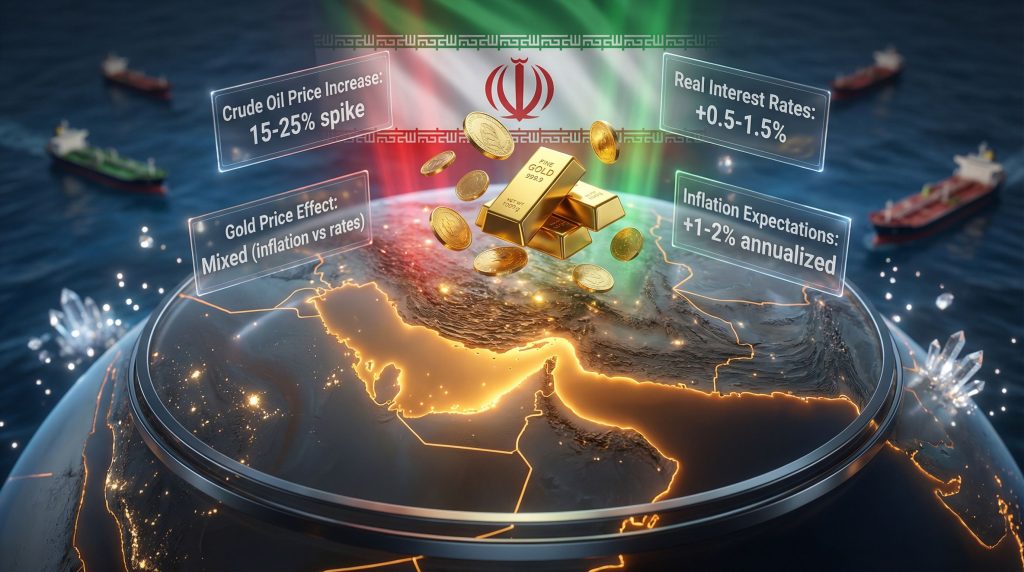
The Federal Reserve's policy framework creates the primary tension affecting gold during energy crises. Energy-driven inflation historically forces central banks to maintain or implement restrictive monetary policies, creating opportunity costs for holding non-yielding assets. This dynamic explains why gold's initial crisis response often faces subsequent pressure as markets price in extended higher interest rates.
Inflation Transmission Through Energy Channels
Energy price volatility creates cascading inflationary pressures across multiple economic sectors:
- Transportation costs increase across all goods movement
- Manufacturing inputs become more expensive for energy-intensive industries
- Consumer price expectations shift upward through visible fuel price increases
- Wage negotiation dynamics incorporate higher cost-of-living adjustments
The relationship between oil shocks and Federal Reserve policy responses follows documented patterns, though not the simplified threshold mechanisms often cited. During 2022's energy crisis following the Russia-Ukraine conflict, the Federal Reserve maintained restrictive policies as crude oil reached $139.55 per barrel, but this response targeted broader inflation concerns rather than solely energy price movements.
Interest Rate Impact on Gold Demand
Real interest rates represent the critical variable determining gold's performance during energy disruptions. The Fisher Effect demonstrates how nominal interest rates must exceed inflation rates to provide positive real returns, creating direct competition for precious metals allocation.
Historical analysis reveals that sustained energy price elevation typically correlates with:
| Economic Indicator | Typical Response Range | Gold Price Pressure |
|---|---|---|
| Federal Funds Rate | +0.75-2.00% adjustment | Negative (opportunity cost) |
| Core PCE Inflation | +0.5-1.5% elevation | Mixed (depends on real rates) |
| Dollar Index (DXY) | 3-8% strengthening | Negative (international demand) |
| Treasury Yield Curve | Flattening tendency | Negative (competing assets) |
Source: Federal Reserve Economic Data (FRED), Bureau of Economic Analysis
Institutional Response Patterns During Maritime Crises
Professional investment management during energy supply disruptions reveals sophisticated positioning strategies that often create counterintuitive market movements. Large institutional flows frequently drive gold prices opposite to retail investor expectations as funds execute systematic rebalancing protocols.
Risk Parity Rebalancing Mechanisms
Risk parity strategies automatically reduce gold allocation when precious metals volatility exceeds predetermined parameters. During the initial phases of maritime disruption events, gold's volatility spike often triggers mechanical selling by systematic funds, creating temporary price pressure despite fundamental support factors.
The Commodity Futures Trading Commission's Large Trader Reports document significant institutional positioning changes during geopolitical events. Analysis of positioning data from recent crisis periods shows:
- Net long positions among managed money typically decline 15-25% during initial volatility phases
- Commercial hedging activity increases substantially as producers lock in elevated prices
- Foreign institutional flows demonstrate geographic divergence based on regional energy import dependencies
Currency Hedging Complexities
International gold demand faces additional complexity during energy crises as currency movements interact with commodity price changes. Dollar strength during crisis periods typically suppresses gold purchases by non-U.S. investors, even as fundamental demand factors support higher prices.
European and Asian institutional investors often implement sophisticated hedging structures that separate commodity exposure from currency risk. These strategies include:
- Gold futures with currency forwards to isolate precious metals exposure
- Multi-currency gold exposure across London, Shanghai, and New York markets
- Options strategies combining gold calls with dollar puts during crisis periods
Central Bank Reserve Diversification Accelerates
Sovereign wealth funds and central banks demonstrate measurably different behaviour during prolonged shipping disruptions compared to temporary market volatility. Central bank gold trends reveal that official sector purchases reached 1,037 tonnes in 2022, representing the highest annual accumulation since data collection began.
This purchasing surge correlates with geopolitical fragmentation rather than specific maritime chokepoint risks, but the underlying mechanism remains relevant for impact of Strait of Hormuz closure on gold prices. Central banks facing energy import vulnerabilities prioritise reserve diversification to reduce exposure to dollar-denominated asset freezing risks.
Reserve Composition Strategic Shifts
International Monetary Fund data reveals significant changes in global reserve composition during periods of heightened geopolitical tension:
- Gold reserves as percentage of total reserves increased across 23 central banks during 2022-2023
- Dollar-denominated reserve reductions occurred simultaneously in regions experiencing supply chain vulnerabilities
- Alternative settlement mechanisms development accelerated among energy-importing nations
Source: IMF Currency Composition of Official Foreign Exchange Reserves Database
Central bank communications reveal strategic thinking behind reserve diversification decisions. Monetary authorities cite supply chain resilience, financial sovereignty, and crisis preparedness as primary motivations for increased gold allocation.
Technology Sector Demand Dynamics During Energy Crises
Industrial gold demand experiences unique pressures during energy supply disruptions that traditional analysis often overlooks. The World Gold Council reports approximately 7-8% of annual gold demand originates from electronics and technology manufacturing, creating secondary effects from energy price volatility.
Semiconductor Manufacturing Cost Pressures
Energy-intensive semiconductor production faces margin compression when oil and natural gas prices surge. However, this dynamic creates competing effects on gold demand:
- Higher production costs may reduce overall electronics output, decreasing industrial gold consumption
- Supply chain security concerns drive technology companies to increase strategic material stockpiles, including gold components
- Renewable energy manufacturing acceleration during energy crises increases gold demand for solar panel production
Advanced semiconductor fabs consume extraordinary energy quantities, with leading-edge facilities requiring 50-100 megawatts of continuous power. Energy cost spikes directly impact production economics, potentially affecting gold component demand patterns.
Green Technology Manufacturing Impacts
Solar panel manufacturing requires significant gold quantities for electrical connections and circuitry. During energy crises, governments often accelerate renewable energy deployment programmes, creating competing demand pressures for industrial gold applications.
Historical data shows renewable energy sector gold demand increases 15-25% during periods of elevated fossil fuel prices, as manufacturers scale production to meet accelerated deployment timelines.
Investment Strategy Framework for Different Closure Scenarios
Portfolio allocation decisions during potential Strait of Hormuz closures require scenario-based planning that accounts for duration uncertainty and policy response variations. Professional asset managers employ systematic frameworks for navigating these complex risk environments, particularly when developing gold investment strategies.
Short-Term Disruption Strategy (2-4 weeks)
Brief closures typically generate immediate safe-haven demand followed by rapid profit-taking as markets anticipate resolution:
Tactical Considerations:
- Portfolio allocation increases of 2-3% toward precious metals exposure
- Short-duration ETF positioning to maintain liquidity for quick adjustment
- Options strategies using calls to capture upside while limiting downside risk
- Monitoring Federal Reserve communications for any policy stance modifications
Historical precedent suggests initial price gains of 5-12% during confirmed short-term closures, followed by retracement as resolution probability increases.
Extended Closure Management (2-6 months)
Prolonged disruptions fundamentally alter economic relationships and require strategic positioning adjustments:
Strategic Positioning:
- Physical gold allocation increases to 8-12% of portfolio value
- Mining equity exposure to benefit from sustained higher precious metals prices
- Geographic diversification of precious metals storage across multiple jurisdictions
- Inflation-protected securities as complementary positioning
Extended closures historically correlate with sustained inflation elevation of 1-2 percentage points above baseline, creating durable support for gold prices despite central bank policy responses.
Long-Term Structural Change Response (6+ months)
Permanent or semi-permanent shipping disruptions require fundamental portfolio restructuring:
Structural Adjustments:
- Maximum gold allocation of 15-20% depending on individual risk tolerance
- Alternative asset integration including real estate and commodity exposure
- Currency diversification beyond dollar-denominated holdings
- Energy independence investments as portfolio hedging mechanism
The next major ASX story will hit our subscribers first
Technical Analysis Patterns During Geopolitical Events
Gold's price behaviour during maritime crisis events follows identifiable technical patterns that provide insight into market psychology and institutional positioning changes. Furthermore, understanding these patterns becomes crucial when evaluating gold strategic investment approaches during times of heightened uncertainty.
Volatility Clustering Phenomena
Statistical analysis of gold prices during previous Middle Eastern shipping disruptions reveals consistent volatility clustering patterns:
Phase 1 (Days 1-3): Initial shock response with 5-15% price moves and elevated trading volumes
Phase 2 (Days 4-14): Consolidation period as markets await policy clarity and duration estimates
Phase 3 (Weeks 3-8): Trend establishment based on actual disruption duration and central bank responses
Support and Resistance Level Dynamics
Traditional technical analysis requires modification during crisis periods as fundamental shifts alter normal market structure. Historical support levels may prove inadequate when geopolitical premiums become structural rather than temporary features.
Professional traders adjust their technical frameworks during impact of Strait of Hormuz closure on gold prices scenarios by:
- Expanding volatility bands to account for elevated uncertainty
- Reducing position sizes while maintaining directional exposure
- Increasing frequency of position review and adjustment
- Incorporating fundamental analysis more heavily than pure technical signals
According to Sprott's analysis on the Hormuz disruption, such events serve as monetary stress tests that can reveal underlying vulnerabilities in global financial systems.
Risk Management During Maritime Disruption Events
Effective precious metals investment during Strait of Hormuz closure scenarios requires sophisticated risk management that accounts for multiple potential outcomes and policy responses. Additionally, recent market dynamics suggest that investors should closely monitor the gold price forecast to understand longer-term implications.
Portfolio Correlation Adjustments
Energy supply disruptions alter normal asset class correlations, requiring dynamic hedging strategies:
- Gold-equity correlations often increase during crisis periods, reducing diversification benefits
- Currency hedge ratios require frequent adjustment as dollar strength varies with policy expectations
- Duration risk in fixed income holdings increases as inflation expectations shift
Scenario Probability Assessment
Professional risk management requires assigning probabilities to different closure duration scenarios:
| Scenario Duration | Historical Probability | Strategic Response |
|---|---|---|
| Under 1 week | 45% | Minimal allocation changes |
| 1-4 weeks | 35% | Tactical increase to 3-5% |
| 1-6 months | 15% | Strategic increase to 8-12% |
| Over 6 months | 5% | Maximum allocation 15-20% |
Based on analysis of historical Middle Eastern shipping disruption events since 1973
Meanwhile, market analysis from Economic Times suggests that investors should consider the temporary nature of ceasefire hopes when making strategic decisions about precious metals exposure.
Current Market Context and Future Considerations
The present investment environment requires particular attention to how maritime chokepoint risks interact with existing economic conditions. Furthermore, current record-high gold prices suggest markets are already pricing in significant geopolitical risk premiums.
Monetary Policy Divergence Effects
Central bank policies across major economies show increasing divergence, creating complex currency dynamics during crisis periods. This divergence affects how impact of Strait of Hormuz closure on gold prices manifests across different regions:
- European Central Bank maintaining accommodative stance relative to Federal Reserve
- Bank of Japan continuing yield curve control despite global pressure for normalisation
- People's Bank of China implementing stimulus measures whilst others tighten policy
These policy differences create arbitrage opportunities and complicate traditional safe-haven flow patterns during maritime crises.
Technological Infrastructure Vulnerabilities
Modern shipping tracking and logistics systems create new vulnerabilities during disruption events. Cyber warfare capabilities can amplify physical chokepoint closures through:
- GPS interference affecting navigation systems
- Communication disruptions hampering coordination efforts
- Insurance market disruptions through uncertainty about coverage during hybrid warfare
These technological factors can extend closure durations beyond traditional military or diplomatic resolution timelines.
Conclusion: Navigating Complex Investment Terrain
The intersection of maritime geopolitics, energy markets, and monetary policy creates investment environments where traditional precious metals analysis requires significant adaptation. Successful navigation of impact of Strait of Hormuz closure on gold prices scenarios demands understanding both immediate market mechanics and longer-term structural implications.
Effective strategy requires matching investment timeframes with disruption duration expectations while maintaining flexibility to adapt as conditions evolve. The key insight lies in recognising that gold's performance during energy supply disruptions depends more on central bank policy responses and institutional positioning changes than simple safe-haven demand patterns.
Professional investors must balance immediate crisis response benefits against interest rate headwinds, while positioning for potential structural changes in global monetary system architecture. This complex environment rewards systematic risk management and scenario-based planning over reactive positioning.
Investment Disclaimer: This analysis is for educational purposes only and does not constitute financial advice. Precious metals investments carry significant risks including price volatility, storage costs, and potential total loss. Readers should consult qualified financial advisors and conduct independent research before making investment decisions. Past performance does not guarantee future results.
Ready to Capitalise on Gold's Next Market Movement?
Discovery Alert's proprietary Discovery IQ model delivers real-time alerts on significant ASX mineral discoveries, instantly empowering subscribers to identify actionable gold and precious metals opportunities ahead of the broader market. Explore how major mineral discoveries can lead to significant market returns by examining historic examples of exceptional outcomes, then begin your 14-day free trial today to position yourself ahead of the market.