July 23, 2026
Understanding Market Backwardation in Crisis Conditions
Global energy markets operate through complex pricing mechanisms that reveal trader psychology and supply chain vulnerabilities. During periods of geopolitical uncertainty, these mechanisms can produce extreme price distortions that illuminate both immediate market fears and longer-term economic fundamentals. The April 2026 energy crisis demonstrates how sustained military conflicts can transform standard market relationships into unprecedented pricing structures, particularly when analysing near-term oil prices trump iran conflict dynamics.
Defining Backwardation and Its Market Signals
Backwardation represents a fundamental inversion of normal commodity pricing patterns where immediate delivery commands higher prices than future contracts. Under typical market conditions, futures contracts trade at premiums to spot prices due to storage costs, financing charges, and convenience yields. When this relationship inverts, markets signal acute short-term supply constraints relative to anticipated future availability.
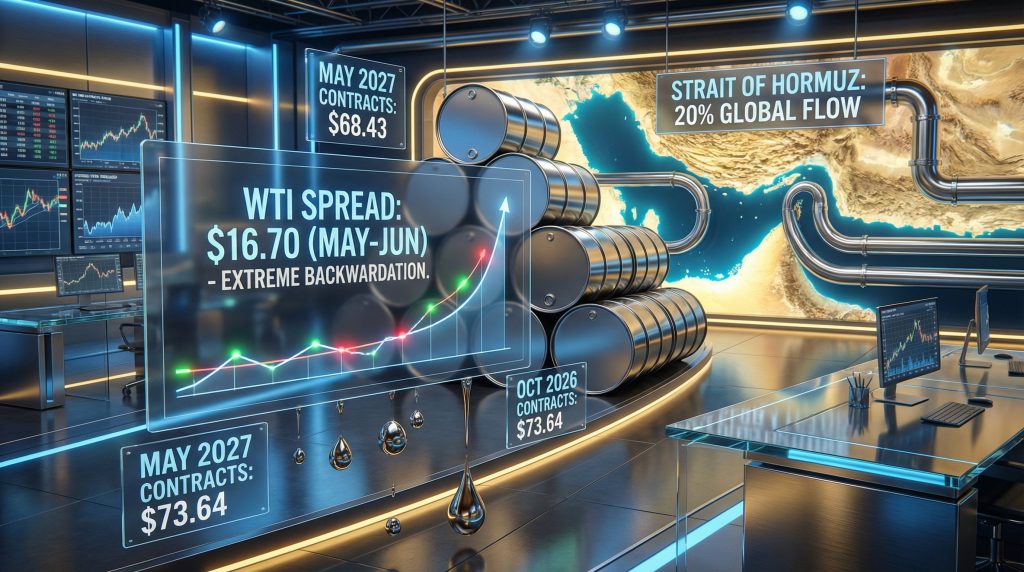
The technical mechanics of backwardation reveal trader expectations about temporal supply dynamics. Near-term oil prices during the Trump Iran conflict reached extraordinary premium levels, with May 2026 WTI crude futures establishing a $16.70 per barrel premium over June contracts. This differential represents the largest-ever recorded spread between front-month and second-month crude oil deliveries, according to trading data from April 2026.
Historical precedents for extreme backwardation events typically coincide with major supply disruptions. The 1990-1991 Gulf War produced significant futures curve inversions as markets anticipated Iraqi supply interruptions. The 2008 financial crisis generated backwardation through different mechanisms, as credit constraints limited inventory financing capabilities. The April 2026 Iran conflict exceeded these historical benchmarks by creating sustained supply uncertainty over multiple months rather than weeks.
The $16.70 Premium: Breaking Down Record-Setting Spreads
The extraordinary premium between May and June 2026 WTI contracts reflects multiple converging factors that compressed normal market relationships. May contracts reached session highs of $113.97 per barrel before settling at $111.42, creating the widest spread in crude oil futures history. This differential illustrates how traders valued immediate oil access during active military operations.
Comparative analysis reveals the unprecedented nature of April 2026 price relationships:
| Crisis Period | Peak Backwardation | Duration | Primary Driver |
|---|---|---|---|
| 1990 Gulf War | $8.50/barrel | 6 months | Iraqi supply loss |
| 2008 Financial Crisis | $12.30/barrel | 4 months | Credit constraints |
| 2026 Iran Conflict | $16.70/barrel | 5+ weeks | Hormuz closure |
Trader positioning analysis during this period reveals sophisticated risk management strategies. Professional commodity traders distinguish between temporary disruptions and structural supply changes. The extreme backwardation suggested market participants expected resolution within defined timeframes, as evidenced by the gradual normalisation of pricing further out on the futures curve.
When big ASX news breaks, our subscribers know first
How Geopolitical Risk Premium Affects Oil Market Structure
Military conflicts introduce multiple risk layers that traditional energy market models struggle to quantify. The Trump administration's escalation against Iran created specific uncertainty patterns that manifested through futures curve distortions. Unlike economic disruptions that follow predictable patterns, military conflicts generate asymmetric risk profiles where downside scenarios can extend indefinitely.
Furthermore, the oil price rally analysis during this period revealed how geopolitical tensions can amplify existing market vulnerabilities, creating cascading effects across multiple energy sectors.
The Strait of Hormuz Chokepoint Factor
The Strait of Hormuz represents a critical vulnerability in global energy infrastructure, with approximately 20 percent of worldwide oil supply flowing through this narrow waterway. The five-week blockade that began in late February 2026 removed millions of barrels per day from international markets, creating immediate supply deficits across oil-importing regions.
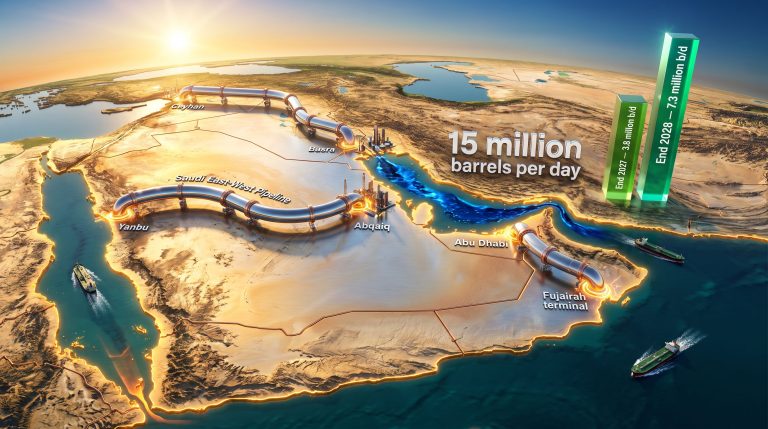
Alternative routing options exist but impose significant cost penalties on energy transportation. The Cape of Good Hope route adds approximately 6,000 nautical miles to transit distances from the Persian Gulf to Western markets, increasing shipping costs and delivery timeframes substantially. Saudi Arabia's East-West pipeline system provided partial mitigation, though insufficient to offset total Hormuz capacity.
Regional price differentials emerged as markets adjusted to transportation constraints. European refineries faced particularly acute supply shortages due to their traditional dependence on Middle Eastern crude imports via Hormuz routing. Asian markets experienced similar disruptions, though alternative pipeline infrastructure from Russia and Central Asia provided limited supply diversification.
Presidential Rhetoric vs Market Reality
Political communication during crisis periods directly impacts commodity pricing through expectation management. President Trump's April 2 evening address created specific market interpretation challenges by committing to hit Iran "extremely hard" whilst declining to outline resolution timelines or reopening mechanisms for the Strait of Hormuz.
The absence of defined military objectives or completion criteria amplified market uncertainty. Traders require probability frameworks to price geopolitical risks effectively. When political leadership suggests other nations should lead clearing efforts for blocked shipping routes, markets interpret this as acknowledgement that resolution timeframes remain entirely undefined.
Policy uncertainty compounds traditional supply disruption effects by preventing normal inventory management decisions. Refineries must choose between purchasing expensive immediate deliveries or accepting potential supply gaps if conflicts extend longer than anticipated. This optimisation challenge contributes directly to backwardation persistence.
Supply Chain Disruption Economics: Why Immediate Oil Commands Higher Prices
Physical commodity markets operate through different mechanisms than financial markets, with inventory levels and transportation logistics determining price relationships. The Iran conflict demonstrated how rapid supply removal can overwhelm existing inventory buffers and create acute shortages across multiple regions simultaneously.
Physical vs Financial Market Dynamics
By early April 2026, fuel shortages had emerged in countries dependent on Hormuz oil deliveries, indicating inventory drawdown rates exceeded replacement capacity. The combination of blocked primary supply routes and extended alternative transportation times created net inventory depletion across affected regions.
Strategic inventory management during supply disruptions requires complex optimisation decisions. Companies must balance current consumption needs against uncertain future availability and pricing. The extreme backwardation observed in April 2026 reflects these inventory management pressures as buyers competed for immediate supply access.
Active U.S. drilling rig counts increased modestly to 411 units during the crisis week, representing minimal producer response despite elevated pricing. This limited supply-side reaction illustrates the temporal mismatch between price signals and production capacity additions in the oil sector, particularly when considering the broader US oil production decline trends affecting the industry.
Regional Price Differentials and Transportation Costs
Geographic pricing disparities expanded significantly as transportation constraints imposed varying cost penalties across different supply routes. Shipping insurance rates increased substantially for vessels attempting to navigate conflict zones or utilise extended alternative routing patterns.
The following factors contributed to regional price variations during the crisis:
• Insurance premium escalation for tankers in the Persian Gulf region
• Extended transit times via Cape of Good Hope routing
• Pipeline capacity constraints for alternative supply sources
• Port congestion at facilities handling diverted cargo volumes
Alternative infrastructure utilisation reached capacity limits as markets sought supply substitution. Saudi Arabia's East-West pipeline system operated at maximum throughput levels, though total capacity remained insufficient to replace blocked Hormuz flows entirely.
Producer Response Mechanisms: Will Higher Prices Trigger Drilling Revival?
Energy sector capital allocation decisions require sustained price signals over extended timeframes rather than temporary market spikes. The disconnect between immediate contract prices and medium-term futures levels created decision-making challenges for drilling operators during the April 2026 crisis.
The Six-Month Price Signal Threshold
October 2026 futures contracts traded around $73.64 per barrel as of early April, representing a 13 percent increase from pre-conflict levels but falling short of many operators' drilling economics. Industry professionals emphasised that six-to-nine-month forward pricing provides the primary signal for capital expenditure decisions rather than spot market activity.
Andy Hendricks, Chief Executive Officer of Patterson-UTI Energy, explained that sustained pricing visibility drives drilling activity more effectively than immediate price spikes. His assessment highlighted the distinction between trader psychology focused on near-term shortages and producer fundamentals requiring medium-term economic certainty.
The drilling policy shift under the Trump administration added another layer of complexity to producer decision-making processes.
Capital Allocation Under Price Uncertainty
Break-even economics vary significantly across different oil production regions and operator cost structures. Latigo Petroleum established specific thresholds requiring prices above $75 per barrel for the remainder of 2026 and 2027 to justify incremental drilling programmes. With forward contracts trading below these levels, capital allocation remained constrained despite near-term market strength.
The following factors influence drilling investment decisions during volatile pricing periods:
- Forward curve sustainability over 6-12 month horizons
- Service cost inflation in drilling and completion activities
- Equipment availability for additional rig deployment
- Financing terms for drilling programme expansion
- Regulatory approval timelines for new well permits
Bryan Sheffield, founder of Formentera Partners, articulated the frustration created by extreme curve backwardation. The $40 discount between front-month pricing and May 2027 delivery contracts created what he described as a fundamental barrier to drilling programme investment despite elevated immediate-term prices.
Consumer Impact Analysis: From Wellhead to Gas Pump
Energy price transmission from crude oil markets to retail consumers follows predictable patterns, though crisis conditions can accelerate or amplify these relationships. The April 2026 oil price spike generated immediate concerns about petrol cost increases across major consuming regions.
Retail Petrol Price Transmission Mechanisms
Crude oil price changes typically require 6-8 weeks to fully transmit through the petrol supply chain, as refiners process existing inventory before incorporating higher-cost feedstock into retail pricing. During supply crises, this transmission can accelerate as refiners adjust margins to reflect replacement cost economics.
Summer petrol blend transitions impose additional cost pressures during the April-May timeframe, typically adding $0.10-0.15 per gallon premiums as refineries switch from winter to summer specifications. The combination of crude price increases and seasonal blend changes amplifies consumer price impacts during this period.
Broader Economic Implications of Energy Price Shocks
Energy cost increases create ripple effects throughout economic systems as transportation-dependent industries face margin compression. Airlines, trucking companies, and manufacturing operations utilising energy-intensive processes experience immediate cost pressures that eventually transmit to consumer pricing.
The Federal Reserve monitors energy price developments closely due to their potential inflation impacts. Sustained energy price increases can influence monetary policy decisions, particularly when energy costs comprise significant portions of consumer expenditure baskets.
Federal Reserve Perspective on Oil Price Volatility
Central bank officials must distinguish between temporary energy price spikes and sustained inflationary pressures when formulating monetary policy responses. The April 2026 crisis presented specific challenges due to the uncertain duration and magnitude of supply disruptions, particularly regarding the Federal Reserve impact on broader economic stability.
Dallas Fed President Logan's Production Outlook
Federal Reserve Bank of Dallas President Lorie Logan provided specific assessment of producer response patterns during the crisis period. Her analysis indicated that U.S. oil producers remained reluctant to accelerate production despite elevated immediate-term pricing, requiring confidence in sustained price elevation over 6-9 month horizons.
Logan's observation that she was not observing dramatic production increases in the short run reflected producer behaviour patterns during previous energy crises. Oil companies typically require sustained price signals before committing capital to drilling programmes due to the time delays between investment decisions and production additions.
Long-Term Price Expectations vs Short-Term Volatility
The futures curve structure during April 2026 revealed market expectations for crisis resolution over medium-term timeframes. May 2027 contracts at approximately $68.43 per barrel suggested traders anticipated substantial price normalisation within twelve months of the initial conflict.
This forward pricing structure created monetary policy assessment challenges. Traditional inflation models struggle to incorporate temporary supply disruptions that generate extreme near-term price spikes whilst maintaining relatively stable longer-term expectations.
The next major ASX story will hit our subscribers first
Strategic Market Positioning During Crisis Periods
Professional commodity traders employ sophisticated strategies during geopolitical crises that can amplify or moderate price volatility depending on positioning and risk management approaches. The extreme backwardation of April 2026 created unique arbitrage opportunities for participants with storage capacity and financing access.
Institutional Trading Strategies in Backwardated Markets
Backwardation presents potential profit opportunities for traders capable of physical storage and delivery. When immediate delivery contracts trade at substantial premiums to forward months, storage economics become highly favourable for participants with tank capacity and working capital.
The $16.70 premium between May and June contracts represented an annualised return exceeding 200 percent for successful storage arbitrage, though geopolitical risks complicated these calculations. Storage operators must evaluate potential supply disruption duration against storage costs and financing charges.
Corporate Hedging Behaviour Under Extreme Volatility
Energy-consuming industries face complex hedging decisions during crisis periods as standard risk management models may inadequately capture extreme price scenarios. Airlines and transportation companies typically maintain hedging programmes for fuel cost management, though crisis conditions can overwhelm normal hedging capacity.
Manufacturing operations with significant energy inputs must balance hedging costs against potential supply disruption risks. The April 2026 crisis demonstrated how sustained conflicts can exhaust traditional hedging instruments and require operational adjustments to manage cost exposures.
Market Resolution Scenarios and Price Implications
Financial markets require probability frameworks for assessing potential crisis outcomes and their respective price implications. The Iran conflict presented multiple resolution pathways with significantly different timeframes and economic impacts.
Moreover, the OPEC meeting impact during this period added another dimension to market uncertainty as producers weighed intervention options against geopolitical considerations.
De-escalation Pathways and Price Normalisation
Diplomatic breakthrough scenarios would likely produce rapid price normalisation as blocked supply routes reopened and inventory rebuilding commenced. The futures curve structure suggested markets anticipated this outcome within 6-12 months based on the substantial discounts in longer-dated contracts.
Potential de-escalation catalysts included:
• Third-party diplomatic intervention from major oil-consuming nations
• Economic pressure on Iran from sustained export disruption
• Military stalemate leading to negotiated ceasefire arrangements
• International coalition formation for Hormuz clearing operations
Escalation Risks and Upside Price Targets
Conflict escalation scenarios presented significant upside price risks, particularly if military operations targeted regional production infrastructure beyond transportation chokepoints. Iranian production facilities, Saudi installations, and regional refinery capacity represented potential targets that could extend supply disruptions beyond transportation constraints.
Investment Risk Disclaimer: Energy sector investments during geopolitical crises involve substantial risks including potential total loss of capital. Past performance does not guarantee future results. Commodity price volatility can exceed historical precedents during military conflicts. Investors should consult qualified financial advisors before making investment decisions in volatile commodity markets.
Strategic reserve deployment effectiveness remained uncertain given the magnitude of blocked supply flows. U.S. Strategic Petroleum Reserve releases could provide temporary market stabilisation but would be insufficient to offset sustained Hormuz closure over extended periods.
According to global leaders' efforts to ease oil price surges, coordinated international responses became increasingly crucial as the crisis extended beyond initial expectations.
Investment Implications for Energy Sector Stakeholders
The April 2026 crisis illuminated fundamental challenges in energy sector capital allocation during periods of extreme price volatility and geopolitical uncertainty. Traditional investment frameworks struggle to incorporate low-probability, high-impact scenarios that can dominate market outcomes during military conflicts.
Upstream Operator Strategic Considerations
Oil production companies faced complex optimisation decisions regarding drilling programme timing, completion scheduling, and hedging strategy adjustments. The extreme backwardation created incentives for accelerated production from existing wells whilst simultaneously discouraging new drilling investment due to uncertain forward pricing.
Completion timing optimisation became critical as operators could capture premium pricing for immediate production whilst forward sales remained uneconomical. Companies with substantial drilled-but-uncompleted well inventories gained significant advantages in this environment.
Downstream Sector Adaptation Strategies
Refinery operations required sophisticated margin management during supply disruptions as feedstock costs increased whilst product demand patterns remained relatively stable. Regional refineries with access to alternative crude sources gained competitive advantages over facilities dependent on Middle Eastern imports.
Product inventory management strategies became crucial as refiners balanced crude input costs against uncertain supply duration. The backwardated market structure favoured refiners with flexible feedstock capabilities and substantial product storage capacity.
Consequently, analysing the Iran conflict and oil demand destruction effects became essential for understanding longer-term market implications beyond immediate supply disruptions.
The near-term oil prices trump iran conflict dynamics demonstrate how geopolitical events can overwhelm traditional market mechanisms and create unprecedented pricing relationships. Understanding these dynamics provides essential context for investors, policymakers, and industry participants navigating energy market volatility during crisis periods.
Ready to Navigate the Next Energy Market Crisis?
Discovery Alert's proprietary Discovery IQ model delivers instant notifications on significant ASX mineral discoveries, including energy sector opportunities that can emerge during volatile market conditions like those explored in this analysis. When global energy markets face unprecedented disruptions, savvy investors turn to Discovery Alert's discoveries page to understand why major resource discoveries can generate substantial returns even during challenging market environments, then begin their 14-day free trial to position themselves ahead of market movements.