May 17, 2026
Market Data Collection Framework for Steelmaking Raw Materials Pricing
Professional price reporting agencies utilise hierarchical data collection systems that prioritise actual transaction evidence over market speculation. This steelmaking raw materials pricing methodology establishes reliability through systematic weighting protocols where completed physical deals receive maximum influence, followed by binding commercial offers, preliminary market indications, and general commentary in descending order of credibility.
The framework incorporates sophisticated validation mechanisms including:
• Transaction timestamp verification ensuring price relevance within 24-48 hour windows
• Volume-weighted calculations allocating proportional influence to larger transactions
• Cross-referencing protocols comparing submitted prices against alternative market indicators
• Outlier analysis investigating submissions deviating beyond statistical norms
International Organisation of Securities Commissions (IOSCO) compliance standards mandate transparency requirements including detailed steelmaking raw materials methodology publication, annual third-party audit procedures, and conflict-of-interest management separating commercial operations from editorial functions.
Data collection protocols require minimum participation from 8-12 independent market participants per assessment, creating robust price discovery even during periods of reduced trading activity. Professional price reporting agencies employ systematic hierarchical approaches that distinguish between completed transactions, firm commercial proposals, preliminary indications, and market observations to ensure accuracy.
Real-Time Integration and Quality Control
Advanced pricing systems incorporate automated verification protocols that validate transaction authenticity and timing relevance. The hierarchy places Tier 1 completed physical transactions with specified delivery terms at maximum weighting, followed by Tier 2 firm commercial bids representing binding commitments, Tier 3 preliminary indications showing market interest without obligation, and Tier 4 general market commentary providing contextual background.
Multi-layer validation systems ensure data integrity through source diversification, independent verification protocols, and regulatory compliance with IOSCO principles for Price Reporting Agencies. These frameworks address information asymmetry challenges inherent in commodity markets where transaction details traditionally remained confidential between counterparties.
When big ASX news breaks, our subscribers know first
Geographic Price Differentiation Systems
Regional pricing hubs reflect localised supply-demand dynamics, infrastructure constraints, and transportation cost differentials across global commodity flows. Geographic differentiation enables market participants to access regionally relevant benchmarks supporting contract negotiations and risk management strategies tailored to specific supply chains.
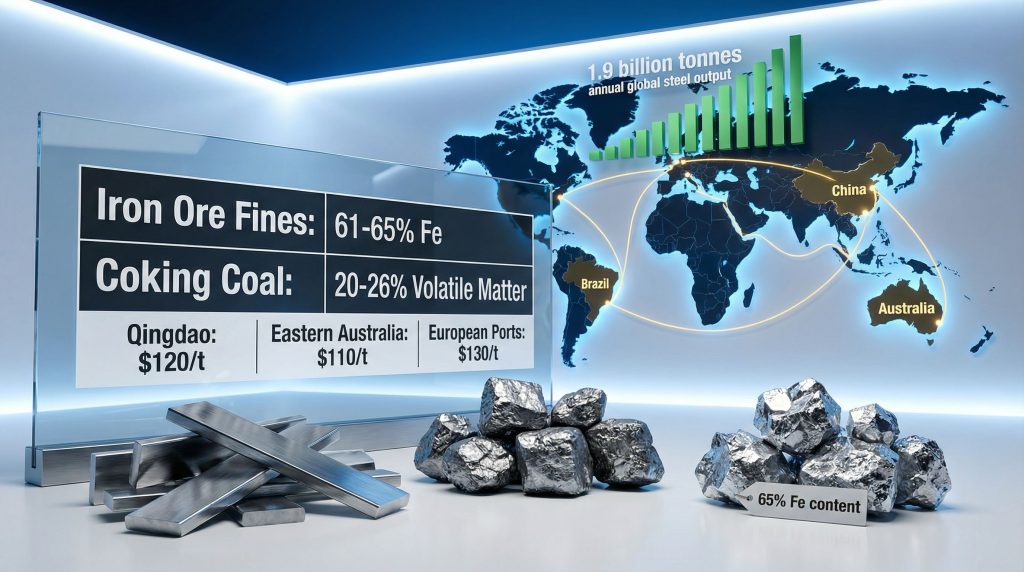
| Pricing Hub | Primary Coverage | Key Differentiating Factors |
|---|---|---|
| Qingdao, China | Iron ore imports (65-70% of seaborne trade) | Port capacity, Chinese steel demand cycles |
| Eastern Australia | Coking coal exports (FOB pricing) | Mining logistics, vessel availability |
| European ports | Scrap metal flows | Collection efficiency, local automotive recycling |
Qingdao's dominance as the iron ore pricing hub reflects China's position as the world's largest steel producer and primary importer, with cost-insurance-freight (CIF) pricing terms standard for approximately 65-70% of seaborne trading flows. Australian coking coal exports utilise free-on-board (FOB) pricing at loading terminals, reflecting domestic mining logistics and international freight responsibilities.
Regional storage capacity limitations, port throughput constraints, and seasonal demand variations create pricing differentials that sophisticated market participants utilise for arbitrage opportunities and supply chain optimisation. European scrap pricing demonstrates how collection efficiency rates and local automotive dismantling volumes influence regional price discovery.
Infrastructure Impact on Pricing Dynamics
Terminal capacity constraints affect inventory timing and create pricing volatility during peak shipping periods. Port infrastructure efficiency influences total logistics expenses through demurrage charges, handling costs, and storage limitations affecting supply timing flexibility.
Current developments include infrastructure investments expanding port throughput capacities and affecting long-term pricing dynamics. Regional environmental regulations and trade protection measures create additional geographic pricing variations that market participants must incorporate into procurement strategies.
Iron Ore Specification Categories and Quality Premiums
Iron ore pricing operates across multiple quality grades reflecting chemical composition and physical characteristics directly impacting blast furnace efficiency. Specification differentiation enables quality-adjusted price relationships supporting procurement optimisation based on production technology requirements and cost structures.
Primary assessed specifications include:
| Grade Category | Iron Content | Market Share | Key Applications |
|—|—|—|
| Standard fines (61-62% Fe) | 61-62% | 70% of seaborne trade | Primary blast furnace feed |
| High-grade fines (65% Fe) | 65%+ | Premium segment | Efficiency optimisation |
| Low-alumina fines | 62% Fe, <2% Al2O3 | Specialised | Reduced slag generation |
| Pellet feed | 67.5% Fe | Growing | Direct reduction processes |
Chemical composition factors affecting pricing include iron content as the primary driver, alumina content where lower specifications command premiums due to reduced slag generation, silica content affecting gangue processing requirements, and phosphorus limitations preventing steel brittleness.
Physical form variations create distinct pricing categories:
• Fines (particles <6-10mm) requiring pelletisation for efficient blast furnace utilisation
• **Lump ore** (>10mm particles) directly suitable for blast furnace feed without agglomeration
• Pellet feed representing pre-beneficiated fines prepared for pellet production
• Sinter fines comprising high-grade material suitable for iron ore sinter production
Origin-specific premiums reflect supply source characteristics, with Brazil-origin 65% Fe fines and Australia-origin lump ore commanding distinct pricing due to quality consistency and logistics advantages. West African high-grade sinter fines represent emerging trade flows creating new price discovery requirements as supply diversification continues.
Quality Parameter Impact Analysis
Higher iron content materials reduce processing requirements and energy consumption, justifying substantial price premiums. Lump ore typically commands 10-15% premiums over equivalent fines due to blast furnace feed efficiency advantages eliminating agglomeration requirements.
Beneficiation processes affecting pellet feed pricing include magnetic separation, flotation, and other techniques producing concentrated material suitable for pelletisation. The 67.5% Fe pellet feed premium reflects processing value-addition and superior furnace performance characteristics.
Coking Coal Quality Parameters and Market Premiums
Coking coal specifications directly correlate with blast furnace productivity and coke oven efficiency, creating quality-based pricing hierarchies reflecting metallurgical performance characteristics. Premium hard coking coal commands significant market premiums due to limited global reserves and stringent quality requirements for primary steelmaking applications.
Critical quality parameters include:
• Volatile matter content (20-26%): Optimal range balancing coke strength and reactivity
• Ash content (<9%): Minimising inert material processing through blast furnaces
• Crucible swelling number (6-8 range): Measuring expansion behaviour during carbonisation
• Sulfur content (<0.7%): Preventing detrimental effects on final steel properties
Volatile matter impact determines gaseous hydrocarbon release rates during carbonisation, affecting coke porosity and mechanical strength during high-temperature combustion. The 20-26% range represents optimal performance balancing coking time requirements with resultant coke quality consistency.
Ash content considerations include iron oxide potentially contributing iron recovery while increasing flux requirements, and silica presence increasing slag volume without productive contribution. Premium specifications targeting <9% ash minimise gangue processing requirements and maximise iron output per tonne.
Crucible Swelling Number Significance
The Crucible Swelling Number (CSN) measured through ASTM D2014 methodology quantifies coal sample expansion during standardised laboratory carbonisation. CSN ranges of 6-8 indicate optimal coking performance correlating with resultant coke mechanical strength and blast furnace efficiency.
Eastern Australia dominates global premium hard coking coal exports, with supply timing affected by seasonal mining industry evolution cycles influencing pricing volatility. Quality differentiation creates price spreads reflecting CSN variations and volatile matter content differences across supply sources.
Scrap Metal Categories and Contamination Premiums
Steel scrap pricing reflects contamination risk, processing requirements, and composition certainty across multiple categories serving electric arc furnace operations and secondary steel production. Circular economy transitions increasingly emphasise scrap utilisation as alternatives to virgin ore processing, affecting relative pricing dynamics between recycled and primary materials.
Primary scrap categories include:
| Category | Processing Level | Density | Key Advantages |
|—|—|—|
| Heavy melting scrap (HMS) | Minimal | 400-600 kg/m³ | Predictable composition |
| Shredded automotive | Mechanical processing | 600-800 kg/m³ | Consistent sizing |
| Industrial scrap | Direct manufacturing | Varies | Known composition |
Heavy melting scrap characteristics include established steel composition from known sources, minimal processing requirements enabling direct electric arc furnace feed, and predictable metallurgy due to absence of copper, tin, and other detrimental elements.
Shredded automotive scrap advantages include mechanical shredding followed by magnetic separation producing 50-80mm particle ranges, density advantages of 600-800 kg/m³ reducing container volume requirements, though requiring validation of magnetic sorting efficiency and residual contamination management.
Industrial scrap premiums result from direct manufacturing waste documentation providing known composition, predictable supply volumes and timing from industrial operations, and quality advantages reducing contamination risk compared to collection-based material.
Quality Control and Contamination Management
Electric arc furnace operators require consistent scrap composition for metallurgical control, creating premium markets for verified material categories. Seasonal availability patterns affect automotive scrap supply correlating with vehicle production cycles and dismantling operations.
Contamination limits for premium scrap grades specify maximum allowable copper, tin, and chrome content preventing steel quality degradation. Environmental considerations increasingly influence scrap premium development as sustainability requirements favour recycled content over virgin material inputs.
Publication Frequency Impact on Price Discovery
Assessment publication timing balances market responsiveness against data quality and price stability requirements. Daily assessments serve spot market transactions requiring immediate price discovery, particularly relevant for high-volume iron ore trades where individual cargo values exceed $10 million.
Weekly assessments support contract negotiations and longer-term procurement strategies by facilitating trend pattern analysis over 5-7 trading day periods. This frequency enables monthly average pricing contract settlements while maintaining sensitivity to underlying market movements.
Publication frequency selection criteria include:
• Market liquidity levels: Daily publication requires consistent transaction flow for reliability
• Transaction value thresholds: High-value trades generate sufficient data for daily assessment
• Contract settlement requirements: Weekly data supports longer-term strategic decision-making
• Risk management timing: Real-time price discovery enables same-day hedging strategies
Transaction volume requirements vary by publication frequency, with daily assessments demanding minimum transaction evidence while weekly publications accommodate lower liquidity periods through extended observation windows. Furthermore, global iron ore price trends demonstrate how publication frequency affects market perception and pricing volatility.
Market Responsiveness vs. Stability Trade-offs
Daily publication advantages include real-time price discovery enabling rapid market response and immediate risk management capabilities. However, reliability depends on consistent transaction flow and adequate market participation levels.
Weekly assessment benefits include volatility smoothing through extended observation periods and trend identification supporting strategic procurement decisions. This approach accommodates thin trading periods while maintaining market relevance through pattern recognition.
The next major ASX story will hit our subscribers first
Risk Management Applications and Financial Integration
Commodity price benchmarks enable sophisticated risk management strategies across steel industry supply chains. Physical supply agreements increasingly reference published assessments through various contract settlement mechanisms balancing price discovery with operational requirements.
Contract settlement methodologies include:
• Monthly average pricing: Smoothing short-term volatility for long-term supply agreements
• Spot price indexation: Enabling rapid adjustment to current market conditions
• Premium/discount structures: Reflecting quality differentials and delivery term variations
• Hybrid approaches: Combining multiple pricing elements for customised risk profiles
Financial instruments tied to raw material price benchmarks facilitate hedging strategies protecting against adverse price movements, portfolio optimisation balancing exposure across material categories, and margin management maintaining profitability during volatile periods.
Market participants utilise pricing benchmarks for contract negotiations establishing baseline pricing terms, procurement timing optimisation identifying favourable purchase windows, and competitive intelligence understanding industry cost structures. Additionally, tariffs impact on markets creates additional complexity requiring sophisticated steelmaking raw materials pricing methodology applications.
Hedging Strategy Implementation
Steel producers employ derivative contracts referencing published price assessments to lock in raw material costs and protect profit margins. Trading companies utilise benchmark pricing for arbitrage opportunities between geographic regions and quality specifications.
Financial risk management incorporates correlation analysis between different raw material categories, volatility assessment for position sizing decisions, and basis risk management addressing differences between physical purchases and financial hedge settlements.
Technology Integration and Digital Evolution
Advanced technologies transform price discovery through automated data collection, verification systems, and analytical capabilities. Digital integration reduces manual data submission errors while enhancing transparency and market efficiency across commodity price reporting.
Emerging technological applications include:
• Automated transaction reporting: Reducing human error in data submission processes
• Blockchain verification: Creating immutable transaction records for audit purposes
• AI-powered pattern recognition: Identifying market trends and anomaly detection
• Satellite monitoring: Tracking mine production and inventory levels remotely
IoT sensor networks enable real-time quality and quantity measurements at production and storage facilities. Predictive analytics support forecasting supply disruptions and demand shifts affecting market dynamics.
Machine learning applications analyse historical price patterns, correlation relationships, and market behaviour prediction models supporting strategic decision-making. These systems process vast datasets identifying subtle market signals invisible to traditional analysis methods. Consequently, data-driven mining operations increasingly integrate with sophisticated pricing methodologies.
Future Pricing Methodology Evolution
Technology integration prospects include enhanced data collection efficiency, improved verification accuracy, and expanded analytical capabilities supporting more sophisticated price discovery mechanisms. Market structure changes from industry consolidation and new entrants will influence pricing power distribution and methodology requirements.
Alternative material development including recycled content verification and synthetic substitutes may require new pricing categories and quality specifications. Geographic diversification through new mining regions and trade routes will necessitate expanded regional pricing coverage, particularly as iron ore demand insights evolve.
Regulatory Compliance and Market Transparency
International regulatory frameworks governing commodity price reporting ensure market integrity through standardised methodologies and audit requirements. IOSCO principles mandate transparency in price discovery processes, separation of commercial and editorial functions, and regular third-party validation of pricing procedures.
Compliance requirements include:
• Methodology documentation: Detailed publication of assessment procedures and criteria
• Audit procedures: Annual independent reviews of pricing processes and controls
• Conflict management: Organisational separation preventing commercial influence on prices
• Market consultation: Regular stakeholder feedback on methodology effectiveness
Transparency measures include public availability of methodology documents, explanation of price rationale, and consultation processes enabling market participant input on specification changes. Moreover, comprehensive steelmaking assessment methodologies provide detailed frameworks for industry compliance.
Market integrity protection involves ongoing surveillance for manipulation attempts, investigation of unusual price movements, and cooperation with regulatory authorities maintaining fair price discovery.
Industry Standards and Best Practices
Professional standards development continues evolving through industry collaboration addressing technological advancement and market structure changes. Best practice implementation includes data quality standards, verification protocols, and stakeholder engagement procedures.
Regulatory coordination between jurisdictions ensures consistent application of price reporting principles across global commodity markets. Market development support includes educational initiatives explaining steelmaking raw materials pricing methodology applications and risk management capabilities to industry participants.
Investment Disclaimer: This article provides educational information about steelmaking raw materials pricing methodology and should not be considered investment advice. Commodity markets involve substantial risk, and pricing methodologies may change. Always consult qualified professionals before making investment decisions and conduct thorough due diligence on specific market conditions and regulatory requirements.
Looking to Capitalise on Mining and Metals Market Opportunities?
Discovery Alert's proprietary Discovery IQ model delivers real-time alerts on significant ASX mineral discoveries, instantly empowering subscribers to identify actionable opportunities ahead of the broader market. Understand why historic discoveries can generate substantial returns by exploring major mineral finds that have transformed portfolios, then begin your 14-day free trial today to position yourself ahead of the market.