June 13, 2026
Market Disruption Through Supply Chain Evolution
Modern aerospace manufacturing operates within an increasingly complex web of supply chain dependencies, where material security has emerged as a fundamental strategic concern. Traditional procurement models, built on spot market purchasing and short-term contracts, are proving inadequate in an era of supply volatility and geopolitical uncertainty. Furthermore, the shift toward strategic equity participation in upstream production represents a fundamental recalibration of how aerospace companies approach critical materials sourcing, particularly evident in the recent Nickel Industries ENC offtake with SpaceX supplier arrangement.
This transformation extends beyond simple cost management. Contemporary aerospace manufacturers face stringent quality requirements, traceability demands, and production timeline pressures that commodity markets cannot reliably satisfy. The convergence of these factors has driven a new investment paradigm where manufacturing companies become direct stakeholders in mining operations.
When big ASX news breaks, our subscribers know first
What Drives Aerospace Giants to Secure Upstream Materials Partnerships?
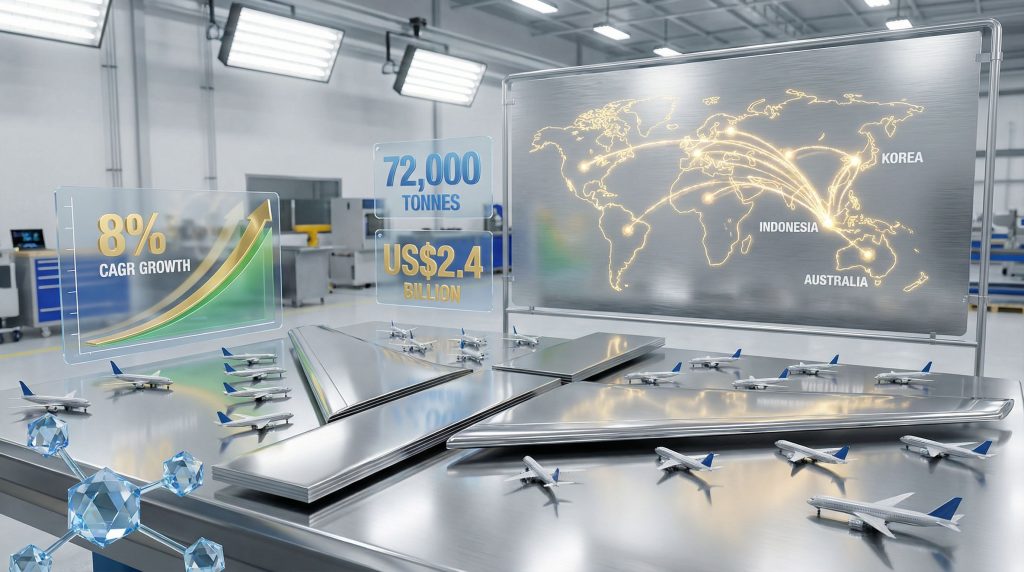
Supply chain vulnerability in high-performance aerospace manufacturing has reached critical levels, particularly for specialized alloy components requiring precise material specifications. The aerospace sector's projected 8% compound annual growth rate through 2030 intensifies pressure on material supply networks already strained by capacity constraints and quality certification requirements.
The strategic imperative for vertical integration in critical materials sourcing reflects fundamental changes in global supply dynamics. Aerospace manufacturers increasingly recognise that traditional procurement strategies expose them to unacceptable risks:
- Supply interruption risk from geopolitical tensions affecting mining regions
- Quality variability in spot market materials lacking traceability documentation
- Price volatility that disrupts long-term project economics
- Certification delays when switching between suppliers during production cycles
The evolution from spot purchasing to strategic equity stakes represents a calculated response to these vulnerabilities. Recent transactions demonstrate how aerospace companies leverage direct investment to secure both supply access and operational transparency.
The Economics of Vertical Integration in Materials Supply
Cost-benefit analysis of equity participation versus long-term contracts reveals compelling advantages for aerospace manufacturers. Direct ownership stakes provide visibility into production costs, quality control processes, and capacity planning that traditional supply agreements cannot match.
The Nickel Industries ENC offtake with SpaceX supplier Sphere Corp exemplifies this strategic shift. Sphere's acquisition of a 10% stake in the ENC project at a US$2.4 billion valuation demonstrates how aerospace companies structure risk mitigation through equity participation rather than relying solely on contractual arrangements.
Risk assessment indicates that supply security justifies capital allocation efficiency trade-offs. While equity investments require significant capital deployment, they provide long-term cost predictability and supply certainty that outweigh short-term financial flexibility concerns.
How Do Aerospace Material Requirements Drive Mining Investment Decisions?
Technical specifications for aerospace-grade materials create distinct market segments that traditional commodity producers often struggle to serve consistently. The aerospace industry demands materials with specific purity levels, mechanical properties, and documented provenance that exceed standard industrial requirements.
Quality assurance and traceability requirements in aerospace supply chains necessitate comprehensive documentation spanning from raw material extraction through final product delivery. This level of oversight requires direct supplier relationships that equity participation facilitates more effectively than arms-length commercial agreements.
Comparative Material Standards Analysis
| Application | Purity Requirements | Traceability Documentation | Quality Certification |
|---|---|---|---|
| Aerospace | >99.5% nickel content | Complete chain of custody | AS9100, NADCAP qualified |
| Automotive | >98% nickel content | Basic material certificates | ISO/TS 16949 |
| Battery | >99% nickel content | Limited traceability | Supplier declarations |
The 72,000 tonnes nickel metal equivalent annual production capacity at the ENC facility positions it as a significant supplier within specialised aerospace material markets. Multiple product forms including nickel cathode, mixed hydroxide precipitate, and nickel and cobalt sulphate provide operational flexibility to serve different aerospace applications.
Production Capacity and Market Positioning Analysis
Annual production benchmarking reveals that specialised HPAL facilities occupy strategic positions within global nickel supply networks. The ENC project's classification as a potential bottom cost-quartile producer indicates competitive advantages that aerospace investors find attractive for long-term supply security.
Market share implications in global nickel cathode supply extend beyond simple volume considerations. Class-1 nickel product capabilities enable direct entry into high-value aerospace applications where material specifications preclude lower-grade alternatives.
Strategic significance of premium material production lies in its alignment with aerospace sector growth projections. The 8% CAGR aerospace growth through 2030 suggests sustained demand increases that favour dedicated supply partnerships over spot market exposure.
What Makes Indonesian HPAL Technology Attractive to Global Aerospace Suppliers?
High-Pressure Acid Leaching technology represents a significant advancement in nickel production capabilities, particularly for aerospace-grade materials requiring consistent quality and high purity levels. Indonesian HPAL facilities benefit from proximity to laterite ore deposits and established processing infrastructure that reduces production costs relative to alternative supply sources.
Product quality advantages of HPAL-produced nickel cathode stem from the process's ability to control impurity levels and maintain consistent chemical composition across production runs. This reliability proves essential for aerospace applications where material variability can compromise component performance.
Technical Process Advantages
HPAL technology delivers several competitive benefits relevant to aerospace material requirements:
- Enhanced purity control through precise acid leaching parameters
- Consistent product specifications across extended production campaigns
- Reduced environmental footprint compared to traditional smelting processes
- Scalable production capacity to meet growing aerospace demand
Competitive positioning analysis comparing Indonesian HPAL facilities shows advantages in cost structure, environmental compliance, and product quality that appeal to aerospace investors seeking sustainable supply sources.
The ENC project's selection by Sphere Corp as a strategic investment target reflects technical differentiators that extend beyond simple cost considerations. Aerospace suppliers prioritise supply chain partners capable of meeting stringent quality requirements while maintaining competitive economics.
How Do Cross-Border Strategic Partnerships Structure Risk and Return?
Project valuation methodologies for mining investments require careful analysis of multiple risk factors, particularly when cross-border partnerships involve regulatory complexities across different jurisdictions. The US$2.4 billion ENC project valuation reflects comprehensive assessment of production capacity, market positioning, and strategic value creation potential.
Ownership structure optimisation balancing control retention with strategic partner benefits demonstrates sophisticated financial engineering. Nickel Industries' maintained 44% stake alongside Sphere Corp's 10% equity entry preserves operational control while facilitating market access and commercial relationships.
Investment Structure Dynamics
The transaction framework illustrates how strategic partnerships can optimise multiple objectives simultaneously:
- Capital efficiency through targeted equity participation rather than full acquisition
- Market access via established aerospace supply chain relationships
- Risk sharing across geographic and operational dimensions
- Value creation through synergistic commercial arrangements
Financial modelling indicates that equity dilution costs are offset by strategic value creation when partnerships provide access to premium market segments. Sphere's concurrent approximately US$1 billion SpaceX supply contract over 10 years demonstrates the commercial value that justifies investment premiums.
Funding Timeline and Execution Risk Assessment
The Q1 2026 completion timeline for funding completion requires careful coordination across regulatory approval processes in Indonesia, Korea, and Australia. Currency and political risk factors necessitate comprehensive hedging strategies to protect investment returns.
Regulatory approval processes for cross-border materials investments involve multiple government agencies and compliance frameworks:
- Indonesian foreign investment approvals for mining sector participation
- Korean outbound investment clearances for strategic material acquisitions
- International trade compliance for aerospace material supply agreements
- Environmental and social licence requirements for mining operations
What Are the Broader Market Implications of Aerospace-Mining Convergence?
Industry trend analysis reveals accelerating convergence between aerospace manufacturers and mining companies as supply chain security becomes a competitive advantage. The first offtake agreement for ENC material into Western markets through Sphere's partnership signals broader market access opportunities for Indonesian production facilities.
Competitive response scenarios from other aerospace manufacturers suggest similar strategic partnerships may emerge as supply chain concerns intensify. Companies observing Sphere's success in securing dedicated supply sources may pursue comparable arrangements to maintain competitive positioning, which aligns with broader mining industry evolution trends.
Supply Chain Transformation Patterns
The aerospace industry's approach to materials sourcing reflects broader trends affecting multiple manufacturing sectors:
- Vertical integration strategies replacing traditional supplier relationships
- Geographic diversification of supply sources to reduce concentration risk
- Quality assurance investments in upstream production capabilities
- Strategic partnership models balancing control with financial efficiency
Supply chain reshoring and friend-shoring implications favour partnerships with allied nations possessing critical material resources. The Indonesia-Korea-Australia cooperation framework exemplifies how the geopolitical mining landscape influences strategic investment decisions.
The next major ASX story will hit our subscribers first
How Does This Partnership Open Western Market Access for Indonesian Production?
Market entry strategy analysis demonstrates how established aerospace suppliers can facilitate access to previously closed Western aerospace markets. Sphere's qualification as a key accredited supplier to SpaceX provides credibility and market access that Indonesian producers would struggle to achieve independently.
Regulatory pathway assessment for Indonesian materials in US aerospace markets involves comprehensive certification processes that can take years to complete. Strategic partnerships with qualified suppliers accelerate this timeline through existing relationships and proven track records.
Western Market Penetration Strategy
The transaction structure enables multiple pathways for market access:
- Direct supply relationships through Sphere's established aerospace customer base
- Quality certification transfer leveraging Sphere's existing approvals
- Market credibility from association with proven aerospace suppliers
- Commercial relationship development across North American aerospace markets
Competitive positioning against established North American suppliers requires demonstration of superior value propositions combining cost efficiency, quality consistency, and supply reliability. Indonesian HPAL production offers cost advantages while meeting aerospace quality requirements.
Growth Trajectory Modelling for Aerospace Materials Demand
Demand forecasting for high-performance specialty alloys indicates sustained growth driven by expanding aerospace manufacturing capacity. The 8% CAGR aerospace sector growth through 2030 suggests material consumption increases that favour dedicated supply partnerships.
Market size analysis comparing aerospace applications against other high-grade nickel uses reveals aerospace represents a premium market segment with attractive pricing dynamics. Specialised material requirements and long certification cycles create barriers to entry that protect supplier margins.
What Are the Strategic Scenarios for ASX-Listed Resources Companies?
Investment thesis evolution for diversified mining companies reflects increasing value recognition for strategic aerospace partnerships. Portfolio optimisation through aerospace supply agreements provides stability and premium pricing that commodity exposure alone cannot deliver.
Valuation impact analysis suggests strategic premiums versus commodity pricing create significant value creation opportunities for mining companies successfully penetrating aerospace markets. The transformation from commodity supplier to strategic partner fundamentally changes risk-return profiles, particularly as mining consolidation trends reshape industry dynamics.
Portfolio Positioning Strategies
ASX-listed resources companies can leverage aerospace partnerships to achieve multiple strategic objectives:
- Margin enhancement through premium market access
- Cash flow stability via long-term supply agreements
- Valuation expansion from strategic partnership premiums
- Risk mitigation through diversified customer base
Strategic partnership premiums reflect the value aerospace companies place on supply security and quality assurance. Mining companies demonstrating ability to meet aerospace requirements command significant valuation premiums versus traditional commodity producers.
What Challenges Could Disrupt This Strategic Partnership Model?
Geopolitical risk scenarios affecting Indonesia-Korea-Australia cooperation include potential trade policy changes, diplomatic tensions, and regulatory modifications that could impact cross-border investment frameworks. Political stability in Indonesia remains crucial for long-term partnership success.
Technology disruption risks in aerospace materials requirements pose ongoing challenges as manufacturers explore alternative materials and production methods. Advanced composites, additive manufacturing, and material substitution research could reduce demand for traditional aerospace alloys.
Risk Mitigation Framework
Comprehensive risk assessment requires evaluation of multiple threat vectors:
- Political risks from changing government policies and international relations
- Technological risks from alternative material development and manufacturing process innovation
- Market risks from aerospace industry consolidation and demand volatility
- Operational risks from mining operations, environmental compliance, and supply chain disruption
Alternative materials development and substitution threats require continuous monitoring of aerospace research and development activities. However, certification timelines for new materials typically extend 5-10 years, providing established suppliers time to adapt strategies.
Environmental and Regulatory Compliance Considerations
ESG requirements for aerospace supply chain partnerships increasingly influence investment decisions and operational standards. Environmental compliance standards for Indonesian mining operations must align with international aerospace industry expectations for sustainable sourcing.
Social licence considerations for international mining investments require ongoing community engagement and transparent environmental management. Aerospace customers increasingly demand supply chain partners demonstrate responsible mining practices.
How Might This Partnership Model Scale Across the Industry?
Replication potential for other critical materials and aerospace partnerships appears significant given supply chain security concerns affecting multiple aerospace manufacturers. Strategic partnership models tested in nickel supply could extend to rare earth elements, lithium, cobalt, and other specialised materials.
Strategic implications for traditional mining finance models suggest fundamental changes in how mining projects secure development capital. Aerospace customer equity participation provides alternative capital raising methods while guaranteeing market access for production.
Industry Structure Evolution Scenarios
Long-term industry development may follow several pathways:
- Increased vertical integration as aerospace companies acquire mining assets
- Strategic partnership proliferation across multiple critical material supply chains
- Geographic supply diversification to reduce concentration risks
- Technology investment acceleration in advanced materials production
The mining industry's evolution toward strategic partnerships with end-users represents a fundamental shift from commodity production toward value-added supply chain integration.
What Does This Mean for Investors in Critical Materials Sectors?
Investment thesis implications for diversified mining portfolios suggest increasing focus on companies capable of securing strategic aerospace partnerships. Traditional commodity exposure alone may underperform investments targeting premium market segments with established customer relationships.
Strategic partnership premiums versus traditional commodity exposure create differentiated return profiles that justify focused investment strategies. Mining companies demonstrating aerospace market access capabilities command valuation multiples reflecting strategic value beyond underlying resource assets, particularly those implementing comprehensive critical minerals strategy initiatives.
Portfolio Strategy Considerations
Investors evaluating critical materials exposure should consider multiple factors when assessing strategic partnership potential:
- Resource quality alignment with aerospace material specifications
- Management experience in high-quality industrial markets
- Geographic positioning in favourable regulatory environments
- Capital structure flexibility to accommodate strategic partnerships
Portfolio positioning for aerospace materials supply chain evolution requires careful selection of mining companies with demonstrated capability to meet aerospace industry requirements while maintaining competitive cost structures.
Key Monitoring Metrics for Partnership Success
Production milestone tracking and quality certification progress provide early indicators of partnership value realisation. Market penetration metrics in Western aerospace markets demonstrate commercial success and validate strategic positioning.
Financial performance indicators for strategic partnership value include:
- Revenue premium capture versus commodity pricing
- Cash flow stability from long-term supply agreements
- Margin expansion through value-added product development
- Valuation multiple expansion reflecting strategic partnership premiums
The aerospace materials partnership model represents a fundamental shift in mining industry dynamics, creating value through strategic alignment rather than commodity exposure alone. Success in this evolving landscape requires operational excellence, strategic vision, and patient capital capable of supporting long-term market development.
Furthermore, the Nickel Industries ENC offtake with SpaceX supplier represents a paradigm shift that could inspire similar arrangements across the critical materials sector. As demonstrated by recent market analysis, this transaction exemplifies how strategic aerospace partnerships create value beyond traditional commodity relationships.
Disclaimer: This analysis contains forward-looking statements and projections that involve inherent risks and uncertainties. Aerospace industry growth projections, materials demand forecasts, and partnership success scenarios reflect current market conditions and may not accurately predict future outcomes. Investors should conduct independent research and consider professional advice before making investment decisions. Mining operations involve significant operational, environmental, and regulatory risks that could materially impact investment returns.
Ready to Capitalise on Strategic Materials Partnerships?
Discovery Alert's proprietary Discovery IQ model identifies significant ASX mineral discoveries in real-time, enabling subscribers to spot emerging aerospace supply chain opportunities and strategic partnerships before the broader market catches on. Explore Discovery Alert's track record of historic discovery returns and begin your 30-day free trial today to position yourself ahead of evolving critical materials markets.