May 18, 2026
Market Dynamics Reshaping Global Iron Ore Supply Chains
The global iron ore market is experiencing a fundamental shift as sustainability requirements and technological innovation reshape traditional supply chains. Steel producers worldwide are increasingly prioritising premium iron ore products that reduce greenhouse gas emissions during manufacturing processes, creating new opportunities for suppliers capable of meeting stringent environmental specifications. Understanding iron ore price trends becomes crucial as this transformation extends beyond simple commodity trading, representing a strategic realignment toward quality-differentiated products that support decarbonisation initiatives across the steel industry.
Brazilian iron ore producers have positioned themselves at the forefront of this transition, leveraging advanced processing technologies and sustainable production methodologies to capture growing market share in the premium pellet segment. Furthermore, iron ore demand insights reveal that the convergence of environmental regulations, technological advancement, and evolving steel industry requirements has created conditions favouring suppliers with sophisticated production capabilities and robust export infrastructure.
When big ASX news breaks, our subscribers know first
Strategic Production Recovery and Market Position
Brazil's pellet production sector has demonstrated remarkable resilience and growth trajectory, with leading producers achieving record-breaking output volumes that surpass pre-pandemic operational levels. The Samarco production increase of 15.11 million tonnes in 2025 represents the highest annual output since operational resumption in December 2020, establishing new performance benchmarks for the industry. This production milestone encompasses both pellets and iron ore fines, distributed globally through sophisticated export infrastructure supporting steel manufacturers across all continents.
Since resuming operations, Brazilian pellet producers have achieved cumulative production volumes exceeding 50.52 million tonnes, with export logistics handling over 500 vessels through proprietary port terminals. This operational scale demonstrates sustained capacity for international market supply, with 140 ships dispatched in 2025 alone through the Ubu terminal facility in Espírito Santo state.
The strategic positioning extends beyond volume metrics to encompass quality differentiation in global markets. Moreover, Samarco's operational expansion plans illustrate how Brazilian pellet producers have consolidated their position among leading international exporters by focusing on premium specifications required for direct reduction iron (DRI) applications. This market segment represents a growing proportion of global steel production, driven by environmental performance requirements and technological advancement in steel manufacturing processes.
Competitive Landscape and Export Infrastructure
Port infrastructure capabilities serve as critical differentiators in global pellet markets, where logistics efficiency directly impacts delivery reliability and cost competitiveness. Brazilian facilities have demonstrated capacity to handle significant vessel traffic while maintaining operational consistency throughout varying market conditions.
Export destination diversification across continents provides strategic risk mitigation and market opportunity optimisation. Rather than concentrating shipments within specific regional markets, Brazilian producers have established distribution networks spanning multiple geographic regions, reducing dependency on individual market performance.
The cumulative achievement of 500 million tonnes shipped since 1977 operations commenced illustrates long-term market presence and established customer relationships across the global steel industry. This historical milestone, reached in October 2025, represents sustained competitive positioning over multiple commodity cycles and technological transitions.
Production Capacity Utilisation and Expansion Strategy
Current operational capacity utilisation rates of 60% provide substantial headroom for production expansion without requiring new facility construction. This capacity cushion positions Brazilian producers to respond rapidly to market demand fluctuations while maintaining operational flexibility for maintenance and system upgrades.
The strategic timeline for capacity restoration targets 100% utilisation by 2028 for Germano complex operations and 2029 for Ubu facilities, supported by approved capital investment of R$ 13.8 billion. In addition, detailed production capacity expansion outlines how this multi-year investment program encompasses plant revitalisation, filtration system expansion, and equipment modernisation across multiple facility locations.
| Investment Category | Timeline | Expected Impact |
|---|---|---|
| Plant Revitalisation | 2025-2028 | 60% to 100% capacity |
| Filtration Systems | Ongoing | Waste reduction 85% |
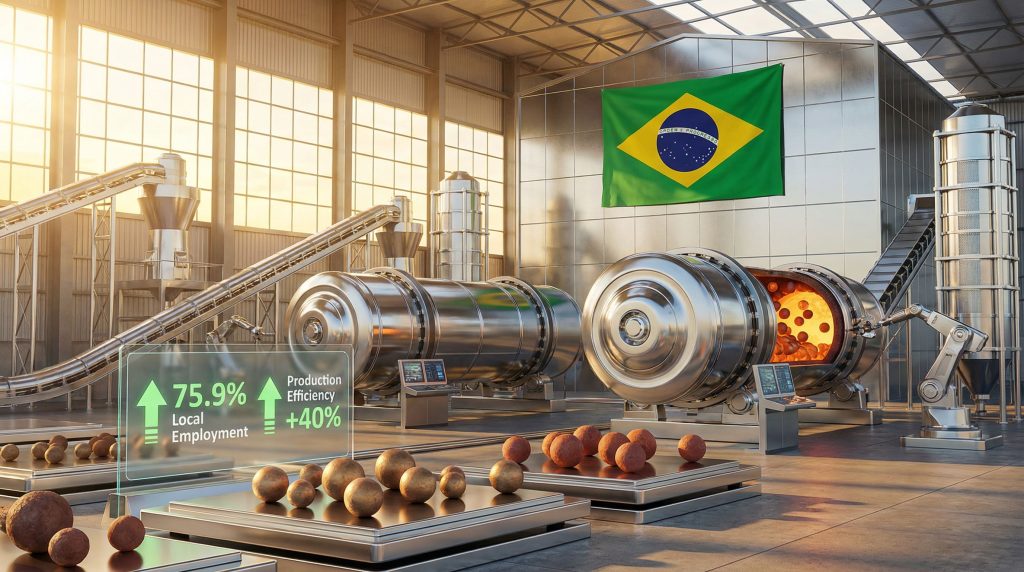
| Equipment Modernisation | 2025-2029 | Production efficiency +40% |
| Port Infrastructure | 2025-2027 | Export capacity +25% |
Workforce Development and Regional Integration
Employment scaling strategies emphasise regional workforce integration, with 75.9% of new hires in Minas Gerais operations sourced from neighbouring communities and 67.4% local hiring rates in Espírito Santo facilities. This approach creates sustainable economic development while ensuring workforce stability for long-term operations.
Total workforce levels of approximately 20,500 employees (including direct and contract workers) support both current production levels and planned capacity expansion. Community-focused hiring practices strengthen local economic ties while developing skilled labour pools essential for advanced manufacturing operations.
Training programme implementation through Community Courses initiatives produced 16 new training cohorts in 2025, including 12 technical courses and 4 professional development programs totalling 535 available positions. Since programme inception in 2022, 1,265 community residents have participated across 46 training cohorts, demonstrating systematic workforce development aligned with operational scaling requirements.
Technology Integration and Process Innovation
Fundamental production process transformation has eliminated traditional tailings dam disposal systems in favour of advanced filtration technologies enabling dry stacking methodologies. This technological transition represents more than environmental compliance, creating operational efficiencies and reducing long-term liability exposure associated with waste management.
The implementation of AI in mining operations across production facilities has generated measurable improvements in operational decision-making and process optimisation. Intelligent chatbot systems facilitate rapid internal information access using generative AI capabilities, while virtual assistant development in Integrated Operations Centres supports real-time production decisions.
Innovation Insight: The development of virtual intelligent assistants in operational command centres represents cutting-edge application of AI technology for real-time production optimisation, positioning Brazilian facilities at the technological forefront of global iron ore production.
Circular Economy Applications in Waste Management
Innovative approaches to tailings utilisation have created multiple value streams from previously waste materials. For instance, mine reclamation innovations demonstrate how sustainable applications include road paving material development and incorporation into dam decharacterisation projects, showing practical circular economy implementation within mining operations.
These solutions emerged through collaboration with innovation ecosystem partners, indicating systematic approach to technology development rather than isolated internal research efforts. The integration of tailings reuse into infrastructure projects creates additional revenue streams while addressing environmental remediation requirements.
Advanced filtration systems incorporating dry stacking technology have achieved significant waste reduction metrics while improving overall production efficiency. The Germano dam decharacterisation project, currently in advanced stages with completion forecast for 2026, exemplifies integration of environmental restoration with operational technology advancement.
Environmental Performance and Sustainability Metrics
Iron ore pellets demonstrate superior environmental performance compared to traditional iron ore products, generating lower greenhouse gas emissions during steel production processes. This specification advantage positions pellets as essential components in steel industry decarbonisation strategies, creating sustained demand growth independent of overall steel production volumes.
Direct reduction iron (DRI) applications specifically benefit from pellet specifications, as this steelmaking technology requires consistent quality and chemical composition unavailable in conventional iron ore fines. The upward trajectory in DRI production globally correlates directly with increased pellet demand, particularly for suppliers capable of meeting stringent quality standards.
Environmental restoration achievements include 45,500 hectares of protected and reforested areas (representing 91% of the 50,000-hectare target) alongside protection of 4,300 water springs (achieving 86% of the 5,000-spring objective). These metrics demonstrate measurable progress in ecological rehabilitation parallel to production scaling.
Regulatory Compliance and Long-Term Commitments
The comprehensive environmental framework encompasses both immediate operational requirements and multi-decade restoration commitments. Since 2015, total expenditure on reparation and compensation has reached R$ 71.9 billion, including R$ 38.3 billion executed through previous institutional arrangements.
The New Rio Doce Agreement framework provides structured approach to long-term environmental and social obligations, with R$ 170 billion allocated over 20 years. This agreement received recognition through the Innovare Prize in the "Tribunal" category for innovative conflict resolution methodologies in complex legal frameworks.
Recent financial commitments include R$ 33.6 billion allocated between November 2024 and December 2025, with R$ 22.8 billion representing direct operational obligations. Individual compensation payments totalling R$ 16.67 billion have reached over 353,000 people, while R$ 10.9 billion supports public policy strengthening across affected municipalities.
Global Steel Industry Demand Patterns
Steel production requirements increasingly favour premium iron ore products that enhance manufacturing efficiency while reducing environmental impact. Pellets specifically address these requirements through consistent chemical composition and physical properties that optimise blast furnace and direct reduction operations.
Direct reduction iron technology adoption continues expanding globally as steel producers seek alternatives to traditional blast furnace operations. DRI production offers improved energy efficiency and reduced carbon emissions, particularly when utilising pellets as primary feedstock material.
Environmental regulations across major steel-producing regions create regulatory demand drivers favouring pellet utilisation over conventional iron ore products. These requirements extend beyond voluntary sustainability initiatives to encompass mandatory emission reduction targets and carbon accounting obligations. However, Australia iron ore leadership demonstrates how different regional approaches compete in addressing these market demands.
Premium Product Positioning
Pellet specifications command price premiums in international commodity markets due to superior performance characteristics in steel production applications. These premiums reflect both manufacturing efficiency gains and environmental compliance value for steel producers subject to emissions regulations.
Quality consistency represents a critical differentiator in global pellet markets, where specification reliability directly impacts steel production efficiency. Brazilian producers have developed quality control systems ensuring consistent product characteristics across varying operational conditions and production volumes.
The strategic supplier positioning emphasises long-term partnership development with international steel producers rather than transactional commodity trading relationships. This approach creates sustainable competitive advantages through technical collaboration and supply chain integration.
The next major ASX story will hit our subscribers first
Regional Economic Development Impact
Local economic integration extends beyond direct employment to encompass comprehensive regional development programmes supporting community prosperity and business ecosystem strengthening. The Force Local Programme has facilitated R$ 5.1 billion in local supplier contracting since 2020, benefiting over 4,400 regional companies.
Small and medium enterprise development through specialised training programmes has produced 850 professional qualification opportunities with 57 companies completing formation processes in 2025. The Empretec methodology, developed by the United Nations for entrepreneurial behaviour development, provides framework for strategic business management enhancement.
Since Force Local Programme inception, over 550 companies have achieved certification in Development and Qualification pillars, while programme activities have impacted more than 18,500 individuals through capacity-building initiatives.
Community Development Metrics
• 16 training cohorts established in 2025 (12 technical, 4 professional)
• 535 training positions made available to community residents
• 1,265 total participants since 2022 programme launch
• 46 total training cohorts completed across programme duration
These metrics demonstrate systematic commitment to human capital development aligned with operational requirements and community economic advancement objectives.
Investment Strategy and Capital Allocation
The R$ 13.8 billion approved investment programme represents the largest capital commitment in company history, encompassing plant revitalisation, system modernisation, and infrastructure enhancement across multiple facility locations. This investment scale demonstrates confidence in long-term market prospects and commitment to technological advancement.
Strategic capital allocation prioritises capacity restoration over new facility development, maximising return on investment through optimisation of existing infrastructure. The phased timeline approach allows for systematic implementation while maintaining operational continuity throughout the expansion process.
Equipment modernisation initiatives focus on automation integration and process efficiency enhancement, creating sustainable competitive advantages through technological differentiation. These investments complement capacity expansion with operational excellence improvements that enhance long-term profitability.
Risk Management and Future Positioning
Diversified investment categories provide risk mitigation across multiple operational domains while creating synergistic benefits through integrated system optimisation. Port infrastructure enhancement specifically addresses export capacity constraints that could limit market opportunity realisation.
The integration of environmental compliance with operational expansion ensures regulatory risk mitigation while positioning operations for evolving sustainability requirements. This approach creates sustainable competitive advantages through proactive environmental performance enhancement.
Long-term strategic positioning emphasises premium product market leadership rather than volume-based competition, creating sustainable differentiation through quality and service excellence. This strategy aligns with global steel industry trends toward specification-critical supply relationships.
Market Psychology and Investment Implications
Investor confidence in Brazilian pellet production recovery reflects recognition of fundamental industry transformation toward premium product demand and environmental performance requirements. The sustained production growth trajectory demonstrates operational capability restoration while maintaining safety and environmental standards.
Market sentiment has shifted toward recognising pellet producers as strategic suppliers rather than commodity providers, creating valuation premiums for companies demonstrating consistent quality delivery and technological innovation. This perception change supports sustainable competitive positioning in evolving market conditions.
Risk perception improvements result from demonstrated operational excellence, environmental compliance achievement, and systematic approach to community integration. These factors collectively enhance investment attractiveness while reducing regulatory and social risk exposure.
Disclaimer: This analysis is based on publicly available information and should not be construed as investment advice. Commodity market conditions, regulatory requirements, and operational performance can change rapidly, affecting future outcomes differently than projected. Readers should conduct independent research and consult qualified professionals before making investment decisions.
Future market positioning depends on sustained execution of operational improvements, technology integration success, and continued environmental compliance achievement. The convergence of these factors creates potential for significant long-term value creation in evolving global iron ore markets, particularly for companies achieving the Samarco production increase levels seen in 2025.
Looking to Capitalise on Premium Iron Ore Market Opportunities?
Discovery Alert's proprietary Discovery IQ model delivers real-time alerts on significant iron ore and mineral discoveries across the ASX, helping investors identify emerging opportunities in the rapidly evolving commodities sector. Start your 14-day free trial today and gain the market-leading advantage needed to position yourself ahead of major market movements in premium mineral resources.