June 21, 2026
Market Dynamics Reshaping Global Lithium Supply Strategies
The global lithium sector stands at a critical inflection point where traditional supply-demand models are being challenged by unprecedented technological shifts and geopolitical realignments. As battery manufacturers increasingly prioritize supply chain security over cost optimization, mining projects that once represented marginal economic opportunities are now positioned as strategic assets within evolving energy transition insights.
This transformation has created multiple development pathways for lithium projects worldwide, with success increasingly dependent on regulatory agility, technical innovation, and market timing precision. Projects that can navigate complex approval processes while maintaining capital efficiency are emerging as preferred investment targets among institutions seeking exposure to critical minerals without the traditional risks associated with early-stage resource development.
When big ASX news breaks, our subscribers know first
Strategic Positioning Within North American Lithium Infrastructure
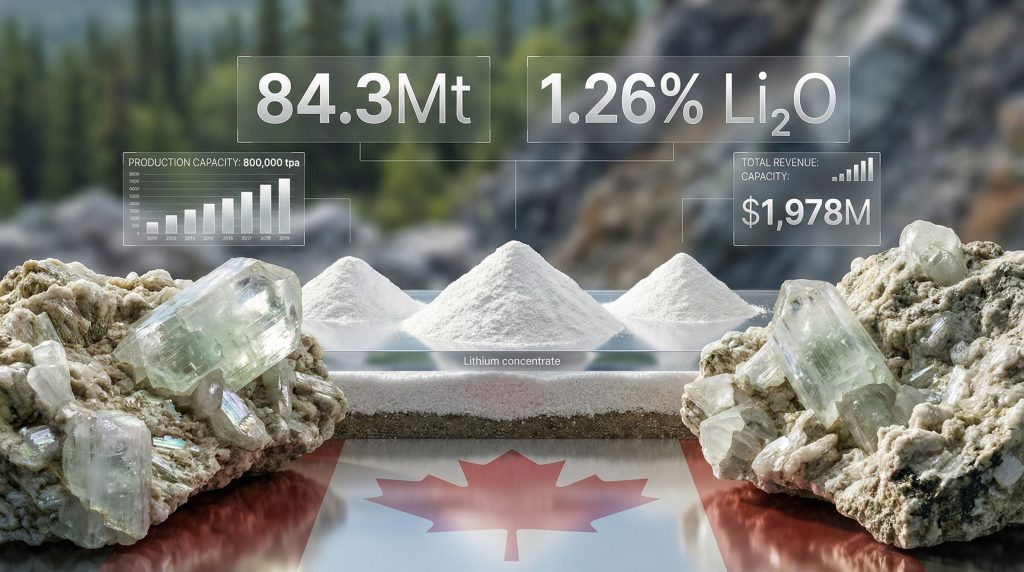
The Shaakichiuwaanaan CV5 lithium project represents a significant component of North America's evolving critical minerals strategy, with Quebec emerging as a cornerstone jurisdiction for battery-grade lithium production. The project's 800,000 tonnes per annum spodumene concentrate production target positions it among the largest planned hard-rock lithium operations globally, comparable in scale to established Australian producers like Greenbushes and emerging projects across multiple continents.
Quebec's regulatory framework has demonstrated increasing sophistication in managing large-scale lithium developments. The province has established streamlined pathways for projects that meet specific technical and environmental criteria. The 84.3 million tonnes maiden probable reserve at 1.26% lithium oxide places CV5 within the upper quartile of global pegmatite deposits by both grade and scale.
North American Supply Chain Integration Opportunities
• Battery manufacturing proximity: CV5's location provides strategic access to emerging North American battery gigafactories
• Infrastructure advantages: Existing transportation networks reduce logistics costs compared to remote locations
• Regulatory stability: Quebec's established mining code provides predictable approval timelines
• Trade relationships: Provincial connections to both European and Asian markets optimize export flexibility
The project's development timeline aligns with projected demand increases from North American electric vehicle manufacturers. Industry analysis suggests that spodumene concentrate demand in North America could exceed 2 million tonnes annually by 2030, creating substantial market opportunities for high-quality producers entering the market during this expansion phase.
Technical Innovation Driving Competitive Differentiation
CV5's processing methodology centres on Dense Media Separation (DMS) technology, representing a significant departure from conventional flotation and roasting approaches employed by many lithium producers. This processing strategy offers multiple advantages including reduced energy consumption, simplified plant design, and enhanced environmental performance compared to traditional beneficiation methods.
The Shaakichiuwaanaan project's simple dense media separation-only process flowsheet enables production of SC5.5 grade spodumene concentrate. This technical approach reduces both capital and operating costs while maintaining product quality standards required by downstream chemical processing facilities.
Capital Efficiency Analysis
| Cost Component | Gross Investment | Net Development | Optimisation |
|---|---|---|---|
| Total Project Capital | $1,978 million | $1,510 million | $468 million |
| Capital per Annual Tonne | $2,473/tpa | $1,888/tpa | 24% reduction |
| Processing Plant Investment | Included in total | Optimised design | DMS simplification |
The $468 million differential between gross and net development costs reflects sophisticated financial engineering. This includes government incentives, by-product revenue optimisation, and phased development strategies. Furthermore, this capital efficiency positions CV5 favourably against peer projects typically requiring $2,000-$3,000 per annual tonne of production capacity.
Hybrid Mining Strategy Benefits
• Open-pit initiation: Lower initial capital requirements and faster production startup
• Underground transition: Extended mine life accessing deeper, high-grade zones
• Operational flexibility: Ability to optimise extraction methods based on market conditions
• Resource maximisation: Sequential mining approach captures full deposit value
By-product recovery opportunities through caesium and tantalum extraction provide additional revenue streams that enhance project economics beyond primary lithium production. High-grade caesium zones identified as Rigel and Vega deposits offer potential specialty chemical applications valued significantly above base lithium pricing.
Regulatory Framework Navigation and Timeline Optimisation
The Environmental and Social Impact Assessment (ESIA) submission in April 2026 represents a critical milestone in CV5's development pathway. This submission establishes the foundation for federal and provincial approval processes required for mine authorisation under Canadian mining legislation.
PMET Resources' achievement of progressing from discovery to formal ESIA submission within approximately four years demonstrates accelerated development timelines. However, this timeline compares favourably to comparable projects globally, where discovery-to-ESIA periods typically extend 5-7 years depending on resource complexity and regulatory requirements.
Multi-Stage Approval Process
- ESIA Public Review: Federal government initiates stakeholder consultation period
- Indigenous Engagement: Ongoing consultation with Cree communities and benefit agreement finalisation
- Environmental Assessment: Technical review of baseline studies and mitigation measures
- Provincial Permitting: Quebec mining authorisation and operational permits
- Federal Coordination: Inter-governmental approval coordination and final authorisation
The ESIA encompasses comprehensive multidisciplinary analysis covering environmental baseline studies, indigenous consultation frameworks, and climate considerations, establishing regulatory compliance foundations for large-scale lithium production operations.
Community integration strategies include commitments to 20% Cree workforce participation, demonstrating alignment with indigenous economic development priorities. This approach reflects evolving best practices in Canadian mining where community partnerships are increasingly viewed as operational necessities.
Risk Mitigation Through Early Stakeholder Engagement
• Four-year baseline data collection: Comprehensive environmental monitoring establishing pre-development conditions
• Continuous community consultation: Ongoing dialogue reducing approval process friction
• Regulatory pre-engagement: Early coordination with federal and provincial agencies
• Environmental framework alignment: ESIA structure matching established assessment criteria
The projected H2 2027 final investment decision timeline reflects confidence in regulatory approval progression. This timeline positions CV5 for potential production startup in the early 2030s, coinciding with projected peak demand growth for battery-grade lithium products.
Investment Scenarios and Market Entry Strategy
CV5's market entry strategy encompasses multiple development scenarios ranging from conservative base-case production ramp to accelerated expansion models. The 5.1 million tonnes per annum processing plant capacity provides operational flexibility to adjust production rates based on market conditions and demand patterns.
Base case development projections assume gradual production increases over the initial three-year period, reaching full capacity by Year 4 of operations. In addition, this conservative ramp profile reflects typical pegmatite operation startup challenges whilst providing buffer capacity for unexpected technical or market developments.
Market Timing and Price Cycle Analysis
| Scenario | Production Timeline | Market Conditions | Strategic Focus |
|---|---|---|---|
| Conservative | Years 1-3: 60-80% capacity | Price volatility management | Operational optimisation |
| Base Case | Year 4: Full production | Stable demand growth | Market share expansion |
| Accelerated | Years 5-7: Expansion potential | Supply deficit conditions | Capacity maximisation |
The project's development timeline targets market entry during projected lithium supply deficits. During this period, demand from battery manufacturers is expected to exceed available high-quality spodumene concentrate supply. Industry forecasts suggest this supply-demand imbalance could persist through the early 2030s, providing favourable pricing environments for new producers.
Supply Chain Partnership Opportunities
• Battery manufacturer direct contracts: Long-term offtake agreements with automotive and energy storage companies
• Chemical processor partnerships: Integrated supply arrangements with lithium hydroxide and carbonate producers
• Strategic investor participation: Joint ventures with downstream companies seeking supply security
• Government partnership frameworks: Alignment with North American critical minerals initiatives
Revenue diversification through by-product sales creates additional value streams independent of primary lithium markets. Caesium applications in drilling fluids command premium pricing, whilst tantalum serves electronics and aerospace sectors with stable demand profiles.
Resource Quality and Geological Competitive Advantages
The 108.0 million tonnes indicated resource base supporting CV5's development represents one of the largest hard-rock lithium deposits globally. The 1.26% Li₂O average grade positions the deposit in the upper quartile of global pegmatite producers, comparing favourably to established operations across Australia, Canada, and emerging African projects.
Geological characteristics indicate exceptional ore body continuity with spodumene mineralisation extending over 1.5 kilometres along strike. Furthermore, high-grade zones within the broader deposit offer selective mining opportunities during periods of favourable lithium pricing.
Global Grade Comparison Analysis
| Project | Grade (Li₂O) | Resource Scale | Geographic Location |
|---|---|---|---|
| CV5 | 1.26% | 108.0 Mt | Quebec, Canada |
| Greenbushes | 1.5-2.0% | 150+ Mt | Western Australia |
| Spodumene Ridge | 1.0-1.3% | 80+ Mt | Nevada, USA |
| Kathleen Valley | 1.2-1.4% | 70+ Mt | Western Australia |
Pegmatite deposit geometry enables both open-pit and underground mining methodologies, maximising resource recovery whilst optimising extraction costs. Initial open-pit development accesses higher-grade surface zones whilst underground infrastructure development proceeds in parallel.
Exploration Upside and Resource Expansion Potential
• CV4 discovery integration: Potential resource consolidation increasing total project scale
• 1.5-kilometre strike extension: Exploration targets along mineralised trend
• High-grade caesium zones: Rigel and Vega deposits offering premium by-product opportunities
• Tantalum recovery potential: Additional revenue streams from specialised applications
Resource confidence levels support mine planning over 15+ year operational periods, with exploration upside providing potential for mine life extensions and production capacity increases beyond base case projections.
Mineral recovery optimisation through DMS processing typically achieves 85-90% lithium extraction efficiency from spodumene ores. This technical advantage translates to higher effective grades and improved project economics compared to flotation methods.
The next major ASX story will hit our subscribers first
Strategic Risk Assessment and Future Opportunities
CV5's development faces multiple risk categories typical of large-scale mining projects, with lithium price volatility representing the most significant external factor affecting project economics. Historical lithium pricing demonstrates extreme volatility ranges from $8,000-$80,000 per tonne lithium carbonate equivalent, requiring robust financial planning and risk management strategies.
Market timing risks associated with the projected H2 2027 final investment decision depend on regulatory approval progression and global lithium market conditions. However, delays in permitting processes could shift production startup into different market cycles, potentially affecting project returns and financing availability.
Operational Excellence Pathways
• Weather resilience strategies: Northern Quebec operational challenges and mitigation approaches
• Workforce development: Skills training and local employment optimisation
• Infrastructure coordination: Transportation and utilities development requirements
• Technology advancement: Processing efficiency improvements and cost optimisation
Regulatory evolution in Canadian critical minerals policy may provide additional development incentives or accelerated approval pathways for strategic projects. Government recognition of lithium's importance to energy transition objectives creates potential for policy support beyond standard mining regulations.
Growth and Market Leadership Scenarios
| Development Phase | Timeline | Production Capacity | Strategic Objectives |
|---|---|---|---|
| Phase 1 | Years 1-3 | 400,000-600,000 tpa | Market establishment |
| Phase 2 | Years 4-7 | 800,000 tpa target | Operational optimisation |
| Phase 3 | Years 8-15 | Expansion potential | Market leadership |
Long-term expansion opportunities include resource base increases through exploration success, processing capacity expansions, and vertical integration strategies. Integration with downstream lithium chemical processing could capture additional value chains whilst reducing market exposure to concentrate pricing volatility.
Market Context and Industry Outlook
The Shaakichiuwaanaan CV5 lithium project enters a complex market environment characterised by significant lithium market challenges and evolving supply chain dynamics. Recent industry analysis highlights the importance of projects that can navigate regulatory hurdles whilst maintaining competitive cost structures in an increasingly sophisticated marketplace.
Industry developments across North American mining trends demonstrate growing investor confidence in projects that combine technical excellence with strategic positioning. The convergence of government policy support, established infrastructure, and proven geology creates compelling investment propositions for projects like CV5.
Technology advancements in battery chemistry and energy storage applications will continue driving lithium demand growth, with high-quality spodumene concentrate producers like CV5 positioned to benefit from sustained market expansion over multi-decade operational periods.
Investment thesis validation for CV5 depends on successful navigation of regulatory approval processes, demonstration of operational excellence during startup phases, and effective market positioning within evolving North American lithium supply chains. Project success metrics include achievement of production targets, cost control, environmental compliance, and community partnership sustainability.
For instance, the project's environmental assessment submission demonstrates technical readiness and regulatory compliance preparation that positions CV5 favourably amongst competing development projects seeking market entry during the next decade.
Disclaimer: This analysis contains forward-looking statements and projections that involve inherent risks and uncertainties. Lithium market conditions, regulatory approval timelines, and project development costs may vary significantly from current projections. Investors should conduct independent due diligence and consider all risk factors before making investment decisions.
Ready to Capitalise on Critical Minerals Discoveries?
Discovery Alert's proprietary Discovery IQ model delivers real-time alerts on significant ASX mineral discoveries, instantly empowering subscribers to identify actionable opportunities ahead of the broader market. Begin your 14-day free trial today and secure your market-leading advantage in the evolving critical minerals sector.