
August 14, 2026
Market Psychology Mechanisms in Energy Infrastructure Warfare
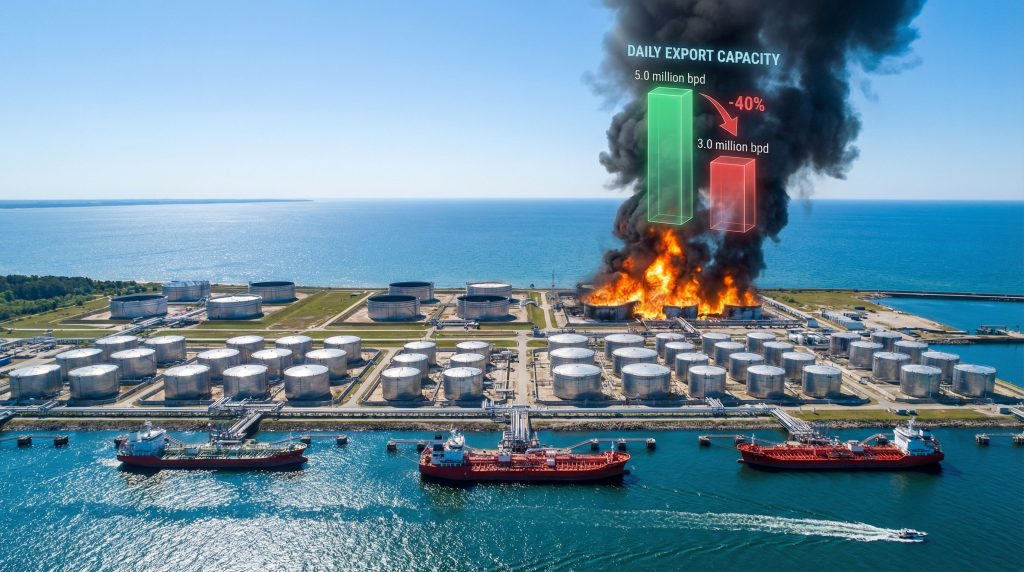
Strategic chokepoint disruption has evolved into a sophisticated tool of modern conflict, creating cascading effects across global energy markets through precisely targeted infrastructure attacks. When critical export terminals face coordinated assault, the resulting supply chain fragmentation generates volatility patterns that extend far beyond immediate physical damage, reshaping investor sentiment and risk assessment frameworks across international commodity markets. Recent events demonstrate how Ukraine knocks out 40% of Russia's oil export capacity in Baltic drone strike operations continue to reshape global energy dynamics.
The mechanics of infrastructure-driven market psychology operate through three interconnected amplification systems. Supply disruption anticipation creates forward-looking price pressure as traders position for extended capacity constraints. Risk premium layering occurs as each new headline involving facility damage or tanker strikes adds additional geopolitical uncertainty to crude futures pricing. Finally, positioning feedback loops emerge when speculative positioning amplifies price movements through automated stop-loss triggers and momentum-following algorithmic strategies.
Current market data demonstrates these psychological mechanisms in action. On March 26, 2026, WTI crude surged +$3.79 (+4.20%) to $94.11 per barrel, while Brent crude jumped +$5.10 (+4.99%) to $107.30 per barrel. Furthermore, heating oil experienced even more dramatic volatility with a +$0.247 (+6.17%) increase to $4.254 per barrel, reflecting refined product supply concerns beyond crude oil availability.
When big ASX news breaks, our subscribers know first
Infrastructure Vulnerability Creates Systemic Risk Premiums
Russia's Baltic Sea export architecture demonstrates how concentrated terminal infrastructure creates single-point-of-failure vulnerabilities that markets price aggressively once disruption occurs. Historical capacity through Primorsk, Ust-Luga, and Vysotsk terminals handled approximately 1.5-1.7 million barrels per day before recent attacks, representing critical throughput for global supply chains.
The strategic nature of these facilities extends beyond simple export capacity. Pipeline-to-port connectivity through the Druzhba system creates bottlenecks where alternative routing faces significant operational constraints. In addition, Arctic shipping routes require ice-class tanker fleets and extended transit times of 15-20+ days versus 8-10 days via Baltic routes.
Alternative export routing analysis reveals the economic penalties associated with infrastructure redundancy. Arctic route utilization increases transportation costs substantially while reducing delivery flexibility for Asian refineries configured specifically for Russian Urals crude. This crude compatibility factor creates additional switching costs for refineries attempting to source alternative feedstock, as hydrotreating unit optimization requires capital expenditure and operational downtime for process parameter adjustments.
According to recent reports, the scale of damage to Russian export infrastructure represents a significant escalation in strategic targeting. Moreover, current OPEC production increase discussions take on greater urgency as markets seek supply replacement.
Risk Premium Quantification in Futures Markets
Geopolitical risk premium components in crude futures markets reflect multiple layers of uncertainty pricing. Physical geopolitical risk combines supply disruption probability with expected production loss duration. Financial risk manifests through widened bid-ask spreads, reduced market liquidity, and increased hedging costs for commercial participants. Carry cost increases from elevated storage and insurance premiums appear in forward curve contango structures.
Front-month contracts typically experience greater volatility than deferred contracts during supply shock events, creating temporary backwardation as immediate supply concerns outweigh longer-term production recovery expectations. Consequently, this term structure reflects market psychology where near-term physical delivery commands premium pricing over future supply availability assumptions.
Historical comparison provides context for current risk premium levels. The 2019 Saudi Aramco attacks on Abqaiq and Khurais facilities removed approximately 5.7 million barrels per day temporarily, creating an 8% global crude price spike. Recovery required approximately two months as spare capacity came online and facility repairs restored normal throughput.
The 1973 OPEC oil embargo demonstrated extreme risk premium amplification when crude prices increased from $2.90 to $11.65 per barrel over six months, representing a 301% increase driven by strategic reserve depletion concerns and extended supply uncertainty. More recently, the 2011 Libya conflict triggered Brent crude spikes from approximately $100 to $127 per barrel as markets priced the offline status of 30% of Libya's OPEC production capacity.
Asian Energy Security Under Compounding Pressure
Asian markets face the most severe supply chain disruption from Russian export capacity constraints due to established procurement relationships and refinery configurations optimized for specific crude qualities. India's crude oil imports from Russia increased dramatically following Western sanctions implementation, reaching approximately 2 million barrels per day by 2023-2024 as refiners capitalised on discounted pricing opportunities.
Recent market activity demonstrates continued Asian demand for Russian crude despite infrastructure constraints. India secured 60 million barrels of Russian crude for April delivery according to March 2026 market reports, indicating sustained procurement strategies despite transportation and insurance complications from Baltic Sea disruptions.
China's energy security calculations face similar complexity with traditional Russian crude imports of 6-8 million barrels per day representing 15-20% of total Chinese import volumes. These established supply relationships create switching costs beyond simple price differentials, as refinery configurations and commercial contracts embed Russian crude specifications into operational planning. However, this development where Ukraine knocks out 40% of Russia's oil export capacity in Baltic drone strike operations forces rapid strategic reassessment.
Southeast Asian refinery capacity compounds regional vulnerability through combined throughput of approximately 2-2.5 million barrels per day across Vietnam, Thailand, Singapore, and Indonesia facilities with significant Russian crude processing capability. For instance, these refineries face adaptation costs for alternative feedstock sourcing, requiring process optimisation and quality specification adjustments to maintain market access.
What Happens When Hormuz Strait Disruption Amplifies Asian Supply Constraints?
Compounding supply chain stress emerges from simultaneous disruptions affecting Asian energy security beyond Russian capacity loss alone. The Strait of Hormuz, responsible for approximately 20% of global oil and LNG flows, faces throughput constraints from Middle East conflict escalation, creating competing pressures on alternative supply sources.
Recent analysis indicates Iran earns $139 million daily from oil exports as Hormuz crisis conditions limit competitor access to traditional shipping routes. This supply redistribution benefits Iranian revenue while constraining alternative sourcing options for Asian buyers seeking Russian crude replacements.
Market intelligence suggests cascading geographical stress patterns with supply disruption effects moving from South Asia through Southeast and Northeast Asia before intensifying pressure on European markets. This sequential impact reflects both transportation logistics and contractual relationships that determine supply allocation during shortage periods. Furthermore, the comprehensive energy security strategy considerations become paramount during such volatile periods.
European Diversification Success Despite Remaining Vulnerabilities
European energy security has improved substantially through diversification away from Russian supply dependency, with natural gas reliance decreasing from approximately 40% in 2022 to 6% by 2026. This dramatic shift resulted from accelerated LNG import infrastructure development and alternative supplier relationship establishment.
The United States emerged as the primary alternative supplier, accounting for approximately 50% of EU LNG imports and becoming the world's largest LNG exporter. In October 2025, the US achieved 10 million tons of single-month LNG exports for the first time, demonstrating expanded production capacity and global market reach. Nevertheless, the natural gas forecast remains volatile amid infrastructure uncertainty.
European renewable energy deployment provides additional supply security through reduced fossil fuel dependency. Solar and wind generation currently produces approximately 40% of European electricity compared to 25% five years earlier. Spain demonstrates particularly rapid solar deployment growth while Germany maintains coal-fired power plant capacity that becomes economically viable during elevated natural gas pricing periods.
France benefits from nuclear energy providing approximately two-thirds of national electricity generation, minimising natural gas dependency for power generation. However, Italy faces greater vulnerability with liquefied natural gas generating up to 50% of electricity, creating direct exposure to LNG market volatility from Middle East conflicts.
Industrial gas demand across Europe has declined approximately 30% compared to five-year averages, reflecting both conservation efforts and structural economic adjustments to elevated energy costs. This demand destruction provides buffer capacity during supply disruption events but indicates potential economic impact from sustained high energy prices.
How Do Storage Infrastructure and Emergency Reserve Utilization Work?
Strategic petroleum reserve deployment mechanisms provide short-term supply security during disruption events but require coordinated international release strategies to maximise market impact. The International Energy Agency coordinates member country reserve utilisation while national strategic petroleum reserves supplement commercial storage capacity during emergency periods.
Current emergency supply sharing agreements activate automatically when supply disruptions exceed threshold levels, providing additional market stability through coordinated response protocols. However, reserve capacity limitations constrain extended deployment duration, requiring supply source restoration for sustained energy security.
Commercial storage utilisation rates indicate market desperation levels as buyers compete for available inventory during supply constraint periods. Asian markets particularly demonstrate elevated storage capacity utilisation as refiners build inventory buffers against continued supply uncertainty.
Investment Strategy Implications from Infrastructure Warfare
Energy infrastructure resilience investments gain strategic importance as targeted facility attacks demonstrate vulnerability concentration risks in export terminal architecture. Distributed export capacity development reduces single-point-of-failure exposure while pipeline redundancy and security upgrades provide operational continuity during conflict periods.
Alternative energy acceleration opportunities emerge from supply chain uncertainty as renewable energy transformations provide energy security benefits beyond environmental considerations. LNG infrastructure expansion projects gain priority as European and Asian buyers seek supply diversification, while strategic mineral supply chain development supports renewable energy deployment at scale.
Maritime chokepoint alternative development represents long-term infrastructure investment themes as traditional shipping routes face disruption risks. Arctic shipping route development requires specialised vessel fleets and port infrastructure while southern pipeline corridor expansion provides geographical diversification for export capacity.
The strategic significance of these developments becomes clearer when analysing how detailed assessments confirm the extensive damage to critical export facilities. Consequently, investors must consider infrastructure warfare as a permanent feature of energy market dynamics.
The next major ASX story will hit our subscribers first
Long-term Market Structure Transformation
Permanent market share redistribution possibilities emerge from sustained infrastructure targeting campaigns as supply relationships adjust to new transportation and security realities. Investment flows redirect toward alternative supply sources while technology acceleration in energy security systems reduces dependency on vulnerable infrastructure configurations.
Global supply chain reorganisation creates opportunities for non-Russian producers to establish long-term market positions previously held by Moscow. Venezuelan oil production increases to 1.1 million barrels per day demonstrate capacity expansion from alternative suppliers seeking market share capture during Russian supply constraints.
Energy security doctrine revisions across NATO member countries prioritise infrastructure resilience and supply diversification strategies. National energy independence policy acceleration reflects lessons learned from infrastructure warfare effectiveness while international law considerations for infrastructure targeting evolve through conflict experience. Current oil price rally analysis must account for these structural market changes.
The broader implications extend beyond immediate market disruption. The systematic targeting approach that enables Ukraine knocks out 40% of Russia's oil export capacity in Baltic drone strike operations demonstrates the evolution of asymmetric warfare capabilities. Moreover, these developments force fundamental reassessment of energy infrastructure vulnerability across all major producing regions.
Market participants must now factor permanent infrastructure risk premiums into long-term pricing models. The events demonstrate that strategic energy infrastructure represents both economic and military targets, requiring enhanced security measures and diversified export capacity development. This reality reshapes investment priorities toward resilient infrastructure and alternative energy sources.
Disclaimer: This analysis involves forecasts, speculation, and assumptions about future market conditions that may not materialise as described. Energy markets face significant volatility and geopolitical risks that can create substantial investment losses. Historical performance and theoretical scenarios do not guarantee future results. Investors should conduct independent research and consider professional advice before making investment decisions based on infrastructure warfare scenarios or geopolitical risk assessments.
Ready to Navigate Energy Market Volatility?
Discovery Alert's proprietary Discovery IQ model delivers real-time alerts on significant ASX mineral discoveries, instantly empowering subscribers to identify actionable opportunities ahead of the broader market during periods of heightened geopolitical uncertainty. Begin your 14-day free trial today and secure your market-leading advantage as energy infrastructure developments continue reshaping global commodity markets.