July 14, 2026
Market Psychology Driving Critical Mineral Diversification
The global critical minerals landscape has entered a period of unprecedented strategic realignment, driven by supply chain vulnerabilities that extend far beyond traditional geopolitical considerations. As industrial nations confront the stark reality of concentration risk in essential materials, developing economies are positioning themselves to capture higher-value segments of previously dominated supply chains. This transformation reflects deeper shifts in resource sovereignty approaches and the economic imperative to move beyond raw material extraction toward integrated processing capabilities.
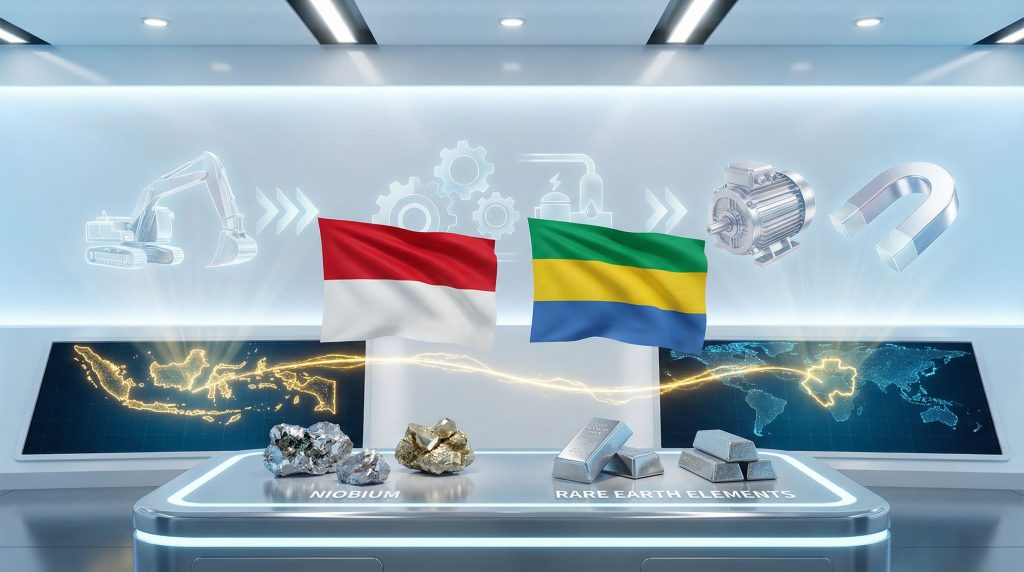
The Indonesia Gabon rare earth value chain represents a compelling case study in this broader trend, where two resource-rich nations are collaborating to establish alternative pathways in the critical minerals sector. Furthermore, this partnership emerges at a time when supply diversification has become a strategic priority across multiple industries, from renewable energy to defense applications.
When big ASX news breaks, our subscribers know first
Strategic Foundations of Southeast Asia-West Africa Resource Cooperation
Resource Sovereignty in the Modern Mineral Economy
The contemporary approach to critical mineral development reflects a fundamental shift away from traditional extractive models toward integrated value creation strategies. Countries possessing significant rare earth deposits increasingly recognise that downstream processing capabilities determine long-term economic benefits rather than simple extraction volumes.
China currently controls approximately 60-85% of global rare earth element separation and processing capacity, according to the U.S. Geological Survey. This concentration creates systemic vulnerabilities that industrialised nations have identified as strategic risks requiring diversification responses. The Indonesia Gabon rare earth value chain partnership directly addresses these concentration concerns through alternative processing route development.
For instance, global rare earth reserves total approximately 120 million tonnes (rare earth oxide equivalent), with China holding roughly 37% of identified reserves. However, processing capabilities remain far more concentrated than reserve distributions, highlighting the strategic importance of developing alternative separation and refining facilities outside traditional supply chain bottlenecks. In this context, Australia's critical minerals strategy provides valuable insights for similar initiatives.
Technical Complexity of Rare Earth Value Chains
Rare earth elements comprise 17 distinct elements including 15 lanthanides plus scandium and yttrium, each with specialised industrial applications. These elements are categorised as light rare earth elements (LREE: lanthanum through gadolinium) and heavy rare earth elements (HREE: terbium through lutetium), with varying degrees of supply vulnerability and strategic importance.
Critical elements for advanced applications include:
- Dysprosium: Essential for high-performance permanent magnets
- Terbium: Required for green phosphors and magneto-optical devices
- Neodymium: Primary component in NdFeB permanent magnets
- Praseodymium: Critical for aircraft engines and permanent magnets
Modern rare earth processing achieves 80-95% recovery rates from ores containing typically 0.1-5% rare earth oxide content. However, the separation process requires 8-15 distinct process stages depending on desired purity levels, representing significant technical barriers to new market entrants.
PT Perminas and the Indonesian Processing Hub Strategy
State-Controlled Enterprise Development Model
Indonesia's approach through PT Perusahaan Mineral Nasional (Perminas) reflects a broader trend among developing nations toward maintaining equity ownership in critical mineral projects. The involvement of sovereign fund Danantara Indonesia demonstrates the strategic priority placed on domestic control over critical mineral infrastructure development.
This state-led model contrasts sharply with traditional foreign investment approaches where developing nations primarily supplied raw materials to processing facilities located in industrialised countries. The Indonesian strategy aims to capture value-added processing revenues domestically while developing technical expertise in rare earth separation technologies.
State-controlled rare earth enterprises in other jurisdictions, particularly China's integrated industry structure, typically combine extraction, processing, and refining under centralised coordination to maintain supply chain control. Indonesia's existing experience in bauxite, tin, and nickel mining provides institutional frameworks and technical knowledge bases applicable to rare earth value chain development.
Vertical Integration Economics
Historical analysis demonstrates that downstream processing typically generates 5-10 times greater economic value than raw material extraction alone. The Indonesia Gabon rare earth value chain partnership specifically targets this value multiplication through integrated mine-to-magnet manufacturing capabilities.
The complete magnet manufacturing value chain includes:
- Mining and concentration of rare earth-bearing ores
- Leaching and solvent extraction for element separation
- Calcination and oxide production for purity refinement
- Reduction to metallic forms for alloy preparation
- Alloy formation with specific magnetic properties
- Anisotropic magnet casting/sintering for final products
- Final magnet product grading and quality certification
Neodymium-iron-boron (NdFeB) magnets require ultra-high purity rare earth materials (typically >99.9% purity for high-performance applications). Consequently, processing facilities must maintain strict contamination controls and specialised equipment for consistent quality achievement.
Gabon's Maboumine Project: Geological and Strategic Significance
Tropical Mining Environmental Considerations
Gabon's tropical climate presents both opportunities and challenges for rare earth extraction operations. The Maboumine project's niobium and rare earth element resources require specialised approaches to environmental management, particularly regarding water treatment, tailings storage, and ecosystem protection protocols.
Tropical mining environments typically involve:
- High annual rainfall requiring advanced water management systems
- Dense vegetation necessitating careful environmental impact mitigation
- Sensitive ecosystems demanding comprehensive biodiversity protection measures
- Complex hydrogeology affecting tailings management and groundwater protection
Niobium and rare earth element deposits require distinct extraction methodologies. Niobium typically occurs as pyrochlore minerals, requiring different concentration techniques than monazite or bastnasite (common REE ores). This geological complexity necessitates integrated processing approaches for optimal resource recovery.
Processing Technology Requirements
Rare earth element separation employs solvent extraction (SX) technology involving multiple stages of organic solvent contact to progressively isolate individual rare earth elements. Processing efficiency depends on:
- Solvent selection optimised for specific element separation
- pH control systems maintaining optimal chemical conditions
- Temperature management for consistent reaction kinetics
- Equipment design maximising contact efficiency and throughput
Quality control specifications for magnet-grade materials include:
| Parameter | Specification |
|---|---|
| Purity Level | 99.9% minimum |
| Iron Content | <0.5% maximum |
| Moisture Content | <1,000 ppm |
| Particle Size | Specified distribution ranges |
These stringent requirements necessitate sophisticated analytical capabilities and process control systems throughout the separation and refinement stages. Additionally, innovation in mining continues to advance these technological capabilities.
Infrastructure Investment and Logistical Frameworks
Capital Requirements Analysis
Modern rare earth processing facilities typically require $300-800 million in capital investment depending on scale and technology sophistication. These facilities consume 100-200 megawatts of electrical power at full operational capacity, representing significant energy infrastructure requirements.
The Indonesia Gabon rare earth value chain faces unique logistical challenges given the geographical distance between West Central Africa and Southeast Asia. Transportation timelines via standard container shipping routes typically require 4-6 weeks, with rare earth concentrates classified as hazardous materials increasing handling complexity and costs.
Energy Infrastructure Critical Path
Indonesia's current power generation mix includes coal (60%), natural gas (25%), and renewables (15%). Rare earth processing facilities require reliable baseload power for consistent operations, making energy infrastructure availability a critical constraint for processing hub development.
Transportation cost benchmarks for rare earth materials include:
- Raw ores: $40-80 per tonne via containerised shipping
- Concentrates: $100-150 per tonne due to hazardous material classification
- Processed oxides: $200-300 per tonne for high-purity materials
These transportation economics significantly impact the overall project feasibility and competitive positioning relative to established supply chains. Furthermore, discussions around establishing a critical minerals reserve highlight the strategic importance of such projects.
Market Demand Drivers and End-User Applications
Clean Energy Technology Requirements
The transition toward renewable energy systems creates substantial demand for high-performance permanent magnets containing rare earth elements. Electric vehicle motors typically require 2-3 kilograms of rare earth materials per vehicle, while modern wind turbines contain 200-600 kilograms of rare earth elements depending on generator design and capacity.
Demand projections for key applications include:
| Application | Annual Growth Rate | REE Content |
|---|---|---|
| Electric Vehicles | 15-25% | 2-3 kg per vehicle |
| Wind Turbines | 8-12% | 200-600 kg per turbine |
| Air Conditioning | 5-8% | 1-2 kg per unit |
| Electronics | 6-10% | Variable by device |
Defense and Strategic Applications
Military applications for rare earth elements include guidance systems, communications equipment, radar installations, and advanced weaponry. These applications typically require the highest purity specifications and most stringent supply chain security protocols.
Strategic material classifications vary by country, but most industrialised nations maintain strategic reserves of critical rare earth elements for defense applications. Supply diversification through partnerships like the Indonesia Gabon rare earth value chain directly supports these strategic reserve objectives and enhances energy transition security.
The next major ASX story will hit our subscribers first
Risk Assessment and Mitigation Strategies
Technical Implementation Challenges
The establishment of rare earth processing capabilities outside established centres faces several technical hurdles:
- Technology transfer timelines of 3-7 years for achieving commercial-grade operations
- Skilled workforce development requiring specialised training programmes
- Equipment procurement from limited global suppliers
- Process optimisation specific to local ore characteristics
Most successful rare earth processing facilities required extensive optimisation periods to achieve target throughput and recovery rates. The Indonesia Gabon rare earth value chain must account for these technical learning curves in project development timelines.
Financial and Market Risk Factors
| Risk Category | Probability | Impact | Mitigation Strategy |
|---|---|---|---|
| Technology Transfer Delays | Medium | High | Phased implementation approach |
| Market Price Volatility | High | Medium | Long-term supply agreements |
| Regulatory Changes | Low | High | Government partnership agreements |
| Environmental Compliance | Medium | High | Advanced environmental systems |
Geopolitical Considerations
The Indonesia Gabon rare earth value chain operates within complex international trade frameworks. WTO compliance requirements, export licensing protocols, and strategic material classifications affect project implementation and market access opportunities.
Bilateral trade agreements between Indonesia and Gabon provide foundational frameworks for resource cooperation, though specific rare earth provisions may require additional negotiations and regulatory clarifications. However, recent developments in U.S. policy, such as the critical minerals executive order, may influence global trade dynamics.
Investment Implications and Market Positioning
Competitive Analysis Framework
The partnership positions itself against established rare earth suppliers through several competitive advantages:
- Geographic diversification reducing supply chain concentration
- Integrated processing capabilities capturing higher-value segments
- Government backing providing project stability and financing access
- Strategic customer relationships through sovereign fund connections
However, competitive challenges include:
- Established supply relationships between existing producers and end users
- Technical expertise gaps relative to experienced processing facilities
- Scale disadvantages compared to major Chinese processing complexes
- Market entry timing during periods of supply chain uncertainty
Timeline to Market Competitiveness
Realistic development timelines for the Indonesia Gabon rare earth value chain suggest:
- Years 1-2: Feasibility studies and regulatory approvals
- Years 3-4: Infrastructure development and facility construction
- Years 5-6: Process commissioning and optimisation
- Years 7-10: Full production capacity and market establishment
This extended timeline reflects the technical complexity of rare earth processing and the infrastructure requirements for integrated operations spanning two continents. Such timelines align with broader industry observations on rare earth supply chain development.
Strategic Scenarios and Future Pathways
Success Case Projections
Full implementation of the Indonesia Gabon rare earth value chain could potentially capture 2-5% of global rare earth processing capacity within a decade. This market share would represent significant revenue generation for both countries while providing alternative supply sources for strategic customers.
Economic impact projections include:
- Direct employment: 2,000-5,000 skilled positions across both countries
- Indirect economic effects: $500 million-$1.2 billion annual regional impact
- Technology transfer benefits: Advanced materials processing capabilities
- Strategic supply security: Reduced dependence on concentrated suppliers
Alternative Development Scenarios
Should technical or market challenges impede full vertical integration, alternative approaches might include:
- Phased implementation focusing initially on concentration and basic separation
- Joint venture expansions with established processing companies
- Specialised product focus targeting specific high-value applications
- Regional supply agreements serving Southeast Asian and African markets
Policy and Regulatory Enablers
Indonesian Mining Policy Evolution
Recent changes in Indonesian foreign investment regulations emphasise value-added processing requirements and domestic content preferences. Export restrictions on raw materials encourage downstream development, directly supporting initiatives like the Indonesia Gabon rare earth value chain partnership.
Key policy milestones supporting downstream development include:
- 2014 Mining Law amendments requiring domestic processing
- 2017 Investment regulations prioritising value-added industries
- 2020 Omnibus Law streamlining licensing for strategic projects
- 2023 Critical minerals strategy identifying rare earths as national priority
International Trade Framework Considerations
The partnership must navigate complex international trade regulations, including:
- Export licensing requirements for strategic materials
- Customs classifications for rare earth products at different processing stages
- Environmental compliance standards for both mining and processing operations
- Technology transfer restrictions affecting equipment and expertise acquisition
Long-Term Strategic Implications
Global Supply Chain Transformation
The Indonesia Gabon rare earth value chain represents broader trends toward supply chain regionalisation and strategic partnership development among developing economies. Success could catalyse similar partnerships in other critical minerals sectors.
This transformation challenges traditional North-South resource extraction patterns, positioning developing nations as integrated suppliers rather than raw material exporters. The implications extend beyond rare earths to lithium, cobalt, graphite, and other critical minerals essential for clean energy transitions. In addition, recent analysis shows how companies are diversifying rare earths supply chains to reduce concentration risks.
Technology Sovereignty Considerations
Control over rare earth processing capabilities increasingly represents technological sovereignty for nations dependent on advanced materials. The Indonesia Gabon rare earth value chain partnership directly addresses these sovereignty concerns while building domestic technical capabilities.
Success metrics for monitoring project progress include:
- Feasibility study completion and resource confirmation
- Financial closing and construction commencement
- First production of rare earth concentrates
- Processing facility commissioning and initial magnet production
- Market penetration and customer relationship establishment
Investment Disclaimer: The Indonesia Gabon rare earth value chain partnership involves significant technical, financial, and market risks. Potential investors should conduct thorough due diligence and consider the extended development timelines typical of rare earth processing projects. Market conditions, regulatory changes, and technical challenges may materially affect project outcomes and investment returns.
Ready to Capitalise on the Next Critical Minerals Discovery?
Discovery Alert's proprietary Discovery IQ model delivers real-time alerts on significant ASX mineral discoveries, instantly empowering subscribers to identify actionable opportunities in the critical minerals sector ahead of the broader market. Explore how major mineral discoveries can generate substantial returns by visiting Discovery Alert's dedicated discoveries page, showcasing historic examples of exceptional market outcomes, and begin your 14-day free trial today to position yourself strategically in this rapidly evolving landscape.