July 27, 2026
Market Structure Dynamics Behind Metal Supply Disruptions
Understanding aluminum market mechanics requires examining how global manufacturing dependencies intersect with geopolitical vulnerabilities. Industrial metals markets operate through complex warehouse networks, futures contracts, and physical delivery systems that can experience rapid disruption when supply chains face unexpected pressures. The London Metal Exchange serves as the primary price discovery mechanism for aluminum worldwide, with its inventory levels functioning as a critical barometer of global supply tightness.
Modern aluminum production relies heavily on consistent energy supplies and uninterrupted shipping routes, making the industry particularly susceptible to regional conflicts and infrastructure disruptions. When major production facilities experience operational challenges, the ripple effects propagate through global markets within days rather than months, as recent events demonstrate.
When big ASX news breaks, our subscribers know first
Current Inventory Crisis Signals Critical Supply Shortage
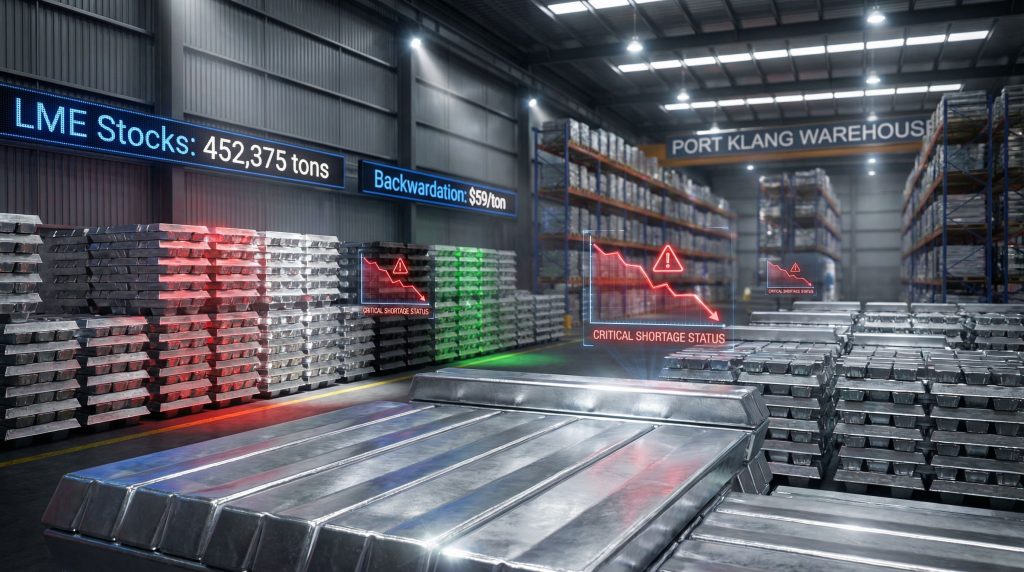
LME aluminum stockpile shortages have reached unprecedented levels, with total warehouse inventories dropping to 452,375 tons as of recent data from exchange records. This represents the lowest stock level since July 2025, indicating a sustained pattern of inventory depletion that extends beyond temporary market fluctuations.
The severity of current conditions becomes apparent when examining cancellation patterns within the LME warehouse system. Cancelled warrants, which represent metal earmarked for physical delivery, now account for 39.5% of total available inventory. This proportion signals that market participants are actively seeking immediate access to physical aluminum rather than maintaining strategic reserves.
| Inventory Metric | Current Level | Market Impact |
|---|---|---|
| Total LME Stocks | 452,375 tons | Lowest since July 2025 |
| Cancelled Warrants | 39.5% of inventory | Unprecedented withdrawal rate |
| Available Metal | ~273,000 tons | Critically low buffer |
| Weekly Drawdown | 45,000+ tons | Accelerating depletion |
Port Klang warehouses in Malaysia experienced particularly dramatic inventory movements, with 98,150 tons of warranted aluminum cancelled in a single trading session. This massive withdrawal demonstrates how quickly physical metal can be redirected when market conditions tighten, leaving warehouse operators scrambling to maintain adequate operational buffers.
Geopolitical Disruptions Trigger Unprecedented Market Response
Regional production disruptions have cascaded through global aluminum markets with remarkable speed. Qatalum, a major Gulf region smelter, declared force majeure due to gas supply interruptions affecting its operations. Similarly, traders raid LME aluminum stockpiles as Aluminium Bahrain announced its inability to fulfill shipment obligations, removing significant production capacity from international markets.
These operational challenges coincided with broader concerns about shipping route security, particularly regarding Middle Eastern supply chains. The combination of production facility shutdowns and logistical uncertainties created a perfect storm for inventory depletion. Furthermore, the evolving geopolitical landscape has intensified concerns about us–china trade tensions affecting global commodity flows.
Market participants responded through several mechanisms:
• Warehouse raiding: Massive cancellations at strategic distribution points
• Forward contract restructuring: Shifting from future delivery to immediate possession
• Geographic repositioning: Moving metal to regions facing acute shortages
• Supply chain diversification: Seeking alternative sourcing arrangements
The backwardation structure that emerged reflects these supply pressures, with cash aluminum contracts trading at a $59 per metric ton premium over three-month forward positions. This premium level matches the highest seen since February 2022, following Russia's invasion of Ukraine, suggesting comparable market stress levels.
Technical Market Mechanisms Driving Inventory Withdrawals
Understanding the LME warrant cancellation process reveals how physical metal markets respond to supply constraints. When traders cancel warrants, they commit to removing aluminum from exchange-approved warehouses within specific timeframes. This mechanism allows market participants to secure immediate access to metal while paying storage and handling costs.
The economics of backwardation create powerful incentives for physical delivery:
• Immediate delivery premiums: Cash contracts command higher prices than futures
• Storage cost avoidance: Eliminating warehouse rental during tight markets
• Arbitrage opportunities: Geographic price differentials create profit potential
• Supply security: Physical possession eliminates counterparty risks
Port Klang's role as a strategic Asian distribution hub explains why this location experienced the heaviest withdrawal activity. The facility's geographic position allows efficient redistribution to major manufacturing centres throughout the Asia-Pacific region, making it a natural focal point during supply disruptions.
However, traditional carry trade economics, where traders profit from storing metal and selling futures, broke down completely under current market conditions. Instead of earning storage returns, traders faced mounting costs for holding inventory while immediate delivery commanded substantial premiums.
Historical Context and Market Precedents
Comparing current aluminum market stress to previous crisis periods provides valuable perspective on potential duration and recovery patterns. The February 2022 backwardation premium surge followed Russia's invasion of Ukraine, creating similar supply chain uncertainties and inventory hoarding behaviours.
In addition, several factors distinguish the current situation from historical precedents:
2022 Ukraine War Response:
• Focused on Russian aluminum production concerns
• Primarily affected European supply chains
• Recovery occurred within 6-8 months as alternative sourcing developed
Current Middle East Crisis:
• Impacts multiple production facilities simultaneously
• Affects critical shipping routes for global trade
• Combines production and logistics disruptions
The speed of inventory depletion in 2026 appears faster than previous crisis periods, suggesting either more acute supply constraints or heightened market sensitivity to disruption signals. Weekly drawdowns exceeding 45,000 tons indicate sustained pressure rather than temporary speculation.
Regional Vulnerability and Supply Chain Dependencies
Asia-Pacific manufacturing centres face particular exposure to current LME aluminum stockpile shortages due to their heavy reliance on Middle Eastern production. The region's automotive industry, especially electric vehicle manufacturing, requires consistent aluminum supplies for battery housings, chassis components, and body panels.
Manufacturing sectors experiencing supply pressure include:
• Automotive production: EV components and traditional vehicle manufacturing
• Construction industry: Building facades, structural elements, and infrastructure
• Electronics manufacturing: Heat sinks, enclosures, and component housings
• Aerospace applications: Aircraft structures and engine components
European markets face different but equally significant challenges, with high energy costs limiting domestic smelting operations while import dependencies expose manufacturers to supply disruptions. The combination of reduced local production capacity and uncertain import availability creates vulnerability to extended shortages.
Consequently, strategic aluminum reserves maintained by governments and major corporations provide some buffer against short-term disruptions. Nevertheless, extended supply constraints could force drawdowns of these stockpiles, as industrial consumers typically maintain 30-90 day inventory buffers.
The next major ASX story will hit our subscribers first
Market Psychology and Trading Behaviour Patterns
Current aluminum market dynamics demonstrate how supply fears can become self-reinforcing through trader psychology and risk management practices. As inventory levels declined, market participants shifted from normal commercial hedging to defensive positioning, accelerating physical metal withdrawals.
Behavioural factors driving market response:
• Scarcity premium recognition: Traders competing for limited physical supplies
• Just-in-time vulnerability: Manufacturing exposure to supply interruptions
• Hoarding incentives: Economic benefits of securing inventory during shortages
• Forward curve signals: Backwardation encouraging immediate delivery
The shift from contango to backwardation markets fundamentally altered trading strategies, as traditional storage economics became unprofitable whilst immediate possession gained value. This transformation explains the dramatic warehouse withdrawal patterns observed in recent weeks.
For instance, professional metal traders typically employ sophisticated risk management systems that trigger increased physical positioning when inventory metrics reach critical thresholds. Current LME data likely activated multiple algorithmic trading systems simultaneously, contributing to the coordinated warehouse raids observed across major storage facilities.
Technical Analysis of Supply-Demand Fundamentals
Analysing aluminum market fundamentals reveals structural imbalances that extend beyond immediate geopolitical disruptions. Global aluminum consumption has grown consistently due to lightweighting trends in transportation, infrastructure development in emerging markets, and energy transition technologies requiring aluminum components.
Demand drivers creating underlying supply pressure:
• Electric vehicle adoption: Battery housings and chassis lightweighting
• Solar panel infrastructure: Mounting systems and structural components
• Building construction: Energy-efficient facades and structural applications
• Packaging industry: Beverage cans and food container demand
Supply-side constraints compound demand pressures through several mechanisms. Primary aluminum production requires enormous energy inputs, making smelters vulnerable to electricity cost fluctuations and environmental regulations. Furthermore, tariffs affecting metals have created additional cost pressures across the industry.
The aluminum production process involves electrolytic reduction of alumina using carbon anodes, consuming approximately 13-15 megawatt hours per metric ton of output. This energy intensity means smelters often locate near abundant, low-cost power sources, creating geographic concentration risks when regional disruptions occur.
Investment and Risk Management Implications
Current LME aluminum stockpile shortages present both opportunities and challenges for different categories of market participants. Industrial consumers face input cost volatility and potential supply interruptions requiring operational adjustments and financial hedging strategies.
Risk management approaches for different stakeholders:
Manufacturing Companies:
• Strategic inventory building during supply availability
• Forward contract diversification across multiple suppliers
• Material substitution planning where technically feasible
• Price hedging through futures and options strategies
Trading Firms:
• Physical inventory positioning for backwardation arbitrage
• Geographic arbitrage opportunities between supply regions
• Volatility trading strategies using options instruments
• Storage optimisation across warehouse networks
Investment Funds:
• Aluminum exposure through commodity indices and ETFs
• Mining company equity positions benefiting from higher prices
• Infrastructure investments in alternative supply chains
• Currency hedging for international aluminum trade exposure
The structural nature of current supply constraints suggests extended periods of market tightness, potentially rewarding long-term positioning strategies over short-term speculation. However, geopolitical uncertainties create significant downside risks if conflicts resolve more quickly than anticipated.
How Do Current Market Conditions Affect Mining Operations?
The evolving mining trends are being reshaped by these supply constraints. Additionally, the focus on critical raw materials has intensified as governments seek to secure strategic supplies.
Mining companies with aluminum production capabilities are experiencing aluminum climbs amid Middle East conflict and subsequent supply disruption risks. This has created unprecedented opportunities for producers with stable operations to capture premium pricing.
Recovery Scenarios and Market Outlook
Projecting aluminum market recovery requires assessing multiple interconnected factors including geopolitical developments, production capacity restoration, and inventory rebuilding timeframes. Historical precedents suggest 6-18 month periods typically required for substantial market rebalancing following major supply disruptions.
Short-term recovery factors (2-6 months):
• Geopolitical resolution: Conflict duration determining facility restart timelines
• Alternative sourcing: Activation of idle capacity in stable regions
• Inventory restocking: Gradual warehouse refilling as supply normalises
• Price incentives: Higher prices attracting marginal production capacity
Medium-term structural changes (6-24 months):
• Supply chain diversification: Reduced dependence on concentrated production
• Strategic reserve building: Government and corporate stockpile expansion
• Technology investments: Enhanced recycling and efficiency improvements
• Infrastructure development: New smelter projects in politically stable regions
The aluminum industry's capital intensity means significant capacity additions require multi-year development timelines, limiting short-term supply responsiveness to price signals. Existing idle capacity provides some flexibility, but restarting mothballed smelters involves substantial costs and technical challenges.
Moreover, understanding tariffs' market impact becomes crucial as governments may implement protective measures that further complicate global supply chains during the recovery phase.
Important Disclaimer: This analysis contains forward-looking projections and market speculation that involve significant uncertainties. Aluminum prices and supply conditions can change rapidly due to geopolitical developments, economic conditions, and other factors beyond current market visibility. Investment decisions should consider these risks and seek appropriate professional guidance.
Current LME aluminum stockpile shortages represent a convergence of immediate supply disruptions with longer-term structural market imbalances. While inventory levels will eventually recover, the underlying fundamentals suggest extended periods of supply tightness that could reshape global aluminum trading patterns and industrial supply chains for years to come.
Looking to Capitalise on Metal Market Volatility?
Discovery Alert's proprietary Discovery IQ model delivers real-time alerts on significant ASX mineral discoveries, instantly empowering subscribers to identify actionable opportunities ahead of the broader market during periods of heightened commodity volatility. Begin your 14-day free trial today and secure your market-leading advantage whilst metal markets experience unprecedented supply disruptions.