August 6, 2026
Market Volatility and the Australian Response
The Australian Securities Exchange demonstrates particularly acute sensitivity to Middle Eastern developments due to Australia's position as a major commodity exporter and the interconnected nature of global energy supply chains. When analyzing US-Iran tension impact on ASX markets, institutional investors must understand that traditional risk-off patterns have evolved significantly.
Current market data reveals sophisticated investor behaviour as geopolitical tensions escalate. The concentration of energy sector earnings releases during crisis periods creates amplified sector performance, whilst record-high gold prices provide additional safe-haven demand signals. Furthermore, the crisis cycle demonstrates how market participants increasingly differentiate between temporary geopolitical noise and structural sector narratives.
When big ASX news breaks, our subscribers know first
Understanding Geopolitical Risk Transmission Mechanisms
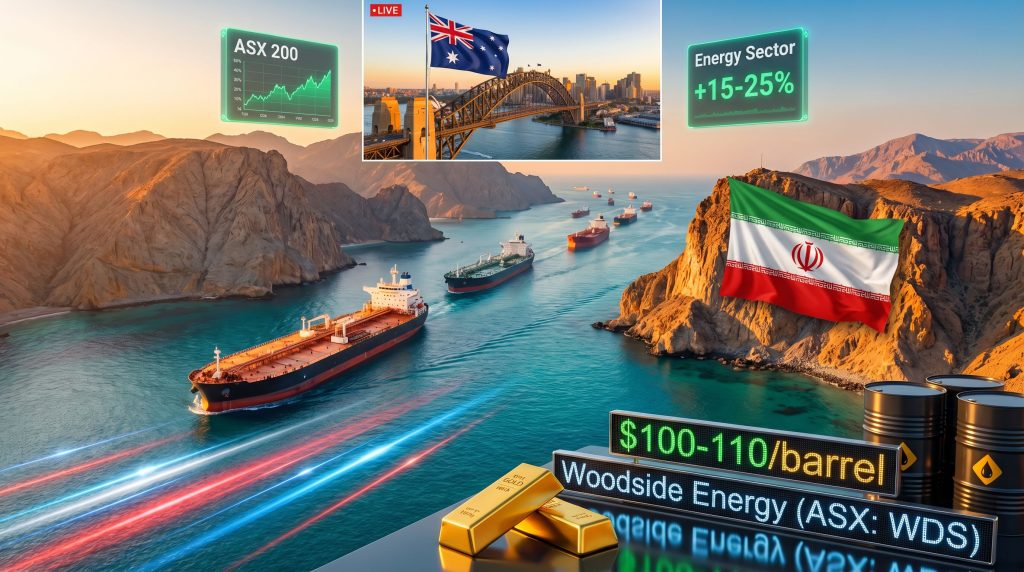
The transmission of geopolitical risk from Middle Eastern conflicts to Australian equity markets follows a predictable yet complex pathway. Iran's attacks on vessels in the Strait of Hormuz immediately triggered Brent crude pricing to $101.44 per barrel, representing a 3% surge from the prior trading session.
Market Response Framework During Crisis Events:
| Phase | Duration | ASX Energy Sector | Currency Impact | Sector Rotation Pattern |
|---|---|---|---|---|
| Initial Shock | 2-6 hours | +8-15% immediate spike | AUD weakens 100-150 basis points | Flight from discretionary sectors |
| Price Discovery | 1-3 trading days | Sustained volatility | Risk-off USD strength | Energy/defensive accumulation |
| Stabilisation | 5-10 trading days | Gradual normalisation | Currency range trading | Growth sector re-entry |
The Australian dollar's current positioning at 71.5 cents against the US dollar exemplifies the competing forces during geopolitical uncertainty. However, higher commodity prices typically support the AUD, whilst safe-haven demand for US dollars creates downward pressure on the Australian currency.
This dynamic directly impacts profitability calculations for ASX-listed energy producers who benefit from both higher commodity prices and potential currency translation effects. Consequently, Australia's commodity-focused economy creates unique vulnerabilities during Middle Eastern tensions.
Critical Risk Assessment
Unlike diversified developed markets, the ASX exhibits heightened correlation to energy price movements. Major energy producers show share price elasticity of approximately 0.8 to 1.2 times oil price movements. Moreover, this amplification effect means that sustained geopolitical tensions can create outsized impacts on Australian equity valuations.
Why the Strait of Hormuz Creates Critical Supply Chain Vulnerabilities
The Strait of Hormuz represents the world's most critical energy chokepoint, with approximately 21% of global petroleum liquids transiting through this narrow waterway. For Australian investors, this geographic bottleneck creates both risks and opportunities that extend far beyond direct oil exposure.
Current events demonstrate the immediate impact of Strait disruptions on Australian energy markets. Santos Limited and Woodside Energy, both reporting earnings during the crisis window, benefit directly from crisis-driven energy price premiums. Additionally, the timing of these earnings releases during active geopolitical tensions provides management teams opportunities to revise guidance based on elevated commodity price assumptions.
LNG Market Dynamics During Crisis
Furthermore, several factors amplify the impact on Australian energy companies:
- Substitution demand increases: Asian power generators increase LNG consumption as an alternative fuel source when crude oil supplies face disruption threats
- Shipping cost escalation: War risk insurance premiums for vessels transiting volatile waters can add $2-5 per barrel equivalent to transport costs
- Contract repricing: Long-term LNG agreements often include crisis adjustment mechanisms that benefit Australian producers
The current Brent crude pricing above $100 per barrel creates cascading effects throughout the Australian energy sector. In addition, Australia's geographic positioning outside traditional conflict zones provides structural advantages during Middle Eastern tensions.
The country's stable regulatory environment and diverse export markets reduce single-point-of-failure risks that affect other energy-exporting nations. This stability premium becomes particularly valuable during extended geopolitical stress periods, attracting foreign investment seeking reliable energy supply sources.
Energy Sector Leadership During Geopolitical Uncertainty
Immediate Beneficiaries of Crisis Pricing
The current geopolitical environment demonstrates clear winners within the ASX energy sector. Analysis of recent ASX market performance reveals sophisticated investor behaviour, with institutional capital flowing toward companies with direct exposure to global energy pricing mechanisms.
Primary Crisis Beneficiaries:
Woodside Energy (ASX: WDS)
- Direct exposure to global LNG pricing through Asian export contracts
- Quarterly earnings exhibit high sensitivity to $10 per barrel oil price movements
- Strategic communication opportunities during elevated commodity prices
Santos Limited (ASX: STO)
- Diversified oil and gas production portfolio with significant Asian LNG exposure
- Benefits from both crude oil and natural gas price premiums during supply disruption fears
- Guidance revision opportunities during crisis windows
Operational Complexity During Crisis
Viva Energy's situation illustrates the nuanced impacts of geopolitical tensions on Australian energy companies. Despite benefiting from higher refined product margins due to crude price spikes, the company faces operational constraints from the Geelong refinery fire.
Management's statement that the facility can return to nearly full production within weeks demonstrates how operational resilience becomes critical. Consequently, crisis-driven margin expansion periods require robust operational capabilities to capitalise on market opportunities.
Sector Rotation Patterns and Investment Flows
Current market behaviour reveals significant evolution in traditional geopolitical risk responses. The trading session demonstrates an important disconnect: whilst Middle Eastern tensions escalated, US technology stocks rallied strongly according to financial markets analysis.
This divergence suggests sophisticated market participants are increasingly capable of separating temporary geopolitical noise from structural sector narratives. However, the Australian market's expected negative opening contrasts sharply with US market strength, indicating geographic and sector-specific divergence in crisis interpretation.
Institutional Investment Strategy During Crisis:
- Phase One: Immediate defensive positioning in energy and infrastructure
- Phase Two: Selective accumulation in companies with crisis-resistant business models
- Phase Three: Gradual reallocation toward growth sectors upon de-escalation signals
The concentration of energy sector earnings releases during the current crisis period is not coincidental. Companies strategically time guidance updates to capitalise on elevated investor attention during commodity price volatility.
Currency Dynamics and Commodity Price Transmission
Australian Dollar Performance Under Stress
The Australian dollar's response to Middle Eastern geopolitical tensions reveals complex interactions between commodity price benefits and safe-haven currency flows. Current positioning at 71.5 cents against the US dollar represents the equilibrium between these competing forces.
Currency Transmission Mechanisms:
- Commodity price support: Higher oil and gas prices typically strengthen commodity currencies like the AUD
- Risk-off sentiment: Global uncertainty drives investors toward US dollar safe-haven positions
- Terms of trade impact: Australia's energy export revenues increase during crisis periods, supporting long-term currency fundamentals
Previous Middle Eastern crises demonstrate that AUD weakness during initial shock phases typically reverses within 2-4 weeks as commodity price gains offset risk-aversion flows. Furthermore, the current 71.5 cent level suggests markets are pricing moderate crisis duration with limited escalation probability.
Commodity Price Elasticity Effects
The energy price surge above $100 per barrel creates cascading effects throughout the Australian economy. Natural gas futures trading at $2.71 per gigajoule provide additional support for domestic energy producers whilst creating input cost pressures for energy-intensive industries.
Downstream Industry Impacts:
- Manufacturing sector: Energy-intensive producers face margin compression from higher input costs
- Transportation companies: Fuel cost escalation affects logistics and airline sector profitability
- Consumer discretionary: Higher energy prices reduce household disposable income, affecting retail spending patterns
Gold pricing at $4,750 per ounce reflects increased safe-haven demand during geopolitical uncertainty. Australian gold miners benefit from this dual tailwind: higher gold prices and potential currency hedging advantages as the AUD weakens against the US dollar.
Strategic Portfolio Positioning for Ongoing Uncertainty
Risk-Adjusted Allocation Framework
Sophisticated investors require dynamic allocation strategies that account for both immediate crisis opportunities and long-term structural implications of geopolitical instability. The current environment demands departure from traditional static portfolio construction, particularly considering critical minerals energy security themes.
Core Defensive Holdings (40-50% allocation):
- Energy infrastructure: APA Group benefits from increased domestic energy demand and pipeline utilisation
- Major miners: BHP's recent resolution of Chinese trade disputes provides stability during global uncertainty
- Defensive utilities: Companies with regulated revenue streams and essential service provision
Tactical Crisis Opportunities (25-35% allocation):
- Gold miners: Dual benefits from higher gold prices and potential currency hedging gains
- Energy service companies: Recent Middle East contract wins demonstrate sector opportunities
- Infrastructure projects: Long-term energy security themes drive investment toward diversification technologies
Scenario Planning and Risk Management
Three-Scenario Framework:
| Scenario | Probability Assessment | ASX Impact | Portfolio Response |
|---|---|---|---|
| Escalation | 25-30% | -20-30% market decline | Increase cash, energy exposure to 60%+ |
| Extended Uncertainty | 50-55% | Continued volatility, range-bound | Maintain defensive positioning, selective accumulation |
| Rapid De-escalation | 15-25% | +15-25% relief rally | Prepare growth sector re-entry, reduce defensive positions |
Currency hedging becomes particularly valuable during extended geopolitical uncertainty periods. Investors with significant international exposure should implement dynamic hedging strategies, particularly for US dollar-denominated investments. However, the current AUD weakness may provide natural hedging for companies with overseas earnings exposure.
The next major ASX story will hit our subscribers first
Long-term Structural Investment Implications
Energy Security as Investment Theme
Current US-Iran tension impact on ASX highlights fundamental vulnerabilities in global energy supply chains that create long-term investment opportunities extending beyond traditional energy companies. The crisis accelerates existing trends toward energy diversification and supply chain resilience.
Emerging Investment Themes:
- Critical minerals mining: Companies developing lithium, rare earth, and battery metal resources benefit from energy security imperatives
- Infrastructure modernisation: Smart grid technologies and distributed energy systems reduce reliance on centralised supply sources
- LNG infrastructure expansion: Long-term contracts and export facility development provide supply security premiums
Australian companies benefit from geographic positioning outside traditional conflict zones, creating a structural stability premium during global uncertainty. This advantage becomes particularly pronounced during extended geopolitical stress periods, according to Australia's geopolitical risk analysis.
Supply Chain Resilience Factors
The current crisis demonstrates how geopolitical events can rapidly disrupt established trade patterns and supply relationships. Australian companies with diversified export markets and robust supply chain management exhibit superior resilience during these disruption periods.
Key Competitive Advantages:
- Political stability: Consistent regulatory environment attracts long-term international investment
- Resource abundance: Diverse commodity base reduces single-product dependency risks
- Strategic partnerships: Alliance relationships with stable democracies provide security cooperation benefits
- Technological leadership: Innovation in mining, energy extraction, and processing technologies maintains competitive positioning
Crisis periods typically accelerate infrastructure investment decisions as governments and companies prioritise supply security over cost optimisation. This trend creates opportunities in port development, pipeline construction, and transport network expansion projects, particularly considering renewable energy solutions for long-term sustainability.
Moreover, global exploration initiatives, such as Saudi exploration impact, demonstrate how geopolitical tensions reshape global energy investment patterns.
Frequently Asked Questions
How quickly do ASX energy stocks respond to Middle Eastern developments?
Australian energy markets typically respond within hours of major geopolitical events. Companies like Santos and Woodside show immediate price adjustments. The current crisis demonstrates this rapid response, with Brent crude pricing immediately incorporating Iran's Strait of Hormuz actions and flowing through to ASX energy stock valuations within the same trading session.
Which companies show the highest sensitivity to oil price changes?
Woodside Energy and Santos demonstrate the strongest correlation to oil price movements among major ASX-listed companies. Energy service companies with Middle East contracts also exhibit significant sensitivity to regional energy sector activity levels.
Should investors hedge currency exposure during geopolitical events?
Currency hedging becomes increasingly valuable during extended uncertainty periods. With the AUD currently at 71.5 cents, investors with significant US dollar exposure should consider dynamic hedging strategies. The competing forces of commodity price strength versus safe-haven dollar demand create complex currency dynamics requiring active management.
How long do geopolitical risk premiums typically persist in commodity markets?
Risk premiums in energy markets usually persist for 2-8 weeks depending on conflict duration and resolution prospects. The current Brent crude pricing above $100 per barrel suggests markets are pricing moderate escalation probability with limited duration expectations.
What sectors should investors avoid during Middle Eastern tensions?
Consumer discretionary companies face pressure from higher energy costs reducing household disposable income. Technology stocks may experience growth multiple compression during risk-off periods, though the current crisis shows this relationship is evolving as markets differentiate between temporary geopolitical noise and structural technology trends.
Investment Risk Disclaimer: This analysis contains forward-looking statements and scenario modelling based on current geopolitical conditions. Geopolitical events are inherently unpredictable, and actual market outcomes may differ significantly from projected scenarios. Past performance of sectors and individual stocks during previous crisis periods does not guarantee future results. Investors should conduct independent research and consult qualified financial advisors before making investment decisions based on geopolitical analysis.
Ready to Capitalise on Geopolitical Market Opportunities?
Discovery Alert's proprietary Discovery IQ model delivers real-time notifications on significant ASX mineral discoveries, helping investors identify actionable opportunities during volatile market conditions like current Middle Eastern tensions. Explore how major mineral discoveries have generated substantial returns throughout various market cycles and begin your 14-day free trial today to position yourself ahead of market movements.