July 18, 2026

Global economic turbulence has fundamentally altered the landscape of energy storage markets, forcing a comprehensive reassessment of traditional cost projection models. The interplay between monetary policy shifts, supply chain disruptions, and geopolitical tensions has created an environment where market volatility and battery cost expectations no longer follow predictable patterns established during the previous decade of steady price declines.
Raw material markets have experienced unprecedented fluctuations, with lithium carbonate prices demonstrating extreme sensitivity to both speculative trading and actual supply-demand fundamentals. Furthermore, the mining sector faces inherent constraints in responding rapidly to demand surges, particularly given the geological complexity of lithium extraction processes and the extended development timelines required for new production facilities.
How Supply Chain Bottlenecks Are Amplifying Price Volatility
The concentration of lithium processing capabilities in a limited number of geographic regions has created systemic vulnerabilities that extend far beyond simple commodity price movements. Processing capacity constraints represent a more significant bottleneck than raw material availability itself, as transforming lithium-bearing ores into battery-grade compounds requires sophisticated chemical facilities that cannot be rapidly scaled.
Mining operations face additional challenges from declining ore grades at established facilities, forcing extraction companies to process larger volumes of material to maintain output levels. This trend increases operational costs and energy consumption while simultaneously reducing production efficiency. Consequently, the situation becomes more complex when considering that spodumene concentrate grades at many Australia lithium innovations facilities have decreased from historical averages of 6-7% lithium oxide to current ranges of 5-6%, requiring proportionally greater processing inputs.
Key supply chain vulnerabilities include:
- Processing facility utilization rates exceeding 95% in major production hubs
- Transportation bottlenecks affecting concentrate shipments from remote mining locations
- Technical expertise shortages in specialized chemical processing operations
- Environmental compliance requirements extending facility approval timelines
- Energy cost fluctuations impacting processing economics
The inventory dynamics across the battery supply chain reveal concerning patterns of just-in-time procurement strategies that amplify market volatility. Battery manufacturers traditionally maintained minimal raw material stockpiles to optimise working capital, but current market conditions have exposed the risks inherent in this approach. Companies now face difficult decisions between accepting elevated carrying costs for strategic inventory or accepting supply security risks.
When big ASX news breaks, our subscribers know first
Monetary Policy Impacts on Energy Storage Economics
Central bank policy adjustments have created cascading effects throughout energy storage markets that extend beyond simple interest rate impacts on project financing. Currency volatility has become a significant factor in battery cost structures, as most raw materials trade in US dollars while manufacturing operations span multiple currency zones.
The relationship between monetary policy and commodity markets has become increasingly complex as quantitative easing programs in major economies have directed capital flows toward hard assets, including critical minerals. This dynamic has contributed to price appreciation that reflects financial market conditions rather than fundamental supply-demand balances, particularly affecting US economic inflation dynamics.
Inflation transmission mechanisms affect different components of battery manufacturing at varying rates and timescales. However, labour-intensive assembly operations experience more immediate cost pressures from wage inflation, while capital-intensive chemical processing facilities face delayed but more substantial impacts from equipment and energy cost increases.
| Economic Factor | Impact on Battery Costs | Timeline | Mitigation Strategies |
|---|---|---|---|
| Interest Rate Changes | Financing cost increases | 3-6 months | Long-term debt restructuring |
| Currency Fluctuations | Raw material cost volatility | Immediate | Financial hedging instruments |
| Wage Inflation | Assembly cost escalation | 6-12 months | Automation investments |
| Energy Price Changes | Processing cost impacts | 1-3 months | Renewable energy procurement |
Geopolitical Risk Factors Reshaping Market Structure
The evolution of international trade policies has introduced new categories of risk that traditional market analysis frameworks struggle to quantify. Export control regimes affecting battery materials and manufacturing equipment have created uncertainty about long-term supply chain viability, forcing companies to develop alternative sourcing strategies with inherently higher costs.
Regional strategic autonomy initiatives in battery manufacturing represent a fundamental shift from globalised cost optimisation toward supply security prioritisation. European and North American policies encouraging domestic battery production capacity necessarily involve accepting higher initial cost structures in exchange for reduced geopolitical dependencies related to critical raw materials supply.
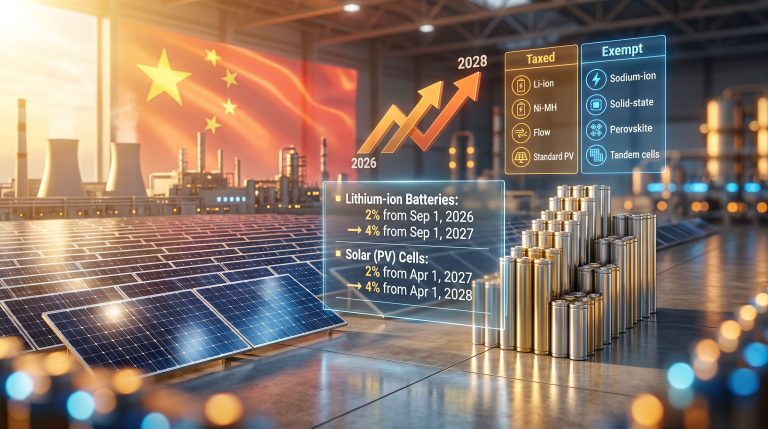
The removal of Chinese VAT rebates on battery material exports demonstrates how fiscal policy adjustments can immediately alter global cost structures. This policy change, implemented without advance notice to international buyers, added approximately 13% to the cost of Chinese battery materials for foreign purchasers, creating immediate pressures on existing supply contracts. Moreover, the US-China trade war impact continues to influence global pricing mechanisms.
Critical mineral security considerations have elevated battery materials to strategic commodity status in multiple jurisdictions, triggering government interventions that prioritise supply security over cost optimisation. These policies include export restrictions, import tariff adjustments, and domestic content requirements that fundamentally alter traditional market dynamics.
Demand-Supply Imbalance Implications for Storage Economics
The convergence of multiple demand growth vectors has created conditions where traditional supply elasticity assumptions no longer apply effectively. Grid modernisation programs across developed economies have accelerated utility-scale storage deployment schedules, while electric vehicle adoption rates continue exceeding infrastructure development capacity.
Data centre expansion driven by artificial intelligence applications has emerged as an unexpected demand category for battery storage systems, creating competition for battery manufacturing capacity across different market segments. These facilities require high-reliability power quality solutions that often specify premium battery technologies, further constraining supply for other applications.
Manufacturing capacity expansion faces constraints beyond simple capital availability. Skilled workforce limitations in battery manufacturing represent a more significant bottleneck than equipment procurement, as the specialised knowledge required for consistent quality production cannot be rapidly scaled through traditional training programs. For instance, price volatility in renewable energy markets has accelerated demand for reliable storage solutions.
Environmental permitting challenges for new battery manufacturing facilities have extended development timelines significantly. Lithium-ion battery production involves multiple chemical processes that require comprehensive environmental impact assessments, often requiring 24-36 months for full regulatory approval in major markets.
Market Reality Check
Industry experts acknowledge that the traditional expectation of continuous battery cost reductions has been fundamentally disrupted. Market participants must now incorporate volatility premiums and supply security considerations into long-term planning models.
Investment Strategy Adaptations for Market Volatility
Traditional investment approaches focused on cost curve positioning and scale advantages require substantial modification in the current market environment. Risk-adjusted return calculations must now incorporate supply chain disruption probabilities and regulatory change scenarios that were previously considered remote possibilities.
Portfolio diversification strategies across the battery value chain have become essential for managing exposure to specific commodity or geographic risks. In addition, investors are increasingly evaluating vertical integration opportunities that provide greater control over supply chain variables, even at the cost of reduced operational efficiency.
Contract structuring innovations have emerged as critical risk management tools, with price indexation mechanisms and force majeure provisions becoming standard components of battery supply agreements. These contractual protections help allocate volatility risks between buyers and suppliers more explicitly than traditional fixed-price arrangements. Furthermore, insights from battery storage market analysis show the importance of flexible pricing models.
Alternative technology evaluation has gained prominence as investors seek to reduce dependence on constrained raw materials. Sodium-ion battery technologies have attracted increased attention despite performance limitations, as their raw material requirements avoid the most volatile commodity markets affecting lithium-ion systems. Meanwhile, developments in battery recycling breakthrough technologies offer promising alternatives for material sourcing.
Financial hedging strategies for commodity price exposure have become more sophisticated, with battery manufacturers developing customised derivatives positions that address their specific raw material procurement patterns. However, the limited liquidity in some critical mineral markets constrains the effectiveness of traditional hedging approaches.
Long-Term Structural Market Evolution
The current volatility period represents a transition toward a more mature market structure where cost optimisation must balance against supply security and operational flexibility. Industry consolidation pressures are intensifying as companies seek to achieve scale advantages necessary for managing increased complexity and risk.
Technology platform standardisation efforts have accelerated as manufacturers recognise that customisation increases supply chain complexity without proportional performance benefits. This standardisation trend may ultimately reduce costs by enabling larger-scale procurement and manufacturing efficiencies.
Circular economy integration through battery recycling and second-life applications is gaining economic viability as raw material costs increase. Companies are developing business models that capture value from multiple battery lifecycle phases, reducing dependence on primary material supplies.
Regional market development in emerging economies presents opportunities for cost-effective manufacturing expansion, though these markets often lack the regulatory stability and infrastructure quality that international companies require for large-scale investments.
The innovation acceleration occurring across battery chemistry research may ultimately provide the most significant cost reduction opportunities. Companies are intensifying development efforts for alternative chemistries that reduce or eliminate dependence on the most constrained raw materials while maintaining acceptable performance characteristics.
The next major ASX story will hit our subscribers first
Navigating Market Uncertainty: Practical Considerations
Scenario planning methodologies have become essential tools for evaluating battery market investments and supply chain strategies. Companies must develop multiple future scenarios that account for different combinations of policy changes, supply chain disruptions, and technology development outcomes.
Real options valuation approaches provide frameworks for evaluating investments in flexible manufacturing capacity that can adapt to changing market conditions. These methodologies help quantify the value of operational flexibility in uncertain environments where market volatility and battery cost expectations continue to evolve unpredictably.
Supply chain stress testing exercises help identify vulnerabilities and develop contingency plans for various disruption scenarios. These assessments must consider not only direct suppliers but also second and third-tier suppliers whose operations may significantly impact overall supply chain resilience.
Regulatory monitoring systems have become necessary for tracking policy developments across multiple jurisdictions that could affect battery market dynamics. Companies must maintain awareness of trade policy changes, environmental regulations, and strategic autonomy initiatives that could impact their operations.
Stakeholder engagement strategies with government officials, industry associations, and academic researchers provide valuable insights into potential policy directions and technology development trends that may not be immediately apparent through market analysis alone. Consequently, understanding how market volatility and battery cost expectations affect different stakeholders remains crucial for strategic planning.
Future Market Outlook
The transformation of battery markets from predictable cost decline trajectories toward more complex risk-return profiles requires fundamental changes in analysis methodologies and investment strategies. Success in this environment depends on developing capabilities for managing uncertainty while maintaining operational efficiency and competitive positioning.
Companies that effectively navigate these challenges will likely emerge with stronger competitive positions as market conditions stabilise. However, the timeline for achieving stability in market volatility and battery cost expectations remains uncertain, requiring continued vigilance and adaptive strategies across the entire value chain.
Disclaimer: This analysis contains forward-looking assessments based on current market conditions and available information. Battery market dynamics involve numerous variables that may change rapidly, and actual outcomes may differ significantly from projections presented. Readers should conduct independent research and consult qualified professionals before making investment decisions related to energy storage markets.
Ready to Capitalise on Critical Materials Market Opportunities?
Discovery Alert's proprietary Discovery IQ model delivers instant notifications on significant ASX mineral discoveries, including lithium and other critical materials essential for the energy storage revolution. With supply chain volatility creating unprecedented opportunities for informed investors, explore Discovery Alert's discoveries page to understand how major mineral discoveries have generated substantial returns, then begin your 14-day free trial to position yourself ahead of market movements.