
July 10, 2026
The Strategic Framework for Materials Sector Investment Analysis
Understanding the contemporary dynamics of resource investment requires a fundamental shift from traditional metrics toward operational resilience analysis. In an environment where commodity cycles demonstrate unprecedented volatility, investors must evaluate mining assets through a lens that prioritises adaptive capacity over pure growth metrics. This analytical framework becomes particularly crucial when assessing diversified mining conglomerates against pure-play opportunities in high-demand commodities.
The materials sector's recent performance illustrates the importance of strategic positioning during market turbulence. The S&P/ASX 200 Materials Index experienced a dramatic 21% decline between 27 February and 23 March 2026, followed by an equally impressive 18% recovery as market participants refocused on fundamental value drivers. This volatility pattern demonstrates why sophisticated investors increasingly emphasise risk-adjusted returns and operational excellence when evaluating buy hold or sell South32 Capstone Copper and BHP shares decisions.
When big ASX news breaks, our subscribers know first
What Drives Mining Investment Decisions in Today's Market?
The New Framework for Resources Portfolio Analysis
Contemporary mining investment analysis extends far beyond traditional earnings multiples and production volumes. Institutional investors now prioritise strategic asset evaluation that encompasses operational resilience during commodity downturns, geographic diversification benefits, and technological adaptation capabilities. This evolution reflects lessons learned from previous commodity cycles where pure-play miners faced existential challenges during prolonged price depressions.
The operational resilience versus growth potential matrix has emerged as a critical evaluation tool. Companies demonstrating consistent cash generation across commodity cycles typically command premium valuations despite potentially lower peak returns. This framework particularly benefits diversified miners like BHP Group, whose multi-commodity portfolio provides natural hedging against sector-specific downturns. Furthermore, recent developments in mining industry innovation have shown how technological advancement can improve operational efficiency across market cycles.
Risk-adjusted return calculations have become increasingly sophisticated, incorporating geopolitical stability assessments, regulatory environment analysis, and supply chain resilience metrics. These expanded evaluation criteria reflect the mining sector's evolution toward long-term strategic planning rather than opportunistic resource exploitation.
Why Copper Exposure Dominates Investment Thesis
Energy transition demand fundamentals represent perhaps the most compelling long-term growth driver across the materials sector. Copper's essential role in electrical infrastructure, renewable energy systems, and electric vehicle manufacturing creates sustained demand growth that transcends traditional economic cycles. Industry analysis suggests copper demand could increase by 70% through 2040, driven primarily by electrification initiatives across developed economies.
Supply constraint dynamics through 2030 compound the bullish copper outlook. Michael Gable from Fairmont Equities emphasises this perspective, noting that the commodities bull market represents an early-stage opportunity with extended runway potential. This assessment aligns with geological realities where new copper discoveries struggle to offset declining ore grades at existing operations.
Infrastructure modernisation requirements globally create additional copper demand layers beyond energy transition applications. In addition, exploration & copper insights reveal how challenging new discoveries have become, creating sustained supply constraints. Aging electrical grids in developed nations require substantial upgrade investments, whilst emerging economies continue expanding basic electrical infrastructure. This dual demand driver provides copper-focused miners with multiple growth pathways.
How Should Investors Evaluate BHP's Current Market Position?
Operational Scale Advantages in Uncertain Times
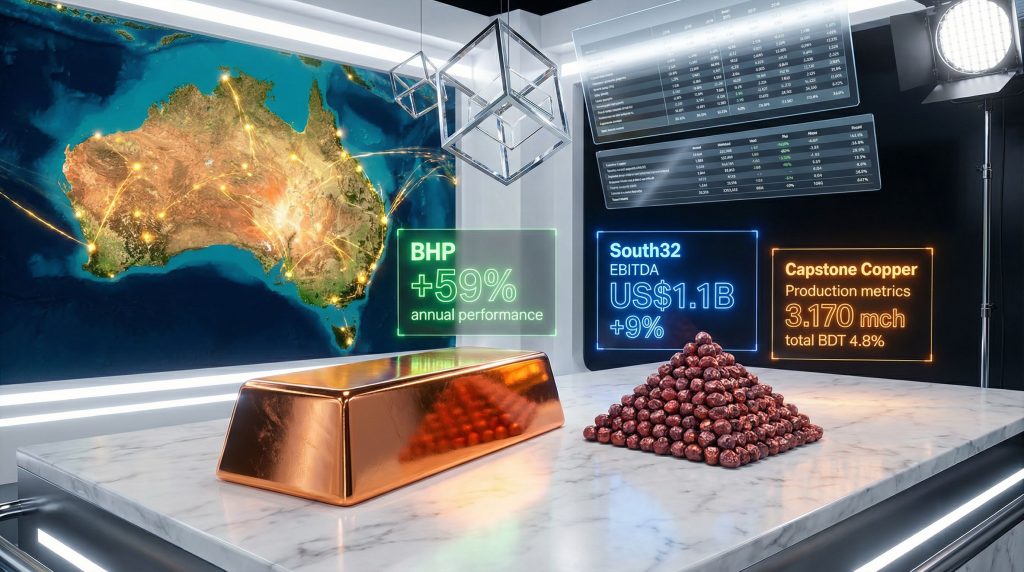
BHP Group Ltd (ASX: BHP) exemplifies the diversified mining strategy that appeals to risk-conscious investors seeking materials sector exposure. Trading at $54.56 with a remarkable 59% annual return, BHP demonstrates how operational scale translates into market resilience. The company's geographic diversification across Australia, the Americas, and other regions provides natural protection against country-specific political or regulatory risks.
The recent volatility pattern illustrates BHP's defensive characteristics effectively. Despite reaching a record high of $59.39 on 3 March 2026, the share price declined to $46.06 during the geopolitical uncertainty period before recovering alongside broader market sentiment. This price action established a clear support level range that technical analysts view as a foundation for future advancement.
Cost structure resilience during market volatility represents a key competitive advantage for large-scale miners. BHP's ability to maintain profitability across commodity price cycles stems from operational efficiency improvements, technological investments, and economies of scale that smaller competitors cannot replicate.
Technical Analysis vs. Fundamental Valuation Gaps
The current trading range between $46-$54 provides insight into market sentiment regarding BHP's fair value. Technical indicators suggest this range represents a consolidation phase following the dramatic 59% annual advance. Gable emphasises the $46.06 level as major support, expressing confidence that BHP should bounce from these technical levels.
BHP Performance Metrics Analysis
| Metric | 12-Month Performance | Current Valuation | Risk Assessment |
|---|---|---|---|
| Share Price Growth | +59% | $54.56 | Moderate |
| Volatility Range | $46.06-$59.39 | High | Elevated |
| Sector Leadership | Maintained | Strong | Low |
| Support Level | $46.06 | Confirmed | Stable |
Momentum sustainability assessment becomes crucial when evaluating whether BHP's 59% annual performance can continue. However, consideration of record copper prices suggests underlying fundamental support for elevated valuation levels. The combination of commodity price strength, operational efficiency improvements, and strategic capital allocation supports premium valuations. Nevertheless, investors must consider whether current pricing fully reflects these positive developments.
Why Are Pure-Play Copper Strategies Gaining Momentum?
Capstone Copper's Growth Trajectory Assessment
Capstone Copper Corp CDI (ASX: CSC) represents the pure-play copper investment thesis at its most concentrated form. Trading at $12.10 following a spectacular 97% annual advance, CSC demonstrates the potential rewards of focused commodity exposure during favourable market conditions. Mitch Belichovski from Morgans Financial identifies CSC as one of the limited pure-play copper alternatives available on the ASX, creating scarcity value for investors seeking targeted exposure.
Production scaling capabilities differentiate CSC from diversified mining giants through concentrated focus on operational optimisation and expansion projects. The company's growth strategy combines near-term brownfield enhancements with longer-term greenfield development opportunities, creating multiple value inflection points for patient investors.
Belichovski notes that copper production growth differentiates CSC from its peers, driven by a combination of near-term and longer-dated brownfield and greenfield projects, alongside a declining cost profile.
This production expansion approach provides CSC with operational leverage during copper price strength whilst building long-term asset base for sustained growth. The declining cost profile mentioned by analysts suggests operational efficiency improvements that enhance profitability across different copper price environments.
Market Positioning in Copper Supply Chains
Limited pure-play alternatives on the ASX create a structural advantage for companies like CSC that provide concentrated copper exposure. Investors seeking to capitalise on energy transition trends often prefer pure-play investments that move more directly with underlying commodity prices rather than diversified miners whose performance may be diluted by other commodities.
Price-earnings ratio attractiveness becomes particularly relevant when evaluating CSC's current valuation. Belichovski indicates that CSC was recently trading on a modest price-earnings ratio in 2026, offering good value at current price levels despite the substantial year-to-date gains. Moreover, understanding copper–uranium investment trends helps contextualise CSC's position within broader resource allocation patterns.
Growth differentiation versus established producers represents CSC's primary competitive advantage. Whilst larger miners like BHP possess greater financial resources and geographic diversification, pure-play copper miners can respond more quickly to market opportunities and deploy capital more specifically toward copper-focused projects.
How Does South32 Navigate Portfolio Complexity?
Asset Portfolio Transition Strategy
South32 Ltd (ASX: S32) exemplifies the challenges and opportunities inherent in managing a transitional mining portfolio. Trading at $4.58 with strong recent performance including 43% gains over six months and 28% year-to-date returns, S32 demonstrates how effective asset management can generate value despite operational complexity.
The Mozambique aluminium smelter situation illustrates the strategic decision-making required in portfolio optimisation. Mark Elzayed from Investor Pulse notes that the company placed this facility into care and maintenance in March 2026, representing a strategic pivot away from challenging operational environments. This decision reflects management's willingness to prioritise profitable operations over maintaining asset scale.
Base metals versus precious metals balance requires continuous evaluation as market conditions evolve. S32's diversified portfolio provides exposure to multiple commodity types, creating both hedging benefits and complexity in strategic planning. Consequently, the company must balance resource allocation between copper, zinc, silver, and other commodities based on market outlook and operational capabilities.
Financial Performance Despite Headwinds
South32's 1H FY26 results demonstrate resilient financial performance despite operational challenges. Underlying EBITDA of US$1.1 billion increased 9% from the prior corresponding period, whilst underlying earnings of US$435 million grew 16%, supported by higher base and precious metals prices.
South32 Financial Snapshot
| Financial Metric | 1H FY26 Result | Growth Rate | Strategic Impact |
|---|---|---|---|
| Underlying EBITDA | US$1.1B | +9% | Positive |
| Underlying Earnings | US$435M | +16% | Strong |
| Cannington Reserves | Increased | +28% | Significant |
| Share Price | $4.58 | +43% (6M) | Momentum |
The 28% increase in underground ore reserves at Cannington represents a particularly significant development for S32's long-term value proposition. This reserve expansion extends mine life and provides foundation for sustained cash generation from one of the company's core assets. For instance, copper and zinc production remained strong across the portfolio, demonstrating operational resilience despite broader challenges.
What Market Dynamics Shape Mining Investment Decisions?
Geopolitical Risk Assessment Framework
Recent geopolitical developments demonstrate the materials sector's sensitivity to global stability concerns. The Iran conflict created significant short-term volatility across commodity markets, with the S&P/ASX 200 Materials Index experiencing the previously mentioned 21% decline before recovering. This pattern illustrates how geopolitical events can create temporary disconnects between fundamental value and market pricing.
Supply chain disruption scenarios require careful evaluation when assessing mining investments. Companies with greater geographic diversification typically demonstrate more resilience during regional conflicts or trade disputes. This consideration particularly benefits miners like BHP whose operations span multiple continents and regulatory environments.
Regional stability considerations for long-term holdings become increasingly important as resource nationalism trends continue globally. Investors must evaluate not only current operational environments but also potential future changes in regulatory frameworks, tax policies, and foreign investment restrictions.
Technical vs. Fundamental Analysis Integration
Support and resistance level identification provides valuable entry point guidance for mining investments. The recent volatility across BHP, CSC, and S32 shares has established clear technical levels that can inform timing decisions. Technical indicators appearing neutral for S32, as Elzayed notes, suggest a consolidation phase following strong recent performance.
Momentum indicators versus valuation metrics create interesting decision frameworks for different investor types. Growth-oriented investors may prioritise momentum continuation, whilst value-focused approaches emphasise fundamental metrics relative to historical averages. Furthermore, examining successful copper growth strategy implementations can provide insights into sustainable competitive advantages. The mining sector's cyclical nature requires careful consideration of both approaches.
The next major ASX story will hit our subscribers first
Which Investment Strategy Aligns with Your Risk Profile?
Conservative Approach: Diversified Exposure Strategy
BHP's defensive characteristics during volatility make it suitable for conservative investors seeking materials sector exposure without concentrated commodity risk. Gable emphasises that BHP's diversification makes it a safer bet for investors to ride the commodities bull market, providing exposure to multiple commodity types through a single investment vehicle.
Dividend sustainability through commodity cycles represents an additional conservative investment consideration. Large diversified miners typically maintain more consistent payout policies compared to pure-play alternatives, providing income stability alongside capital appreciation potential.
Portfolio allocation considerations for stability suggest that diversified miners like BHP can serve as core holdings within broader investment strategies. The combination of operational scale, geographic diversification, and commodity variety provides natural risk mitigation compared to more concentrated alternatives.
Growth-Oriented Approach: Pure-Play Opportunities
Capstone's production scaling potential appeals to investors willing to accept higher volatility in exchange for concentrated exposure to copper demand growth. The 97% annual return demonstrates the potential rewards of successful pure-play positioning, whilst also illustrating the elevated risk profile of such investments.
Copper demand growth trajectory alignment with energy transition trends creates a compelling long-term thesis for pure-play copper miners. Investors with conviction regarding electrification and renewable energy adoption may prefer concentrated exposure through companies like CSC rather than diversified alternatives.
Higher volatility tolerance requirements are essential for pure-play copper investments. The concentrated nature of these business models amplifies both positive and negative commodity price movements, requiring investors to maintain long-term perspectives during inevitable cyclical downturns.
Balanced Approach: Multi-Asset Resource Exposure
South32's transitional portfolio benefits appeal to investors seeking middle-ground exposure between diversified giants and pure-play specialists. The company's base metals focus provides energy transition exposure whilst maintaining some diversification across commodity types.
Risk distribution across commodity types helps smooth returns during periods when individual commodities experience weakness. S32's combination of copper, zinc, silver, and aluminium exposure provides natural portfolio diversification within a single investment vehicle.
Medium-term outlook optimisation suggests that S32's current portfolio transition may position the company for improved performance as management completes strategic asset rationalisation. Elzayed's assessment that the stock represents a wait-and-see opportunity reflects this transitional nature.
How Do Expert Ratings Translate to Investment Actions?
Analyst Consensus Interpretation Framework
Buy, hold, and sell ratings require careful interpretation within the context of each analyst's methodology and time horizon. Gable's hold rating for BHP reflects confidence in support level bounce potential whilst acknowledging current fair valuation. Belichovski's buy rating for CSC emphasises production growth differentiation and attractive valuation metrics.
Price target reliability in volatile markets becomes questionable during periods of significant commodity price movement. Analysts must regularly update assumptions regarding copper, iron ore, and other commodity prices that drive mining company valuations. This dynamic environment requires investors to focus on underlying operational metrics rather than specific price targets.
Institutional versus retail investor considerations differ significantly in mining sector analysis. However, understanding buy hold or sell South32 Capstone Copper and BHP shares from different analytical perspectives provides comprehensive market insight. Institutional investors often prioritise operational cash flow sustainability and balance sheet strength, whilst retail investors may focus more heavily on share price momentum and technical indicators.
Timing Considerations for Market Entry
Technical indicator alignment with fundamentals provides optimal entry point identification for mining investments. The current environment where technical indicators appear neutral for several mining stocks suggests a potential accumulation phase for patient investors.
Market cycle positioning assessment requires understanding both commodity cycles and broader economic trends. For instance, accessing commodity market analysis can provide valuable context for timing decisions. The early-stage commodities bull market thesis suggests that current entry points may prove attractive for long-term investors despite elevated absolute price levels.
Key Investment Decision Factors:
- BHP: Diversified exposure with strong support levels
- CSC: Pure-play copper growth with production scaling
- S32: Transitional portfolio with operational improvements
- Market Timing: Early-stage commodities bull market environment
- Risk Assessment: Geopolitical volatility creating entry opportunities
Dollar-cost averaging versus lump-sum strategies offer different approaches for mining investment timing. The sector's inherent volatility suggests that systematic accumulation approaches may reduce timing risk compared to concentrated position building.
Building Your Mining Investment Framework
Risk Assessment Methodology
Commodity price sensitivity analysis should quantify potential return scenarios across different price environments for copper, iron ore, and other relevant commodities. This analysis helps investors understand the relationship between commodity price movements and share price performance for each mining company under consideration.
Operational risk evaluation criteria must encompass mine-specific factors including ore grade quality, processing complexity, labour relations, and regulatory compliance requirements. Companies operating in multiple jurisdictions face additional complexity in regulatory risk assessment and mitigation strategies.
Geographic and political risk considerations require ongoing monitoring as global political environments evolve. Mining investments in stable jurisdictions typically command valuation premiums compared to operations in higher-risk regions, reflecting the long-term nature of mining asset development.
Portfolio Integration Strategies
Correlation analysis with existing holdings helps determine appropriate position sizing for mining investments within broader portfolios. Materials sector exposure often provides inflation hedging benefits and portfolio diversification relative to technology or financial services investments.
Sector allocation optimisation approaches should consider both defensive and growth characteristics of different mining investment styles. Diversified miners like BHP provide different risk-return profiles compared to pure-play copper miners like CSC or transitional portfolios like S32.
Rebalancing frequency considerations for mining exposure depend on investor time horizons and volatility tolerance. The sector's cyclical nature suggests that systematic rebalancing approaches may capture volatility benefits whilst maintaining strategic allocation targets.
Investment Framework Summary:
- Risk tolerance assessment determines appropriate mining investment style
- Time horizon considerations influence choice between diversified and pure-play options
- Portfolio integration requires correlation analysis with existing holdings
- Market timing factors suggest current environment favours patient accumulation
- Ongoing monitoring essential due to commodity price and geopolitical volatility
When evaluating buy hold or sell South32 Capstone Copper and BHP shares decisions, investors must integrate technical analysis, fundamental valuation metrics, and strategic portfolio considerations within their individual risk frameworks. The current market environment provides opportunities across different mining investment styles, requiring careful selection based on individual investment objectives and risk tolerance levels.
Ready to Discover the Next Major Mining Opportunity?
Discovery Alert's proprietary Discovery IQ model delivers real-time alerts on significant ASX mineral discoveries, instantly empowering subscribers to identify actionable opportunities ahead of the broader market. Understand why historic discoveries can generate substantial returns by exploring major mineral discoveries that have delivered exceptional outcomes, then begin your 14-day free trial today to position yourself ahead of the market.