July 20, 2026
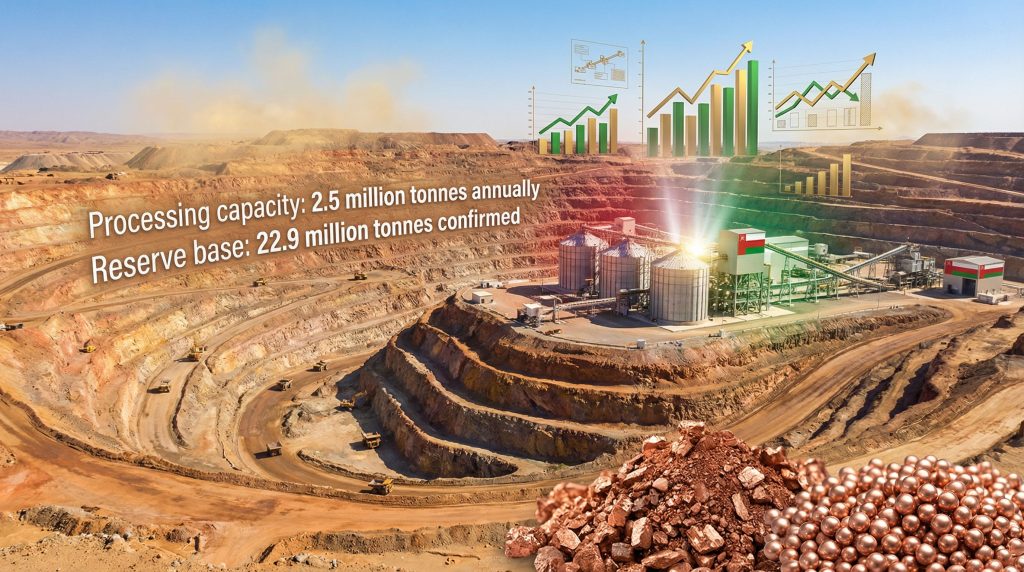
The Sultanate of Oman's ambitious Mazoon Copper Project stands as a testament to modern mining innovation and strategic economic diversification. This comprehensive development represents a pivotal moment for the nation's mining sector, demonstrating how advanced engineering, sophisticated financing, and environmental stewardship can combine to create sustainable industrial operations. Furthermore, the project's sophisticated approach to project finance strategies showcases the evolving landscape of mining investment in the Middle East.
Understanding Oman's Copper Mining Revolution
The Sultanate of Oman's strategic pivot toward mining sector development represents a calculated response to global energy transition dynamics and critical mineral supply security concerns. With copper demand projected to double by 2035 driven by renewable energy infrastructure and electric vehicle adoption, Oman's positioning within emerging copper supply chains reflects broader Gulf Cooperation Council economic diversification imperatives.
Disclaimer: The following analysis includes forward-looking statements regarding mining project economics, production timelines, and market positioning. Actual results may vary significantly due to commodity price volatility, technical challenges, regulatory changes, and global economic conditions.
Economic Diversification Through Critical Mineral Development
The Mazoon Copper Project exemplifies Oman's systematic approach to reducing hydrocarbon revenue dependence through strategic mineral resource development. Located in Yanqul, Al Dhahirah Governorate, this initiative demonstrates how geological assets can be transformed into long-term economic value creation engines within diversified national development frameworks.
Critical mineral security has emerged as a geopolitical imperative, with copper serving as the fundamental building block for renewable energy infrastructure, telecommunications networks, and transportation electrification. Oman's mineral reserves positioning allows the sultanate to participate in global supply chain diversification strategies while generating domestic employment and industrial capacity building opportunities.
The project's strategic importance extends beyond immediate economic returns to encompass technological capability development, environmental stewardship demonstration, and regional mining sector leadership establishment. These factors collectively position Oman as a reliable supplier within increasingly complex global mineral commodity networks. Moreover, understanding copper investment insights becomes crucial for stakeholders evaluating this emerging market opportunity.
When big ASX news breaks, our subscribers know first
Technical Infrastructure Configuration and Global Standards Comparison
Modern copper mining operations require integrated systems combining extraction methodology, processing technology, and environmental management protocols to achieve sustainable production targets. The Mazoon Copper Project's technical specifications demonstrate adherence to international best practices while incorporating region-specific operational adaptations.
Open-Pit Mining Configuration and Scale Analysis
The project's five open-pit mining configuration represents an optimized approach to ore body extraction, maximizing recovery while minimising operational complexity. This multi-pit strategy allows for sequential development phases, risk distribution across geological zones, and operational flexibility throughout the projected mine life cycle.
| Technical Specification | Mazoon Project | Global Industry Standard |
|---|---|---|
| Processing Capacity | 2.5 million tonnes annually | 1.5-4.0 million tonnes |
| Reserve Base | 22.9 million tonnes confirmed | 15-50 million tonnes |
| Concentrate Output | 115,000 tonnes at 21.5% purity | 50,000-200,000 tonnes |
| Operational Lifespan | 10-year mining cycle | 8-15 years |
| Material Movement | ~150 million tonnes total | 100-300 million tonnes |
Open-pit mining methodology enables efficient large-scale operations while maintaining safety protocols and environmental compliance standards. The configuration allows for systematic waste rock management, progressive rehabilitation implementation, and optimised equipment utilisation throughout operational phases.
Processing Plant Design and Metallurgical Capabilities
State-of-the-art processing facilities incorporate advanced flotation circuits, concentrate purification systems, and quality control mechanisms to achieve target specifications for international markets. Modern copper processing plants utilise multi-stage grinding, selective flotation, and dewatering technologies to maximise metal recovery while minimising environmental impact.
The metallurgical design emphasises copper concentrate grade optimisation, targeting 21.5% copper content to meet international trading standards and premium pricing tiers. Advanced process control systems monitor flotation chemistry, particle size distribution, and concentrate quality parameters in real-time to ensure consistent output specifications.
Water management systems integrate closed-loop recycling, tailings water recovery, and zero-liquid-discharge protocols to minimise environmental impact while maintaining operational efficiency. These systems are particularly critical in arid climates where water conservation directly impacts project economics and environmental compliance.
Multi-Commodity Output Strategy
Copper-gold concentrate production strategies maximise resource utilisation by recovering valuable by-products from the same ore processing circuits. Gold recovery as a co-product enhances project economics through diversified revenue streams while utilising existing processing infrastructure efficiently. The integration of copper and gold exploration methodologies demonstrates the sophisticated approach required for modern multi-commodity mining operations.
The integrated approach requires specialised metallurgical circuits capable of selective mineral separation, concentrate quality control, and multi-product marketing coordination. This strategy reduces per-unit production costs while increasing overall project returns through commodity diversification.
Financial Engineering Structures for Large-Scale Mining Projects
Project financing for major mining developments requires sophisticated capital structures balancing debt capacity, equity requirements, and risk allocation across multiple stakeholder groups. The Mazoon Copper Project's financing architecture demonstrates modern project finance principles adapted to regional market conditions and Islamic finance considerations.
Dual-Currency Syndicated Financing Architecture
The $400 million financing package represents a comprehensive approach to capital structure optimisation, incorporating both conventional and Islamic finance tranches to broaden lender participation while accommodating diverse investor mandates. This dual-tranche structure reflects the growing sophistication of regional capital markets and Islamic finance product development.
The financing structure allocates 60% of total project investment through debt instruments, with the remainder covered through equity contributions and other funding sources. This leverage ratio aligns with industry standards for established mining projects while maintaining adequate equity cushion for operational flexibility.
Key Financial Metrics:
- Total financing package: $400 million (RO154 million)
- Debt-to-total investment ratio: 60%
- Dual-currency structure: USD and Omani Rial tranches
- Multi-institutional syndication across local banks
- Conventional and Islamic finance integration
The dual-currency approach addresses both domestic and international cost structures while providing natural hedging against currency fluctuations. Omani Rial tranches cover local costs including labour, utilities, and domestic services, while USD tranches fund imported equipment, international contractors, and export-related expenses.
Risk Distribution Across Local Banking Consortium
Syndicated financing structures distribute project risks across multiple financial institutions, preventing concentration of exposure while ensuring adequate capital availability throughout project development phases. The consortium approach allows smaller regional banks to participate in large-scale project financing while maintaining manageable individual exposure levels.
Risk allocation mechanisms include:
- Credit risk sharing across syndicate members
- Currency risk distribution through dual-tranche structure
- Construction risk mitigation through phased drawdown schedules
- Operational risk management via comprehensive covenant structures
The involvement of both Ahlibank and Ahli Islamic alongside additional local institutions demonstrates effective risk pooling while maintaining alignment with both conventional banking regulations and Sharia compliance requirements. This structure enables broader participation in Oman's largest copper mining project while adhering to diverse institutional mandates.
Project Finance vs. Corporate Lending Approaches
Project finance methodologies focus on cash flow generation capacity, asset quality, and operational sustainability rather than sponsor credit strength alone. This approach enables higher leverage ratios while providing lenders with direct recourse to project assets and revenue streams.
Project Finance Characteristics:
- Asset-based security package
- Cash flow-dependent repayment structure
- Limited recourse to project sponsors
- Comprehensive technical and financial due diligence
- Operational milestone-based funding releases
The Mazoon financing demonstrates project finance principles through its focus on operational viability, technical feasibility validation, and market demand confirmation. Lenders evaluate mining reserves, processing technology, and offtake arrangements rather than relying primarily on corporate guarantees or sponsor balance sheet strength.
Environmental Standards in Modern Mining Operations
Contemporary mining operations integrate environmental protection protocols throughout project lifecycles, from initial planning through post-closure monitoring. These standards address water management, air quality, ecosystem preservation, and community impact mitigation while maintaining operational efficiency and economic viability. Additionally, implementing mine reclamation innovations ensures long-term environmental sustainability and compliance with international best practices.
Zero-Liquid-Discharge Water Management Systems
Advanced water treatment facilities eliminate liquid waste discharge through comprehensive recycling, treatment, and reuse systems. These technologies are particularly important in arid regions where water resources require careful management and environmental compliance demands strict discharge controls.
Environmental Protection Measures:
- Closed-loop water recycling infrastructure
- Air quality monitoring and dust suppression systems
- Groundwater protection protocols and monitoring
- Progressive rehabilitation planning and implementation
- Biodiversity conservation and habitat restoration programmes
Water management systems integrate multiple treatment stages including clarification, filtration, and chemical treatment to achieve reuse standards for processing operations. Excess water is managed through evaporation ponds and crystallisation systems to eliminate environmental discharge while recovering valuable minerals from waste streams.
Waste Management and Tailings Storage Facilities
Modern tailings management employs engineered storage facilities with comprehensive environmental monitoring, seepage control, and long-term stability assurance. These systems protect groundwater resources while enabling safe long-term storage of processing waste materials.
Tailings facility design incorporates geotechnical stability analysis, seepage collection systems, and progressive revegetation to minimise environmental impact throughout operational and post-closure phases. Advanced monitoring systems track facility performance and environmental parameters continuously.
Post-Mining Land Restoration Methodologies
Progressive rehabilitation strategies restore disturbed areas to productive land use through systematic soil replacement, revegetation, and ecosystem reconstruction. These programmes begin during operational phases and continue through mine closure to achieve long-term environmental sustainability.
Restoration methodologies include topsoil preservation, native species propagation, and habitat reconstruction to support local ecosystem recovery. Monitoring programmes track rehabilitation success through vegetation establishment, soil quality assessment, and wildlife population recovery metrics.
Contractor Integration and Technology Implementation
Large-scale mining projects require coordinated contractor management across engineering, construction, and operational phases. The Mazoon Copper Project demonstrates effective integration of international expertise with local capabilities to achieve technical objectives while supporting domestic capacity development.
EPCM Framework and Contractor Responsibilities
Engineering, Procurement, Construction Management frameworks provide integrated project delivery through single-point accountability while enabling specialised contractor participation across technical disciplines. This approach optimises project coordination while maintaining quality standards and schedule adherence.
| Contractor | Responsibility | Specialisation |
|---|---|---|
| Lycopodium (Canada) | EPCM services and plant design | Metallurgical engineering |
| STRABAG Oman | Earthworks and site preparation | Civil construction |
| Metso | Processing equipment supply | Mineral processing technology |
| ONEIC | Power infrastructure and substations | Electrical systems |
The EPCM approach enables specialised contractor deployment while maintaining project integration through comprehensive management systems. This methodology optimises technical expertise utilisation while ensuring schedule coordination and quality control across multiple work streams.
International vs. Local Contractor Integration
Successful project execution requires balancing international technical expertise with local knowledge, regulatory compliance, and community engagement capabilities. The contractor selection strategy demonstrates effective integration of global best practices with regional operational requirements.
International contractors provide specialised technical capabilities, advanced equipment access, and proven project delivery methodologies. Local contractors contribute regulatory knowledge, community relationships, and domestic supply chain integration while supporting national employment and business development objectives.
Technology Transfer and Knowledge Localisation
Strategic technology transfer programmes ensure long-term operational capability development within Oman's mining sector. These initiatives include technical training, equipment maintenance capabilities, and process optimisation knowledge to support sustainable operations beyond initial development phases.
Knowledge localisation encompasses operational procedures, maintenance protocols, and continuous improvement methodologies to build domestic expertise across technical disciplines. This approach supports long-term project sustainability while contributing to national capability development in strategic industries.
Transportation Infrastructure and Mining Economics
Efficient logistics networks directly impact mining project economics through transportation costs, delivery reliability, and market access optimisation. Strategic positioning relative to ports, processing facilities, and customer markets influences long-term competitiveness and operational flexibility.
ASYAD Group Logistics Partnership Analysis
Integrated logistics partnerships provide comprehensive transportation solutions encompassing mine-to-port delivery, storage facilities, and export coordination. These partnerships optimise supply chain efficiency while reducing operational complexity and transportation costs.
The ASYAD Group partnership demonstrates strategic alignment between mining operations and national logistics capabilities, ensuring reliable product delivery while supporting broader economic development initiatives. Integrated logistics reduce concentrate handling costs while improving delivery reliability to international customers.
Port Connectivity and Export Route Optimisation
Strategic port access enables efficient concentrate export while providing operational flexibility for market diversification. Modern port facilities accommodate bulk commodity handling requirements while ensuring quality preservation during storage and loading operations.
Export route optimisation considers transportation costs, delivery schedules, and customer location factors to maximise project returns while maintaining service reliability. Multiple port options provide operational flexibility and risk mitigation against infrastructure disruptions or capacity constraints.
Domestic vs. International Market Access Strategies
Market access strategies balance domestic industrial development opportunities with international export potential to optimise revenue generation and support broader economic development objectives. Flexible marketing approaches enable response to changing market conditions while maintaining operational efficiency.
Domestic market development supports regional industrial growth while reducing transportation costs and delivery complexity. International markets provide price optimisation opportunities and revenue diversification while contributing to export earnings and foreign exchange generation.
The next major ASX story will hit our subscribers first
Project Timeline and Modern Mining Development Cycles
Contemporary mining project development follows systematic phases encompassing feasibility validation, financing arrangement, construction management, and operational ramp-up. Each phase requires specialised capabilities and comprehensive risk management to ensure successful project delivery.
How is the construction phase being managed? (2024-2026)
Systematic project execution requires coordinated management across multiple parallel work streams while maintaining schedule adherence and quality standards. The construction timeline reflects modern mining project complexity and technical requirements.
Project Development Milestones:
- Groundbreaking ceremony completion: November 2024
- EPCM contract initiation and mobilisation: Q1 2024
- Infrastructure development and site preparation: 2024-2025
- Processing equipment installation and testing: 2025-2026
- Commissioning and operational ramp-up: Q2 2026
- Commercial production commencement: 2027
Construction phase coordination requires effective contractor management, quality control, and safety protocol implementation while maintaining environmental compliance throughout development activities. Regular milestone monitoring ensures schedule adherence and early identification of potential delays or technical challenges.
Operational Readiness and Workforce Development
Successful operational transition requires comprehensive workforce preparation including technical training, safety certification, and operational procedure familiarisation. These programmes ensure smooth transition from construction to production while maintaining safety standards and operational efficiency.
Workforce development encompasses equipment operation, maintenance procedures, quality control protocols, and emergency response capabilities. Local employment development supports community engagement while building long-term operational capability within the regional workforce.
Economic Multiplier Effects and Regional Development
Large-scale mining operations generate substantial economic impacts beyond direct project employment and revenue through supply chain development, service provider growth, and infrastructure improvement initiatives. These multiplier effects contribute to broader regional development and economic diversification.
Direct Employment Creation in Al Dhahirah Governorate
The Mazoon Copper Project creates direct employment opportunities across multiple skill levels including equipment operators, maintenance technicians, laboratory personnel, and administrative staff. Local hiring preferences support community development while building regional mining sector expertise.
Employment programmes include technical training initiatives, apprenticeship opportunities, and career development pathways to ensure sustainable workforce development. These programmes align with national employment strategies while supporting individual career advancement and skill development.
SME Development and Local Supply Chain Integration
Small and medium enterprise development programmes enable local business participation in mining supply chains through equipment supply, maintenance services, catering, transportation, and professional services. These opportunities support regional business development while reducing operational costs.
Supply chain integration requires capability development, quality standard compliance, and service delivery reliability to meet mining industry requirements. Technical assistance programmes support SME development while ensuring operational efficiency and quality maintenance.
Regional Infrastructure Development Catalysts
Mining project development often catalyses broader infrastructure improvements including road upgrades, power system enhancement, telecommunications improvement, and community facility development. These improvements benefit entire regions beyond direct project impacts.
Infrastructure development supports long-term regional growth through improved connectivity, enhanced service delivery, and increased investment attraction. These improvements create lasting economic benefits extending well beyond mining project operational phases.
Oman's Positioning in Global Copper Supply Chains
Strategic mineral resource development enables Oman to participate in evolving global supply chain networks while contributing to international commodity security and regional economic development. Effective positioning requires understanding market dynamics, customer requirements, and competitive positioning factors. However, unlocking copper opportunities requires strategic planning and market intelligence.
Critical Minerals Security and Geopolitical Considerations
Global supply chain diversification initiatives seek reliable copper sources outside traditional producing regions to reduce concentration risks and ensure supply security. Oman's political stability, strategic location, and technical capabilities position the sultanate as an attractive alternative supplier.
Copper demand growth driven by renewable energy infrastructure expansion, electric vehicle adoption, and digital technology proliferation creates opportunities for new producing regions to establish market positions within diversifying supply networks.
Geopolitical considerations include trade relationship stability, regulatory predictability, and transportation security factors that influence long-term supply partnership development. Oman's strategic positioning provides advantages in serving both regional and international markets effectively.
Export Market Targeting and Customer Base Development
Customer base development requires understanding specific quality requirements, delivery preferences, and commercial terms across different market segments. Strategic customer relationship development ensures stable demand while optimising pricing and service delivery arrangements.
Market targeting considers geographic proximity, transportation costs, payment terms, and long-term partnership potential to optimise revenue generation while maintaining operational flexibility. Diverse customer base development reduces market concentration risks while enabling price optimisation.
Integration with Oman's Broader Mining Sector Strategy
The Mazoon Copper Project serves as a flagship development within Oman's comprehensive mining sector development strategy encompassing multiple mineral resources and integrated industrial development. Successful project execution demonstrates capabilities supporting future mineral development initiatives.
Sector integration includes shared infrastructure utilisation, technical expertise development, and regulatory framework optimisation to support multiple projects while maximising economic returns. Coordinated development reduces individual project costs while building comprehensive mining sector capabilities.
Expansion Potential and Future Development Opportunities
Long-term value creation requires understanding expansion potential, technology advancement opportunities, and market development possibilities beyond initial project scope. Strategic planning for future growth enables optimisation of initial investments while positioning for evolving market conditions.
Exploration Activities Across MDO's Concession Areas
Minerals Development Oman controls extensive concession areas totalling 23,644 km² providing substantial exploration potential across multiple mineral types and geological formations. Systematic exploration programmes can identify additional development opportunities supporting long-term growth strategies.
Regional geological surveys indicate potential for copper, gold, silver, and industrial mineral discoveries across different concession areas. Coordinated exploration programmes optimise resource identification while sharing infrastructure and technical capabilities across multiple prospects.
Multi-Mineral Development Opportunities
Integrated mineral development strategies can optimise infrastructure utilisation while diversifying revenue sources through multiple commodity production. Shared processing facilities, transportation systems, and support infrastructure reduce per-project development costs while increasing operational efficiency.
Multi-mineral approaches enable response to changing market conditions while maintaining operational flexibility and revenue stability. Technical synergies between different mineral processing requirements can optimise facility utilisation and reduce operational costs.
Technology Upgrades and Capacity Enhancement Scenarios
Future technology advancement opportunities include processing efficiency improvements, automation implementation, and environmental performance enhancement. Regular technology assessment ensures continued competitiveness while enabling capacity optimisation and cost reduction.
Capacity enhancement scenarios consider market demand growth, operational optimisation opportunities, and infrastructure expansion potential to maximise long-term value creation. Strategic planning enables systematic growth while maintaining operational efficiency and environmental compliance.
Understanding Mazoon Copper Project Operations
What makes Mazoon different from other Middle Eastern mining projects?
The Mazoon Copper Project represents Oman's largest integrated copper operation, featuring advanced processing technology, comprehensive environmental controls, and strategic positioning within global supply chains. Its dual-currency financing structure and multi-institutional syndication demonstrate sophisticated project finance capabilities while accommodating both conventional and Islamic finance requirements.
How does the financing structure support long-term sustainability?
The dual-currency, multi-tranche approach distributes risk across local institutions while maintaining alignment with Islamic finance principles through dedicated Sharia-compliant tranches. The 60% debt-to-total-investment ratio provides adequate leverage while maintaining equity cushion for operational flexibility and market volatility management.
What environmental safeguards ensure responsible mining practices?
Zero-liquid-discharge systems, closed-loop water recycling, and progressive rehabilitation protocols exceed international environmental standards for copper mining operations. Comprehensive monitoring programmes track environmental performance while advanced treatment systems eliminate liquid waste discharge and protect groundwater resources.
How do transportation partnerships optimise project economics?
ASYAD Group logistics partnerships provide integrated mine-to-port transportation, storage facilities, and export coordination. These partnerships optimise supply chain efficiency while reducing operational complexity and transportation costs, ensuring reliable product delivery to international customers.
What expansion potential exists beyond initial development?
MDO's extensive 23,644 km² concession areas provide substantial exploration potential across multiple mineral types. Systematic exploration programmes can identify additional development opportunities while sharing infrastructure and technical capabilities, supporting long-term growth and revenue diversification strategies.
Disclaimer: This analysis contains forward-looking statements regarding mining project development, market conditions, and operational projections. Actual results may vary significantly due to commodity price volatility, technical challenges, regulatory changes, environmental factors, and global economic conditions. Investment decisions should be based on comprehensive due diligence and professional advisory consultation.
Looking for Strategic Exposure to Critical Mineral Discoveries?
Discovery Alert's proprietary Discovery IQ model provides real-time alerts on significant ASX mineral discoveries, instantly empowering subscribers to identify actionable opportunities ahead of the broader market. Understand why major mineral discoveries can generate substantial returns by exploring Discovery Alert's dedicated discoveries page, showcasing historic examples of exceptional outcomes, and begin your 30-day free trial today to position yourself ahead of the market.