May 21, 2026
The Evolution of Mechanical Cutting Systems in Underground Mining
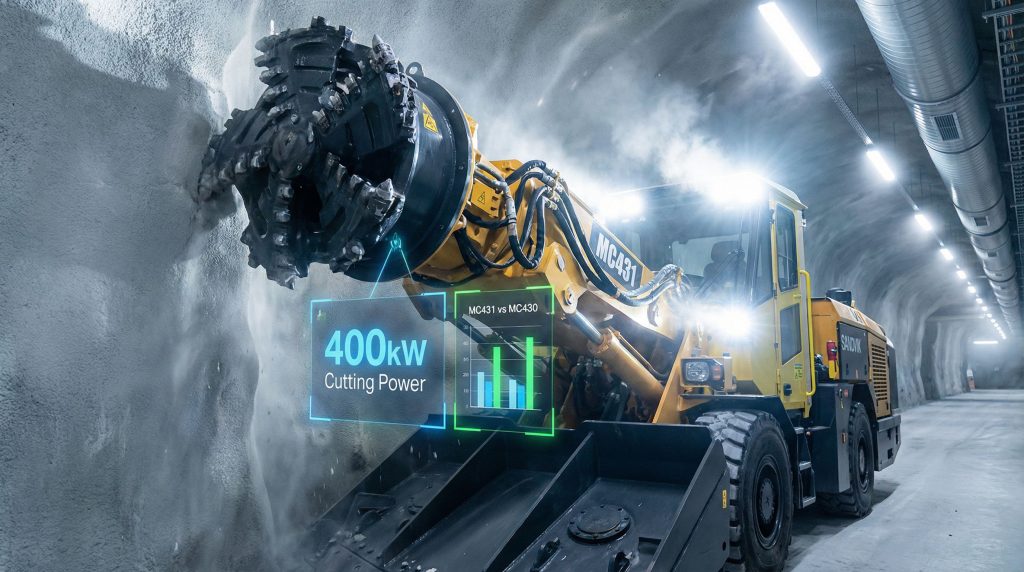
The underground mining industry has undergone a fundamental transformation over the past century, evolving from labor-intensive drill-and-blast methods to sophisticated mechanical cutting technologies. This shift represents more than incremental improvement; it embodies a complete reimagining of how minerals are extracted from beneath the earth's surface. The Sandvik MC431 continuous miner exemplifies this technological revolution, bringing 400kW of cutting power to Australian underground operations for the first time.
Traditional blasting techniques, while effective, create operational challenges that extend far beyond the immediate extraction process. Ventilation requirements, safety protocols, and production scheduling all become more complex when explosive materials are involved. Mechanical cutting systems eliminate these complications while delivering consistent advance rates that can be precisely controlled and optimised.
The economic drivers behind continuous mining adoption stem from multiple operational advantages. Reduced downtime between blasting cycles, elimination of explosive material handling, and improved profile control all contribute to enhanced operational efficiency. When properly matched to geological conditions, continuous miners can achieve advance rates that traditional methods struggle to match.
Understanding Continuous Mining Technology Performance Metrics
Evaluating continuous mining equipment requires understanding specific performance indicators that differentiate these machines from conventional extraction methods. Cutting power represents the primary specification, with the MC431's 400kW cutting capability providing the mechanical force necessary to fracture and remove rock material continuously.
Hydraulic traction systems offer significant advantages in underground mobility scenarios. Unlike traditional wheel-based systems, hydraulic traction provides:
- Enhanced stability on uneven surfaces
- Improved manoeuvrability in confined spaces
- Reduced ground pressure distribution
- Superior climbing capability on inclined surfaces
Double-pass mining configurations optimise material removal efficiency by allowing operators to cut the full tunnel profile in two complementary passes. This methodology ensures precise dimensional control while maintaining optimal cutting angles throughout the excavation process.
When big ASX news breaks, our subscribers know first
Technical Specifications and Engineering Excellence of the MC431
Power and Performance Capabilities
The Sandvik MC431 continuous miner represents a significant advancement in mechanical cutting technology, building upon the proven foundation of the MC430 platform. With 400kW of cutting power, this machine delivers the mechanical force necessary to tackle challenging underground conditions while maintaining operational efficiency.
| Specification | MC431 Value | Application Benefit |
|---|---|---|
| Cutting Power | 400kW | Enables continuous operation in hard rock conditions |
| Mining Configuration | Double-pass | Optimises profile control and material handling |
| Traction System | Hydraulic | Provides superior underground mobility |
| Primary Application | Place change mining | Maximises operational flexibility |
| Shear-up Capability | Enhanced | Supports strong advance rates |
The machine's shear-up capability represents a critical advancement for underground operations requiring vertical cutting profiles. This feature enables operators to maintain optimal cutting geometry even when working in challenging geological formations or confined spaces.
Austrian Manufacturing Standards and Quality Assurance
Manufacturing at Sandvik's Zeltweg facility in Austria ensures compliance with stringent European quality standards. The facility's factory acceptance testing protocols validate every aspect of machine performance before shipment, providing operators with confidence in equipment reliability.
Austrian manufacturing standards incorporate ISO 9001 quality management frameworks alongside specialised mining equipment certifications. This comprehensive approach addresses not only mechanical specifications but also safety systems, control interfaces, and maintenance accessibility.
The completed acceptance testing for the first Australian MC431 marks a milestone in quality validation, confirming that the machine meets operational requirements for Australian underground conditions.
Operational Design Features
Place change mining optimisation represents a key design consideration for the MC431. This operational methodology requires equipment capable of rapid repositioning and precise cutting control, capabilities that the machine's hydraulic systems and control architecture specifically address.
Profile control mechanisms ensure dimensional accuracy throughout the excavation process. Advanced cutting head design and positioning systems enable operators to maintain precise tunnel geometry while adapting to geological variations.
Ground support integration capabilities allow simultaneous excavation and support installation, reducing cycle times and improving overall operational efficiency. This integrated approach minimises exposure time for personnel working in freshly excavated areas.
How the MC431 Addresses Australian Underground Mining Challenges
Underground Conditions and Equipment Requirements
Australian underground mining operations present unique challenges that require specialised equipment solutions. The combination of geological diversity, regulatory requirements, and operational demands creates a complex environment that traditional mining methods often struggle to address efficiently.
The MC431's design specifically addresses several critical factors affecting Australian underground operations:
Geological Considerations:
- Variable rock hardness across different mining regions
- Complex geological structures requiring precise excavation control
- Seam geometry variations demanding operational flexibility
- Ground stability challenges requiring immediate support installation
Regulatory Compliance Framework:
Australian underground mining operations must comply with comprehensive safety and operational regulations including state-based mining legislation, Safe Work Australia standards, and commodity-specific requirements. Understanding mining permitting basics becomes crucial for successful implementation of continuous mining equipment.
Continuous mining equipment must demonstrate compliance with AS 4050 series standards for underground mining equipment, state-based Work Health and Safety mining regulations, ventilation and air quality management requirements, and operator certification and training standards.
Operational Efficiency Improvements
The transition from drill-and-blast to continuous mining methodologies offers quantifiable operational advantages. Advance rate optimisation becomes possible through consistent cutting parameters and eliminated blast-related delays.
Key Efficiency Gains:
- Continuous Operation: Elimination of blast-related production interruptions
- Reduced Ventilation Requirements: Lower air quality management complexity
- Improved Safety Profile: Elimination of explosive material handling risks
- Enhanced Profile Control: Precise dimensional accuracy throughout excavation
Maintenance scheduling becomes more predictable with continuous miners compared to drill-and-blast operations. The implementation of data-driven operations enables more accurate total cost of ownership calculations.
The MC431's hydraulic traction system provides particular advantages in Australian underground conditions where floor stability and gradient variations present operational challenges. Superior mobility enables operators to maintain productivity across diverse underground terrain.
Sandvik's Mechanical Cutting Portfolio Strategy
Building on Proven Technology Platforms
The MC431 represents an evolutionary advancement building upon the 13-year operational track record of the MC430 in South African mining operations. This technology transfer approach minimises deployment risk while incorporating operational improvements developed through extensive field experience.
Sandvik's strategy emphasises proven reliability over experimental technology, recognising that underground mining operations require equipment with demonstrated performance capabilities. Furthermore, the company's focus on engineering excellence and product quality reflects this conservative yet progressive approach to technology development.
The South African operational experience provides valuable baseline data for Australian deployment. Similar geological conditions and mining methodologies create confidence in technology transfer success, while regional adaptations address specific Australian operational requirements.
Market Positioning and Competitive Advantages
The continuous mining equipment market demands solutions that balance technological capability with operational reliability. Modern mining operations increasingly embrace AI in mining innovation alongside proven mechanical systems for optimal results.
Sandvik's positioning emphasises total cost of ownership advantages through:
- Proven Technology Foundation: 13 years of MC430 operational validation
- Manufacturing Quality: Austrian facility standards and testing protocols
- Service Infrastructure: Comprehensive support network development
- Operator Training: Specialised certification programs
What are the key benefits of continuous mining over traditional methods?
Continuous mining offers eliminated blast-related delays, reduced ventilation complexity, improved safety profiles, and enhanced dimensional control compared to conventional drill-and-blast operations.
Integration with existing underground fleet operations requires careful consideration of equipment compatibility, operator training requirements, and maintenance infrastructure. The MC431's design philosophy addresses these integration challenges through standardised control interfaces and maintenance procedures.
Implementation Considerations for Mining Operations
Site-Specific Requirements Assessment
Successful MC431 deployment requires comprehensive evaluation of geological, operational, and infrastructure factors. Site suitability analysis must consider rock strength characteristics, seam geometry, and existing underground infrastructure capabilities.
Geological Suitability Factors:
- Rock compressive strength and abrasiveness
- Structural geology and fault systems
- Groundwater conditions and drainage requirements
- Seam thickness and continuity characteristics
Infrastructure requirements extend beyond the machine itself to encompass power distribution, ventilation capacity, and material handling systems. Underground electrical infrastructure must accommodate the MC431's 400kW power requirements while maintaining safety standards.
Operator training and certification programs ensure safe and efficient machine operation. However, implementing enhanced safety operations requires specialised continuous mining training that addresses machine-specific operational procedures, maintenance requirements, and safety protocols unique to mechanical cutting equipment.
Economic Analysis Framework
Investment analysis for continuous mining equipment requires evaluation of multiple cost and benefit factors extending throughout the equipment lifecycle.
| Cost Component | Consideration Factors |
|---|---|
| Capital Expenditure | Equipment cost, installation, commissioning |
| Operational Costs | Power consumption, consumables, labour |
| Maintenance Costs | Scheduled maintenance, component replacement |
| Infrastructure Costs | Power distribution, ventilation modifications |
| Training Costs | Operator certification, ongoing skill development |
Productivity Improvement Metrics:
- Advance rate comparisons with existing methods
- Cycle time reductions through continuous operation
- Profile accuracy improvements reducing rework requirements
- Safety incident rate reductions
Return on investment calculations must account for operational improvements beyond simple productivity gains. Reduced ventilation requirements, elimination of explosive material costs, and improved safety outcomes all contribute to total cost reduction.
Integration with Existing Operations
Fleet compatibility assessments ensure seamless integration with existing underground equipment. The MC431's design considers interaction with load-haul-dump units, shuttle cars, and roof support systems commonly employed in Australian underground operations.
Workflow optimisation strategies address the transition from batch-oriented blast cycles to continuous production methodologies. Consequently, this operational shift requires adjustment of support functions including material handling, ventilation management, and maintenance scheduling.
Safety protocol adaptations ensure continuous mining operations maintain compliance with existing underground safety standards while capitalising on the inherent safety advantages of eliminating explosive materials from the mining process.
Future of Continuous Mining Technology in Australia
Industry Trends and Technological Advancement
The mechanical cutting equipment sector continues evolving toward increased automation and remote operation capabilities. In addition, understanding current industry evolution trends helps predict how future MC431 iterations may incorporate advanced sensor systems, predictive maintenance technologies, and autonomous navigation capabilities.
Automation integration possibilities include:
- Automated cutting pattern optimisation
- Real-time geological condition monitoring
- Predictive maintenance alerting systems
- Remote operation and monitoring capabilities
These technological enhancements promise to further improve operational efficiency while reducing personnel exposure to underground hazards.
Market Expansion Opportunities
The April 2026 delivery of Australia's first MC431 marks the beginning of potential market expansion across multiple commodities and mining regions. Coal mining applications represent the primary initial market, but hard rock mining applications offer significant growth potential.
Potential Applications Include:
- Underground coal development and production
- Hard rock mining tunnel development
- Infrastructure tunnel construction
- Specialised excavation applications
Technology adoption barriers primarily involve operational familiarity and infrastructure readiness rather than technological limitations. Furthermore, as Australian mining operations gain experience with continuous mining methodologies, adoption rates are expected to accelerate.
The underground development project pipeline across Australia presents substantial opportunities for continuous mining technology deployment. According to Geomechanics International, major mining companies increasingly recognise the operational advantages these systems provide, particularly in challenging geological conditions.
The next major ASX story will hit our subscribers first
Maximizing Operational Performance with Advanced Continuous Mining
The Sandvik MC431 continuous miner represents more than technological advancement; it embodies a fundamental shift in underground mining methodology. The combination of 400kW cutting power, hydraulic traction systems, and proven design principles creates operational capabilities that traditional mining methods cannot match.
Strategic implementation requires careful consideration of geological conditions, infrastructure requirements, and operational integration factors. However, the operational advantages – including continuous production capability, enhanced safety profiles, and improved dimensional control – justify the comprehensive evaluation process.
Australia's mining industry stands positioned to capitalise on continuous mining technology as operational experience grows and infrastructure capabilities expand. For instance, Mining Magazine highlights how the successful deployment of the MC431 will provide valuable baseline data for future continuous mining implementations across diverse geological and operational conditions.
Investment in continuous mining technology represents strategic positioning for long-term operational excellence. As the industry continues evolving toward more efficient and safer extraction methodologies, early adopters of proven continuous mining systems gain competitive advantages through improved productivity, reduced operational complexity, and enhanced safety performance.
The transformation of Australian underground mining through advanced mechanical cutting technology has begun, with the MC431 leading this evolution toward more efficient and safer underground operations.
Ready to Discover the Next Mining Technology Breakthrough?
Discovery Alert's proprietary Discovery IQ model delivers real-time alerts on significant mining and technology discoveries across the ASX, instantly empowering subscribers to identify actionable opportunities ahead of the broader market. Explore how major discoveries can generate substantial returns and begin your 14-day free trial today to position yourself ahead of technological advancements transforming the mining sector.