August 14, 2026
The Mechanical Evolution of Industrial Equipment Protection
Modern heavy machinery operates under extreme conditions that would destroy conventional equipment within hours. Industrial operations spanning from massive excavation sites to remote extraction facilities demand lubrication systems capable of withstanding pressures exceeding 2,000 MPa while maintaining performance across temperature ranges from arctic conditions to desert heat. This mechanical reality drives a fundamental transformation in how sustainable lubrication in mining must perform, not merely as maintenance products, but as critical components enabling environmentally responsible operations in sensitive locations.
The shift toward environmentally acceptable lubricants represents more than regulatory compliance. Furthermore, it reflects an engineering evolution where performance enhancement and environmental protection converge through advanced synthetic chemistry and precision additive formulation. Understanding these technical mechanisms reveals why sustainable lubrication technologies now deliver superior operational outcomes while simultaneously reducing ecological impact across multiple contamination pathways.
When big ASX news breaks, our subscribers know first
Environmental Impact Pathways in Heavy Industrial Operations
Heavy machinery operations create multiple contamination vectors through hydraulic system leaks, gear oil migration, and cable lubrication runoff. Equipment operating in wet conditions, particularly draglines and excavators with open gear systems, poses elevated contamination risks when traditional petroleum-based products encounter soil and groundwater systems.
Traditional mineral oil persistence in industrial environments varies significantly based on soil composition, microbial activity, and climate conditions. Scientific literature documents persistence ranging from one to ten years depending on environmental factors, with contaminated soil requiring extensive remediation efforts. Spill incidents involving conventional lubricants can migrate substantial distances through permeable soil layers, potentially affecting groundwater systems and requiring comprehensive environmental response protocols.
High-Risk Contamination Points:
- Hydraulic systems operating near water bodies or sensitive habitats
- Cable and wire rope lubrication exposed to environmental elements
- Mobile equipment fuel and lubricant storage in remote locations
- Equipment maintenance areas without proper containment systems
Aquatic toxicity studies demonstrate that conventional mineral oils exhibit LC50 values harmful to fish and invertebrate populations. These persistence characteristics necessitate costly remediation protocols when contamination occurs, with cleanup operations requiring specialised equipment and extended timeframes for ecosystem restoration.
Technical Framework for Environmental Acceptability Standards
Environmentally acceptable lubricants achieve performance equivalence through synthetic chemistry that fundamentally differs from petroleum-derived base stocks. These formulations utilise synthetic esters derived from renewable feedstocks, polyalkylene glycols engineered for extreme temperature applications, and bio-based polyalphaolefins that match conventional product load-carrying capacity.
Core Performance Criteria:
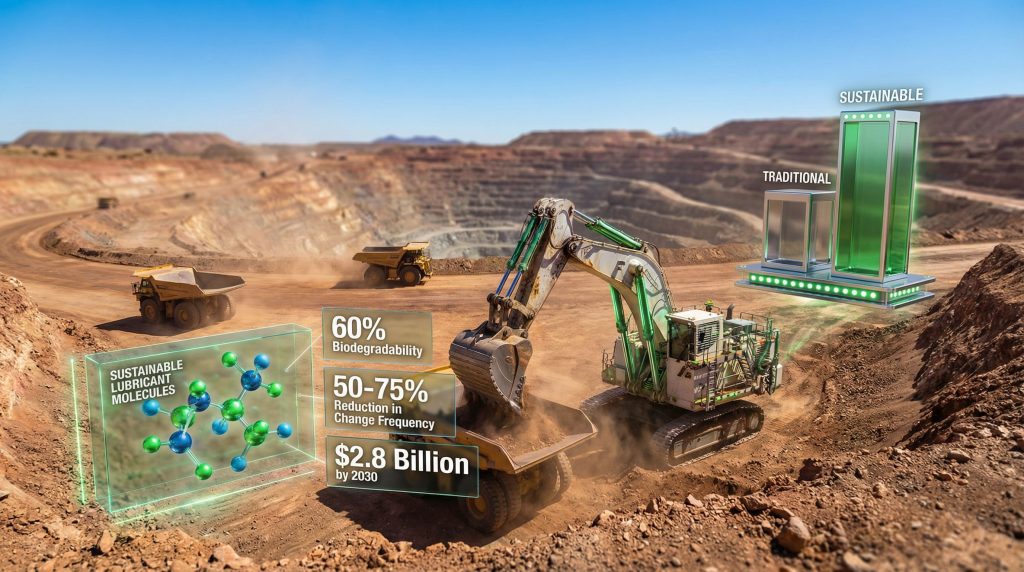
- Biodegradability: OECD 301B testing protocols requiring 60% degradation within 28-day assessment periods
- Ecotoxicity compliance: Meeting regulatory thresholds for aquatic organism protection through standardised testing
- Non-bioaccumulation properties: Preventing contaminant concentration in food chain systems
- Renewable content: Plant-derived base oil components reducing fossil fuel dependence
Synthetic ester technology provides superior polarity for enhanced wear protection while maintaining biodegradable characteristics. These molecules demonstrate naturally higher viscosity indices compared to mineral oils, enabling consistent performance across wider temperature ranges. Polyalkylene glycol formulations excel in extreme temperature applications, maintaining fluidity at -40°C while providing thermal stability up to 150°C operational ranges.
Advanced additive packages enhance friction reduction capabilities, achieving coefficient reductions of 15-25% compared to conventional formulations. This friction modification directly translates to energy efficiency improvements, with documented electricity consumption reductions of 3-8% in electric drive systems and fuel savings of 2-5% in diesel-powered mobile equipment.
Contamination Prevention Through Chemical Engineering
Traditional petroleum-based lubricants create environmental hazards through multiple chemical pathways. Mineral oil components demonstrate persistent organic pollutant characteristics, resisting natural biodegradation processes and accumulating in soil matrices. These compounds exhibit variable aquatic toxicity profiles, with some components bioaccumulating in aquatic organisms and concentrating through food chain magnification.
Spill scenarios in industrial environments follow predictable contamination patterns. Surface spills migrate through soil layers based on permeability characteristics, potentially reaching groundwater systems and creating long-term pollution plumes. Equipment operating in wet conditions accelerates contaminant dispersion through increased water contact and enhanced transport mechanisms.
Critical Contamination Mechanisms:
- Soil infiltration: Petroleum products penetrating through multiple soil horizons
- Groundwater migration: Contaminant plumes following hydraulic gradients
- Surface runoff: Direct water body contamination during precipitation events
- Vapour phase transport: Volatile components affecting air quality in enclosed operations
Environmental persistence varies dramatically based on local conditions. Clay soils with low permeability may retain contaminants for extended periods, while sandy soils facilitate rapid migration but also enhanced microbial degradation under favourable conditions. Temperature influences biodegradation rates, with cold climate operations showing significantly reduced natural attenuation compared to temperate environments.
Advanced Synthetic Chemistry Performance Mechanisms
Environmentally acceptable lubricants achieve equivalent performance through engineered molecular structures that enhance specific tribological properties. Synthetic esters provide superior boundary lubrication through polar molecular attraction to metal surfaces, creating durable lubricant films under extreme pressure conditions. This molecular mechanism enables load-carrying capacity matching conventional products while maintaining complete biodegradability.
Polyalkylene glycol chemistry offers unique advantages for extreme temperature applications. These synthetic polymers maintain consistent viscosity across wide temperature ranges while exhibiting lower volatility than petroleum-based alternatives. PAG formulations demonstrate excellent thermal stability, preventing deposit formation that degrades equipment performance over extended service intervals.
| Technology Type | Performance Advantage | Environmental Benefit |
|---|---|---|
| Synthetic Esters | Superior wear protection, high VI | Complete biodegradability |
| Polyalkylene Glycols | Extreme temperature performance | Reduced emissions through lower volatility |
| Vegetable Oil Derivatives | Renewable resource base | Enhanced oxidation stability |
| Bio-based PAOs | Conventional performance profile | Sustainable feedstock utilisation |
Extended Service Performance:
Modern synthetic formulations enable extended drain intervals through enhanced oxidation resistance and thermal stability. Quality environmentally acceptable lubricants demonstrate service life extensions of 100-300% compared to conventional products under equivalent operating conditions. This extended performance reduces maintenance frequency, equipment downtime, and lubricant disposal volumes.
Water resistance capabilities prevent performance degradation in wet operating environments. Advanced demulsification properties enable rapid water separation, maintaining lubricant integrity in contaminated conditions typical of industrial operations.
Operational Efficiency Enhancement Through Sustainable Technology
Energy efficiency improvements through advanced lubrication technology directly impact operational economics. Friction reduction mechanisms in synthetic formulations decrease power consumption across hydraulic systems, gear drives, and bearing applications. These efficiency gains compound over equipment operating cycles, producing measurable fuel and electricity savings.
Industrial operations utilising environmentally acceptable lubricants report significant maintenance cost reductions through extended service intervals and improved equipment protection. Predictive maintenance programmes enabled by superior lubricant stability provide early warning of component degradation, preventing catastrophic failures and minimising unplanned downtime.
Documented Operational Benefits:
- Reduced friction coefficients: 15-25% improvement enabling energy savings
- Extended drain intervals: Service life improvements of 100-300% under optimal conditions
- Enhanced cold-start protection: Reduced wear during startup cycles in extreme climates
- Superior water separation: Maintained performance in contaminated operating environments
Heat generation reduction extends component service life through decreased thermal stress on seals, bearings, and hydraulic components. Lower operating temperatures reduce seal degradation rates and prevent lubricant oxidation that creates harmful deposits and acids.
Equipment protection enhancement occurs through improved seal compatibility and corrosion resistance. Modern synthetic lubricants utilise additive packages specifically engineered for extended material contact, preventing degradation of elastomeric seals and metallic components over extended service periods.
The next major ASX story will hit our subscribers first
Implementation Strategy for Sustainable Lubrication Programs
Successful transition to environmentally acceptable lubricants requires systematic assessment of equipment applications, environmental exposure risks, and performance requirements. High-risk applications include equipment operating near water bodies, mobile machinery accessing environmentally sensitive areas, and systems with elevated leak potential due to design or operating conditions.
Risk Assessment Protocol:
- Environmental exposure mapping: Identifying equipment location relative to sensitive ecosystems
- Leak probability analysis: Assessing system design vulnerabilities and maintenance history
- Regulatory compliance requirements: Understanding jurisdiction-specific environmental standards
- Performance specification matching: Ensuring product capabilities meet operational demands
Product selection requires detailed analysis of viscosity requirements, load specifications, temperature ranges, and material compatibility considerations. However, compatibility testing with existing seals and system materials prevents performance degradation during transition periods.
Phased Implementation Approach:
- Phase 1: Critical environmental exposure applications requiring immediate protection
- Phase 2: Mobile equipment with accessible maintenance schedules
- Phase 3: Fixed plant equipment during scheduled maintenance intervals
- Phase 4: Specialty applications requiring custom formulation development
Performance monitoring systems track key indicators including equipment availability, unplanned maintenance events, lubricant consumption rates, and total operational costs. Condition monitoring through oil analysis provides predictive maintenance capabilities while verifying lubricant performance over extended service intervals.
What Are the Primary Regulatory Standards?
International environmental standards establish testing protocols and performance criteria for environmentally acceptable lubricants. OECD testing methodologies provide standardised assessment of biodegradability, ecotoxicity, and bioaccumulation potential across multiple environmental matrices.
Primary Testing Standards:
- OECD 301B: Ready biodegradability assessment using standardised test conditions
- OECD 201: Algae growth inhibition testing for primary producer impact assessment
- OECD 202: Daphnia acute immobilisation evaluation for aquatic invertebrate protection
- OECD 203: Fish acute toxicity assessment using standardised test species
Regional regulatory frameworks implement these international standards through jurisdiction-specific requirements. North American standards include EPA Vessel General Permit requirements for marine applications and state-specific regulations in environmentally sensitive areas. Canadian Environmental Protection Act compliance establishes additional testing and reporting requirements for industrial lubricant applications.
European Union standards encompass EU Ecolabel certification for biodegradable lubricants, REACH regulation compliance for chemical safety assessment, and Water Framework Directive requirements for equipment operating near water bodies. These comprehensive frameworks establish performance baselines while enabling innovation in sustainable lubrication in mining technology development.
Economic Impact Analysis of Sustainable Lubrication
Total cost of ownership analysis reveals complex economic relationships between initial product costs, operational efficiency gains, and risk mitigation value. Premium pricing for environmentally acceptable lubricants typically ranges 20-40% above conventional alternatives, but extended drain intervals and reduced disposal costs provide offsetting economic benefits.
Cost Structure Analysis:
| Cost Factor | Traditional Lubricants | Sustainable EALs | Economic Impact |
|---|---|---|---|
| Product price | Baseline | 20-40% premium | Higher initial cost |
| Change frequency | Standard intervals | 100-300% extension | Reduced labour and downtime |
| Disposal costs | Hazardous waste rates | Reduced classification | Lower waste management costs |
| Insurance premiums | Standard environmental coverage | 5-15% reduction | Risk mitigation benefit |
Consequently, productivity improvements through enhanced equipment reliability and reduced maintenance requirements provide measurable operational value. Energy savings from improved friction characteristics compound over equipment operating cycles, particularly significant for high-utilisation mobile equipment and continuous-operation fixed plant systems.
Risk mitigation value includes spill cleanup cost avoidance, regulatory penalty prevention, and reputation protection in increasingly ESG-focused investment environments. Environmental liability reduction becomes increasingly valuable as regulatory enforcement intensifies and environmental damage quantification methodologies improve.
Productivity Enhancement Metrics:
- Reduced equipment downtime: Extended component service life through superior protection
- Energy efficiency gains: Measurable fuel and electricity consumption reductions
- Simplified inventory management: Multi-grade formulations reducing stock requirements
- Enhanced equipment resale value: Superior maintenance records supporting higher valuations
Advanced Technology Integration in Modern Lubrication Systems
Next-generation lubrication technologies incorporate nanotechnology, IoT connectivity, and bio-based innovation to enhance both performance and environmental compatibility. Nanoparticle friction modifiers achieve wear reduction of 40-60% through molecular-scale surface interaction, while smart additives provide real-time condition monitoring capabilities.
Magnetic nanoparticles enable enhanced separation and recycling protocols, supporting circular economy principles in sustainable lubrication in mining management. Self-healing lubricant films extend equipment protection during momentary lubricant film breakdown, preventing wear that would require component replacement.
Digital Integration Capabilities:
- Real-time viscosity monitoring: Continuous assessment of lubricant condition and contamination levels
- Predictive maintenance algorithms: Data-driven scheduling based on actual lubricant degradation rates
- Automated dispensing systems: Reduced waste and human exposure through precision application
- Blockchain tracking: Sustainability compliance verification throughout product lifecycle
Bio-based innovation continues expanding renewable feedstock utilisation through algae-derived base oils, genetically modified organism-free renewable sources, and carbon-negative lubricants incorporating atmospheric CO2 capture. These emerging technologies position sustainable lubrication in mining as a carbon sequestration mechanism rather than merely a reduced-impact alternative.
Advanced recycling technologies enable closed-loop lubrication systems where used lubricants undergo molecular reconstruction to restore original performance characteristics. This circular approach eliminates disposal requirements while reducing virgin feedstock consumption across multiple product lifecycles.
Environmental Impact Quantification and Life Cycle Assessment
Life cycle assessment methodology provides comprehensive environmental impact quantification from raw material extraction through end-of-life disposal. Cradle-to-grave analysis encompasses manufacturing energy consumption, transportation emissions, use-phase efficiency contributions, and disposal or recycling environmental impact.
Carbon footprint quantification reveals significant emission reductions across multiple lifecycle stages. Manufacturing process emissions decrease 25-30% for bio-based feedstocks compared to petroleum extraction and refining. Use-phase efficiency improvements provide operational emission reductions of 3-8% through reduced energy consumption.
Comparative Environmental Impact:
| Impact Category | Traditional Products | Sustainable EALs | Improvement |
|---|---|---|---|
| Manufacturing CO2e | 2.5-3.2 kg CO2/L | 1.8-2.4 kg CO2/L | 25-30% reduction |
| Use-phase efficiency | Baseline performance | 3-8% energy savings | 0.1-0.3 kg CO2/L operational benefit |
| Disposal impact | 0.8-1.2 kg CO2/L | 0.2-0.4 kg CO2/L | 60-75% reduction |
Biodiversity impact assessment quantifies ecosystem protection benefits through reduced aquatic toxicity, enhanced soil microorganism activity, and minimised persistent organic pollutant risk. Groundwater protection provides long-term environmental value through reduced contamination potential and habitat preservation.
Ecosystem protection metrics demonstrate 80-95% lower LC50 values for aquatic organisms, indicating substantially reduced toxicity risk in accidental release scenarios. Enhanced microbial activity in soil systems supports natural biodegradation processes and soil health maintenance in industrial operating areas. In addition, these advances support broader industry evolution trends toward environmental responsibility.
Market Evolution and Industry Transformation Projections
The sustainable industrial lubrication market demonstrates accelerating growth driven by environmental regulations, ESG investment criteria, and technological performance improvements. Market projections indicate substantial expansion as performance-to-cost ratios continue improving through manufacturing scale economies and formulation optimisation.
Regulatory drivers include net-zero commitments by major industrial operators, carbon pricing mechanisms affecting operational costs, and supply chain sustainability requirements from downstream industries. Furthermore, Indigenous land rights considerations increasingly require enhanced environmental protection protocols in remote industrial operations, aligning with sustainability transformation initiatives.
Market Growth Catalysts:
- Regulatory enforcement intensification: Increasing penalties for environmental contamination incidents
- ESG investment requirements: Institutional investor demands for sustainable operational practices
- Technology performance parity: Elimination of performance trade-offs in sustainable alternatives
- Cost structure improvements: Manufacturing scale reducing premium pricing differentials
Innovation roadmap developments include AI in mining innovation for optimised lubricant formulations for specific operational conditions, blockchain-verified sustainability credentials providing supply chain transparency, and integration with renewable energy systems enabling carbon-negative operations. These developments complement broader mining reclamation innovation efforts across the industry.
How Will Technology Shape Future Lubrication Systems?
Advanced recycling technologies enabling closed-loop lubrication systems represent the ultimate sustainable approach, where molecular reconstruction eliminates disposal requirements while maintaining performance standards. This circular economy integration positions industrial lubrication as a regenerative rather than consumptive industrial process, supporting long-term operational sustainability across heavy industrial sectors.
For instance, upcoming innovations showcased at the global resources expo will demonstrate how molecular-level engineering and digital integration create self-monitoring lubricant systems. These systems provide real-time performance feedback while automatically adjusting additive concentrations to optimise equipment protection and environmental compatibility.
Disclaimer: Market projections and performance claims involve inherent uncertainties based on technological developments, regulatory changes, and economic conditions. Actual results may vary significantly from forward-looking statements. Environmental impact assessments depend on specific operational conditions, application methods, and local environmental factors that may differ substantially across industrial sites and geographic regions.
Interested in the Next Big Mineral Discovery?
Discovery Alert's proprietary Discovery IQ model delivers instant notifications on significant ASX mineral discoveries, transforming complex geological data into actionable trading opportunities. Visit Discovery Alert's discoveries page to explore how historic discoveries have generated exceptional returns, then begin your 30-day free trial to position yourself ahead of the market with real-time mineral discovery alerts.