August 12, 2026
What Does Metso's MRA Automation Acquisition Signal for Port Technology Markets?
Industrial automation consolidation continues to reshape global infrastructure markets as equipment manufacturers seek comprehensive technology platforms to serve increasingly complex operational requirements. The acquisition of specialized engineering firms represents a strategic pivot from traditional hardware-centric business models toward integrated software-plus-services offerings that promise recurring revenue streams and deeper client relationships.
This transformation reflects broader industry evolution trends where port operators, mining companies, and terminal managers demand unified control systems capable of managing diverse equipment types under single digital frameworks. The convergence of mechanical engineering expertise with advanced software development creates opportunities for enhanced operational efficiency, predictive maintenance capabilities, and data-driven operations across bulk material handling operations.
When big ASX news breaks, our subscribers know first
Strategic Positioning in Australia's Critical Infrastructure Sector
The Finnish equipment manufacturer Metso acquires MRA Automation in a move that positions the company strategically within Australia's bulk material handling ecosystem. With over 8,000 installations globally and more than a century of operational experience, Metso's acquisition of the Newcastle-based automation specialist brings approximately 60 specialized engineers into its organizational structure.
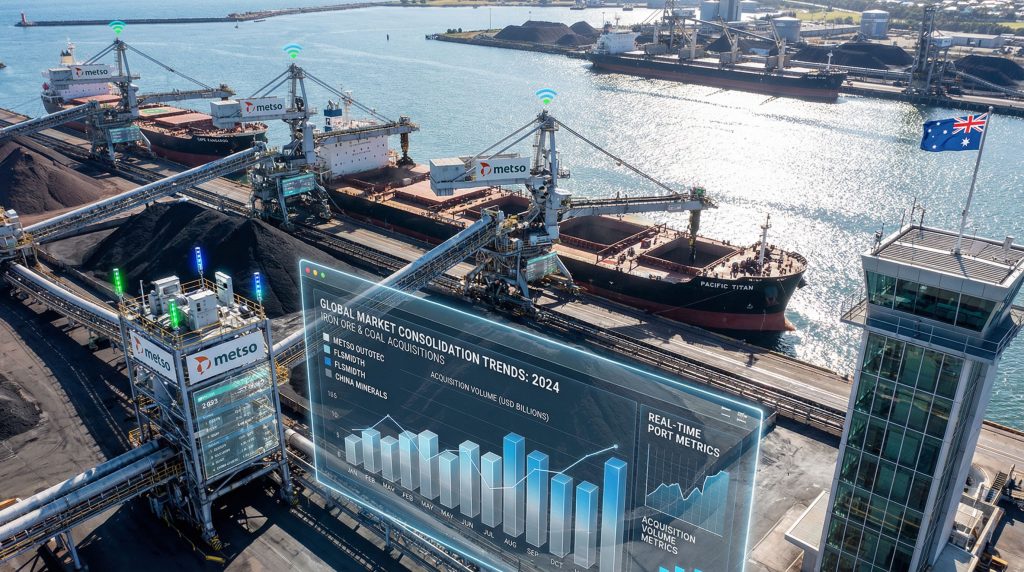
Newcastle's geographic positioning creates natural synergies for automation development and deployment across Asia-Pacific markets. The city serves as a critical hub for Australia's bulk export infrastructure, hosting major port terminal operations and coal export facilities while increasingly supporting critical minerals processing operations.
Market Consolidation Analysis:
- Traditional equipment manufacturers acquiring software capabilities
- Regional automation specialists being integrated into global platforms
- Shift from project-based to recurring subscription service models
- Convergence of mechanical and digital control technologies
These developments align with broader industry consolidation strategies observed across resource and infrastructure sectors. According to Metso's official announcement, the acquisition strengthens their bulk handling portfolio by combining advanced automation capabilities with established equipment manufacturing expertise.
Furthermore, according to Metso Senior Vice President Jonathan Allen, the acquisition aligns with organizational growth strategy by combining MRA's advanced software platform and services to expand offerings for bulk and port customers while strengthening presence in Australian markets and accelerating global reach.
Technology Integration Synergies and Capability Gaps
The integration centres around MRA's proprietary Axo33 Smart Software platform, which provides automation capabilities for stockyard and terminal operations. This technology addresses Metso's need for enhanced electrical and control systems capabilities, following similar strategic investments made in 2023.
Pre vs. Post-Acquisition Technology Stack Comparison:
| Component | Pre-Acquisition | Post-Acquisition |
|---|---|---|
| Mechanical Equipment | Metso's railcar dumpers, feeders, conveyors, stackers, reclaimers, ship loaders | Retained + Enhanced |
| Control Systems | Limited electrical/automation capabilities | Integrated Axo33 platform |
| Software Platform | Hardware-focused solutions | Smart automation services |
| Service Model | Equipment-centric | Software-plus-hardware integration |
| Market Reach | Global mechanical equipment | Global + specialised automation |
The acquisition particularly emphasises advances in AI transforming mining operations through intelligent automation systems. MRA Managing Director Rodney Devetak emphasised that the acquisition strengthens value for customers worldwide while creating growth opportunities for technical teams within a world-class organisation.
Integration Challenges:
- Legacy system compatibility across 8,000+ existing installations
- Scalability architecture for global enterprise deployment
- Data security protocols for critical infrastructure systems
- Interoperability standards with existing port/terminal systems
How Will This Acquisition Reshape Bulk Material Handling Automation?
The consolidation reflects industry-wide transformation from hardware-centric to integrated software-plus-hardware solutions. Original equipment manufacturers face competitive pressure from software-native firms, driving acquisition strategies that combine mechanical expertise with digital intelligence capabilities.
Cross-Selling Opportunity Scale:
The acquisition positions MRA's Axo33 platform for deployment across Metso's existing 8,000+ installation base, representing significant market penetration leverage. This installed base spans ports, terminals, and mining operations globally, creating multiple entry points for automation technology deployment.
Peter McPherson, MRA Director of Engineering, indicated that the acquisition enables global deployment of smart automation products, transforming the bulk material handling sector. However, industry analysts note that such transformations require careful consideration of operational continuity and vendor dependency risks.
Market Concentration Analysis in Port Solutions
Software-Defined Operations Evolution:
- Transition from mechanical control to digital intelligence
- Recurring revenue models through predictive maintenance monitoring
- Cost reduction via unified platform deployments
- Integration economics across equipment lifecycles
The transaction value was not disclosed and is not expected to have material impact on Metso's financials, suggesting the acquisition targets strategic capability enhancement rather than immediate revenue generation.
Competitive Landscape Implications:
- Consolidation of independent automation providers into multinational OEM structures
- Standardisation of previously customised engineering services
- Potential pricing power concentration in specialised automation segments
- Reduced vendor diversification options for port operators
Technology Roadmap Acceleration Opportunities
The integration creates opportunities for enhanced R&D investment and platform development through Metso's broader resource base. Cross-platform compatibility becomes critical as automation systems must interface with diverse control architectures across existing installations.
Platform Integration Requirements:
- Cloud infrastructure development for multi-region deployment
- API standardisation for third-party system integration
- Cybersecurity hardening for critical infrastructure applications
- Protocol translation and middleware development for legacy systems
The acquisition follows established industry patterns where mining equipment manufacturers integrate telematics and autonomous operation software with traditional heavy equipment. Meanwhile, port terminal operations increasingly unify automated gate systems, vehicle management, and inventory software under single platforms.
What Are the Strategic Implications for Mining and Port Operators?
The structural shift from specialised, independent automation providers to integration within multinational OEMs creates fundamental changes in vendor relationships for existing clients. This transformation affects service delivery models, contract structures, and operational risk profiles across the bulk material handling sector.
Client Relationship Transformation:
Pre-Acquisition Model:
- Direct engineering accountability with specialised providers
- Customised service delivery adapted to specific operational requirements
- Boutique-level technical support with immediate access to decision makers
- Project-based pricing structures with transparent cost allocation
Post-Acquisition Model:
- Integration into standardised multinational service frameworks
- Tiered support structures following corporate protocols
- Service prioritisation aligned with broader corporate strategy
- Potential transition to subscription-based licensing models
Vendor Diversification Risk Assessment
Dependency Analysis Framework:
The acquisition increases reliance on single vendors across both equipment and software layers, creating concentrated operational risk profiles for port and terminal operators.
Risk Mitigation Strategies:
- Multi-vendor procurement policies to maintain competitive leverage
- Contractual provisions for service continuity during ownership transitions
- Alternative supplier evaluation for critical automation components
- Technology platform independence to avoid vendor lock-in scenarios
For existing MRA clients with multi-year service agreements, change-of-control clauses may be triggered, requiring service level agreement renegotiation under Metso's standardised terms. Pricing structures may shift from project-based models to subscription and maintenance frameworks.
Innovation Pipeline and Future Service Delivery Models
The acquisition provides clients access to Metso's global support network and broader R&D investment capabilities. Integration with Metso's complementary equipment portfolio, including railcar dumpers, conveyors, stackers, reclaimers, and ship loaders, creates opportunities for comprehensive automation deployment.
Enhanced Capability Access:
- Global technical support infrastructure
- Accelerated platform development through increased R&D investment
- Integrated equipment and software maintenance programmes
- Cross-platform data analytics and optimisation capabilities
Knowledge Transfer Protocols:
MRA's specialised expertise from approximately 60 engineering professionals must be documented and integrated into Metso's larger organisational structure. This transition period presents operational continuity risks as boutique-level direct support transitions to corporate service models.
Which Market Segments Will Experience the Greatest Impact?
Australia's position as a dominant global bulk commodity exporter creates substantial modernisation opportunities across iron ore terminals, coal export facilities, and emerging critical minerals processing operations. These developments were highlighted at recent innovation expo insights events focusing on automation technology advancement.
Australia's Bulk Export Context:
- Iron ore exports: Approximately 900 million tonnes annually, positioning Australia as the world's largest exporter
- Coal terminals: Significant thermal and metallurgical coal exports through Newcastle, Port Hedland, and Queensland facilities
- Port infrastructure: Newcastle Port Authority handles approximately 170 million tonnes across diverse commodities
- Critical minerals: Expanding lithium and rare earth processing facilities under development
Iron Ore and Coal Export Terminal Modernisation
Iron Ore Terminal Automation Requirements:
Modern iron ore export terminals require sophisticated automation systems across multiple operational layers:
- High-throughput stockyard management with automated retrieval, stacking, and blending capabilities
- Ship loader and unloader automation featuring remote operation controls and safety interlocks
- Environmental compliance integration including dust suppression and monitoring systems
- Predictive maintenance protocols with real-time equipment health monitoring
Metso acquires MRA Automation to strengthen these capabilities across the complete mechanical systems infrastructure, including railcar dumpers, feeders, conveyors, stackers, reclaimers, ship loaders, and unloaders. MRA's Axo33 platform provides the digital control layer for integration and optimisation across these systems.
Coal Terminal Complexity Factors:
Coal terminals present additional automation challenges beyond iron ore operations:
- Commodity variation handling for different coal types requiring distinct protocols
- Legacy infrastructure integration with decades-old mechanical systems
- Regulatory compliance meeting Mine Safety and Health Administration standards
- International Maritime Organisation requirements for crew safety protocols
Critical Minerals Processing and Handling Systems
Australia's critical minerals sector expansion creates new automation opportunities in lithium and rare earth processing facilities. These operations present novel technical challenges requiring specialised handling protocols and chemical-resistant materials management.
Critical Minerals Automation Challenges:
| Mineral Type | Processing Requirements | Automation Complexities |
|---|---|---|
| Lithium | Chemical-resistant handling systems | Corrosive environment protocols |
| Rare Earth Elements | Precision separation processes | Multi-stage automation coordination |
| Critical Minerals General | Environmental monitoring | Regulatory compliance integration |
Capital Expenditure Patterns (2026-2030):
Port authorities and terminal operators face substantial modernisation investments driven by:
- Throughput efficiency requirements for global competitiveness
- Environmental compliance mandates for dust and emissions control
- Safety automation systems reducing human operational risk
- Predictive maintenance technologies minimising equipment downtime
The next major ASX story will hit our subscribers first
What Does This Mean for Industry Investment Strategies?
The consolidation of specialised automation providers within larger equipment manufacturers reflects broader capital allocation trends across industrial infrastructure markets. Private equity interest in automation assets continues growing as investors recognise recurring revenue potential and defensive market characteristics of mission-critical industrial software.
Valuation Dynamics in Automation Services:
Specialised engineering services companies command premium valuations due to:
- Recurring revenue streams from maintenance and software licensing
- High switching costs for clients with integrated automation systems
- Specialised talent requirements creating competitive barriers
- Critical infrastructure positioning providing demand stability
The undisclosed transaction value for MRA Automation, while not material to Metso's financials, indicates strategic value exceeding pure revenue multiples. According to Mining Magazine's coverage, this reflects capability acquisition rather than immediate earnings enhancement.
Private Equity Interest in Industrial Automation Assets
Investment Thesis Drivers:
- Digital transformation trends across industrial operations
- Subscription model transitions providing predictable cash flows
- Market consolidation opportunities with fragmented specialised providers
- Infrastructure modernisation cycles driving automation adoption
Geographic Expansion Strategies:
Newcastle's position as an engineering hub creates natural advantages for Asia-Pacific market penetration. The city's established technical workforce and port proximity provide infrastructure for automation development and deployment across regional markets.
Talent Acquisition Challenges:
The acquisition emphasises talent retention as MRA's approximately 60 specialised engineers represent concentrated technical expertise difficult to replicate. Maintaining this knowledge base becomes critical for successful integration and continued innovation capability.
Strategic Acquisition Targets and Market Opportunities
Technology Gap Analysis:
Remaining acquisition opportunities in automation markets focus on:
- Cybersecurity specialists for critical infrastructure protection
- Data analytics platforms for predictive maintenance and optimisation
- Autonomous operation software for unmanned equipment deployment
- Environmental monitoring systems for compliance and sustainability
Partnership vs. Acquisition Framework:
| Strategy | Advantages | Disadvantages |
|---|---|---|
| Strategic Partnerships | Lower capital requirements, faster market entry | Limited control, revenue sharing |
| Full Acquisition | Complete technology control, talent retention | Higher capital costs, integration risks |
| Joint Ventures | Shared development costs, market access | Complex governance, shared IP ownership |
How Should Stakeholders Prepare for Market Evolution?
The transformation of automation service delivery models requires proactive risk management strategies across operational, contractual, and technological dimensions. Stakeholders must balance the benefits of integrated platforms with potential dependency risks and service continuity challenges.
Operational Risk Management Strategies
Service Continuity Planning:
During ownership transitions, operational continuity becomes paramount for mission-critical automation systems. Effective transition management requires:
- Detailed service level agreements specifying response times and performance metrics
- Knowledge transfer documentation capturing specialised technical expertise
- Backup service providers identified for critical system components
- Transition timeline management minimising operational disruptions
Contract Amendment Strategies:
Existing long-term maintenance agreements may require renegotiation under new ownership structures:
Change-of-control provisions in existing contracts may trigger renegotiation requirements, creating opportunities to reassess service terms and performance metrics under new organisational structures.
Key Contract Considerations:
- Service level agreement updates reflecting new organisational capabilities
- Pricing structure transitions from project-based to subscription models
- Intellectual property ownership for customised automation solutions
- Termination clauses providing flexibility during integration periods
Future-Proofing Technology Investment Decisions
Platform Compatibility Requirements:
Multi-vendor environments require careful technology architecture planning to avoid vendor lock-in scenarios while maximising automation benefits:
- Open standards adoption for system interoperability across vendors
- API accessibility enabling third-party integration and customisation
- Data portability protocols preventing proprietary format dependencies
- Modular architecture design allowing component-level vendor diversification
Cybersecurity Implications:
Consolidated automation systems create centralised attack surfaces requiring enhanced security protocols:
- Network segmentation isolating critical control systems
- Multi-factor authentication for system access controls
- Regular security audits identifying vulnerability exposure
- Incident response procedures for operational continuity during cyber events
Skills Development Requirements:
Integrated technology platforms require workforce development across multiple technical disciplines:
Training Focus Areas:
- Cross-platform system administration for unified automation environments
- Data analytics capabilities for predictive maintenance and optimisation
- Cybersecurity awareness for industrial control system protection
- Vendor management skills for multi-supplier coordination
In conclusion, Metso acquires MRA Automation as part of a broader industry transformation toward integrated automation platforms. This evolution creates both opportunities for enhanced operational efficiency and challenges for maintaining vendor independence. Successful navigation requires balanced strategies that capture integration benefits while preserving operational flexibility and risk mitigation capabilities.
Disclaimer: This analysis represents industry assessment based on publicly available information regarding Metso's acquisition of MRA Automation. Investment decisions should consider comprehensive due diligence and professional consultation. Market consolidation patterns and technology integration outcomes may vary based on specific operational requirements and market conditions.
Want to Capitalise on Industrial Automation Investment Opportunities?
Discovery Alert's proprietary Discovery IQ model instantly identifies significant ASX mineral discoveries and industrial technology developments, providing subscribers with actionable insights into emerging market opportunities before they reach mainstream attention. Explore Discovery Alert's discoveries page to understand how major technological shifts and mineral discoveries have generated substantial returns, then begin your 14-day free trial to position yourself ahead of the next automation and mining sector breakthrough.