
May 21, 2026
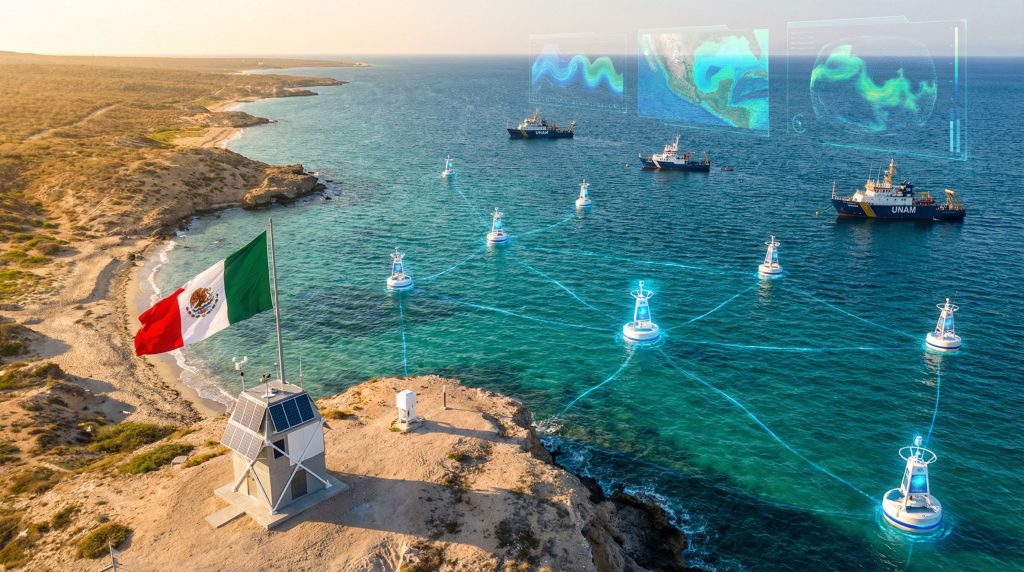
Mexico's Revolutionary Environmental Response to Gulf Oil Crisis
Following a significant hydrocarbon contamination event that exposed critical gaps in Mexico's environmental monitoring systems, the establishment of the Mexico launches permanent observatory following Gulf oil spill initiative represents a fundamental transformation in environmental governance. This institutional response, coordinated through the Ministry of Science, Humanities, Technology and Innovation (SECIHTI), shifts from reactive crisis management to comprehensive, science-based environmental surveillance. Furthermore, the mining industry can learn valuable lessons about decarbonisation benefits when implementing similar environmental frameworks.
The contamination event affected 630 kilometers of Mexican coastline across Tabasco, Veracruz, and Tamaulipas states. Cleanup operations successfully recovered 894.2 metric tons of hydrocarbon, with 853.6 tons from beaches and 40.6 tons from sea. Moreover, response efforts deployed 3,365 personnel from federal and state agencies, utilising 25 vessels, 48 vehicles, 9 aircraft, and 6 drones.
When big ASX news breaks, our subscribers know first
Institutional Reform Through Environmental Crisis Response
The contamination event exposed fundamental weaknesses in environmental monitoring infrastructure through a significant detection timeline gap. Civil society organisations documented hydrocarbon presence through satellite imagery on February 6, 2026, nearly one month before official government acknowledgment. Consequently, this delayed response undermined public confidence in existing surveillance systems.
A coalition of 17 civil society organisations, including Greenpeace México, CEMDA, CartoCrítica, and Geocomunes, documented over 70 satellite images showing hydrocarbon slick presence. Additionally, the contamination source was identified as the OLD AK C pipeline, a 36-inch crude oil line connecting the AKAL-C platform to Dos Bocas Maritime Terminal.
Key Environmental Impact Metrics:
• 48 affected beaches documented across three coastal states
• 32 beaches declared free of hydrocarbon contamination (7 in Tabasco, 25 in Veracruz)
• Multiple contamination sources identified through investigation
• Extended response duration spanning several months
The institutional choice to embed the observatory within SECIHTI rather than an energy ministry signals a strategic shift toward scientific governance frameworks. This approach prioritises research-based decision making over traditional regulatory enforcement models.
Critical Detection and Response System Failures
How Did Satellite Monitoring Fail to Provide Early Warning?
The contamination event revealed systematic transparency failures within Mexico's environmental emergency response framework. During the critical one-month period between satellite detection and official acknowledgment, no official alerts were issued to coastal communities most at risk from hydrocarbon exposure. However, this breakdown suggests failures occurred at multiple stages of the communication chain.
Detection Timeline Analysis:
| Date | Event | Source |
|---|---|---|
| February 6, 2026 | First satellite detection documented | Civil society coalition |
| Early March 2026 | Official government acknowledgment | Federal authorities |
| March-April 2026 | Full response deployment | Inter-agency coordination |
Environmental monitoring technology exists and functions effectively, but institutional protocols failed to translate satellite evidence into timely public warnings. Furthermore, this pattern reflects broader institutional opacity challenges where regulatory authorities may receive incident reports without contemporaneous public disclosure. The Gulf's expansion of cleanup and monitoring programs demonstrates the comprehensive nature of Mexico's response efforts.
What Communication Protocols Need Reform?
The expected communication chain involves five critical stages: operator detection, regulatory notification, severity assessment, public notification, and local response activation. Nevertheless, communication breakdowns prevented critical environmental information from reaching affected communities in time to implement protective measures.
Expected Communication Chain:
- Operator detection (PEMEX platform monitoring)
- Regulatory notification (ASEA incident reporting)
- Severity assessment (inter-agency evaluation)
- Public notification (community alert systems)
- Local response activation (state/municipal coordination)
Comprehensive Observatory Framework and Technology Integration
Multi-Institutional Scientific Governance
The observatory operates through a collaborative model involving Mexico's premier research institutions, creating scientific credibility while ensuring independence from commercial energy interests. In addition, this academic coalition provides expertise across multiple disciplines essential for comprehensive environmental monitoring.
Participating Research Institutions:
• UNAM (National Autonomous University of Mexico) – Primary research leadership and coordination
• Universidad Veracruzana (UV) – Regional expertise and proximity to affected coastlines
• CICESE (Ensenada Scientific Research and Higher Education Center) – Oceanographic and marine sciences specialisation
• ECOSUR (Colegio de la Frontera Sur) – Environmental and biodiversity research
• Universidad Autónoma de Baja California (UABC) – Marine research capacity
• GEO Center (Geospatial Information Sciences Research Center) – Satellite integration and geospatial analysis
This institutional architecture distributes governance authority across multiple research centres, reducing risk of regulatory capture. Furthermore, it provides diverse scientific perspectives on environmental monitoring challenges.
Integrated Technology and Infrastructure Systems
The observatory combines field infrastructure with advanced technological systems to create real-time environmental monitoring capabilities. Consequently, this addresses the detection failures exposed by the recent contamination event while establishing predictive rather than reactive monitoring capabilities.
Core Technology Components:
| Technology Type | Function | Monitoring Capability |
|---|---|---|
| Oceanographic Buoys | Water quality assessment | Continuous data transmission |
| Meteorological Stations | Weather pattern analysis | Hourly atmospheric updates |
| Tide Gauges | Coastal water level monitoring | Real-time measurement |
| Satellite Integration | Large-scale surveillance | Daily coverage and analysis |
| Digital Platforms | Data integration and analysis | Multi-source coordination |
| Predictive Models | Risk assessment and forecasting | Scenario generation |
ESG Implications and Financial Market Response
PEMEX Environmental Performance Under Scrutiny
Mexico's state oil company faces intensified oversight following the contamination event, with international investors increasingly focused on environmental performance metrics. The Norwegian Government Pension Fund's exclusion of PEMEX from its portfolio in 2025 demonstrates growing financial consequences for poor environmental governance. Additionally, multiple sources were identified behind the Gulf oil spill, highlighting the complexity of monitoring offshore operations.
Historical Environmental Performance Context:
• 1,146 total hydrocarbon contamination cases recorded from 2008-2024
• PEMEX responsible for 79% of Mexico's hydrocarbon-related soil contamination
• 13.6 million cubic meters of soil impacted by contamination events
• Credit rating improvements explicitly conditioned on operational safety progress
Recent credit rating upgrades from Fitch and Moody's accompanying PEMEX's financial recovery were specifically conditioned on continued progress in operational safety governance. However, the Gulf contamination event places these conditional improvements under pressure, potentially affecting future credit assessments.
International ESG Standards Alignment
The observatory's establishment signals Mexico's commitment to aligning environmental governance with international ESG standards. This institutional development addresses growing investor demands for transparent environmental risk assessment and management. Moreover, it provides data infrastructure necessary for credible ESG reporting.
The creation of permanent monitoring infrastructure demonstrates government recognition that environmental transparency directly affects international investment confidence and sovereign risk assessments.
International financial institutions increasingly integrate environmental performance metrics into investment decisions. Consequently, robust monitoring systems become essential for maintaining access to global capital markets.
Comparative International Monitoring Standards
Global Best Practices Integration
The observatory incorporates elements from successful international environmental monitoring models, adapting proven frameworks for Mexico's specific context. This approach leverages international expertise while addressing unique Gulf of Mexico environmental challenges. Furthermore, industries can apply similar approaches to waste management solutions for comprehensive environmental protection.
International Monitoring Model References:
• Norway's petroleum sector monitoring – Integrated operator-regulator systems
• Australia's Great Barrier Reef surveillance – Multi-stakeholder environmental protection
• North Sea environmental protocols – Offshore industrial monitoring standards
• EU Copernicus satellite systems – Open-source environmental data access
Technology and Data Integration Leadership
Unlike conventional incident-response systems, the observatory prioritises continuous monitoring and predictive modelling. This creates institutional capacity for environmental risk prevention rather than crisis management. Additionally, it addresses the fundamental detection gaps that enabled prolonged contamination.
The integration of satellite technology, field sensors, and community-based monitoring creates redundant detection systems. This reduces dependence on single-source environmental information while ensuring immediate attention to future environmental incidents.
The next major ASX story will hit our subscribers first
Strategic Implications for Industry Stakeholders
Energy Sector Compliance and Operational Impact
Enhanced monitoring requirements will likely increase operational compliance costs for energy sector participants while establishing clearer transparency expectations. Companies operating in Mexican waters must adapt to more stringent regulatory enforcement backed by comprehensive scientific data. However, this aligns with global trends toward sustainable production practices across extractive industries.
Operational Changes for Energy Companies:
• Real-time environmental monitoring integration with operations
• Enhanced incident reporting protocols and timelines
• Community engagement requirements for environmental impact
• Predictive risk assessment participation and data sharing
The observatory provides regulatory authorities with independent environmental data, reducing information asymmetries between operators and regulators. Furthermore, it establishes clear performance benchmarks for environmental compliance.
Investment and Financial Institution Considerations
Improved environmental data availability enhances ESG risk assessment capabilities for investors and financial institutions. This demonstrates clear government commitment to environmental governance improvements while supporting long-term investment confidence through transparent environmental risk management.
Financial Market Benefits:
• Enhanced ESG data for investment decision-making
• Regulatory framework clarity supporting long-term planning
• Risk assessment improvement through real-time environmental data
• Government commitment demonstration to environmental governance
Community Integration and Environmental Justice
How Does Citizen Science Strengthen Environmental Protection?
The observatory incorporates coastal communities directly into environmental surveillance through citizen science programs. This addresses historical exclusion of at-risk populations from formal monitoring systems while recognising that residents most exposed to environmental risks need better connection to early warning systems.
Strategic Objectives Framework:
- Climate Change Monitoring – Gulf-specific environmental tracking
- Biodiversity Resource Management – Marine ecosystem protection
- Industrial and Environmental Safety – Proactive risk assessment
- Citizen Science Promotion – Community-based data collection
The citizen science component actively involves coastal communities and students in environmental research and surveillance. Consequently, this creates distributed monitoring capacity that supplements institutional systems while building local environmental awareness.
What Are the Long-Term Benefits for Communities?
Direct community participation through citizen science programs addresses historical environmental justice concerns while improving early warning capabilities for environmental threats. This inclusive approach ensures that populations most at risk from environmental incidents receive timely information and protection. Additionally, this community-centred approach can benefit from reclamation innovation practices applied to coastal restoration.
Community Integration Benefits:
• Early warning system access for environmental threats
• Citizen science participation in environmental research
• Environmental education and awareness building
• Environmental justice advancement through inclusive monitoring
Long-Term Environmental Governance Evolution
Preventive Environmental Policy Framework
The observatory represents a fundamental evolution from incident response toward comprehensive environmental risk management. Its implications extend beyond the energy sector to coastal development, tourism, and marine resource management. Furthermore, this institutional transformation establishes Mexico as a regional leader in proactive environmental governance.
Policy Evolution Indicators:
• Shift from reactive to predictive environmental management
• Integration of scientific research with policy decision-making
• Community participation in environmental surveillance
• Technology-driven transparency in environmental reporting
The permanent nature of the observatory ensures continuity beyond immediate crisis response, building institutional memory and expertise. This prevents future environmental governance failures while addressing international investor concerns about environmental risk management consistency.
Regional Impact and International Cooperation
Through academic partnerships and community integration, the initiative builds sustainable institutional capacity for environmental governance. This reduces dependence on external expertise during environmental challenges while creating lasting improvements in environmental protection capabilities.
The observatory's regional impact extends beyond Mexican territorial waters, as Gulf of Mexico environmental conditions affect multiple nations and international shipping routes. Moreover, Mexico's leadership in environmental monitoring establishes frameworks that may influence regional environmental cooperation and standards. This approach contrasts with deep-sea mining controversy discussions where international coordination remains challenging.
The Mexico launches permanent observatory following Gulf oil spill initiative represents the country's most significant environmental governance reform in decades. This comprehensive approach transforms crisis response into systematic institutional capacity while addressing fundamental gaps in environmental oversight and community protection. Furthermore, it establishes new standards for environmental monitoring that integrate scientific research, technology innovation, and community participation into sustainable environmental governance frameworks.
This analysis is based on publicly available information and should not be considered as investment advice. Environmental policy developments and regulatory changes may affect investment outcomes and business operations in unpredictable ways. Readers should conduct independent research and consult qualified professionals before making investment decisions.
Looking to Capitalise on Environmental Technology Opportunities?
Discovery Alert's proprietary Discovery IQ model delivers real-time notifications on significant ASX mineral discoveries, including companies developing environmental monitoring technologies and sustainable resource solutions. With growing demand for environmental compliance and monitoring systems like Mexico's new Gulf observatory, investors can position themselves ahead of the market through immediate access to discovery announcements showcasing the exceptional returns that major discoveries can generate.