
May 12, 2026
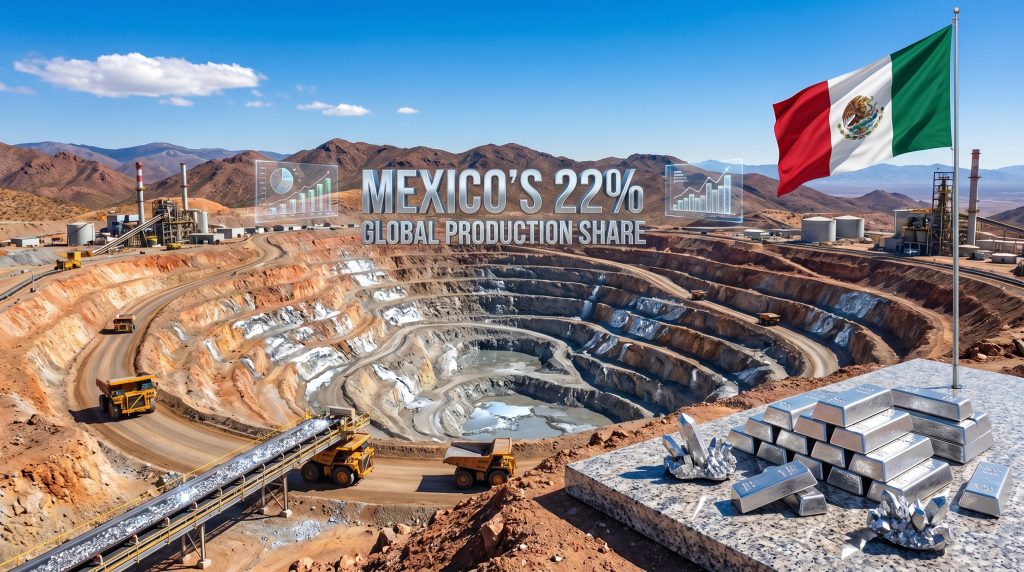
Mexico silver sector recovery faces unprecedented challenges as global precious metals markets experience structural tightening and supply constraints. The industrial metal's expanding role in renewable energy infrastructure creates both demand acceleration and supply pressure, particularly affecting Mexico's position as the world's largest silver producer. Furthermore, silver supply deficits have depleted above-ground inventories while industrial applications continue expanding at unprecedented rates.
The mathematics of global silver fundamentals reveal a market under extraordinary pressure. Five consecutive years of supply deficits have amplified global supply constraints and created complex investment dynamics that require sophisticated analysis. This structural imbalance directly affects Mexico's declining domestic output, creating a silver market squeeze that extends far beyond traditional mining economics.
Supply Chain Disruptions Reshape Mexico's Production Economics
Mexico's Declining Market Leadership Position
Mexico's silver production trajectory demonstrates concerning deterioration across multiple operational metrics. The nation's output declined 5% year-over-year in 2025, reaching 172.9 million ounces, marking the third consecutive annual decrease. This production decline represents more than statistical variation; it signals systematic challenges affecting the world's dominant silver producing jurisdiction.
The regional impact extends beyond Mexico's borders. North American silver output reached decade-low levels in 2025, primarily driven by Mexican production constraints despite increases in other global regions. This geographic concentration of decline suggests Mexico-specific factors rather than broader industry challenges.
Consequently, the nation faces policy-driven exploration restrictions that limit pipeline development. Additionally, mining permitting challenges create systematic bottlenecks that affect project advancement timelines and operational viability.
Key Production Decline Factors:
• Ore grade deterioration at flagship operations including Peñasquito
• Operational disruptions affecting major mining complexes
• Policy-driven exploration restrictions limiting pipeline development
• Processing inefficiencies offsetting throughput improvements
Ore Quality Degradation Analysis
Grade decline represents the most fundamental challenge facing Mexico silver sector recovery. Peñasquito, operated by Newmont Corporation as Mexico's largest polymetallic operation, exemplifies this industry-wide problem. The facility processed lower-grade ore throughout 2025, with throughput increases failing to compensate for reduced metal concentrations.
This grade-throughput dynamic creates mathematical constraints on production economics. As silver concentrations decline, operations must process exponentially larger ore volumes to maintain equivalent metal output. Physical limitations including mill capacity, water availability, and tailings storage create ceiling effects that prevent indefinite throughput expansion.
Moreover, the exploration pipeline has contracted significantly over recent years. This contraction creates long-term supply vulnerability as existing ore bodies approach depletion without adequate replacement reserves.
Global Market Context and Structural Deficits
The World Silver Survey 2026 documents the fifth consecutive annual supply deficit in global markets, with projections indicating a sixth consecutive shortfall in 2026. This extended deficit period represents structural market tightening rather than cyclical fluctuation, creating upward pressure on silver pricing strategies despite Mexico's production decline.
By-product silver from polymetallic operations now comprises nearly three-quarters of global supply, fundamentally altering supply dynamics. This composition shift means silver availability increasingly depends on copper, gold, lead, and zinc mining economics rather than direct silver price incentives.
| Global Silver Supply Composition | Percentage |
|---|---|
| By-product from polymetallic operations | 74% |
| Primary silver mining | 26% |
When big ASX news breaks, our subscribers know first
Regulatory Architecture Creates Investment Bottlenecks
What Impact Does the Exploration Ban Have on Future Supply?
Mexico's restrictions on private sector exploration activity represent a critical constraint on long-term production capacity. The exploration ban affects private companies and individuals, removing key participants from the discovery pipeline essential for reserve replacement. This policy creates a systematic reduction in new deposit identification, threatening future production sustainability.
Exploration represents the foundation of mining project pipelines. By constraining private sector participation in this critical stage, Mexico has effectively reduced the probability of new discoveries. Furthermore, the policy's impact extends beyond immediate exploration activity to affect investor confidence in Mexico's mining sector attractiveness.
Investment Climate Assessment:
• Current legislation actively discourages capital allocation to Mexican mining projects
• Regulatory uncertainty creates risk premiums that reduce project economics
• Permitting bottlenecks delay project development timelines
• USD 4 billion in mining projects currently stalled due to permit processing delays
Permitting Framework Evolution
Despite systemic challenges, recent developments suggest potential improvement in regulatory processes. Fresnillo CEO Octavio Alvidrez identified positive permitting trends, noting that authorities have begun approving permits for open-pit mining projects. Additionally, Mexico is witnessing regulatory transformation that could affect future sector development, including gold operations that face similar restrictions to silver developments.
This regulatory evolution appears linked to government recognition of mining's economic contribution potential. Officials have reportedly identified mining projects that align with national economic growth objectives. Consequently, this suggests a more strategic approach to sector development rather than blanket restrictions.
Open-Pit Mining Restrictions and Project Viability
Open-pit mining restrictions create specific challenges for silver project development, as many deposits require surface extraction methods for economic viability. These restrictions affect projects across Mexico's mining landscape, forcing operators to consider more expensive underground alternatives or abandon projects entirely.
However, the industry continues adapting to regulatory complexities. Mexico's silver sector faces ongoing challenges despite these adaptation efforts, requiring innovative approaches to project development.
Regulatory Complexity Factors:
- Environmental compliance requirements increasing project timelines
- Indigenous consultation processes extending permitting phases
- Water usage restrictions in arid mining regions
- Tailings storage regulations affecting project design
Production Challenges Drive Operational Cost Inflation
Resource Depletion Economics at Major Operations
Grade decline at Mexico's largest silver operations creates compound economic pressure through multiple mechanisms. Lower ore grades require increased processing volumes, higher energy consumption per unit of metal produced. In addition, they often necessitate more complex metallurgical processes to maintain recovery rates.
Peñasquito's grade challenges exemplify broader industry trends affecting Mexico silver sector recovery prospects. As head grades decline, the operation faces choices between accepting lower metal output, increasing processing costs through higher throughput. Alternatively, they must invest in advanced recovery technologies to extract more metal from lower-grade ore.
Grade Decline Impact Mechanisms:
• Higher energy costs per ounce of silver produced
• Increased reagent consumption for metal extraction
• Greater waste rock handling and disposal requirements
• Higher water usage per unit of metal recovery
Infrastructure and Operational Cost Pressures
Mexican silver operations face multiple cost inflation vectors that compound grade decline challenges. Energy costs, representing typically 15-25% of total mining costs, have experienced significant volatility tied to global energy markets. Furthermore, domestic electricity pricing policies create additional uncertainty for operational planning.
Labor market dynamics create additional pressure through wage inflation and skills shortages in specialized mining roles. Equipment costs have risen substantially due to global supply chain disruptions and increased demand for mining machinery worldwide.
Primary Cost Inflation Categories:
- Energy and Fuel: Electricity price volatility affects processing costs
- Labor: Wage inflation and specialized skills shortages
- Equipment: Mining machinery and technology upgrade requirements
- Logistics: Transportation cost escalation for concentrate shipments
Technology Integration Requirements
Processing lower-grade ore economically requires technological advancement across multiple operational areas. Sensor-based ore sorting, improved flotation chemistry, and automated processing systems represent necessary investments for maintaining competitiveness as grades decline.
These technology requirements create capital expenditure pressure precisely when operators face declining cash flows from reduced production. The timing mismatch between technology investment needs and operational cash generation creates financing challenges for many Mexican silver operations.
Corporate Strategic Adaptations Under Uncertainty
Fresnillo's Portfolio Optimization Approach
Fresnillo plc, as the world's largest primary silver producer, provides insight into strategic adaptation within Mexico's challenging regulatory environment. The company maintains a diversified project portfolio across different development stages, allowing flexibility in capital allocation based on regulatory developments.
Fresnillo Project Portfolio Status:
• Orisyvo: Most advanced project with pre-feasibility completion and secured permits
• Rodeo: Open-pit development positioned for near-term production capability
• Guanajuato: Currently navigating permitting phase requirements
• Exploration prospects: Multiple early-stage opportunities requiring regulatory clarity
Orisyvo represents Fresnillo's most developed project, having successfully navigated permitting requirements and completed pre-feasibility studies. This achievement demonstrates that project advancement remains possible within current regulatory frameworks. However, timelines and costs have increased significantly.
Risk Management and Capital Allocation Strategies
Mexican silver companies are adapting capital allocation strategies to address regulatory uncertainty through portfolio diversification, staged investment approaches, and enhanced government relations capabilities. These adaptations reflect recognition that traditional mining investment models require modification for Mexico's current environment.
Strategic approaches include:
Portfolio Diversification: Maintaining projects across different jurisdictions and development stages to reduce regulatory concentration risk
Staged Investment: Committing capital incrementally based on regulatory milestone achievement rather than full project funding upfront
Community Engagement: Increased investment in local community relations and social licence maintenance to reduce operational disruption risks
Operational Efficiency Enhancement
Technology integration across Mexican silver operations focuses on maximising metal recovery from available ore while minimising cost inflation impact. Digital transformation initiatives including automated processing control, predictive maintenance systems, and integrated mine planning software represent priority investment areas.
These efficiency improvements target multiple operational aspects: reducing energy consumption per unit of production, optimising metallurgical recovery rates. Furthermore, they improve equipment utilisation to maximise throughput from existing infrastructure.
Market Fundamentals Support Long-Term Value Creation
Supply-Demand Equilibrium Dynamics
Global silver market fundamentals continue strengthening despite Mexico's production challenges. Industrial demand growth, particularly from renewable energy applications including solar panels and electric vehicle components, creates structural demand increases. Consequently, these increases offset supply constraints through higher price incentives.
The five consecutive years of global supply deficits demonstrate market tightening that extends well beyond Mexico's production decline. This global context suggests that successful Mexico silver sector recovery could generate substantial value creation through both volume restoration and sustained price premiums.
Moreover, comprehensive precious metals analysis indicates strengthening fundamentals across multiple metals categories, supporting the broader investment case for sector recovery.
| Global Silver Market Balance | 2024 | 2025 | 2026F |
|---|---|---|---|
| Mine Supply (Moz) | 830 | 835 | 840 |
| Industrial Demand (Moz) | 560 | 580 | 600 |
| Investment Demand (Moz) | 240 | 260 | 270 |
| Market Balance (Moz) | -30 | -45 | -50 |
Industrial Applications Growth Trajectory
Silver's role in energy transition technologies creates demand growth that operates independently of traditional precious metals market cycles. Solar panel manufacturing, electric vehicle charging infrastructure, and grid modernisation projects require substantial silver quantities with limited substitution possibilities.
This industrial demand component provides price floor support that reduces investment risk in Mexican silver projects. Unlike investment demand that fluctuates with economic conditions and monetary policy, industrial applications create consistent silver consumption that supports long-term project viability.
Investment Demand and Portfolio Allocation Trends
Precious metals allocation within institutional portfolios has increased substantially as investors seek inflation hedges and currency diversification. Silver's industrial demand component provides additional investment appeal beyond traditional store-of-value characteristics.
Exchange-traded fund (ETF) holdings, coin and bar investment, and institutional direct investment in silver have expanded significantly. Consequently, these trends create additional demand support for market fundamentals.
Investment Opportunities Emerge Despite Sectoral Challenges
Advanced Project Pipeline Assessment
Mexico's silver project pipeline, while constrained by regulatory challenges, contains several advanced development opportunities that could benefit from improved permitting processes. These projects represent potential production increases that could partially offset declining output from existing operations.
Project Development Timeline Analysis:
- Immediate potential (1-2 years): Fresnillo's Rodeo project
- Near-term development (2-4 years): Orisyvo advancement to production
- Medium-term pipeline (4-6 years): Guanajuato and other permitted projects
- Exploration upside (6+ years): New discoveries dependent on exploration reactivation
Project financing requirements vary significantly based on development stage and technical complexity. Open-pit projects like Rodeo typically require lower capital intensity per unit of production capacity compared to underground developments. However, regulatory restrictions may favour underground alternatives.
Junior Mining Company Opportunities
Smaller exploration and development companies face unique challenges and opportunities within Mexico's regulatory environment. Limited capital resources create vulnerability to extended permitting timelines, but successful navigation of regulatory processes could generate substantial returns. Furthermore, this could occur through project advancement or acquisition by larger operators.
Strategic Positioning for Junior Companies:
• Focus on projects with existing permit progress
• Develop strong government relations capabilities
• Maintain sufficient capital reserves for extended development timelines
• Consider joint venture partnerships with established operators
Financing Mechanisms and Capital Market Access
Capital raising for Mexican silver projects requires sophisticated approaches that address regulatory risk perception among international investors. Successful financing strategies combine traditional mining finance with regulatory risk mitigation through insurance products, government relations expertise, and staged investment structures.
Alternative Financing Approaches:
• Streaming and royalty arrangements reducing regulatory risk exposure
• Joint ventures with established Mexican operators
• Equipment financing and operational leasing to reduce capital intensity
• Development loans tied to regulatory milestone achievement
The next major ASX story will hit our subscribers first
Economic Scenario Analysis Shapes Strategic Planning
Base Case Recovery Assumptions
Mexico silver sector recovery depends on convergence of multiple favourable factors including regulatory reform, operational improvement, and maintained silver price support. Base case projections assume modest production recovery beginning in 2026, driven by operational improvements at existing facilities and gradual project advancement.
Key Recovery Assumptions:
- Permitting improvement continues at current pace
- Exploration restrictions face gradual modification
- Silver prices maintain levels supporting higher-cost production
- Technology adoption offsets portion of grade decline impact
Metals Focus expects Mexican silver output to recover modestly in 2026, supported by operational improvements and project ramp-ups. This recovery projection reflects both technical improvements at existing operations and potential new project contributions.
Alternative Development Pathways
Scenario analysis reveals significant upside potential if regulatory reforms accelerate beyond current trends. Complete exploration ban removal could reactivate substantial drilling activity, potentially identifying new deposits that support long-term production growth.
Regulatory Reform Scenario Impact:
• Exploration reactivation could identify 5-10 new development projects within 3-5 years
• Foreign investment increases could provide capital for delayed projects
• Permitting efficiency improvements could reduce project timelines by 18-24 months
• Technology investment acceleration could improve recovery rates at existing operations
| Scenario Analysis | Status Quo | Modest Reform | Comprehensive Reform |
|---|---|---|---|
| 2028 Production (Moz) | 165 | 185 | 210 |
| New Projects Online | 1-2 | 3-5 | 6-10 |
| Investment Level | Low | Moderate | High |
Technology Breakthrough Potential
Advanced metallurgical technologies could transform economics of lower-grade Mexican silver deposits. Sensor-based ore sorting, improved leaching processes, and automated mining systems represent potential breakthrough applications that could restore production competitiveness.
These technological advances require substantial capital investment but offer potential for step-change improvements in operational economics. Early adopters of advanced technologies could gain competitive advantages that persist for multiple years.
Investment Framework for Mexico Silver Sector Evaluation
Risk-Adjusted Return Analysis
Evaluating Mexican silver investments requires sophisticated risk assessment that incorporates regulatory, operational, and market factors. Traditional mining investment models must be adjusted for Mexico-specific regulatory risks and extended development timelines.
Primary Risk Categories:
• Regulatory: Policy changes affecting project viability and timelines
• Operational: Grade decline and cost inflation impacts on economics
• Market: Silver price volatility and demand sustainability
• Currency: Peso-dollar exchange rate effects on costs and revenues
Investment evaluation must incorporate multiple scenario analysis and stress testing to account for regulatory uncertainty and operational challenges unique to Mexico's mining environment.
Risk-adjusted returns require higher hurdle rates for Mexican silver projects compared to more stable jurisdictions. However, the combination of market fundamentals, production decline, and potential regulatory improvement creates asymmetric upside opportunity for successful projects.
Due Diligence Considerations
Comprehensive investment due diligence for Mexican silver projects extends beyond traditional technical and financial analysis to include regulatory compliance assessment, government relations evaluation, and social licence verification.
Enhanced Due Diligence Requirements:
- Regulatory Status: Detailed permit analysis and compliance verification
- Government Relations: Assessment of company-government relationship quality
- Community Engagement: Evaluation of social licence and local support
- Operational Resilience: Analysis of cost structure flexibility and grade sensitivity
Portfolio Positioning and Timing Strategy
Strategic portfolio positioning for Mexico silver sector recovery requires careful timing and diversification considerations. Early positioning ahead of regulatory improvement could generate substantial returns, but requires tolerance for extended development timelines and regulatory uncertainty.
Optimal Investment Characteristics:
• Companies with advanced projects and existing permit progress
• Strong balance sheets capable of weathering extended development periods
• Experienced management with proven Mexico regulatory navigation capabilities
• Diversified project portfolios reducing single-project dependency
Performance Monitoring Indicators:
• Permitting timeline improvements and approval rate increases
• Exploration activity levels and new discovery announcements
• Production cost trends and operational efficiency metrics
• Silver price sustainability relative to production cost inflation
Investment timing strategy should consider the asymmetric risk-reward profile inherent in Mexico silver sector recovery. Early positioning requires higher risk tolerance but offers greater upside potential. Conversely, later entry may reduce risk but limit return potential if regulatory improvements accelerate quickly.
Disclaimer: This analysis contains forward-looking statements and projections based on current market conditions and regulatory environments. Actual results may differ materially from projections due to regulatory changes, operational challenges, and market volatility. Investors should conduct independent due diligence and consider their risk tolerance before making investment decisions.
Ready to Capitalise on Mexico's Silver Sector Recovery?
Discovery Alert's proprietary Discovery IQ model delivers real-time alerts on significant silver discoveries across the ASX, instantly empowering subscribers to identify actionable opportunities ahead of the broader market. Understand why major mineral discoveries can lead to substantial returns by exploring historic examples, then begin your 14-day free trial today to position yourself ahead of the market.