
June 7, 2026
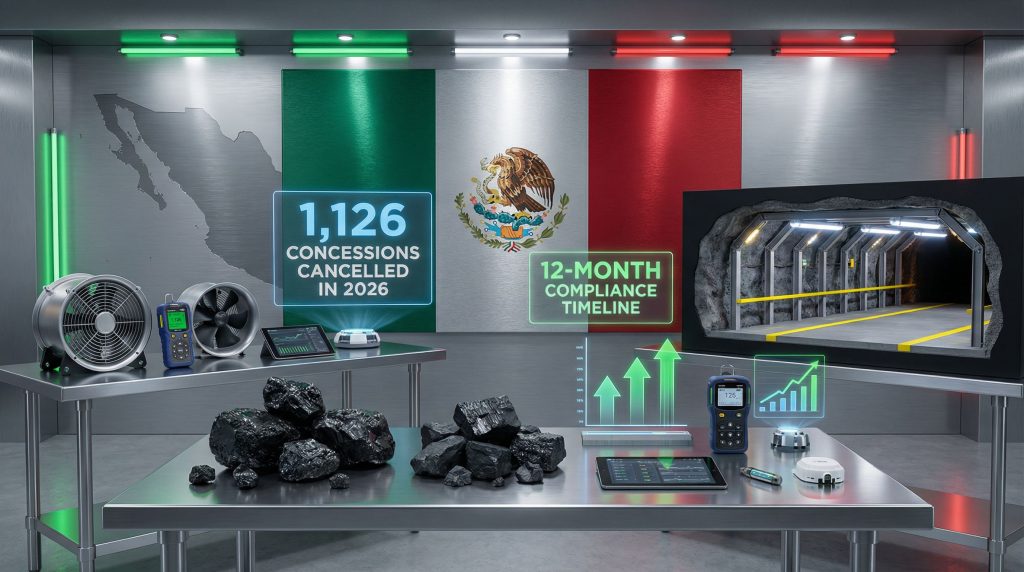
Mexico to tighten coal mining regulations following a series of deadly incidents that exposed critical safety gaps in the country's extractive sector. Coal mining operations worldwide face mounting pressure to adopt rigorous safety protocols as governments recognise the catastrophic human cost of inadequate regulatory frameworks. The mining industry's historical reliance on tiered safety standards has created systematic vulnerabilities that extend far beyond individual incidents, revealing fundamental structural weaknesses in how extractive operations are governed and monitored.
International mining safety data demonstrates a clear correlation between regulatory stringency and worker fatality rates, with countries maintaining universal safety standards experiencing significantly lower incident frequencies than those employing exemption-based frameworks. This regulatory evolution reflects broader shifts in industrial governance philosophy, moving from prescriptive compliance models toward comprehensive sustainability transformation systems that prioritise worker protection over operational flexibility.
Understanding the Regulatory Response to Mining Safety Failures
The devastating collapse of a Coahuila coal mine in 2022 that claimed 10 worker lives exposed critical gaps in Mexico's mining oversight framework, particularly regarding small-scale operations that had previously operated under relaxed safety requirements. This incident, followed by a 2025 winch system failure that temporarily trapped 8 workers in another Coahuila facility, highlighted the systemic risks inherent in tiered regulatory approaches that create safety disparities based on operation size.
The state utility CFE's procurement practices came under intense scrutiny following these incidents, as investigators examined how coal sourcing from inadequately regulated mines contributed to workplace safety vulnerabilities. Furthermore, the regulatory response reveals broader concerns about supply chain accountability in extractive industries, where end-users of raw materials bear indirect responsibility for worker safety conditions at production sites.
Technical Vulnerabilities Exposed by Recent Incidents
Analysis of the 2022 collapse and 2025 winch failure reveals specific technical deficiencies that the new regulatory framework addresses. These technical failures demonstrate how regulatory exemptions for smaller operations created systematic vulnerabilities that extended beyond individual mine sites to affect entire regional supply chains serving major industrial consumers like ArcelorMittal and CFE.
Key vulnerabilities identified include:
- Structural integrity failures in tunnel systems lacking standardised dimension requirements
- Mechanical equipment deficiencies in winch and cart operations without redundancy protocols
- Ventilation system inadequacies creating oxygen depletion risks in underground workings
- Emergency response gaps for trapped worker extraction and medical intervention
Broader Mining Sector Regulatory Evolution
Mexico's coal mining safety overhaul represents part of a comprehensive mining sector reform initiative that extends beyond immediate safety concerns. The regulatory transformation includes environmental compliance integration, waste management standardisation, and alignment with claims framework insights that establish global best practices for worker protection.
The elimination of small-scale exemptions signals a fundamental shift from flexible regulatory accommodation toward universal safety standards regardless of operational scale or economic constraints. However, this approach reflects international trends in mining governance that prioritise worker protection and environmental stewardship over traditional economic development models.
When big ASX news breaks, our subscribers know first
Comprehensive Analysis of New Safety Requirements
The regulatory framework announced by Mexico's labour ministry establishes mandatory technical specifications across multiple operational dimensions previously subject to discretionary enforcement. These requirements eliminate the tiered system that allowed smaller operations to operate under reduced safety protocols, creating universal compliance obligations that fundamentally restructure industry operational parameters.
Structural and Technical Specifications
The new regulations mandate specific technical requirements addressing the primary failure modes identified in recent incidents. These specifications address critical infrastructure deficiencies while establishing measurable compliance metrics that enable consistent regulatory enforcement across operations of varying scales.
| Safety Component | Previous Framework | New Requirements | Implementation Period |
|---|---|---|---|
| Tunnel Dimensions | Variable/Discretionary | Standardised minimums | 12 months |
| Ventilation Systems | Optional for small ops | Mandatory oxygen monitoring | 18 months |
| Ramp Inclinations | Flexible specifications | Technical angle standards | 6 months |
| Safety Inspections | Infrequent/Irregular | Continuous monitoring | Immediate |
The technical standards reflect international best practices adapted to Mexico's specific geological and operational conditions, whilst incorporating boosting safety operations methodologies proven effective in similar mining environments.
Equipment and Operational Protocol Updates
Equipment safety protocols focus on mechanical systems that have demonstrated failure patterns in recent incidents. The winch system requirements address the 2025 Coahuila incident where mechanical failure trapped workers, while ventilation standards respond to oxygen depletion risks identified in underground coal extraction operations.
The new framework requires:
- Redundant safety systems for critical equipment including winches and ventilation
- Regular inspection protocols with documented maintenance schedules
- Worker training programs covering emergency response and equipment operation
- Documentation standards for incident reporting and safety compliance tracking
Elimination of Scale-Based Exemptions
The most significant regulatory change involves removing exemptions that previously allowed smaller operations to operate under reduced safety requirements. This universal compliance approach eliminates regulatory arbitrage where operators could avoid safety investments by maintaining operation sizes below exemption thresholds.
"The elimination of small-scale exemptions represents a fundamental shift from accommodative regulation toward universal safety standards, potentially consolidating Mexico's coal mining sector toward larger, better-capitalised operations capable of meeting standardised requirements."
International Safety Standard Benchmarking
Mexico's regulatory alignment with international mining safety frameworks positions the country within a broader global trend toward standardised worker protection protocols. Comparative analysis with established mining jurisdictions reveals both convergence opportunities and implementation challenges specific to Mexico's operational context.
Global Safety Framework Comparisons
United States MSHA Standards: The Mine Safety and Health Administration's comprehensive regulatory framework emphasises ventilation requirements, roof support specifications, and equipment safety protocols that parallel Mexico's new technical requirements. MSHA's enforcement mechanism combines regular inspections with significant financial penalties for non-compliance.
Australian Mining Safety Protocols: Australia's risk management approach focuses on hazard identification and elimination rather than prescriptive equipment specifications. This framework emphasises worker participation in safety planning and continuous improvement processes that could inform Mexico's long-term regulatory evolution.
European Union Mining Directives: EU mining initiatives provide frameworks for environmental integration that complement safety requirements, offering models for comprehensive regulatory approaches that address both worker protection and environmental stewardship.
Regional Leadership in Latin America
Mexico to tighten coal mining regulations positions the country as a potential regional leader in mining regulatory sophistication, particularly compared to neighbouring jurisdictions with less comprehensive frameworks. This transformation includes examining international precedents from regional mining nations.
Key regional comparisons include:
- Brazil's Post-Brumadinho Reforms: Following the 2019 tailings dam failure that killed 272 people, Brazil implemented enhanced mining safety requirements that provide precedent for comprehensive regulatory overhaul
- Chile's Copper Mining Standards: Chile's mature regulatory framework for large-scale copper operations offers benchmarks for technical specification and enforcement mechanisms
- Colombia's Coal Safety Protocols: As a regional coal producer, Colombia's safety standards provide direct comparisons for Mexico's new coal-specific requirements
Economic Restructuring and Market Dynamics
The regulatory transformation creates significant economic pressures that will fundamentally restructure Mexico's coal mining sector. Small-scale operations lacking capital resources for compliance upgrades face operational sustainability challenges, while larger operators with technical and financial capacity gain competitive advantages through regulatory compliance capabilities.
Supply Chain Impact Analysis
Major industrial consumers of Mexican coal, including ArcelorMittal and the state utility CFE, will experience supply chain adjustments as compliance requirements eliminate some producers whilst potentially increasing costs for remaining operations. Coal currently powers a limited percentage of Mexico's energy grid while serving essential functions in steel production, creating industrial dependency on stable coal supply chains.
The regulatory changes affect supply chain dynamics through multiple mechanisms:
- Producer consolidation as smaller operations exit markets or merge with larger entities
- Cost structure modifications reflecting compliance investment requirements
- Quality standardisation through enhanced operational protocols and equipment standards
- Supply reliability improvements through reduced incident-related production disruptions
Capital Investment Requirements
Compliance with new safety standards requires substantial capital investments across multiple operational categories. This investment requirement necessitates careful evaluation of safety interview questions to ensure proper workforce preparation for enhanced safety protocols.
Infrastructure Upgrades:
- Tunnel reinforcement and expansion to meet dimension requirements
- Ventilation system installation with oxygen monitoring capabilities
- Equipment replacement for winch systems and material handling
- Emergency response infrastructure for worker safety
Operational System Implementation:
- Documentation and record-keeping system upgrades
- Worker training programme development and delivery
- Third-party safety audit and inspection services
- Continuous monitoring technology deployment
Market Consolidation Projections
The elimination of small-scale exemptions creates natural market consolidation pressures as operations unable to fund compliance upgrades face closure or acquisition. This consolidation trend reflects broader mining industry evolution toward larger, more technically sophisticated operations capable of meeting comprehensive regulatory requirements.
"Regulatory compliance costs serve as barriers to entry that favour established operations with existing capital resources and technical expertise, potentially reducing the total number of active mining operations whilst improving overall industry safety performance."
Implementation Challenges and Transition Strategies
The regulatory transition presents complex implementation challenges that extend beyond technical compliance to encompass workforce development, community economic impacts, and supply chain stability. Successful implementation requires coordinated approaches addressing both immediate compliance needs and long-term industry sustainability.
Technical Implementation Hurdles
Existing operations face significant technical modification requirements within compressed timeframes. The 6-month deadline for ramp inclination compliance and 12-month timeline for tunnel dimension upgrades create operational pressures that may require temporary production suspensions during infrastructure modification periods.
Critical implementation challenges include:
- Engineering expertise availability for compliance design and implementation
- Equipment procurement timelines for specialised mining safety systems
- Construction scheduling to minimise operational disruptions
- Workforce training coordination during transition periods
Small-Scale Operator Transition Support
Operations previously benefiting from exemptions face the most severe adaptation challenges, requiring comprehensive transition strategies addressing financial, technical, and operational constraints. These operators typically lack the capital resources and technical expertise necessary for rapid compliance implementation.
Potential transition mechanisms include:
- Consolidation partnerships with larger operations providing technical and financial resources
- Phased compliance timelines allowing gradual implementation of safety requirements
- Technical assistance programmes providing engineering and implementation support
- Financial incentive structures facilitating compliance investment
Enforcement and Compliance Monitoring
Effective regulatory implementation requires robust enforcement mechanisms that ensure consistent compliance across operations of varying scales and technical capabilities. The labour ministry's expanded oversight role necessitates enhanced inspection capabilities and standardised compliance assessment protocols.
Inspection and Audit Frameworks
The new regulatory structure establishes continuous monitoring requirements replacing previous irregular inspection schedules. This systematic approach enables proactive safety management rather than reactive incident response, fundamentally changing the relationship between operators and regulatory authorities.
Enhanced Oversight Components:
- Regular mandatory safety audits with standardised assessment criteria
- Technical compliance verification through qualified inspection personnel
- Incident reporting and investigation protocols with formal documentation requirements
- Worker safety training verification and continuing education mandates
Penalty and Enforcement Mechanisms
Regulatory compliance depends on meaningful enforcement mechanisms that create appropriate incentives for safety investment and operational responsibility. The enhanced penalty structure addresses both financial sanctions and operational consequences for non-compliance.
Enforcement escalation typically includes:
- Financial penalties scaled to operation size and violation severity
- Operational restrictions limiting production until compliance achievement
- Licence suspension for repeated or severe safety violations
- Criminal liability for incidents resulting from wilful safety neglect
The next major ASX story will hit our subscribers first
Long-term Industry Transformation Implications
The regulatory transformation represents more than immediate safety improvements, signalling broader evolution in Mexico's mining industry toward comprehensive sustainability frameworks that integrate worker protection, environmental stewardship, and community development objectives. This transformation aligns with Mexico's evolving regulatory policies that prioritise comprehensive safety standards.
Energy Transition Context
Coal's role in Mexico's energy portfolio faces ongoing evolution as renewable energy expansion and grid modernisation alter demand patterns. While coal maintains importance for steel production and industrial heating applications, the regulatory enhancement occurs within broader energy transition dynamics that may affect long-term coal demand trajectories.
The intersection of safety regulation and energy transition creates multiple scenario pathways:
- Compliance-driven consolidation improving operational efficiency and safety performance
- Technology integration enhancing both safety and environmental performance
- Supply chain optimisation reducing operational risks whilst maintaining industrial supply security
- Workforce development transitioning mining expertise toward emerging energy sectors
Investment Climate Evolution
Enhanced regulatory requirements create higher barriers to entry whilst potentially improving investment stability through reduced operational risks and improved safety performance. International investors increasingly prioritise ESG compliance in mining investments, making regulatory alignment with global standards potentially attractive to capital markets.
Investment Implications Include:
- Premium valuations for compliant operations with demonstrated safety performance
- Due diligence emphasis on regulatory compliance capabilities and track records
- Capital allocation toward operations with comprehensive risk management systems
- Long-term sustainability focus reflecting global investment trends
Regional Mining Governance Leadership
Mexico to tighten coal mining regulations positions the country as a potential model for regional mining governance evolution. The elimination of scale-based exemptions and universal safety requirement implementation provide frameworks that other Latin American jurisdictions may evaluate for their own regulatory development.
This leadership position creates opportunities for:
- Technical expertise export in mining safety implementation and compliance systems
- Regional coordination on cross-border mining operation standards and enforcement
- International investment attraction through demonstrated regulatory sophistication
- Academic and research collaboration on mining safety technology and best practices
The regulatory transformation thus extends beyond immediate coal mining safety improvements to position Mexico within broader global trends toward comprehensive, sustainability-focused extractive industry governance that prioritises worker protection whilst maintaining industrial competitiveness and economic development objectives.
"This analysis is based on publicly available regulatory announcements and industry reporting. Specific technical requirements, compliance timelines, and enforcement mechanisms may be subject to modification during implementation. Investors and operators should consult official regulatory documentation and qualified legal counsel for detailed compliance guidance."
Ready to Capitalise on Mining Sector Regulatory Changes?
Mexico's mining safety overhaul represents just one example of how regulatory shifts can create significant market opportunities and risks across the extractive industries. Discovery Alert's proprietary Discovery IQ model delivers real-time alerts on significant ASX mineral discoveries, helping investors identify actionable opportunities as they emerge in this dynamic regulatory environment. Begin your 14-day free trial today to gain the market-leading edge you need for informed investment decisions in the evolving mining sector.