
July 21, 2026
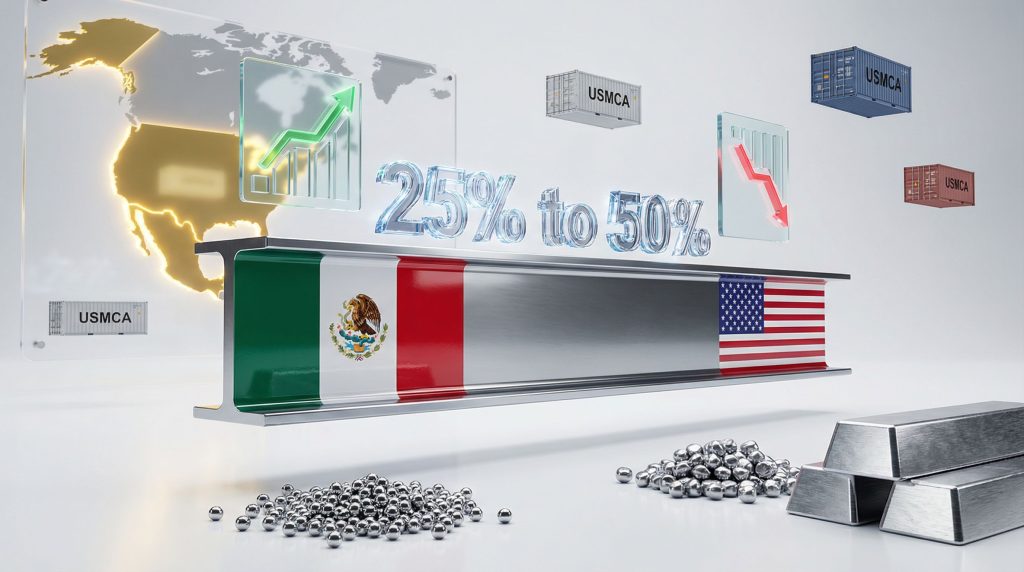
Mexico's response to US steel tariffs represents a critical juncture in North American trade relations, as escalating protectionist policies fundamentally challenge decades of integrated commerce. Steel markets, historically governed by comparative advantage and efficiency principles, now operate under complex webs of national security justifications and retaliatory frameworks. Furthermore, understanding these shifts requires examining how established trading partners navigate between economic integration and domestic protection imperatives.
Understanding the Current Mexico-US Steel Tariff Framework
The escalation of trade tensions between Mexico and the United States stems from Washington's application of Section 232 tariffs, imposing a 50% duty on Mexican steel imports under national security provisions. This dramatic increase represents a significant departure from traditional bilateral trade patterns that have characterised North American commerce for decades.
Mexico's position as a steel trading partner reveals the complexity of these measures. Despite US claims of national security concerns, the United States maintains a steel trade surplus with Mexico, undermining the economic rationale for protective duties. Industry data indicates that while Mexican steel prices declined across 13 benchmark products during the tariff period, US domestic prices increased substantially, suggesting market distortions rather than genuine security threats.
The timing and scope of Section 232 implementation reflects broader political pressures beyond traditional trade considerations. Analysis by Mexican industry leaders attributes these measures to efforts addressing US tariffs and inflation issues rather than legitimate bilateral security concerns. This political dimension complicates resolution prospects, as economic arguments alone may not address underlying policy motivations.
USMCA provisions contain mechanisms for addressing trade disputes, yet current enforcement frameworks reveal significant gaps. The agreement's rules of origin requirements for steel products lack sufficient incentives for regional production, creating opportunities for circumvention through non-FTA steel inputs. These structural deficiencies highlight the need for enhanced trilateral coordination mechanisms.
Technical committees established under USMCA focus on traceability, energy policies, and industrial strategy, yet their effectiveness remains limited by incomplete enforcement tools. The absence of surge-based protection alternatives to blanket tariffs reduces flexibility in addressing genuine market disruptions while maintaining regional integration objectives.
When big ASX news breaks, our subscribers know first
Mexico's Multi-Layered Policy Response Strategy
Mexico's response to US steel tariffs reflects a carefully calibrated approach balancing diplomatic engagement with preparation for potential retaliation. The Mexican Senate's Sectoral Diagnostic Summary of USMCA establishes clear conditions for escalation, stating that if Section 232 tariff elimination fails, Mexico should implement equivalent reciprocal measures.
Congressional engagement through 17 working groups led by Senators Emmanuel Reyes and Waldo Fernández demonstrates institutional commitment to coordinated federal action. These groups emphasise Mexico's steel industry reinforcement through active participation in USMCA technical committees, focusing on rules of origin enforcement and industrial strategy alignment.
| Policy Instrument | Target | Implementation Status | Timeline |
|---|---|---|---|
| Retaliatory tariffs | US goods | Under Senate consideration | Conditional |
| Anti-dumping duties | Non-FTA steel | Congressional approval secured | 2026 implementation |
| LIGIE reforms | Broad product categories | Promoted by President Sheinbaum | Active |
Mexico's domestic protection strategy operates independently of bilateral tensions, targeting countries without trade agreements, particularly Asian producers. Congressional approval of reforms to the General Import and Export Tax Law (LIGIE) allows duties up to 50% starting in 2026, covering extensive product categories including steel, automotive, and aluminium sectors.
This dual-track approach enables Mexico to strengthen domestic industry protection whilst maintaining negotiating flexibility with the United States. However, the strategy demonstrates sophisticated understanding of trade policy leverage, using multilateral measures to support bilateral negotiating positions.
Implementation mechanisms emphasise consultation and calibration rather than immediate escalation. After Ministry of Economy consultations, the final tariff package reduced duties on selected items to align with major trading partners whilst maintaining protections for strategic sectors. Moreover, these adjustments reflect tariffs impact on markets and broader economic considerations.
Industrial Stakeholder Alignment and Advocacy
CANACERO, Mexico's steel industry association, plays a pivotal role in shaping policy responses through direct engagement with legislative committees and executive branch consultations. Under the leadership of Víctor Martínez, who serves simultaneously as CANACERO President and CEO of ArcelorMittal Mexico, the organisation provides industry expertise crucial for policy formation.
The association's strategic position reflects broader industry concerns about unfair competition from Asian producers combined with US tariff pressures. CANACERO supports Mexico's tariff reforms targeting non-FTA countries whilst opposing US Section 232 measures, demonstrating nuanced understanding of global steel market dynamics.
Industry advocacy focuses on several key priorities:
• Regional integration enhancement through coordinated North American protective frameworks
• Import substitution acceleration to reduce dependence on external suppliers
• Rules of origin strengthening to incentivise regional content requirements
• Trilateral dialogue promotion replacing unilateral national security frameworks
CANACERO's endorsement of congressional LIGIE reforms emphasises sector stabilisation objectives amid record-low domestic production and consumption in 2025. This support reflects industry recognition that global competitive pressures require comprehensive policy responses rather than isolated trade measures.
The organisation's approach balances immediate protection needs with long-term integration objectives. By supporting Mexico's broader industrial development plan whilst advocating for enhanced North American cooperation, CANACERO positions the industry for sustainable competitiveness rather than short-term protection. Additionally, these developments contribute to global steel challenges affecting international supply chains.
Mexican steel producers adapt to the evolving trade environment through strategic repositioning emphasising domestic market development and supply chain optimisation. These adjustments reflect industry understanding that current trade tensions may persist, requiring fundamental business model evolution rather than temporary accommodation.
Economic Impact Assessment and Trade Flow Analysis
The economic consequences of escalating steel trade tensions extend beyond immediate price effects to fundamental supply chain restructuring throughout North America. Mexican steel sector performance in 2025 reveals the scope of these disruptions, with industry experiencing simultaneous export volume declines and domestic consumption weakness.
Price differential analysis demonstrates market fragmentation effects of tariff policies. While US domestic steel prices increased during the tariff period, Mexican prices declined across benchmark products, indicating supply-demand imbalances created by artificial trade barriers. These divergent price trends suggest efficiency losses and resource misallocation resulting from protective measures.
"Mexico's response to US steel tariffs represents a critical test case for regional trade integration under pressure from unilateral protection policies." – Mexican business analysis
Trade flow redirections create complex adjustment pressures for integrated industries, particularly automotive manufacturing. Mexican steel price advantages may benefit domestic automotive producers whilst potentially disrupting established cross-border supply relationships built over decades of NAFTA and USMCA integration.
The steel trade surplus maintained by the United States with Mexico contradicts traditional economic justifications for import protection. This anomalous situation highlights the political rather than economic motivations underlying current tariff policies, complicating resolution through conventional trade negotiations. Furthermore, these dynamics reflect broader Trump tariff implications for regional trade relationships.
Regional manufacturing competitiveness faces challenges from increased input costs and supply chain uncertainty. Automotive sector vulnerability to steel price fluctuations may accelerate nearshoring trends whilst simultaneously creating cost pressures that could affect North American competitiveness relative to other global production centres.
Third-country transshipment concerns, particularly regarding Chinese steel, add complexity to bilateral dispute resolution. Addressing these issues requires enhanced trilateral cooperation and monitoring mechanisms rather than bilateral tariff escalation that may prove ineffective against circumvention practices. Consequently, these developments influence the broader US-China trade war dynamics.
Regional Security Framework Evolution
Traditional national security frameworks governing international trade increasingly conflict with regional integration objectives developed over decades of North American cooperation. Mexico's proposal to replace national security approaches with regional security frameworks represents significant conceptual evolution in trade policy thinking.
Trilateral dialogue mechanisms offer potential alternatives to unilateral protection measures whilst addressing legitimate concerns about unfair competition and market disruption. This approach would require enhanced coordination among US, Mexican, and Canadian authorities to develop consistent policies addressing common challenges.
Technical implementation of regional security frameworks would involve several key components:
• Joint monitoring systems for tracking steel trade flows and identifying irregularities
• Coordinated rules of origin enforcement preventing circumvention through transshipment
• Shared surge protection mechanisms providing alternatives to permanent tariff barriers
• Trilateral industry consultation processes ensuring stakeholder input in policy development
Historical precedents from previous trade dispute resolutions demonstrate potential for negotiated solutions addressing underlying concerns. The 2018 NAFTA renegotiation period saw successful resolution of similar tensions through enhanced monitoring agreements and joint oversight mechanisms.
Canada's role in North American steel trade coordination becomes increasingly important as bilateral US-Mexico tensions escalate. Canadian participation in trilateral frameworks could provide mediating influence whilst ensuring comprehensive North American approaches to external competitive pressures.
Regional security approaches require balancing legitimate protection needs with integration benefits accumulated over decades of cooperation. Success depends on developing mechanisms that address root causes of trade tensions rather than merely managing symptoms through escalating protection measures.
The next major ASX story will hit our subscribers first
What Are the Future Policy Scenarios?
The trajectory of Mexico's response to US steel tariffs will likely determine broader patterns of North American trade policy evolution. Several scenarios emerge from current policy dynamics, each carrying distinct implications for regional economic integration and global trade relationships.
Negotiated exemption scenarios involve Mexico securing relief from Section 232 tariffs through enhanced monitoring commitments and joint oversight mechanisms. This outcome would preserve regional integration whilst addressing US concerns about transshipment and unfair competition from third countries.
Retaliation escalation pathways could emerge if diplomatic solutions fail, leading to comprehensive tariff wars affecting agriculture, manufacturing, and services sectors. Such escalation would fundamentally damage North American integration achievements whilst creating opportunities for external competitors.
Trilateral framework development represents the most constructive long-term solution, requiring institutional innovation within USMCA structures. This approach would establish permanent mechanisms for addressing trade tensions whilst preserving integration benefits and competitiveness objectives.
Mexico's policy response influences broader emerging market strategies for addressing unilateral trade measures by major economies. Successful resistance to unjustified protection could establish precedents encouraging similar responses by other middle-power economies facing comparable pressures. Moreover, as highlighted in economic forecasting analyses, these policy decisions carry significant long-term implications.
Regional trade bloc dynamics may accelerate as countries seek alternatives to bilateral vulnerability. Mexico's response to US steel tariffs demonstrates potential for combining domestic protection with regional integration, offering models for other economies facing similar challenges.
WTO dispute resolution mechanisms provide additional pathways for addressing these tensions through multilateral frameworks rather than bilateral escalation. Mexico's approach to these procedures may influence global trade governance evolution and the effectiveness of international economic law.
Disclaimer: This analysis is based on publicly available information and policy statements current as of December 2025. Trade policy developments remain subject to rapid change based on political and economic factors beyond current forecasting capabilities. Readers should consult current official sources for the most up-to-date policy positions and implementation timelines.
The outcome of Mexico's response to US steel tariffs will significantly impact future North American economic relationships and the viability of regional integration models under increasing protectionist pressures worldwide.
Want to Stay Ahead of Trade War Market Impacts?
Discovery Alert's proprietary Discovery IQ model delivers real-time alerts on significant ASX mineral discoveries, helping investors identify actionable opportunities that often emerge when global trade tensions create market volatility in commodities and mining sectors. Visit Discovery Alert's dedicated discoveries page to see how major mineral discoveries have historically generated substantial returns during periods of economic uncertainty, then begin your 30-day free trial to position yourself ahead of the market.