
August 14, 2026
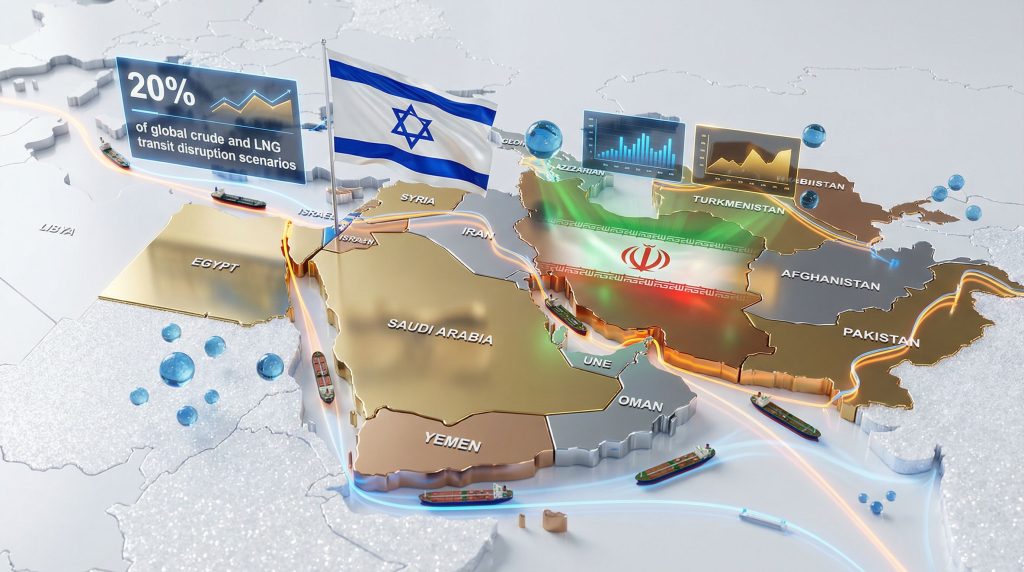
Supply chain vulnerabilities across multiple regions have fundamentally altered the strategic calculus for Middle East ceasefire prospects. Current energy market dynamics create both obstacles and incentives for regional stability, with global crude oil flows experiencing unprecedented disruption levels. Understanding these interconnected pressures reveals why traditional diplomatic frameworks may prove insufficient for sustainable conflict resolution.
Energy Infrastructure as Diplomatic Leverage
The Strait of Hormuz crisis demonstrates how critical chokepoints transform from economic assets into geopolitical weapons. Approximately 20% of global crude oil and liquefied natural gas supply typically transits through this waterway, making its closure a systemic threat to international energy security. Recent market data shows shipments have been "all but halted," creating what the International Energy Agency classifies as "the biggest-ever oil supply disruption."
This supply shock extends beyond regional boundaries, with at least 40% of Russia's oil export capacity simultaneously offline due to Ukrainian drone attacks, pipeline damage, and tanker seizures. Such concurrent disruptions create compounding effects that traditional strategic petroleum reserves cannot fully mitigate.
Market participants have responded with characteristic volatility patterns. Brent crude futures experienced dramatic swings, declining more than 2% on March 25, 2026, before recovering $1.13 (1.1%) to $103.35 per barrel the following day. Furthermore, oil price rally analysis indicates that West Texas Intermediate crude followed similar trajectories, rising $1.08 (1.2%) to $91.40 per barrel as investors reassessed ceasefire possibilities.
Strategic Reserve Management Under Stress
National inventory levels reveal the strain on backup systems designed to absorb supply shocks. US crude inventories reached 456.2 million barrels in the week ending March 20, 2026, representing the highest level since June 2024. This 6.9 million barrel weekly increase substantially exceeded analyst expectations of a 477,000-barrel rise, indicating emergency stockpiling activities.
Japanese Prime Minister Sanae Takaichi's request for additional coordinated International Energy Agency stockpile releases reflects broader concerns about prolonged conflict duration. However, the decline in US oil production complicates strategic reserve calculations. Such coordinated releases require unanimous member country agreement, creating diplomatic complexity that may constrain rapid response capabilities.
When big ASX news breaks, our subscribers know first
Nuclear Negotiations and Economic Incentives
The Trump administration's 15-point proposal transmitted through Pakistani intermediaries establishes maximalist preconditions that may exceed realistic diplomatic boundaries. These demands include:
• Removal of Iran's highly enriched uranium stockpiles
• Complete halt to uranium enrichment activities
• Ballistic missile program curtailment
• Termination of funding to regional proxy networks
Iran's Foreign Minister stated explicitly that despite reviewing this proposal, Iran maintains "no intention of holding talks to end the widening Middle East conflict." This positioning suggests fundamental incompatibility between negotiating parties rather than tactical manoeuvring.
White House Press Secretary Karoline Leavitt's declaration that President Trump will "hit Iran harder if Tehran fails to accept that the country has been defeated militarily" indicates escalatory rhetoric that may preclude compromise solutions. In addition, Trump tariff impacts create domestic political constraints that limit diplomatic flexibility for both administrations.
Regional Proxy Warfare Dynamics
Iran's extensive proxy network complicates any comprehensive ceasefire framework. Hezbollah operations in Lebanon, Houthi activities disrupting Red Sea shipping lanes, and Iraqi militia coordination create multiple potential violation points for any agreement. These decentralised command structures make verification and compliance monitoring technically challenging.
The economic cost of maintaining these proxy relationships creates competing pressures. Sanctions relief could provide resources for expanded proxy funding, while continued isolation may force strategic prioritisation among regional commitments.
Market Psychology and Risk Assessment
Energy market analyst Tsuyoshi Ueno from NLI Research Institute characterised current conditions as fundamentally unstable, noting that "optimism regarding a ceasefire has faded" with oil prices remaining "vulnerable to further volatility depending on negotiations and military actions by both sides."
This vulnerability reflects deeper structural problems with traditional risk management models. Historical precedents for regional conflicts typically involved single-theatre disruptions with alternative supply routes available. Consequently, current oil price stagnation dynamics eliminate many traditional hedging mechanisms.
How Do Alternative Energy Procurement Strategies Affect Stability?
Supply adaptation demonstrates market resilience despite geopolitical constraints. India's acquisition of its first Iranian liquefied petroleum gas cargo in multiple years, following temporary US sanctions relief, illustrates how energy security concerns override political considerations during crisis periods.
Iraqi oil production has contracted significantly, with storage tanks reaching "high and critical levels" according to three Iraqi energy officials. This infrastructure strain creates additional bottlenecks that may persist beyond immediate conflict resolution.
| Supply Disruption Metrics | Current Impact | Historical Comparison |
|---|---|---|
| Strait of Hormuz Transit | 95% reduction | Largest single-chokepoint disruption |
| Russian Export Capacity | 40% offline | Comparable to 1990s post-Soviet decline |
| US Strategic Reserves | Highest since June 2024 | Emergency stockpiling levels |
| Oil Price Volatility | Daily swings >2% | Exceeds 2008 financial crisis periods |
Technology Transfer and Economic Integration
Long-term Middle East ceasefire prospects depend partially on creating economic interdependencies that make conflict costs prohibitive. Energy infrastructure investments, particularly in renewable technology and smart grid systems, could provide neutral cooperation frameworks that benefit all regional parties.
However, current sanctions regimes prevent most technology transfer mechanisms that would create these interdependencies. European Union energy security concerns create potential opening for trilateral cooperation frameworks, but require sustained political commitment that current crisis conditions make unlikely.
Financial Architecture for Post-Conflict Reconstruction
Post-conflict reconstruction financing typically requires multilateral development bank coordination, private sector investment guarantees, and political risk insurance mechanisms. Current geopolitical alignments make such financial architecture development premature until fundamental security agreements achieve implementation.
The economic opportunity costs of prolonged conflict include foregone energy infrastructure investments, delayed renewable energy transitions, and continued military expenditure escalation across multiple regional actors. For instance, uranium market volatility demonstrates how nuclear energy sector uncertainties compound regional instability.
Intelligence Assessment and Verification Challenges
Any sustainable ceasefire framework requires robust verification mechanisms for nuclear activities, conventional weapons deployments, and proxy force activities. The technical complexity of monitoring uranium enrichment levels, ballistic missile testing, and financial flows to proxy organisations creates implementation challenges that historical arms control agreements have struggled to address.
International Atomic Energy Agency inspection protocols provide established frameworks for nuclear verification, but require Iranian cooperation levels that current political positioning suggests may not be forthcoming. Furthermore, Middle East tensions continue to influence global market sentiment.
Communication Channel Reliability
Current negotiations rely on Pakistani intermediaries for message transmission, indicating absence of direct communication channels between primary parties. This indirect communication creates delay and misinterpretation risks that may escalate tensions during critical negotiation phases.
Third-party mediation through Gulf states like Qatar and the UAE offers alternative channels, but requires these countries to balance relationships with both Iran and the United States while maintaining their own energy export stability.
The next major ASX story will hit our subscribers first
Regional Security Architecture Evolution
Middle East ceasefire prospects ultimately depend on broader regional security architecture transformation. Current alliance structures create zero-sum competitive dynamics that incentivise conflict continuation rather than resolution.
The Abraham Accords framework demonstrated potential for Arab-Israeli normalisation, but Iranian integration requires different diplomatic mechanisms that address Persian Gulf security concerns comprehensively. Additionally, recent ceasefire developments highlight the complexity of multilateral negotiations.
Investment Implications:
• Energy sector portfolios should maintain geographic diversification across multiple supply regions
• Defence contractor equities may experience sustained demand during prolonged negotiation periods
• Renewable energy infrastructure investments benefit from fossil fuel supply uncertainty
• Shipping and logistics companies face persistent risk premiums for Middle East route exposure
Economic modelling suggests that successful Middle East ceasefire prospects implementation could reduce global energy prices by 15-25% within six months, while failure scenarios point toward sustained price premiums and supply chain reorganisation that may persist for multiple years.
Current negotiations represent critical inflection points where energy security considerations may override traditional geopolitical calculations, creating unprecedented opportunities for creative diplomatic solutions that address both security and economic imperatives simultaneously.
Disclaimer: This analysis contains forward-looking statements regarding Middle East ceasefire prospects, energy market projections, and geopolitical scenarios. Actual outcomes may differ materially from these assessments due to rapidly evolving political, economic, and security conditions. Readers should conduct independent research and consider multiple scenario analyses before making investment or policy decisions based on this content.
Considering Investment Opportunities During Global Supply Chain Disruptions?
Discovery Alert's proprietary Discovery IQ model identifies significant ASX mineral discoveries that could benefit from supply chain vulnerabilities and commodity price volatility, providing real-time alerts when Australian mining companies announce major finds. Explore how historic mineral discoveries have generated substantial returns during periods of geopolitical uncertainty, then begin your 14-day free trial to position yourself ahead of market movements.