August 24, 2026
The Hidden Cost of Geopolitical Instability in the Metals That Power Renewable Energy
Every megawatt of solar capacity installed, every wind turbine raised, and every kilometre of transmission line strung across Asia's rapidly expanding grid requires one material above all others: aluminium. Lightweight, conductive, corrosion-resistant, and endlessly recyclable, aluminium is the structural and electrical backbone of the global clean energy transition. Yet its production is concentrated in regions that carry significant geopolitical risk, and the consequences of that concentration are now being felt across procurement desks from Jakarta to Tokyo.
The ongoing Middle East conflict aluminium supply chain disruption has moved from a regional concern to a globally consequential supply shock, one that is now threatening to raise the capital cost of Asia's green shift at precisely the moment when deployment needs to accelerate most.
When big ASX news breaks, our subscribers know first
Aluminium's Indispensable Role Across Clean Energy Infrastructure
Why No Renewable Technology Can Escape Aluminium Dependency
It is easy to think of the clean energy transition in terms of silicon wafers, lithium cells, and copper wiring. But the structural and electrical role of aluminium is pervasive in ways that rarely attract attention. Solar panel frames are almost universally constructed from extruded aluminium profiles. Wind turbine nacelle housings, heat exchangers, and electrical components rely heavily on aluminium alloys.
Electric vehicle battery enclosures require precision-formed aluminium casing to protect cells from thermal and mechanical stress. Furthermore, high-voltage transmission infrastructure uses aluminium conductor steel-reinforced cables as the industry standard over long distances.
Quantifying this dependency reveals its scale. Industry estimates suggest that a single megawatt of utility-scale solar capacity requires between 3 and 5 tonnes of aluminium in framing and mounting structures alone, while wind installations can require substantially more when nacelle and tower components are included. As renewable energy capacity additions across Asia are being planned in the hundreds of gigawatts over the coming decade, the cumulative aluminium demand embedded in those targets runs into the tens of millions of tonnes.
Asia's Renewable Energy Ambitions and the Aluminium Volume They Demand
Southeast Asia's three fastest-growing clean energy markets illustrate the scale of the demand challenge particularly clearly. Considering industrial metals demand across the region, the figures are striking:
- Indonesia has committed to reaching 44% renewable energy in its national electricity mix by 2030, requiring massive solar and geothermal buildout across its archipelago.
- Vietnam, already one of the world's largest solar installers by deployment speed, is targeting further large-scale additions to both solar and offshore wind capacity.
- The Philippines is pursuing grid modernisation alongside distributed solar deployment, with transmission upgrades demanding significant volumes of aluminium conductor material.
None of these economies operates a primary aluminium smelting industry of meaningful scale. All three are structurally dependent on imported primary metal, making them acutely exposed to disruptions anywhere in the global supply chain.
"Asia's clean energy ambitions are structurally inseparable from global aluminium supply security. Any sustained disruption to primary supply does not merely affect commodity markets. It directly inflates the capital cost of every solar farm, wind installation, and grid upgrade across the region."
The Gulf's Position in Global Aluminium Production
Why the GCC Became a Primary Aluminium Powerhouse
The Gulf Cooperation Council's rise as a major aluminium producing region was not accidental. It was the product of a structural cost advantage rooted in access to low-cost natural gas for power generation. Primary aluminium smelting is among the most energy-intensive industrial processes on earth, requiring roughly 13 to 15 kilowatt-hours of electricity per kilogram of metal produced.
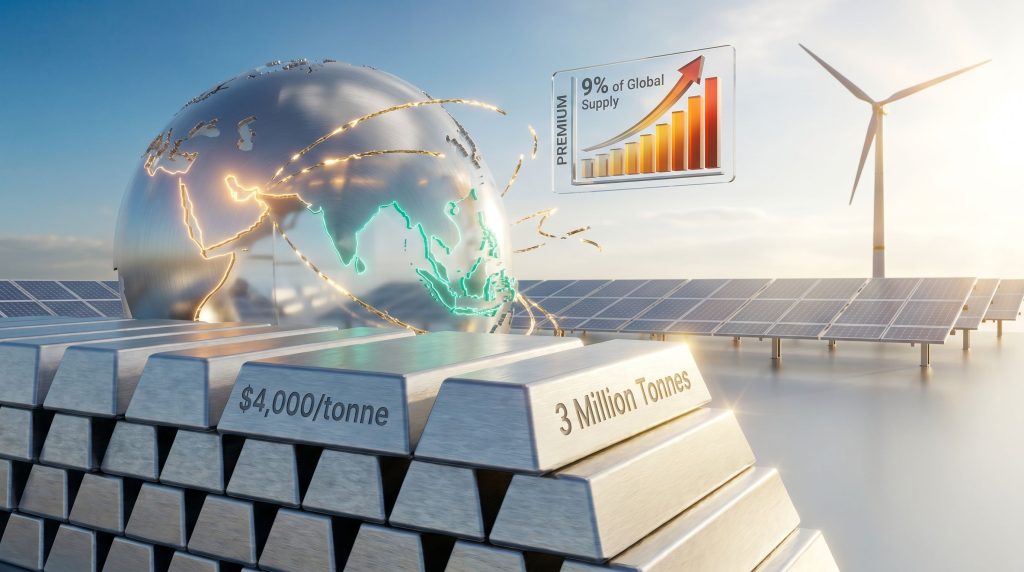
Gulf producers, led by operations in the UAE, Bahrain, and Qatar, have built this advantage into a formidable competitive position. The GCC collectively accounts for approximately 9% of global primary aluminium supply. Notably, among the top aluminium producers, Gulf operators carry outsized market influence because they serve as key swing exporters to both European and Asian buyers.
The Strait of Hormuz as a Metal Trade Chokepoint
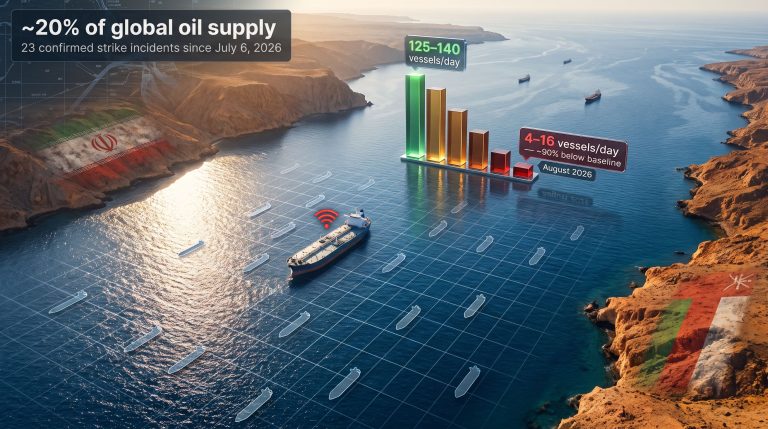
What makes Gulf aluminium production particularly significant from a supply security perspective is its geographic concentration relative to one of the world's most strategically sensitive maritime passages. As this analysis of Middle East supply chain risks outlines, the Strait of Hormuz handles an enormous volume of commodity trade, including finished primary aluminium exports, as well as inbound shipments of bauxite and alumina required to feed Gulf smelters.
This creates a dual vulnerability that market participants rarely fully appreciate:
| Supply Chain Vulnerability | Description | Estimated Impact |
|---|---|---|
| Finished aluminium exports | Primary metal shipped to Asia, Europe, and the US | Supply tightening across all import regions |
| Inbound bauxite/alumina | Raw material feedstock for Gulf smelters | Risk of smelter curtailments if feedstock is constrained |
| Shipping insurance premiums | War-risk surcharges on Gulf-routed vessels | Elevated freight costs passed to downstream buyers |
| Regional premium escalation | Spot premiums above LME base price | All-in costs exceeding $4,000 per tonne in key markets |
War-risk insurance surcharges on vessels transiting conflict-adjacent waters are not merely a theoretical concern. Underwriters price elevated risk into hull and cargo policies dynamically, and those costs are passed directly through to CIF buyers as higher landed prices regardless of where the metal ultimately originated.
Quantifying the Supply Shock Across Global Markets
Production Losses and the Arithmetic of Market Deficit
Reports of facility-level disruptions at major Gulf smelting operations have created measurable gaps in expected output. Capacity losses at specific installations have been estimated at approaching 1.6 million tonnes on an annualised basis, with total regional output at risk potentially reaching 3 million tonnes when direct and indirect impacts are considered together.
Analyst projections cited across industry commentary suggest the global market could face a net supply loss of 3 to 3.5 million tonnes of aluminium output through 2026 if disruptions persist at current intensity. To contextualise that number: global primary aluminium production runs at approximately 70 million tonnes per year, meaning a loss of this magnitude would represent roughly 5% of global output being removed from a market that already operates with relatively thin inventory buffers.
The Premium Surge That Is Already Repricing Project Economics
The LME aluminium price is only part of the cost equation for buyers. The total landed cost of primary metal includes a regional delivery premium that reflects local supply-demand balances, logistics costs, and supply chain risk perception. These premiums have moved sharply:
- European aluminium premiums have risen to record or near-record levels as buyers compete aggressively for non-Gulf supply sources.
- US Midwest premiums have tracked upward in response to aluminium tariff impacts layered on top of supply disruption concerns.
- Japanese and broader Asian spot premiums are climbing as regional buyers face redirected competition from Western buyers who have pivoted toward alternative suppliers.
All-in delivered costs in major import markets have surpassed $4,000 per tonne, a level that meaningfully compresses margins for fabricators and raises project development costs for clean energy developers purchasing aluminium-intensive components.
"The current supply disruption is not a transient price spike. The structural loss of Gulf capacity, even partially, could sustain elevated aluminium prices for multiple quarters, compounding cost pressures across Asia's entire clean energy project pipeline."
A Compounding Risk: The Nickel Dimension
One aspect of the Middle East conflict aluminium supply chain story that receives insufficient attention is the simultaneous disruption to nickel supply chains relevant to EV battery manufacturing. The same geopolitical pressures affecting aluminium logistics are creating friction in the supply of nickel, a critical input for the lithium-nickel-manganese-cobalt and lithium-nickel-cobalt-aluminium battery chemistries that dominate EV applications.
For clean energy project developers and EV manufacturers simultaneously sourcing both aluminium and nickel, the combined price and availability pressure creates a multiplier effect on total project economics. Capital cost estimates for renewable energy installations that were modelled at prevailing commodity prices twelve months ago may now be materially understated.
How Asian Buyers Are Responding to Supply Disruption
Procurement Pivots and Their Hidden Cost Penalties
The most immediate response from Asian aluminium buyers has been a pivot toward alternative supply sources. North American producers, Australian refiners, and in some cases Russian suppliers have all seen increased inquiry from Asian purchasers who previously relied heavily on Gulf origins.
This diversification carries a cost that is often underestimated. The freight differential between sourcing primary aluminium from the Middle East versus sourcing equivalent tonnage from Canada or Australia is substantial. Longer shipping routes translate into:
- Higher freight costs on a per-tonne basis.
- Greater working capital tied up in longer supply pipelines.
- Increased port handling and logistics complexity.
- Wider exposure windows to currency fluctuation on multi-week voyages.
For manufacturers operating on tight margins, these incremental costs can be the difference between a profitable quarter and a loss-making one.
The Accelerating Case for Secondary and Green Aluminium
Perhaps the most significant structural consequence of the current disruption is the acceleration it is providing to corporate interest in recycled and certified low-carbon aluminium. Secondary aluminium, produced from scrap rather than primary ore, offers several compelling supply chain advantages in the current environment:
- It draws on localised scrap feedstock rather than globally traded primary metal.
- It requires approximately 95% less energy per tonne than primary smelting, reducing exposure to energy price volatility.
- It can be sourced from within the same regional supply chain as the end application, shortening logistics pipelines.
Green aluminium, defined as primary or secondary metal produced using renewable energy inputs, is simultaneously attracting a growing commercial premium driven by ESG commitments. For instance, initiatives such as the green aluminium venture between major producers demonstrate how certification frameworks such as the Aluminium Stewardship Initiative (ASI) Performance Standard are becoming procurement requirements rather than optional credentials.
Moreover, energy transition supply security is increasingly being embedded into renewable energy project financing structures, reinforcing the case for certified low-carbon sourcing across the entire supply chain.
"Supply chain disruptions of this magnitude historically accelerate structural shifts that were already underway. The current crisis may compress what would have been a decade-long transition toward recycled and certified green aluminium sourcing into a much shorter timeframe for Asian manufacturers and project developers."
The next major ASX story will hit our subscribers first
Country-Level Exposure Assessment
The following table summarises how key Asian clean energy markets are exposed to the current disruption:
| Country | Primary Green Energy Dependency on Aluminium | Key Risk Factor | Estimated Cost Impact |
|---|---|---|---|
| Indonesia | Solar and grid expansion | Heavy reliance on imported primary aluminium | Higher project capital costs |
| Vietnam | Solar manufacturing and installation | Exposure to Middle East scrap and primary supply | Margin compression for manufacturers |
| Philippines | Grid modernisation and solar | Import-dependent with limited domestic smelting | Elevated infrastructure costs |
| India | Wind and solar capacity additions | Large-scale aluminium demand for renewables | Procurement cost escalation |
Operational and Strategic Responses for Clean Energy Developers
Near-Term Risk Mitigation
For procurement teams and project developers currently navigating this environment, several immediate actions can reduce near-term exposure:
- Inventory buffering: Accelerating aluminium procurement ahead of anticipated further price escalation where storage and cash flow permit.
- Supplier qualification: Actively qualifying alternative suppliers across multiple geographies before supply tightens further and options narrow.
- Contract restructuring: Shifting from spot purchasing toward longer-term fixed-price supply agreements wherever counterparties are willing to provide price certainty.
Medium-Term Supply Chain Resilience
Over a six to eighteen month horizon, the following strategies can meaningfully reduce structural vulnerability:
- Incorporating secondary aluminium specifications into project procurement requirements to reduce dependence on primary metal.
- Developing preferred supplier relationships with non-Gulf primary producers in Australia, Canada, and Scandinavia.
- Utilising LME aluminium futures and options contracts to hedge price exposure on large-scale infrastructure procurement programmes.
Long-Term Structural Adjustments
The longer-term response requires action that extends beyond individual companies. As reporting on Asia's aluminium supply crunch highlights, the structural vulnerabilities exposed by this disruption demand coordinated policy and investment responses:
- Investment in domestic aluminium recycling infrastructure in key Asian markets to reduce the region's structural import dependency.
- Engagement with policy frameworks that incentivise the development of green aluminium production capacity within the Asia-Pacific region.
- Embedding supply chain resilience criteria into renewable energy project financing structures and due diligence frameworks so that procurement risk is assessed alongside technical and financial risk from the outset.
Frequently Asked Questions
What percentage of global aluminium supply comes from the Middle East?
The GCC accounts for approximately 9% of global primary aluminium supply. While not a majority share, the region's role as a low-cost swing producer and major exporter to both Asian and European markets means that disruptions create outsized price and availability impacts far beyond what the raw percentage might suggest.
How much aluminium output has been affected by the Middle East conflict?
Disruptions at major Gulf facilities have affected capacity equivalent to approximately 1.6 million tonnes at specific installations, with total regional output at risk potentially reaching 3 million tonnes of annualised production capacity.
Why does aluminium supply disruption threaten Asia's renewable energy targets?
Aluminium is a non-substitutable input across solar panel frames, wind turbine structures, EV components, and electrical grid infrastructure. When primary aluminium prices and regional delivery premiums rise sharply, every renewable energy installation becomes more expensive to build, potentially delaying project timelines or reducing the financial viability of planned capacity additions.
What is green aluminium and why does it matter now?
Green aluminium refers to metal produced using renewable energy inputs, resulting in significantly lower carbon emissions per tonne than conventionally smelted primary metal. The current Middle East conflict aluminium supply chain disruption is increasing both commercial and strategic interest in green aluminium as buyers seek supply chain resilience alongside alignment with the ESG requirements embedded in clean energy project financing.
How are aluminium prices responding to the conflict?
Spot premiums in Europe and the United States have risen to record or near-record levels, with all-in delivered costs exceeding $4,000 per tonne in major import markets. Asian premiums are also rising as regional buyers face intensified competition for non-Gulf alternative supply.
Key Takeaways
- The Middle East conflict has introduced a structural supply shock to global aluminium markets, with potential output losses of 3 to 3.5 million tonnes projected through 2026.
- Asia's green energy transition is directly exposed because aluminium is a non-substitutable input across solar, wind, EV, and grid infrastructure.
- All-in aluminium costs have surpassed $4,000 per tonne in key markets, with Asian premiums rising as Western buyers compete for alternative supply.
- The crisis is accelerating three structural shifts: geographic supply diversification, recycled aluminium adoption, and green aluminium certification.
- Countries including Indonesia, Vietnam, and the Philippines face the most acute near-term exposure given their import dependence and aggressive renewable energy targets.
- Long-term supply chain resilience requires investment in domestic recycling infrastructure, alternative sourcing partnerships, and policy frameworks supporting low-carbon aluminium production.
Disclaimer: This article contains forward-looking analysis, market projections, and scenario-based assessments drawn from publicly available industry data and commentary. Figures related to output losses, price levels, and demand projections are estimates subject to revision as market conditions evolve. Nothing in this article constitutes financial or investment advice.
Want to Track the Next Major ASX Mineral Discovery Before the Broader Market Does?
The structural shifts driving demand for aluminium and other critical minerals are creating significant opportunities for investors who can identify high-potential ASX discoveries early — Discovery Alert's proprietary Discovery IQ model delivers real-time alerts the moment significant mineral discoveries are announced on the ASX, transforming complex data across 30-plus commodities into clear, actionable insights, so you can explore historic discoveries and their returns or start your 14-day free trial today and position yourself ahead of the market.