July 29, 2026
The Architecture of Vulnerability: Why Oil Markets Cannot Escape the Middle East
Every few decades, the global energy system undergoes a stress test severe enough to expose the gap between theoretical resilience and operational reality. Pipeline redundancies, strategic reserves, and diversified supplier portfolios all look robust on paper until a conflict strikes at the precise intersection of production infrastructure, refining capacity, and maritime transit simultaneously. That convergence is exactly what the Middle East conflict impact on oil markets has delivered, and the results are reshaping how traders, policymakers, and energy strategists think about supply security from the ground up.
Understanding what is happening requires more than tracking a price chart. It demands a structural examination of why this region retains irreplaceable energy significance, how the current disruption differs mechanically from historical precedents, and which market segments are bearing the greatest stress.
When big ASX news breaks, our subscribers know first
Why the Middle East Remains Structurally Irreplaceable
The Strait of Hormuz: A Single Point That Governs Global Supply
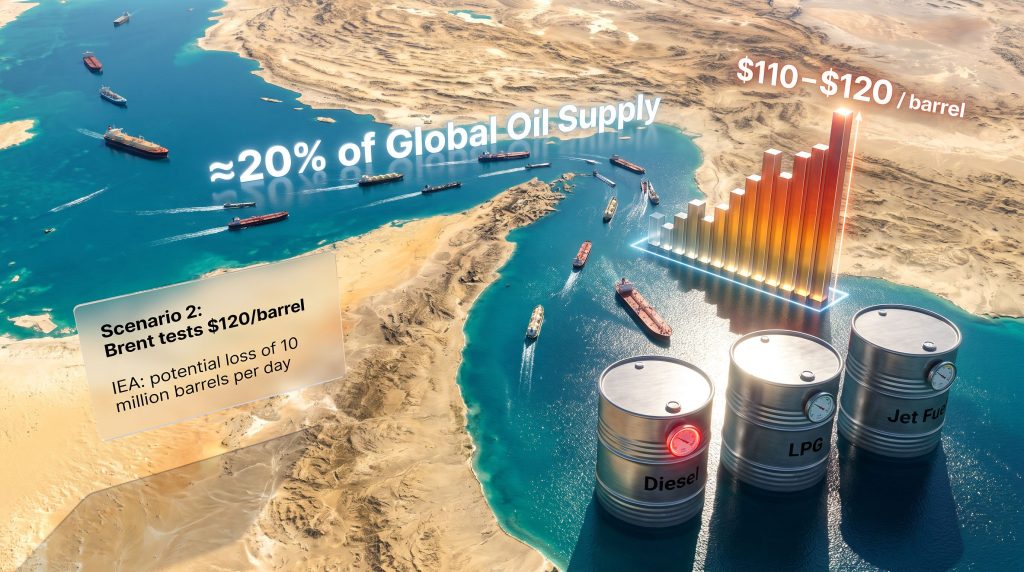
Geography does not negotiate. The Strait of Hormuz, a narrow waterway connecting the Persian Gulf to the Gulf of Oman, carries approximately 20% of total global oil supply every single day. No other maritime corridor on earth concentrates this volume of energy flow through such a constrained passage. Critically, the strait also serves as the primary export route for liquefied natural gas from Qatar, meaning any disruption extends its reach well beyond crude oil into gas markets across Europe and Asia.
Previous conflicts have tested regional resilience without directly threatening Hormuz transit. The current situation is categorically different. Direct risks to shipping lanes have caused voluntary avoidance behaviour among tanker operators, effectively reducing throughput even without a formal closure. Furthermore, marine insurance premiums for Gulf transits have spiked sharply, adding a financial friction layer that compounds physical supply constraints.
There is no viable full alternative. The East-West Pipeline across Saudi Arabia can carry roughly 5 million barrels per day, a meaningful but insufficient bypass that cannot replicate the Strait's full throughput capacity. Iraq has no overland alternative of comparable scale. The arithmetic of geographic substitution simply does not work at the volumes involved.
Compounding Disruption: Why This Conflict Breaks the Historical Template
Commodity analysts have characterised the current disruption as the most significant geopolitical shock to oil markets in several decades. The basis for that assessment becomes clear when mapped against historical benchmarks:
| Historical Event | Supply Removed | Duration | Market Response |
|---|---|---|---|
| 1973 Arab Oil Embargo | ~4.3 mb/d | ~5 months | Prices quadrupled |
| 1990 Gulf War | ~4.3 mb/d | ~6 months | Prices doubled briefly |
| 2019 Abqaiq Attacks | ~5.7 mb/d temporarily | Days | Prices spiked ~15% intraday |
| Current Middle East Conflict | Up to 8-10 mb/d in severe scenarios | Ongoing | 25-55%+ price gains observed |
The International Energy Agency has modelled scenarios in which Middle Eastern production losses reach at least 10 million barrels per day under severe escalation pathways, with estimates of effective global supply reduction approaching 8 million barrels per day across certain conflict trajectories. What distinguishes the current episode is not simply scale but simultaneity. Production infrastructure, refining facilities, and maritime transit have all faced pressure at the same time, creating a compounding supply risk that markets have struggled to price with confidence.
Prior conflict episodes typically affected one dimension of supply at a time. The present disruption has stressed all three simultaneously: upstream production, midstream refining, and the logistics corridor connecting them to global consumers. That combination produces non-linear market effects.
What Has Actually Happened to Crude Oil Prices
Price Trajectory and the Role of Algorithmic Amplification
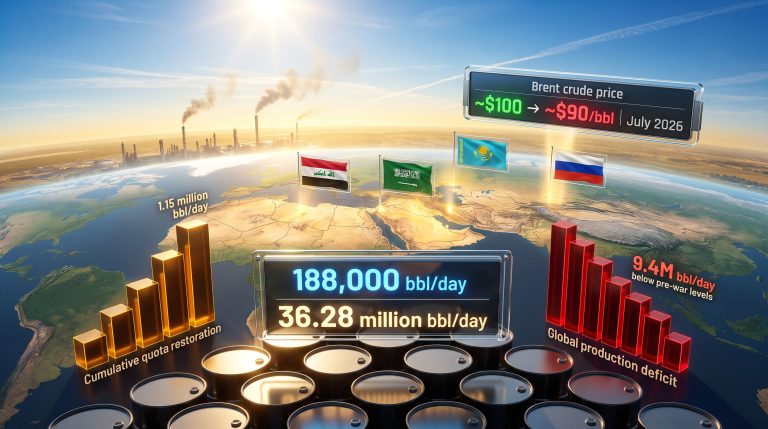
Crude oil price trends show that Brent crude has recorded gains ranging from 25% to more than 55% over compressed timeframes following escalation events, with price peaks observed in the $110 to $120 per barrel range before partial retracement. The speed of these moves reflects more than fundamental supply arithmetic. Algorithmic trading systems, which now account for a substantial share of futures market volume, are programmed to recognise geopolitical trigger events and execute positions within milliseconds. This mechanism amplifies short-term volatility significantly beyond what physical supply and demand alone would justify.
The practical consequence is a market prone to violent intraday swings, where headline risk can move prices by several dollars per barrel before fundamental data has time to inform traders. For physical market participants managing procurement, this volatility creates genuine operational challenges beyond simple price exposure. The oil price movements observed during this period also reflect broader macroeconomic anxieties layered on top of direct supply concerns.
The Resilience Paradox: Why Prices Have Not Sustained Higher Levels
Despite the severity of the disruption, three countervailing forces have prevented a sustained move toward the most extreme price scenarios:
- Strategic Petroleum Reserve releases: IEA member nations have coordinated drawdowns from strategic reserves, injecting additional barrels into the market to dampen price spikes. This mechanism is effective short-term but is finite by definition.
- Demand destruction: Elevated prices organically suppress consumption, particularly in price-sensitive developing markets where fuel demand exhibits higher elasticity. Industrial users have also accelerated efficiency measures and fuel switching where technically feasible.
- Trade flow rerouting: Buyers have progressively redirected procurement toward non-disrupted supply corridors, substituting Middle Eastern volumes with barrels from the United States, Brazil, Guyana, and Canada, all of which have seen meaningful production growth in recent years.
The combination of these three mechanisms explains why prices have moved materially but not catastrophically on a sustained basis. Markets are effectively balancing geopolitical fear premium against observable fundamental offsets in real time.
Crude vs. Refined Products: Where the Real Stress Lives
| Market Segment | Disruption Level | Primary Driver | Price Pressure |
|---|---|---|---|
| Brent Crude | Moderate to High | Supply risk premium plus reserve releases | Elevated but partially offset |
| Diesel | High | Simultaneous refinery outages in Middle East and Russia | Acute tightening |
| Gasoline | Moderate | Demand reduction plus trade flow shifts | Elevated |
| LPG | High | Hormuz transit disruption | Significant |
| Jet Fuel | Moderate to High | Aviation demand recovery plus refinery constraints | Rising |
The Refining Crisis: The Dimension Most Markets Are Underestimating
Why Refinery Outages Create a Different Class of Problem
Crude oil disruptions are serious, but they operate within a market that has developed sophisticated mechanisms for response: reserve releases, demand reduction, and supplier substitution. Refinery outages present a structurally harder problem. Refining capacity cannot be redirected like a tanker. Processing facilities take months or years to rebuild or bring online. When refinery throughput falls in multiple major producing regions simultaneously, the downstream product market tightens regardless of what happens to crude availability.
The current conflict has produced simultaneous refining capacity losses across the Middle East and Russia. These two regions collectively supply a significant share of globally traded refined products, particularly diesel and fuel oil. Consequently, the result is a product supply deficit that exists independently of crude price dynamics, creating a divergence between crude and product markets that is itself a distinctive feature of this disruption cycle.
Diesel: The Market Under the Sharpest Pressure
Diesel occupies a unique position in the refined products complex. Unlike gasoline, which faces meaningful demand competition from electric vehicles in advanced economies, diesel remains the fuel of choice for freight, agriculture, construction, and industrial power generation. Its demand base is largely inelastic at the margin, meaning users cannot easily reduce consumption without directly reducing economic output.
Refining margin expansion, measured through the metric known as the crack spread (the price differential between refined diesel and the crude oil input required to produce it), has widened substantially as product scarcity outpaces crude cost increases. This means refiners with operational capacity outside the conflict zone are capturing historically elevated margins, while importers dependent on Middle Eastern and Russian output face acute supply tightening.
European and Asian diesel importers are experiencing this pressure most directly, as their traditional supply corridors from the Middle East and Russia have been disrupted simultaneously.
LPG: The Overlooked Downstream Casualty
Liquefied petroleum gas receives far less analytical attention than crude or diesel, but its exposure to the current disruption is proportionally severe. LPG exports from the Gulf depend almost entirely on terminals that feed directly into Hormuz transit lanes. Disruption to this corridor has compressed availability for petrochemical feedstock users across Asia and created acute pricing pressure for residential heating markets in South and Southeast Asia, where LPG remains the dominant household cooking fuel for hundreds of millions of people. The energy poverty dimension of this disruption is underappreciated in most Western market commentary. In addition, the LNG supply outlook for the region has deteriorated meaningfully as the same transit constraints weigh on gas export volumes.
How Different Regions Are Experiencing the Shock
Oil Importers: Inflation, Trade Deficits, and the Central Bank Dilemma
For oil-importing nations, sustained price elevation creates a transmission mechanism that reaches deep into domestic economies. Transport fuel costs rise directly, freight costs increase, manufacturing input costs climb, and food prices follow as agricultural and logistics costs flow through supply chains. The cumulative effect pushes headline consumer price indices upward over a 2 to 3 quarter lag following the initial oil price shock.
Central banks in the United States, European Union, and United Kingdom face a consequential dilemma. Monetary policy easing cycles that appeared well-timed in the absence of energy disruption are now complicated by persistent energy-driven inflation. Historical analysis of oil shock episodes suggests that sustained prices above $100 per barrel have typically delayed central bank rate-cutting cycles by an average of 6 to 9 months, as energy cost inflation permeates broader CPI baskets before policymakers can confirm it will not become entrenched.
The stagflationary risk scenario, where slowing growth coexists with elevated energy-driven inflation, has moved from tail risk to a scenario requiring explicit probability weighting in central bank deliberations.
The Structural Versus Cyclical Debate
A significant strand of pre-conflict analysis held that Middle Eastern geopolitics had diminished in market relevance due to US shale growth, Brazilian deepwater expansion, and Guyanese production coming online. That thesis rested on the assumption that supply disruptions would remain upstream in nature and manageable through reserve releases and trade flow adjustment.
The current conflict challenges that framework directly. When production infrastructure is physically targeted, when refining capacity is damaged across multiple jurisdictions simultaneously, and when the single maritime corridor that carries one-fifth of global oil supply faces credible threat, the structural buffer argument encounters its limits. The trade war impact on oil has further complicated this picture, layering demand-side uncertainty onto an already stressed supply environment.
The distinction between production capacity and deliverable supply is critical. A well-endowed global market can still face acute shortage conditions if the infrastructure required to transform production capacity into exportable barrels is compromised at multiple points in the chain simultaneously.
Scenario Framework for the Remainder of the Year
Three Pathways and Their Market Implications
Scenario 1: Controlled Escalation with Gradual Normalisation
Conflict remains geographically contained, Hormuz transit continues operating, and strategic reserve releases sustain market confidence. Under this pathway, Brent crude stabilises in the $85 to $100 per barrel range as trade flows adjust and demand responds. Refined product pressure, particularly in diesel markets, persists longer than crude tightness due to refinery rebuild timelines measured in months rather than weeks.
Scenario 2: Hormuz Transit Restriction
Sustained interdiction of shipping lanes, or voluntary avoidance driven by persistent threat, removes Hormuz volumes from accessible markets. Brent tests and potentially exceeds $120 per barrel. Diesel markets face acute shortage conditions. Global recession risk rises materially as energy cost inflation becomes structurally embedded in producer and consumer price indices across multiple regions.
Scenario 3: Broader Regional Escalation
Conflict expands to draw additional Gulf producers into active disruption, threatening Saudi, UAE, or Iraqi output at scale. Supply losses in the 8 to 10 million barrels per day range trigger emergency IEA coordination and potential demand rationing in the most vulnerable import-dependent economies. Long-term implications for energy security investment and supply chain architecture become permanent structural features of planning frameworks.
Markets are currently pricing a probability-weighted blend of Scenarios 1 and 2. A credible normalisation signal for Hormuz would trigger a sharp downward price correction, while renewed infrastructure attacks would rapidly reprice toward Scenario 2 parameters. The binary nature of this dynamic creates unusual volatility asymmetry.
The next major ASX story will hit our subscribers first
The Leading Indicators Worth Monitoring
For market participants, policymakers, and analysts tracking the evolution of the Middle East conflict impact on oil markets, the following metrics function as the most sensitive real-time signals:
- Hormuz shipping traffic volumes: Tanker tracking data provides early warning of voluntary avoidance behaviour that precedes formal disruption announcements.
- War risk insurance premiums for Gulf transit: Premium spreads widen rapidly in response to credible threat signals, often before price markets have fully repriced.
- Diesel crack spreads: The margin between diesel and crude input cost is the most sensitive real-time indicator of refined product tightness and refinery margin dynamics.
- IEA strategic reserve levels and release coordination: Reserve drawdown rates signal how much buffer remains before physical supply becomes the binding constraint.
- OPEC+ production decisions: OPEC's market influence remains a critical variable, as the divergence between conflict-affected members and those positioned to benefit from elevated prices creates internal tensions that will shape production strategy across the remainder of the year.
Long-Term Structural Implications for Energy Security
Supply Diversification and the Investment Case for Distributed Refining
The conflict has reinvigorated policy discussions around domestic energy production capacity, strategic reserve adequacy, and import diversification across multiple importing regions. The investment case for LNG infrastructure as a hedge against oil supply disruption has strengthened, and the acceleration of renewable energy deployment as a long-term demand-side response to geopolitical oil vulnerability has gained additional policy momentum.
Less visible but equally important is the strategic argument for distributed refining capacity. The prevailing economic logic of refinery development has historically favoured scale concentration: large facilities in major producing regions achieve better unit economics. However, the current disruption exposes the systemic fragility of that model. Refinery capacity in politically stable, geographically distributed locations carries a strategic value that pure economic analysis does not fully capture.
The tension between refinery economics and energy security geography is likely to become a recurring theme in long-term infrastructure planning. As research into political conflict and crude oil markets continues to deepen our understanding of these dynamics, the enduring lesson of the current episode becomes clearer.
The Middle East conflict impact on oil markets demonstrates that geopolitical risk does not follow a diminishing returns curve. As long as a single geographic chokepoint carries one-fifth of global energy supply, and as long as refining capacity remains concentrated in geopolitically exposed regions, the structural vulnerability that the current conflict has exposed will remain a fundamental feature of the global energy system.
This article contains forward-looking analysis, scenario modelling, and market projections based on publicly available data and commodity market research. All price references, supply estimates, and scenario outcomes represent analytical assessments and should not be construed as financial advice. Commodity markets are subject to rapid change, and actual outcomes may differ materially from scenarios described. Readers should conduct independent analysis before making any investment or procurement decisions.
Want to Capitalise on Market-Moving Resource Discoveries Before the Crowd?
While geopolitical shocks reshape global energy and commodity markets, Discovery Alert's proprietary Discovery IQ model scans ASX announcements in real time, delivering immediate alerts on significant mineral discoveries so subscribers can act ahead of the broader market — explore historic discovery returns to see what early positioning has meant for investors, and begin your 14-day free trial today.