May 20, 2026

How Does Middle East Geopolitical Tension Drive Global Energy Market Volatility?
Global commodity markets exhibit pronounced sensitivity to geopolitical disruptions, particularly when conflicts emerge in regions controlling critical energy infrastructure. The Iran conflict impacts oil prices through both immediate spot market adjustments and longer-term contract repricing, creating cascading economic effects across import-dependent nations. Furthermore, the interconnected nature of modern energy systems means that even localised military actions can trigger worldwide price adjustments within hours.
Understanding the Macroeconomic Framework of Energy Security
Energy security vulnerabilities become particularly acute during periods of regional instability. The global petroleum distribution network relies heavily on several strategic chokepoints, each representing potential bottlenecks capable of disrupting international supply chains.
| Critical Chokepoint | Global Transit Share | Daily Volume (Million Barrels) |
|---|---|---|
| Strait of Hormuz | 21% | ~5.0 |
| Suez Canal | 12% | ~2.8 |
| Strait of Malacca | 25% | ~6.0 |
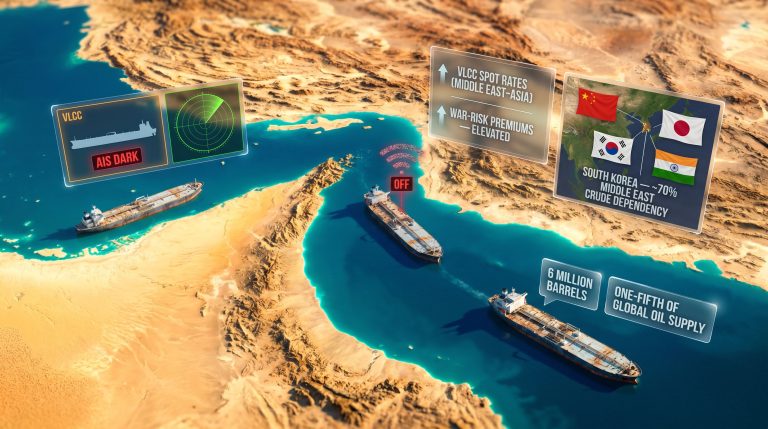
Current events validate these vulnerability assessments. The Strait of Hormuz has experienced a 70% reduction in traffic volume as of March 2026, creating practical supply constraints without formal blockade declarations. This reduction demonstrates how insurance market responses and commercial shipping decisions can create supply disruptions more effectively than military interdiction.
Risk premium calculations in commodity futures markets incorporate multiple factors beyond immediate supply availability. Traders evaluate potential duration of conflicts, alternative route capacity, and strategic reserve utilisation capabilities when establishing forward pricing curves. Moreover, understanding the OPEC production impact becomes crucial during such periods of heightened volatility.
The Economics of War Risk in Energy Markets
Financial institutions have developed sophisticated frameworks for quantifying geopolitical risk in energy markets. JPMorgan's analysis indicates that Brent crude pricing models incorporate 15-25% war risk premiums during active Middle East conflicts, with potential spikes to $120 per barrel if critical infrastructure faces sustained disruption.
Historical precedent from the 1979 Iranian Revolution demonstrates similar price dynamics. During that crisis, oil prices increased from approximately $15 to over $40 per barrel within 18 months, representing a 167% increase that triggered global recession. These factors contribute to the broader oil price rally factors that influence market dynamics.
Insurance market responses amplify shipping cost escalation patterns. Marine insurance rates for Persian Gulf transits have increased by 300-500% during the current crisis, according to recent analysis by Reuters. Major shipping companies, including Maersk, have suspended operations entirely through the Strait of Hormuz, citing safety concerns and insurance availability constraints.
When big ASX news breaks, our subscribers know first
What Are the Primary Economic Transmission Channels for Oil Price Shocks?
Energy price volatility transmits through multiple economic channels simultaneously, creating compound effects that extend far beyond direct fuel costs. Import-dependent economies face particular vulnerability to these transmission mechanisms, as demonstrated through recent Pakistani economic data.
Import-Dependent Economy Vulnerabilities
Pakistan exemplifies the acute sensitivity of developing economies to energy price fluctuations. Former Pakistan Business Council CEO analysis indicates that the country's current account deficit increases by approximately $1.5-$2 billion for every $10 rise in oil prices. This mechanical relationship reflects Pakistan's substantial import dependency: 85% of crude oil, 29% of natural gas, 50% of LPG, and 20% of coal.
| Energy Import Dependency by Region | Percentage of Total Consumption |
|---|---|
| South Asia (Pakistan focus) | 70-85% |
| European Union | 60% |
| East Asia | 80% |
Foreign exchange reserve depletion patterns create secondary economic pressures. Countries like Pakistan must either draw down reserves to maintain import volumes or implement import compression measures. In addition, these challenges form part of broader energy exports challenges facing the region.
Pakistan's energy import bill reached $17.5 billion in 2023, with projections suggesting this figure will nearly double to approximately $35 billion by 2030. At potential price escalation to $100-$120 per barrel, deficit expansion of $5-$7 billion annually could effectively reverse the recent $2 billion current account surplus achieved in FY25.
Inflation Transmission Through Energy-Intensive Sectors
Energy cost increases propagate through economic systems via multiple simultaneous channels. Pakistan demonstrates typical transmission patterns: rising fuel costs add 0.5-0.6 percentage points to inflation for every $10 oil price increase. This sensitivity exists despite recent inflation improvements from above 30% in 2023 to approximately 5.8% currently.
Transportation-dependent economies face amplified inflation transmission. Pakistan relies heavily on trucking for goods movement rather than integrated rail networks, meaning diesel price increases immediately affect transportation costs for perishables, vegetables, and grains. Consequently, for countries where food represents substantial consumer price index components, this creates rapid inflation pass-through within 2-4 weeks of crude price changes.
Fiscal Policy Constraints During Energy Crises
Government revenue volatility during energy crises creates policy constraint paradoxes. The Petroleum Development Levy mechanism in Pakistan represents typical government responses: policymakers often increase petroleum taxation precisely when households face highest energy cost burdens, seeking to meet revenue targets while managing subsidy expenditures.
Step-by-step Energy Subsidy Policy Response Pattern:
-
Initial price shock absorption through temporary subsidies and strategic reserve utilisation
-
Fiscal deficit expansion as subsidy costs mount and tax revenues decline from reduced economic activity
-
Gradual subsidy removal triggering direct consumer price increases and inflation acceleration
-
Economic adjustment through demand destruction and structural consumption changes
How Do Energy Infrastructure Vulnerabilities Amplify Economic Risks?
Critical infrastructure vulnerabilities create systemic risks extending beyond immediate supply disruption. The current Strait of Hormuz situation demonstrates how commercial risk assessments can create practical closures without formal military interdiction.
Critical Chokepoint Analysis
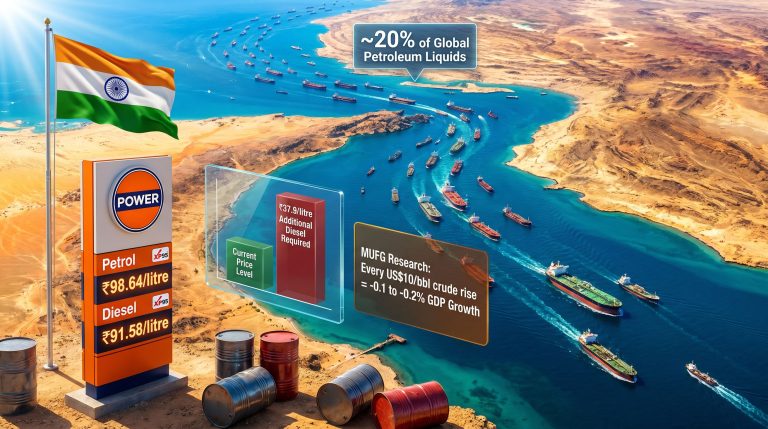
The Strait of Hormuz handles 21% of global petroleum liquids transit, making it the world's most critical energy chokepoint. Current traffic reduction of 70% represents approximately 3.3-3.5 million barrels per day of disrupted normal flows. This scale of disruption validates the outlined framework's prediction of 6-10% oil price spikes within 24-48 hours.
The Strait of Hormuz handles 21% of global petroleum liquids transit. A 70% traffic reduction, as observed during recent conflicts, can trigger 6-10% oil price spikes within 24-48 hours.
De facto closure mechanisms operate through insurance market failures rather than direct military action. Lloyd's of London and other major marine insurers have withdrawn coverage for Persian Gulf transits, creating practical barriers to shipping that function identically to official blockades from supply-side perspectives.
Alternative routing costs demonstrate infrastructure vulnerability amplification. Routing Middle Eastern oil around Africa rather than through Suez adds approximately 3,000 nautical miles and 15-20 days transit time, increasing per-barrel transportation costs by $2-4 while reducing global shipping capacity. These dynamics also relate to broader trade war oil impacts affecting global markets.
Supply Chain Resilience Testing
Current events provide real-time testing of supply chain resilience frameworks. Scenario modelling for energy disruptions typically categorises impacts across time horizons:
-
Short-term (1-4 weeks): Price volatility driven by inventory drawdowns and immediate supply concerns
-
Medium-term (1-6 months): Alternative supply route development and strategic reserve coordination
-
Long-term (6+ months): Structural market adjustments including new supplier relationships and infrastructure investments
Strategic petroleum reserve utilisation patterns vary significantly by region. Current crisis activation thresholds suggest coordinated responses once disruptions persist beyond 2-3 weeks:
| Regional Response Mechanism | Capacity/Coverage |
|---|---|
| IEA coordinated releases | 60-180 million barrels |
| China strategic reserves | 80-day import coverage |
| India emergency protocols | 45-day consumption buffer |
What Investment Strategies Emerge During Energy Security Crises?
Energy security crises trigger predictable portfolio reallocation patterns as investors seek to capitalise on commodity price volatility while hedging against broader economic disruption risks.
Portfolio Reallocation Patterns
Energy sector equity performance during geopolitical stress demonstrates consistent patterns across historical episodes. Upstream oil companies typically deliver 15-30% outperformance during initial crisis periods, driven by higher realised prices on existing production. Integrated oil majors with downstream refining operations often experience 20-40% returns during peak volatility periods.
Energy security crises typically trigger 3-6 month commodity supercycles, with integrated oil majors delivering 20-40% returns during peak volatility periods.
Refining margin expansion opportunities emerge from supply chain disruptions. Premium ultra-low sulfur diesel prices have increased 17%, outpacing crude oil price increases during the current crisis. This differential creates enhanced profitability for refiners capable of maintaining operations during supply disruptions.
Alternative energy acceleration thesis gains momentum during fossil fuel price spikes. Historical analysis indicates that energy security crises accelerate renewable energy transition timelines by 2-5 years as policymakers prioritise energy independence over cost optimisation.
Infrastructure Investment Acceleration
Domestic energy production incentives surge during import security concerns. Pakistan's recent offshore exploration licensing exemplifies typical responses: 23 blocks awarded after 18 years of inactivity, with initial $80 million exploration commitments potentially reaching $1 billion for drilling phases.
| Energy Independence Investment Requirements | Estimated Capital Needs |
|---|---|
| Pakistan offshore exploration potential | $5 billion (exploration phase) |
| Shale gas development (national) | $25-30 billion (over decade) |
| LNG infrastructure capacity | $10-15 billion (terminal development) |
The U.S. Energy Information Administration estimates Pakistan holds over 9 billion barrels of shale oil and 105 trillion cubic feet of shale gas. However, extraction requires $25-30 billion investment over the next decade to access just 10% of total 235 trillion cubic feet natural gas reserves.
How Do Central Banks Respond to Energy-Driven Inflation Pressures?
Central bank responses to energy-driven inflation create complex policy transmission mechanisms, particularly when distinguishing between temporary supply shocks and persistent inflationary pressures.
Monetary Policy Transmission Mechanisms
Energy price shocks create policy dilemmas for central banks targeting core inflation metrics while monitoring headline inflation expectations. The 0.5-0.6 percentage point inflation impact per $10 oil increase represents mechanical pass-through that typically reverses when energy prices stabilise.
Central banks typically maintain accommodative stances during temporary energy shocks, focusing on core inflation measures while monitoring second-round effects through wage negotiations and inflation expectations.
Central bank communication strategies become critical during energy crises. Policymakers must distinguish between temporary price level adjustments and persistent inflation acceleration. Pakistan's inflation trajectory from above 30% in 2023 to 5.8% currently demonstrates successful disinflation, but creates limited buffer against new energy-driven pressures.
Policy rate adjustment timing considerations reflect central bank assessment of energy shock permanence. Immediate rate increases risk exacerbating economic contraction from higher energy costs, while delayed responses may allow inflation expectations to become unanchored. These concerns are reflected in CNBC's analysis of how Iran conflict impacts oil prices and broader economic implications.
Currency Market Dynamics
Energy import bill increases create immediate current account deterioration for oil-importing nations. Countries must choose between foreign exchange reserve depletion to maintain exchange rate stability or allow currency depreciation to reduce import demand.
Step-by-step Currency Crisis Prevention Framework:
-
Immediate foreign exchange intervention to stabilise exchange rates during initial shock period
-
Emergency credit facility activation through IMF arrangements or bilateral swap agreements
-
Import compression implementation through administrative measures targeting non-essential imports
-
Structural adjustment programme development for longer-term balance of payments sustainability
Currency devaluation feedback loops amplify energy import costs in local currency terms. A 10% currency depreciation effectively increases oil import costs by 10% in local currency, requiring either reduced consumption or additional foreign exchange expenditure.
What Long-Term Structural Changes Result From Energy Security Shocks?
Energy security crises typically catalyse permanent structural changes in energy systems, extending far beyond temporary price adjustments. Current crisis dynamics suggest accelerated transition patterns across multiple sectors.
Energy Transition Acceleration
Renewable energy investment surge patterns emerge consistently during fossil fuel price volatility. Crisis-driven policy support typically increases solar and wind capacity additions by 25-40% while accelerating energy storage deployment by 50-100%.
| Post-Crisis Energy Investment Patterns | Typical Increase |
|---|---|
| Solar/wind capacity additions | 25-40% |
| Energy storage deployment | 50-100% |
| Grid modernisation spending | $100-200 billion annually |
Private sector capital reallocation accelerates during energy security concerns. Technology deployment timelines compress as investors prioritise energy independence over pure cost optimisation. However, battery storage, electric vehicle infrastructure, and distributed generation receive enhanced investment during supply security crises.
Geopolitical Realignment Implications
Energy security crises fundamentally alter international economic relationships. Supply chain diversification strategies typically require 5-10 year restructuring cycles that prioritise reliability over cost optimisation. Current crisis may accelerate existing trends toward regional energy cooperation frameworks.
Energy security crises fundamentally reshape international economic relationships, typically resulting in 5-10 year supply chain restructuring cycles that prioritise reliability over cost optimisation.
Strategic alliance formation patterns emerge as countries seek energy supply security through bilateral agreements. Pakistan's recent offshore exploration partnerships with Turkish national oil company TPAO exemplify diversification strategies beyond traditional Middle Eastern suppliers.
Alternative supplier development programmes require substantial lead times. New production capacity development typically requires 3-7 years from discovery to commercial production, meaning current crisis may accelerate projects previously considered marginal or uneconomic.
The next major ASX story will hit our subscribers first
Frequently Asked Questions: Iran Conflict Energy Market Impact
How quickly do oil prices respond to Middle East conflicts?
Oil prices typically spike 3-8% within the first 24 hours of conflict escalation, with full risk premium incorporation occurring over 48-72 hours. Current events validate this pattern: Brent crude jumped nearly 10% following Iran's retaliatory strikes on March 1-2, 2026.
What oil price level triggers significant economic damage?
Most economists identify $100-120 per barrel as the threshold where energy costs begin constraining global economic growth significantly. JPMorgan's current analysis warns of potential $120 spikes if Strait of Hormuz disruptions persist.
How long do geopolitical oil price premiums typically persist?
Historical analysis shows geopolitical premiums average 2-6 months duration, depending on conflict resolution and alternative supply activation. Current 70% traffic reduction through Hormuz suggests extended premium duration if alternative routes cannot compensate.
Which economies are most vulnerable to Middle East energy disruptions?
Import-dependent Asian economies face highest vulnerability. Pakistan imports 85% of crude oil, India relies heavily on Middle Eastern suppliers, while Japan and South Korea lack domestic production capacity. European nations with limited domestic production also face significant exposure.
Can strategic petroleum reserves offset major supply disruptions?
Strategic reserves provide 30-180 days of coverage depending on release rates and consumption patterns. However, reserves address temporary disruptions rather than permanent supply loss. Coordinated IEA releases can provide 60-180 million barrels, equivalent to 3-9 days of global consumption.
This analysis provides educational information about energy market dynamics during geopolitical crises. Energy commodity investments carry significant risks, and past performance does not guarantee future results. Readers should conduct independent research and consult qualified financial advisors before making investment decisions.
Ready to Capitalise on Energy Market Volatility?
Discovery Alert's proprietary Discovery IQ model delivers real-time alerts on significant ASX mineral discoveries, including critical energy transition metals that become increasingly valuable during global energy crises. Begin your 14-day free trial today to position yourself ahead of market movements and discover why historic mineral discoveries can generate substantial returns during periods of heightened commodity volatility.