June 7, 2026
Geopolitical risk in commodity markets demonstrates the intricate connections between regional conflicts and global supply chains. When tensions escalate in resource-rich regions, the cascading effects extend far beyond immediate conflict zones, creating price volatility that fundamentally alters industrial cost structures. These disruptions reveal the delicate balance underlying modern global trade networks.
The aluminium market particularly exemplifies this vulnerability, with Middle East tensions affecting LME aluminium prices through multiple transmission channels. Recent market movements underscore how geopolitical uncertainty translates directly into financial market volatility, impacting industries ranging from automotive manufacturing to construction materials. Furthermore, these developments highlight broader implications similar to those seen with trump tariffs implications.
Strategic Importance of Middle Eastern Aluminium Production
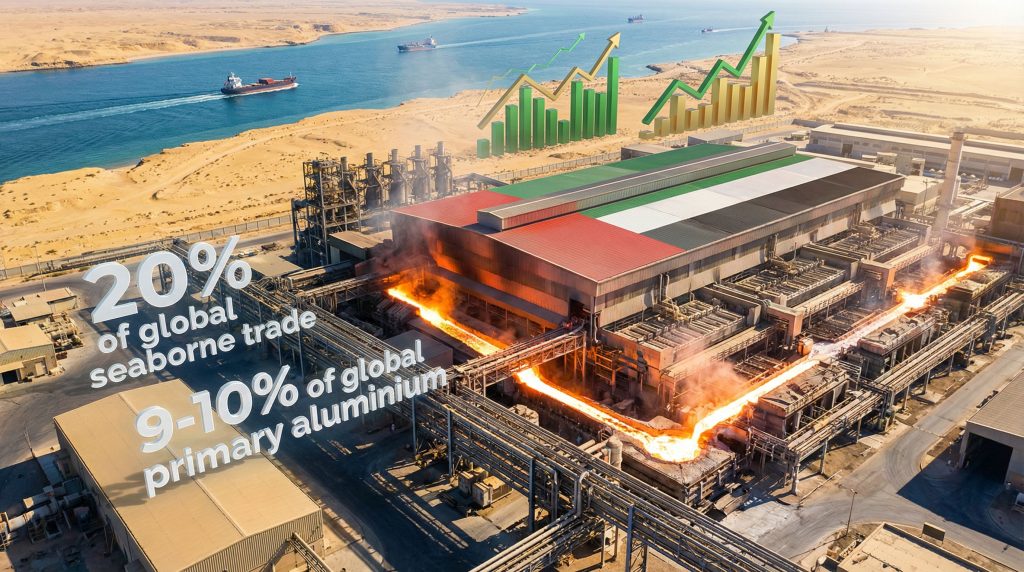
The Gulf Cooperation Council states occupy a critical position in global aluminium supply chains, contributing approximately 8-10 percent of worldwide primary production capacity. This seemingly modest percentage belies the region's strategic importance, as Middle Eastern facilities often operate as swing producers during periods of tight global supply.
Regional production infrastructure centres on several major integrated smelter operations across Qatar, the United Arab Emirates, Bahrain, and Saudi Arabia. The Qatalum facility in Qatar represents one of the world's largest single-site aluminium production complexes, with nominal annual capacity exceeding 915,000 tonnes under normal operating conditions.
Recent developments have seen this facility maintaining only 60 percent production capacity due to reduced natural gas supply. This situation highlights the vulnerability of regional operations to infrastructure disruptions, creating ripple effects across tariffs impact markets globally.
Energy Cost Advantages and Dependencies
Middle Eastern aluminium smelters benefit from substantial energy cost advantages through access to subsidised natural gas pricing. This competitive positioning stems from abundant regional hydrocarbon resources and government policies supporting industrial development. The energy intensity of aluminium production, requiring approximately 12-15 megawatt-hours per tonne, makes these cost differentials particularly significant.
However, this advantage creates corresponding vulnerabilities. Regional smelters depend heavily on consistent natural gas supply for power generation, and any disruption to energy infrastructure immediately impacts production capacity. The current Qatalum situation demonstrates this dependency, with production cuts directly correlating to reduced gas availability.
Raw Material Import Dependencies
Despite their energy advantages, Middle Eastern smelters face significant exposure through alumina import requirements. Regional facilities typically source alumina from Australian refineries and newer capacity additions in Guinea, creating geographic diversity in raw material sourcing but also introducing transportation vulnerabilities.
Port infrastructure capacity becomes critical during periods of shipping disruption. Alternative routing through the Cape of Good Hope versus traditional Suez Canal passages can add 10-14 days to shipping times and substantially increase transportation costs, directly impacting smelter economics. These challenges mirror broader global trade disruptions, including those discussed in the us–china trade war analysis.
When big ASX news breaks, our subscribers know first
Price Transmission Mechanisms in Global Markets
The London Metal Exchange serves as the primary global price discovery mechanism for aluminium, with pricing responding rapidly to supply disruptions. Recent data demonstrates this sensitivity, with Middle East tensions affecting LME aluminium prices as they broke above USD 3,500 per tonne as regional tensions escalated.
Immediate Market Response Patterns
On March 12, 2026, LME aluminium cash prices increased from USD 3,465 per tonne to USD 3,516 per tonne, representing a 1.47 percent daily gain. The 3-month contract similarly advanced 1.45 percent, with bid prices rising from USD 3,442 to USD 3,492 per tonne. This immediate price response pattern reflects market participants' rapid repricing of supply risk premiums.
| Contract Type | March 11 Price (USD/tonne) | March 12 Price (USD/tonne) | Daily Change (%) |
|---|---|---|---|
| Cash Bid | 3,465 | 3,516 | +1.47% |
| 3-Month Bid | 3,442 | 3,492 | +1.45% |
| Asian Reference | 3,457 | 3,516 | +1.70% |
Inventory Dynamics and Supply Tightness
LME inventory levels provide crucial context for understanding price volatility. Total aluminium stocks declined to 450,125 tonnes on March 12 from 452,375 tonnes previously, continuing a trend of inventory drawdowns. This represents historically tight supply conditions that amplify price sensitivity to any potential production disruptions.
The composition of these inventories reveals additional insights:
- Live warrants: 272,800 tonnes (unchanged)
- Cancelled warrants: 174,500 tonnes (declined from 177,325 tonnes)
- Total opening stock: 450,125 tonnes
Cancelled warrants represent material committed for delivery, and their decline suggests some consolidation of immediate delivery obligations. However, the overall inventory level remains at multi-year lows, creating conditions where even modest supply disruptions generate disproportionate price responses.
Industrial Sector Impact Analysis
Aluminium price volatility creates cascading effects across multiple industrial sectors, with varying degrees of exposure depending on material intensity and competitive dynamics. Understanding these transmission mechanisms helps explain the broader economic implications of geopolitical supply disruptions.
Automotive Manufacturing Exposure
The automotive sector represents approximately 26-27 percent of U.S. aluminium consumption, making it highly sensitive to price fluctuations. Modern vehicle manufacturing increasingly relies on aluminium components for weight reduction and fuel efficiency improvements. A typical mid-size vehicle incorporates 40-50 kilograms of aluminium content.
At current LME pricing levels of USD 3,500 per tonne, the aluminium content cost per vehicle reaches approximately USD 140-175. Price increases of 10-15 percent translate to additional per-unit costs of USD 14-26, which must be absorbed through margin compression or passed through to consumers via higher vehicle prices.
Construction Industry Dependencies
Building and construction applications consume approximately 24-25 percent of aluminium shipments, with usage spanning structural components, cladding systems, and roofing materials. Construction projects typically exhibit lower price sensitivity due to longer planning horizons and contract structures, but sustained price elevation affects project economics and material selection decisions.
Packaging Sector Vulnerabilities
The packaging industry, representing 12-13 percent of aluminium demand, faces direct cost pressure from price volatility. Beverage can production, in particular, operates on thin margins where material cost increases directly impact profitability. Unlike automotive or construction applications, packaging faces limited substitution options, creating inelastic demand characteristics.
Historical Context and Pattern Analysis
Previous geopolitical events provide valuable context for understanding current market dynamics and potential price trajectories. Historical analysis reveals consistent patterns in how aluminium markets respond to supply disruptions, though specific circumstances create variations in magnitude and duration.
Comparative Geopolitical Event Analysis
The 1990-1991 Gulf War period witnessed significant aluminium price volatility, with LME prices experiencing substantial increases during peak uncertainty. However, direct comparison requires careful consideration of market structure differences, including lower global production capacity, less developed substitution options, and different inventory management practices prevalent at the time.
More recent events provide closer analogies to current conditions:
- 2019 Strait of Hormuz tensions: Created brief price spikes but limited lasting impact due to rapid diplomatic resolution
- 2020 U.S.-Iran escalation: Minimal sustained price impact as pandemic-related demand destruction offset supply concerns
- 2022 Ukraine conflict: Demonstrated how regional conflicts affecting energy and logistics can create sustained commodity price elevation
Recovery Timeline Patterns
Historical data suggests geopolitical risk premiums in aluminium pricing typically dissipate over 3-6 month periods, assuming resolution of underlying tensions and restoration of normal supply patterns. However, structural supply changes can create permanent baseline price adjustments that persist beyond immediate geopolitical resolution.
The current situation differs from historical precedents due to already-tight global inventory conditions and limited spare production capacity. These factors suggest potentially longer price normalisation periods compared to previous episodes, particularly in the context of broader supply constraints affecting aluminium.
Alternative Supply Source Evaluation
Global aluminium production capacity outside the Middle East provides potential offset mechanisms for regional supply disruptions, though activation timelines and cost structures vary significantly across different producing regions.
Chinese Market Dynamics
China dominates global aluminium production with approximately 57 percent of worldwide capacity. However, Chinese domestic demand consumption typically absorbs the majority of local production, limiting export availability during global supply shortages. Recent Chinese policy emphasis on carbon reduction may further constrain production growth, potentially reducing the country's role as a swing supplier.
Indonesian Capacity Expansion
Indonesia represents one of the most significant growth areas for aluminium smelting capacity, with several major projects scheduled for commissioning between 2026-2027. These facilities benefit from abundant domestic coal resources and lower environmental compliance costs compared to more developed markets.
Projected Indonesian capacity additions:
- 2026: Approximately 500,000 tonnes of new capacity
- 2027: Additional 750,000 tonnes coming online
- 2028-2030: Further expansion dependent on market conditions
Australian Production Stability
Australian smelters provide reliable supply with established logistics networks and stable political frameworks. However, high electricity costs and aging infrastructure limit competitive positioning compared to newer facilities in developing markets. Australian capacity serves more as baseline supply rather than expansion potential.
Economic Indicators and Market Direction Signals
Several leading indicators provide insights into likely market direction changes and potential price normalisation timelines. These metrics help market participants distinguish between temporary volatility and fundamental supply-demand imbalances.
Shipping and Logistics Metrics
Baltic Exchange shipping rate indices reflect transportation cost pressures that directly impact delivered aluminium pricing. Current elevated rates through alternative shipping routes create price premiums that may persist even after geopolitical tensions subside.
Insurance rate differentials between standard and high-risk routing provide quantitative measures of perceived supply chain risk. These rates typically normalise 30-60 days after tensions de-escalate, providing early signals of market confidence restoration.
Manufacturing Activity Correlation
Global manufacturing Purchasing Managers' Index (PMI) data correlates strongly with aluminium demand patterns. Current PMI readings above 50 in major consuming regions support price strength, while readings below 50 suggest demand-side weakness that could offset supply-side premiums.
Regional PMI performance particularly matters:
- U.S. Manufacturing PMI: Affects approximately 15 percent of global aluminium demand
- European PMI: Influences 12 percent of consumption
- Chinese PMI: Impacts 55-60 percent of global demand patterns
The next major ASX story will hit our subscribers first
What Are the Key Risk Management Strategies?
Market participants across the aluminium value chain must develop comprehensive approaches to managing geopolitical supply risk whilst maintaining operational efficiency and competitive positioning. These considerations become particularly relevant when examining broader trade implications, such as us tariffs impact on global supply chains.
Financial Hedging Strategies
Options and futures markets provide mechanisms for managing price volatility exposure, though premium costs reflect elevated volatility conditions. Standard hedging approaches include:
- Call options: Protection against upside price risk for consumers
- Put options: Revenue protection for producers during price declines
- Collar strategies: Combining calls and puts to create price bands
- Forward contracts: Fixed-price agreements for predictable cash flows
Current implied volatility levels in LME aluminium options reflect heightened uncertainty, increasing hedging costs but also providing greater protection value.
Supply Chain Diversification
Long-term strategic planning increasingly emphasises geographic diversification of supply sources to reduce concentration risk. This involves developing relationships with multiple suppliers across different regions and establishing inventory buffers at strategic locations.
Recommended diversification approaches:
- Regional balance: Maintain supply relationships across 3-4 major producing regions
- Contract flexibility: Structure agreements allowing source substitution during disruptions
- Inventory optimisation: Balance carrying costs against supply security benefits
- Logistics redundancy: Develop alternative transportation and storage capabilities
Technology and Innovation Considerations
Longer-term market evolution includes technological developments that may reduce geopolitical supply vulnerabilities:
- Recycling technology advances: Improving secondary aluminium quality and yield
- Alternative production methods: Development of more energy-efficient smelting processes
- Material substitution: Engineering advances enabling aluminium replacement in specific applications
- Renewable energy integration: Reducing fossil fuel dependencies in production
How Do Regional Developments Affect Global Markets?
Current Middle East tensions affecting LME aluminium prices represent both immediate challenges and longer-term strategic considerations for industry participants. The combination of tight inventory conditions, limited spare capacity, and elevated geopolitical risk creates a market environment requiring careful navigation.
Price levels above USD 3,500 per tonne reflect genuine supply risk premiums rather than speculative excess, supported by fundamental supply-demand imbalances. However, demand elasticity at these price levels may eventually provide self-correcting mechanisms as consumers defer purchases or accelerate substitution efforts.
The situation parallels broader regional developments, including saudi exploration impact on energy markets. Furthermore, analysts suggest that aluminium supply risk returns as tensions escalate.
Market Outlook and Strategic Implications
The duration and magnitude of current price premiums will ultimately depend on geopolitical development trajectories and alternative supply activation success. Market participants must balance immediate risk management needs against longer-term strategic positioning in an evolving global supply landscape.
Middle East tensions affecting LME aluminium prices create ripple effects extending beyond immediate supply considerations. These developments influence broader commodity market confidence, affecting investment decisions and strategic planning across multiple industrial sectors.
Key factors shaping medium-term outlook include:
- Diplomatic resolution timelines: Speed of conflict de-escalation
- Infrastructure restoration: Timeline for returning production to full capacity
- Alternative supply activation: Success in ramping up production elsewhere
- Demand elasticity responses: Consumer behaviour at elevated price levels
Disclaimer: This analysis is provided for educational purposes and should not be considered investment advice. Commodity markets involve substantial risk, and past performance does not guarantee future results. Readers should consult qualified financial advisors before making investment decisions based on geopolitical risk assessments.
Want to Capitalise on Commodity Market Disruptions?
Discovery Alert's proprietary Discovery IQ model provides instant notifications when ASX-listed mining companies announce significant discoveries, helping investors identify opportunities created by global supply chain disruptions like those affecting aluminium markets. Start your 14-day free trial today to position yourself ahead of commodity market volatility and discover why major mineral announcements can generate substantial returns by exploring Discovery Alert's proven track record.