June 30, 2026
The global energy landscape remains vulnerable to geopolitical tensions that can rapidly transform market dynamics across interconnected supply chains. Middle East war Gulf oil gas market disruption scenarios reveal how single geographic events can cascade through worldwide energy networks, creating both immediate price volatility and longer-term structural adjustments that reshape investment patterns and strategic planning across multiple economic sectors.
Understanding Energy Market Volatility During Regional Conflicts
Regional conflicts in energy-producing areas trigger immediate market responses through multiple transmission mechanisms. The interconnected nature of global energy infrastructure means that disruptions in one geographic region can rapidly propagate across continents through pricing mechanisms, supply chain dependencies, and financial market linkages.
Energy Market Interconnectedness in Crisis Scenarios
Global energy supply chains operate through critical single-point-of-failure risks that become apparent during regional conflicts. When major shipping routes face closure, the economic multiplier effects extend through manufacturing, transportation, and consumer sectors within days of initial disruption.
The Middle East war Gulf oil gas market disruption of March 2026 demonstrated these vulnerabilities when the Strait of Hormuz closure created immediate price discovery breakdown across multiple energy benchmarks. Crude oil prices surged 20-30% within one week, with Dubai, WTI, and North Sea Dated crude experiencing synchronized rallies that reflected global supply uncertainty rather than localised disruption.
Insurance market withdrawal played a particularly significant role in amplifying physical supply constraints. War risk coverage cancellations for commercial shipping created bottlenecks that paralysed movements independent of actual product availability, demonstrating how financial market responses can exceed the scope of underlying physical disruptions.
Macroeconomic Indicators During Energy Supply Shocks
Energy supply disruptions create distinctive patterns in macroeconomic indicators that differ substantially from demand-driven market cycles. The March 2026 Middle East conflict illustrated how supply-side energy shocks generate immediate inflationary pressures whilst simultaneously threatening economic growth through input cost increases.
Central banks face particular challenges during energy-driven stagflation scenarios, where traditional monetary policy tools become less effective. Interest rate adjustments cannot directly address supply constraints, creating policy dilemmas between inflation control and economic growth support.
Currency markets typically reflect energy security concerns through differential impacts on import-dependent versus energy-exporting economies. Nations with high energy import dependence experience currency pressures as trade balances deteriorate, whilst energy exporters may see currency appreciation despite regional instability.
When big ASX news breaks, our subscribers know first
Critical Chokepoints Controlling Global Energy Stability
The global energy system depends on several critical maritime passages that control disproportionate shares of commodity flows. These chokepoints represent systemic risks where relatively localised conflicts can disrupt global energy markets.
Maritime Infrastructure Vulnerability Assessment
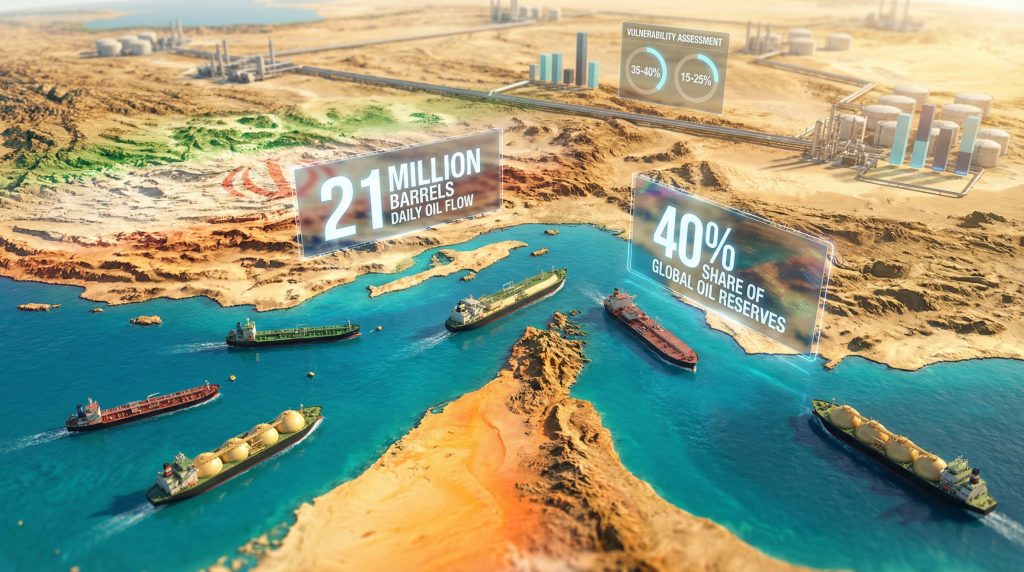
The Strait of Hormuz represents the most critical energy chokepoint globally, with approximately 25% of all oil consumed worldwide passing through this narrow passage daily. During the March 2026 closure, this single route's disruption demonstrated how concentrated geographic dependencies create systemic market vulnerabilities.
Key Energy Chokepoint Analysis:
- Strait of Hormuz: 25% of global daily oil consumption, 20% of global LNG supply
- Asian exposure: 80% of crude oil and 90% of LNG from Middle East Gulf destined for Asian markets
- European indirect exposure: 70% of Gulf jet fuel exports serve European markets, covering 15% of regional consumption
The concentration of energy flows through these passages creates asymmetric regional vulnerabilities. Asia faces the most direct exposure due to import patterns, with China directing state-owned oil companies to halt clean product exports during the March 2026 crisis, demonstrating how chokepoint closures trigger secondary policy responses.
Regional Production Concentration Analysis
Gulf Cooperation Council nations control substantial portions of global energy reserves, creating production concentration risks that compound transportation chokepoint vulnerabilities. Qatar's significant role in global LNG markets became apparent when production halts during the March 2026 conflict contributed to immediate supply tightening.
The economic vulnerability metrics for import-dependent economies become particularly acute during simultaneous production and transportation disruptions. European gas storage levels falling below 30% of capacity during the March 2026 crisis illustrated how quickly strategic reserves can become inadequate during prolonged supply interruptions.
Energy Supply Disruption Cascade Effects
Energy supply disruptions propagate through global markets via primary pricing mechanisms and secondary economic transmission channels that create widespread economic impacts beyond initial energy sectors.
Primary Market Impact Mechanisms
Immediate price discovery breakdown represents the first stage of supply disruption transmission. During the March 2026 Middle East crisis, jet fuel markets experienced particularly severe dysfunction, with prices moving 10-20% within hours as different brokers quoted substantially different prices simultaneously.
Physical delivery constraints versus paper market speculation created significant basis risk for market participants. The transportation sector faced particular challenges as freight rates for Atlantic-to-Asia LNG exports increased over 600% within one week, demonstrating how shipping cost inflation can exceed underlying commodity price increases.
Furthermore, the trade war oil impact scenarios have shown how insurance market withdrawal effects amplify physical supply constraints beyond actual shipping disruptions. War risk coverage cancellations create economic barriers to commodity movement that persist independent of physical infrastructure availability.
Secondary Economic Transmission Channels
Manufacturing sectors experienced rapid cost inflation through energy-intensive production processes. The March 2026 crisis demonstrated how refined product price spikes immediately impact industries dependent on petroleum derivatives, with jet fuel premiums reaching twice crude oil levels according to market records.
Consumer spending patterns shifted rapidly as households reallocated budgets toward essential energy needs. Additionally, the OPEC production impact on transportation costs increased across all modes, with aviation fuel market disruption creating particular challenges for airline hedging strategies during periods of extreme volatility.
Energy market disruptions reveal the interconnected nature of modern economic systems, where single chokepoint closures can rapidly reshape global commodity flows and industrial cost structures within days of initial supply interruption.
Alternative Supply Routes During Crisis Periods
During major supply disruptions, alternative transportation infrastructure activation becomes critical for maintaining global energy flows. However, the economics of emergency supply chain reconfiguration often create significant cost premiums that limit reallocation effectiveness.
Emergency Supply Chain Reconfiguration
Red Sea routing alternatives and pipeline capacity utilisation during maritime disruptions face economic feasibility constraints. The March 2026 crisis demonstrated how all-time-record freight costs threatened to delay global supply reallocation despite alternative route availability.
Trade flow reshaping occurred rapidly during the March 2026 disruption, with Europe positioning to export gasoline to Asia despite traditional flow patterns. However, freight cost spikes of over 600% on some routes created economic barriers to efficient reallocation.
Strategic Reserve Deployment Economics
Emergency stockpile utilisation requires careful economic analysis of market timing and release coordination among allied nations. The cost-benefit analysis of strategic petroleum reserve interventions must balance immediate price relief against long-term strategic positioning.
Pipeline infrastructure activation during maritime disruptions provides some supply diversification, but capacity constraints limit the ability to fully compensate for major chokepoint closures. Consequently, alternative transportation networks typically operate at premium costs that affect delivered product economics.
Sectoral Response Patterns to Supply Shocks
Different energy sectors demonstrate distinctive response patterns during supply shock scenarios, with varying degrees of market structural adjustment and recovery timelines.
Crude Oil Market Structural Adjustments
During major supply disruptions, crude oil benchmarks typically experience immediate substantial price increases within one week of initial supply constraints. The March 2026 Middle East crisis showed synchronised 20-30% price rallies across global benchmarks, reflecting supply uncertainty rather than immediate physical shortages.
The oil price rally analysis indicates that backwardation curve development occurs as near-term supply tightens relative to forward delivery expectations. Regional price differentials expand significantly as transportation constraints create effectively segmented markets rather than globally arbitraged commodities.
Natural Gas and LNG Market Dynamics
LNG markets demonstrate particular vulnerability during supply disruptions due to their role as marginal supply setters in European and Asian markets. The March 2026 crisis saw Dutch TTF gas hub prices rally 70% between February 27 and March 3, illustrating rapid price transmission mechanisms.
Asia-Pacific premium development occurs as regional LNG import dependence creates supply competition. For instance, the US natural gas outlook showed Asian LNG prices surged above European levels during the March 2026 disruption, reversing typical seasonal patterns and reflecting supply allocation pressures.
European gas storage depletion rates accelerate under supply stress conditions. Storage levels below 30% of capacity during the March 2026 crisis demonstrated how quickly strategic reserves become inadequate during prolonged supply interruptions.
Refined Products Market Transformation
Crack spread expansion during refinery capacity constraints creates significant profitability shifts across the petroleum products complex. Jet fuel, diesel, and naphtha face particular exposure as Gulf refineries serve global markets for these products.
Refined Product Vulnerability Assessment:
| Product Category | Exposure Level | Price Volatility Pattern | Recovery Timeline |
|---|---|---|---|
| Jet Fuel | Very High | 10-20% hourly swings | 3-6 months |
| Diesel | High | Regional arbitrage gaps | 2-4 months |
| Gasoline | Medium | Trade flow reversal | 1-3 months |
| Naphtha | High | Industrial input costs | 2-5 months |
Regional gasoline and diesel arbitrage opportunities emerge as traditional trade flows reverse. The March 2026 crisis positioned Europe as a potential gasoline exporter to Asia, demonstrating how supply disruptions can fundamentally alter established trade patterns.
Aviation fuel market disruption creates particular challenges for airline industry risk management. Whilst airlines typically hedge price exposure through derivative instruments, they often maintain unhedged positions and accept basis risk by using diesel or crude derivatives for superior liquidity.
Economic Sectors Facing Greatest Vulnerability
Energy-intensive industries face disproportionate vulnerability during supply disruptions, with varying recovery timelines and adaptive capacity based on production flexibility and input substitution possibilities.
Energy-Intensive Manufacturing Impact Analysis
Manufacturing sectors with high energy cost shares experience immediate margin compression during supply shocks. Aluminium smelting operations face particular vulnerability due to electricity intensity, whilst steel and chemical production sectors must manage both direct energy costs and feedstock price volatility.
Industrial Sector Vulnerability Matrix:
- Aluminium Production: 35-40% energy cost share, very high supply chain risk
- Steel Manufacturing: 20-25% energy cost share, high transportation dependency
- Chemical Processing: 15-20% energy cost share, feedstock price sensitivity
- Cement Production: 30-35% energy cost share, moderate supply flexibility
Recovery timelines vary significantly across manufacturing sectors based on production cycle flexibility and inventory management capabilities. Industries with longer production cycles typically require 6-12 months to fully adjust to new energy cost structures.
Transportation and Logistics Sector Analysis
The transportation sector faces immediate cost pressures during energy supply disruptions, with airline, shipping, and trucking industries experiencing different degrees of hedging effectiveness and cost pass-through ability.
Shipping rate volatility during the March 2026 crisis demonstrated how freight costs can increase faster than underlying fuel prices. LNG transport rates surged over 600% within one week, creating economic barriers to supply reallocation that persisted independent of fuel availability.
Supply chain resilience testing through energy price shocks reveals structural vulnerabilities in just-in-time inventory systems and global sourcing strategies. Widespread impacts on everyday goods demonstrate how companies with geographically concentrated supply bases face particular challenges during regional energy disruptions.
The next major ASX story will hit our subscribers first
Long-Term Economic Restructuring Patterns
Energy crises typically accelerate strategic restructuring across multiple economic sectors, driving investment redirection toward energy security infrastructure and alternative supply development.
Strategic Energy Security Investment Acceleration
Renewable energy investment patterns demonstrate significant acceleration during fossil fuel supply crises. The March 2026 Middle East war Gulf oil gas market disruption highlighted biofuel market resilience, with sustainable aviation fuel and renewable diesel maintaining price stability relative to fossil fuel counterparts.
Energy storage infrastructure development receives increased economic priority as utilities and industrial users seek to reduce supply chain vulnerability. Battery energy storage systems and other grid-scale storage technologies experience heightened investment interest during supply crisis periods.
Diversification strategies for energy import-dependent nations typically include both renewable energy acceleration and strategic partnership development with alternative supplier nations. These long-term adjustments often persist well beyond initial crisis resolution.
Geopolitical Risk Premium Integration
Permanent risk premium establishment occurs in energy pricing as markets incorporate higher probability estimates for future supply disruptions. This risk premium integration affects long-term investment planning across energy-dependent sectors.
Insurance market structural changes for energy infrastructure reflect updated risk assessments following major supply disruptions. War risk coverage modifications and premium adjustments typically persist for extended periods after crisis resolution.
Investment flow redirection toward energy security projects accelerates during supply crises, with both private and public capital seeking reduced vulnerability to future disruptions. This capital reallocation often continues for several years following initial supply shock events.
Central Bank and Government Response Mechanisms
Energy-driven inflation presents unique challenges for monetary and fiscal policy makers, requiring coordinated responses that differ substantially from demand-driven inflationary pressures.
Monetary Policy During Supply-Side Inflation
Central banks face complex policy dilemmas during energy-driven stagflation scenarios where traditional inflation control tools may exacerbate economic slowdown without addressing underlying supply constraints. Interest rate effectiveness becomes limited when price increases stem from supply rather than demand factors.
Currency intervention strategies during energy import stress require careful balance between exchange rate support and domestic price stability. Energy-importing nations may need to accept currency depreciation to maintain external balance during prolonged supply disruptions.
Fiscal Policy Emergency Responses
Energy subsidy deployment represents a primary fiscal response mechanism during supply crises, though budget impact analysis must consider both immediate relief costs and long-term price signal distortions. Strategic reserve release coordination among allied nations requires diplomatic coordination alongside economic planning.
Emergency energy security legislation typically includes provisions for supply reallocation, price monitoring, and strategic infrastructure protection. Furthermore, the OPEC market influence demonstrates how market intervention authorities may need temporary expansion to manage crisis-period supply allocation and pricing stability.
Investment Opportunities Emerging From Market Disruptions
Energy market disruptions create distinctive investment opportunities across infrastructure, technology, and commodity trading sectors as market participants adapt to new supply and demand dynamics.
Energy Security Infrastructure Investment Thesis
Pipeline diversification projects experience enhanced economic justification during supply crisis periods as reduced chokepoint dependency becomes a strategic priority. Investment returns on alternative transportation infrastructure improve significantly when risk-adjusted for supply security benefits.
Renewable energy acceleration investments benefit from both policy support acceleration and improved competitive positioning relative to volatile fossil fuel alternatives. The March 2026 crisis demonstrated biofuel price stability advantages that support longer-term investment in alternative energy production capacity.
Energy storage technology markets expand rapidly during supply crisis periods as grid operators, industrial users, and commercial facilities seek reduced vulnerability to supply chain disruptions. Battery storage, compressed air, and other storage technologies experience increased investment interest and improved project economics.
Commodity Trading and Risk Management Strategies
Volatility trading opportunities in energy derivatives expand significantly during supply crisis periods, though basis risk and liquidity constraints require sophisticated risk management approaches. The March 2026 jet fuel market dysfunction illustrated both opportunities and risks in volatile energy derivatives markets.
Physical commodity storage investment returns improve substantially during supply crisis periods as storage capacity scarcity creates premium storage rates. Strategic location advantages become particularly valuable near major consumption centres with limited alternative supply access.
Energy transition technology investments during crisis periods often benefit from accelerated policy support and improved competitive positioning relative to traditional energy sources. Companies developing alternative energy technologies typically experience increased investor interest and improved financing availability during fossil fuel supply disruptions.
Frequently Asked Questions About Energy Crisis Economics
How long do energy price spikes typically persist after supply disruptions?
Historical analysis indicates energy prices remain elevated for 3-6 months following initial supply disruption, with full normalisation requiring 12-18 months depending on alternative supply development and demand adjustment patterns. The March 2026 Middle East crisis demonstrated immediate 20-30% crude oil price increases within one week, suggesting initial volatility often exceeds longer-term adjustment levels.
Which countries benefit economically from Middle East energy disruptions?
Non-Middle East energy exporters including the United States, Canada, and Norway typically experience revenue increases during Middle East supply disruptions, whilst energy-importing nations face economic headwinds through higher input costs and inflation pressures. The March 2026 crisis showed how biofuel-producing regions gained competitive advantages as renewable alternatives maintained price stability.
How do energy crises reshape long-term investment patterns?
Major energy supply disruptions typically accelerate energy security investments by 20-30%, increase renewable energy project development timelines, and drive strategic reserve capacity expansion globally. The March 2026 crisis highlighted how alternative energy sources gain investment appeal during fossil fuel supply uncertainty periods.
What role do financial markets play in amplifying energy supply disruptions?
Insurance market withdrawal and derivatives market dysfunction can amplify supply disruptions beyond physical constraints. The March 2026 crisis showed how war risk coverage cancellations created economic barriers to shipping that exceeded actual physical infrastructure damage or availability limitations.
How effective are strategic petroleum reserves during major supply crises?
Strategic reserve effectiveness depends on coordination timing, release volume, and market expectations management. Reserves provide temporary price relief but cannot substitute for major supply route closures lasting weeks or months. The optimal deployment requires balancing immediate market stabilisation against long-term strategic positioning needs.
Investment decisions during energy market disruptions involve significant risks and require comprehensive analysis of market fundamentals, geopolitical developments, and regulatory changes. Historical performance does not guarantee future results, and energy commodity investments can experience substantial volatility during crisis periods.
Ready to Capitalise on Energy Market Volatility?
Discovery Alert's proprietary Discovery IQ model delivers real-time alerts on significant ASX mineral discoveries, including energy-critical commodities that surge during supply crises like lithium, uranium, and rare earth elements. Subscribers receive rapid insights into actionable trading and investment opportunities ahead of the broader market, positioning themselves to benefit from energy transition acceleration during supply disruptions. Begin your 14-day free trial today to secure your market-leading advantage during volatile energy markets.