June 19, 2026
The Continent That Cannot Afford to Speak in Fragments
Energy security debates across the developing world tend to fixate on individual nations, individual projects, and individual policies. Yet the most consequential shifts in global energy architecture have rarely been achieved by countries acting alone. Mike Teke Africa energy security and regional collaboration sits at the heart of this challenge, as coordination has consistently outperformed fragmentation. Africa, sitting atop some of the world's most significant energy resources, finds itself at precisely this inflection point.
The question is no longer whether Africa needs a unified energy strategy. The question is whether the institutional mechanisms, political will, and investment frameworks exist to build one before the window narrows.
When big ASX news breaks, our subscribers know first
Why Isolated National Energy Systems Are a Structural Liability
Across much of sub-Saharan Africa, electricity infrastructure was designed within colonial-era national boundaries that rarely corresponded to geological or geographic logic. The result is a patchwork of isolated grids, each subject to its own supply constraints, price volatility, and policy inconsistencies.
This fragmentation carries compounding costs:
- Supply shocks hit harder when there is no neighbouring grid to draw from during domestic generation shortfalls.
- Price volatility is amplified in markets too small to absorb global commodity swings through diversified sourcing.
- Industrial investment is deterred by energy unreliability, which raises operational risk premiums for manufacturers and processors.
- Capital allocation is inefficient when each nation must independently finance generation, transmission, and distribution infrastructure that a shared regional grid could deliver at lower per-unit cost.
The International Energy Agency has consistently noted that sub-Saharan Africa accounts for roughly 600 million people without access to electricity, a figure that underscores not just a humanitarian challenge but a structural economic constraint. No continent can industrialise without reliable, affordable energy as its foundation. Furthermore, the critical minerals demand driving global energy transition only amplifies the urgency of resolving these foundational access issues.
Global Supply Disruptions Expose the Depth of Africa's Vulnerability
The temporary disruption to shipping through the Strait of Hormuz in 2025 provided a sharp illustration of how rapidly global energy markets can destabilise. For African economies with limited domestic energy buffers and high import dependency, such events are not abstract geopolitical incidents. They translate directly into fuel price spikes, electricity tariff pressures, and industrial slowdowns.
Seriti Resources CEO and FutureCoal Africa chapter chairperson Mike Teke addressed this dynamic directly in a speech to the Zimbabwe Chamber of Mines, arguing that the lesson from such disruptions is not about any single shipping route in isolation. Rather, it is about the fundamental necessity of reliable domestic energy resources, resilient supply chains, and secure industrial capacity. His core argument was that energy security and affordability are not obstacles to an energy transition but its essential preconditions.
Strategic Insight: Nations that lack stable baseload energy capacity are not in a position to responsibly accelerate away from fossil fuels. Transition sequencing matters enormously, and Africa's sequence must begin with energy access.
Mike Teke, Seriti, and the Security-Plus-Transition Philosophy
Mike Teke occupies an unusual position in Africa's energy debate. As CEO and co-founder of Seriti Resources Holdings, one of South Africa's major coal producers supplying Eskom, and as chairperson of Seriti Green, the group's renewable energy vehicle focused on wind and solar development, he straddles both sides of the energy transition argument with operational credibility on each.
This dual-track structure is not a contradiction. It reflects a deliberate strategic philosophy: that managed transitions require stable baseload energy as a bridge, not a barrier. Seriti's model acknowledges that coal plays an energy security anchoring role in the near to medium term, while renewables build the capacity foundation for the longer-term transition.
| Dimension | Seriti Resources (Coal) | Seriti Green (Renewables) |
|---|---|---|
| Primary Function | Baseload energy security | Long-term transition capacity |
| Key Markets | Eskom / South Africa grid | Emerging renewable offtake markets |
| Strategic Horizon | Short to medium term | Medium to long term |
| Transition Role | Stability anchor | Growth vehicle |
This dual-track model reflects the operational complexity facing African energy systems more broadly. Premature exit from dispatchable generation before renewable capacity is fully developed creates reliability gaps that ultimately harm the populations and industries energy transition advocates seek to serve. In addition, the energy security landscape in 2025 reinforces why this sequenced approach is not merely pragmatic but structurally necessary.
The FutureCoal Africa Chapter: Building a Continental Voice
One of the more structurally significant developments in Africa's energy coordination landscape is the establishment of the FutureCoal Africa chapter, with Mike Teke Africa energy security and regional collaboration serving as a defining framework for its founding chairpersonship. The chapter was established with founding support from industry leaders across South Africa, Botswana, Mozambique, and Zimbabwe, though its mandate extends continent-wide.
The chapter's core focus areas include:
- Technology coordination across coal and transition energy systems.
- Investment facilitation to improve the bankability of African energy projects for international and institutional capital.
- Energy security advocacy that reflects Africa's operational realities rather than externally imposed transition timelines.
- Industrial development integration to ensure energy resources generate downstream economic value, not just primary commodity exports.
What distinguishes the FutureCoal Africa chapter from earlier industry bodies is its explicit multi-stakeholder design. By inviting governments, private industry, and investors to participate simultaneously, it creates a coordination mechanism capable of bridging the gap between policy aspiration and operational reality.
Africa's negotiating position in global climate and energy forums has historically been weakened by the absence of a unified continental position. Individual nations engaging separately with multilateral bodies, development finance institutions, or global energy partnerships inevitably carry less weight than a coordinated continental bloc presenting a coherent investment thesis.
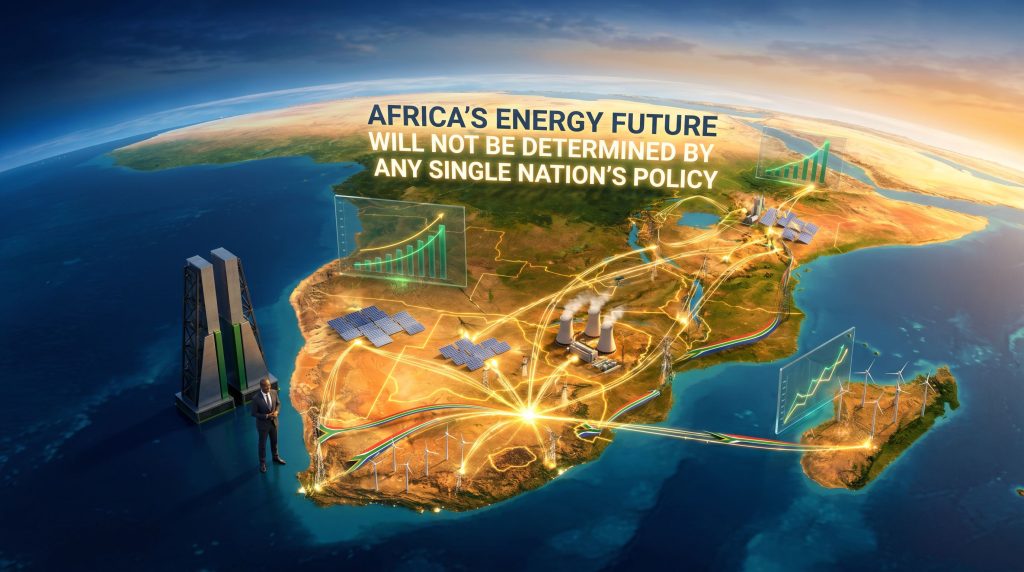
Policy Framing: Africa's energy future will not be shaped by any single country's choices. It will be determined by the extent to which the continent can present a credible, coordinated, and investment-ready position in global energy dialogue.
Sustainable Coal Stewardship: Reframing the Debate
One of the more intellectually substantive contributions of the FutureCoal framework is its challenge to the binary framing that has dominated global coal discourse. The conventional narrative positions coal as an asset to be eliminated as rapidly as possible. The sustainable coal stewardship framework offers a more operationally grounded alternative.
The framework reframes the question from whether coal should exist to how it is produced, how its emissions are managed, and what technologies are deployed to reduce its environmental footprint. This is not a rhetorical manoeuvre. It reflects a genuine operational challenge: in energy systems where coal provides the majority of dispatchable generation capacity, abrupt exit creates reliability crises that fall hardest on the poorest consumers.
Sustainable coal stewardship as a framework involves:
- Responsible production standards that reduce methane and fugitive emissions at the mine level.
- High-efficiency, low-emission (HELE) technology deployment to improve the thermal efficiency of coal-fired generation and reduce emissions per unit of electricity produced.
- Technology transition pathways including carbon capture integration and coal gasification as bridging strategies.
- Industrial development linkages that convert coal resources into higher-value outputs rather than raw commodity exports.
Hwange Power Station: A Working Demonstration
Zimbabwe's Hwange Power Station represents one of the most concrete demonstrations of sustainable coal stewardship currently operating on the African continent. The station's expansion programme has seen Units 7 and 8 equipped with HELE technology, representing a meaningful improvement in generation efficiency relative to the older units they complement.
Simultaneously, a rehabilitation programme covering Units 1 through 6 is extending the operational life of existing assets while improving their performance characteristics. Zimbabwe is also exploring coal gasification and coal-to-X conversion pathways as longer-term industrial development strategies. The decarbonisation of mining across Africa provides important context for understanding why these technology pathways matter beyond the power sector alone.
Case Study Snapshot: Hwange Power Station, Zimbabwe
- Units 7 and 8: New HELE technology deployment improving emissions intensity per MWh generated.
- Units 1 to 6: Active rehabilitation programme extending asset life and improving operational efficiency.
- Additional pathways: Coal gasification and coal-to-X exploration as industrial value-add strategies.
- Framework anchor: FutureCoal sustainable coal stewardship principles.
Coal-to-X is a term worth unpacking for those outside the energy industry. It refers to the catalytic or thermochemical conversion of coal into alternative products including synthetic natural gas, liquid fuels, methanol, ammonia, or chemical feedstocks. The technology has been commercially deployed at scale in South Africa through Sasol's coal-to-liquids operations for decades. For resource-rich African nations with limited refining capacity, coal-to-X pathways offer a potential route to energy product self-sufficiency and export revenue diversification, though the capital intensity and technology transfer requirements are substantial barriers.
Regional Coordination as an Investment Multiplier
For energy investors assessing African exposure, the structural argument for regional coordination is ultimately a risk-adjusted returns argument. Fragmented national energy markets create higher transaction costs, more opaque regulatory environments, and greater political risk concentration. Integrated regional markets address each of these constraints.
Africa's existing regional power pool architecture provides the institutional skeleton for deeper integration:
| Collaboration Model | Geographic Focus | Primary Mechanism | Strategic Benefit |
|---|---|---|---|
| Southern African Power Pool (SAPP) | SADC region | Cross-border electricity trade | Grid stability and surplus sharing |
| East African Power Pool (EAPP) | East Africa | Interconnection development | Demand balancing and reliability |
| West African Power Pool (WAPP) | West Africa | Regional grid integration | Industrial energy access |
| FutureCoal Africa Chapter | Pan-African | Policy coordination and technology advocacy | Unified voice in global energy forums |
The Southern African Power Pool, established in 1995, already facilitates cross-border electricity trading among its twelve member states, but its full potential has been constrained by transmission infrastructure gaps and inconsistent national regulatory frameworks. Deepening SAPP integration, alongside parallel development of the EAPP and WAPP, would substantially improve the bankability of African energy projects for international capital markets.
Overcoming the Barriers to Integration
The obstacles to pan-African energy coordination are real and should not be minimised. They include:
- Sovereignty concerns around cross-border energy dependency, particularly for nations that have experienced supply interruptions from regional partners.
- Infrastructure financing gaps, with the African Development Bank estimating the continent's annual infrastructure funding shortfall in the range of $68 billion to $108 billion.
- Regulatory misalignment between national energy frameworks, which increases transaction costs and creates legal uncertainty for cross-border investment.
- Technology transfer constraints, ensuring that advanced energy technologies including HELE systems and gasification are accessible to nations with varying institutional and industrial capacity levels.
A credible roadmap for overcoming these barriers requires coordinated action across several dimensions simultaneously: harmonised policy standards, multilateral financing mechanisms, structured technology transfer protocols, and institutionalised multi-stakeholder engagement platforms of the kind the FutureCoal Africa chapter is designed to provide.
The next major ASX story will hit our subscribers first
The Investment Landscape and Africa's Transition Opportunity
Africa's energy transition investment case is genuinely compelling on the right analytical terms. The continent holds approximately 60% of the world's best solar resources according to the International Renewable Energy Agency, alongside significant wind potential in coastal and highland regions. Green hydrogen production costs in South Africa and North Africa are projected to be among the most competitive globally by the early 2030s.
However, renewable energy investment does not flow into policy vacuums. It follows regulatory certainty, creditworthy offtake structures, and integrated market depth. Each of these conditions is more achievable through regional coordination than through isolated national action. The renewable energy transformation underway across the mining sector illustrates precisely how these conditions can be cultivated at an industry level.
Investor Consideration: The most scalable and resilient investment theses in African energy are built on regional integration frameworks, not isolated national plays. Coordination is not just good policy; it is a fundamental credit enhancement for infrastructure capital.
The emerging opportunity set for investors encompasses:
- Utility-scale solar and wind in SADC, East Africa, and North Africa.
- Cross-border transmission infrastructure connecting renewable generation zones to industrial demand centres.
- Green hydrogen production and export corridors targeting European and Asian import markets, with South Africa's green hydrogen programme offering a leading regional model.
- Battery storage and grid stabilisation technology as renewables penetration increases.
- HELE and transition technology deployment in coal-dependent systems managing responsible phase-down trajectories.
Frequently Asked Questions: Mike Teke, Africa Energy Security, and Regional Collaboration
What is Mike Teke's role in Africa's energy debate?
Mike Teke serves as CEO and co-founder of Seriti Resources Holdings and chairperson of Seriti Green, giving him operational standing across both conventional and renewable energy sectors. He also chairs the FutureCoal Africa chapter, through which he advocates for coordinated continental engagement on energy security, technology deployment, and investment attraction. Consequently, his position makes him one of the most influential voices shaping Mike Teke Africa energy security and regional collaboration policy dialogue.
What is the FutureCoal Africa chapter?
The FutureCoal Africa chapter is a multi-stakeholder platform focused on coordinated engagement across technology, investment, energy security, and industrial development. It was established with founding support from industry leaders in South Africa, Botswana, Mozambique, and Zimbabwe, with a mandate covering the full African continent.
What does sustainable coal stewardship mean in practice?
Sustainable coal stewardship is a framework for managing coal resources responsibly during the energy transition period. It encompasses responsible production standards, HELE technology deployment, emissions reduction pathways, and industrial development strategies including coal-to-X conversion, rather than treating coal as a binary exit problem.
Why does regional energy collaboration matter for investors?
Regional energy markets reduce the risk premiums associated with isolated national systems by creating deeper, more liquid, more creditworthy investment environments. Coordinated regulatory frameworks lower transaction costs, while shared infrastructure spreads capital requirements across multiple creditworthy counterparties.
What is coal-to-X technology?
Coal-to-X refers to the thermochemical or catalytic conversion of coal into alternative energy products or chemical feedstocks, including synthetic gas, liquid fuels, methanol, and ammonia. It represents a value-add pathway that reduces raw commodity dependency while retaining the economic value of domestic coal resources.
Key Takeaways: What Africa's Energy Coordination Imperative Means Going Forward
- Africa's energy security challenge is fundamentally a continental coordination problem, not a collection of separate national problems.
- The sustainable coal stewardship framework provides a practical, operationally grounded alternative to binary coal exit narratives that do not reflect African energy realities.
- High-efficiency technology deployment at Hwange demonstrates that responsible coal management is achievable within existing infrastructure timelines.
- Regional power pools and multi-stakeholder coordination platforms like the FutureCoal Africa chapter are structural prerequisites for attracting the scale of investment Africa's energy transition requires.
- The sequencing of Africa's energy transition matters: energy access and security must precede decarbonisation acceleration, not follow it.
- For investors, the most credible African energy theses are those built on regional integration depth, not isolated national market exposure.
Disclaimer: This article contains forward-looking statements and analytical projections regarding Africa's energy markets, investment conditions, and transition timelines. These reflect current information and reasonable assumptions but are subject to material uncertainty. Nothing in this article constitutes financial or investment advice. Readers should conduct independent due diligence before making investment decisions.
Want to Track the Mineral Discoveries Powering Africa's Energy Transition?
As Africa's critical minerals and energy infrastructure story continues to unfold, Discovery Alert's proprietary Discovery IQ model delivers real-time ASX alerts on significant mineral discoveries — turning complex data across 30+ commodities into clear, actionable investment insights. Explore how historic discoveries have generated substantial returns on Discovery Alert's dedicated discoveries page, and begin your 14-day free trial today to position yourself ahead of the market.