June 5, 2026
The Fragile Architecture of Gulf Crude Exports: Why Offshore Terminals Are Asymmetric Warfare's Newest Battleground
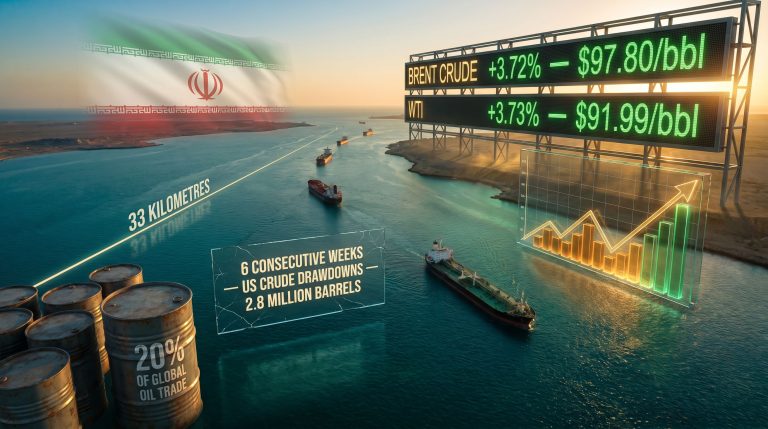
The global oil market has spent decades pricing in the risk of conflict at the Strait of Hormuz, the narrow chokepoint through which roughly 20% of the world's traded oil passes daily. Yet a subtler, more structurally revealing vulnerability has received far less attention: the offshore single-buoy mooring terminals that form the final link between Gulf oil fields and the supertankers that carry crude to Asian refineries. These floating infrastructure nodes are exposed, difficult to harden, and increasingly within reach of low-cost precision drone systems. When Oman suspends oil loading at Mina al Fahal terminal following explosion reports at its SBM berths, the incident exposes not just a single terminal's vulnerability, but a systemic gap in how the Gulf protects its most critical export infrastructure.
When big ASX news breaks, our subscribers know first
Understanding Mina al Fahal: The Terminal at the Centre of Oman's Export Economy
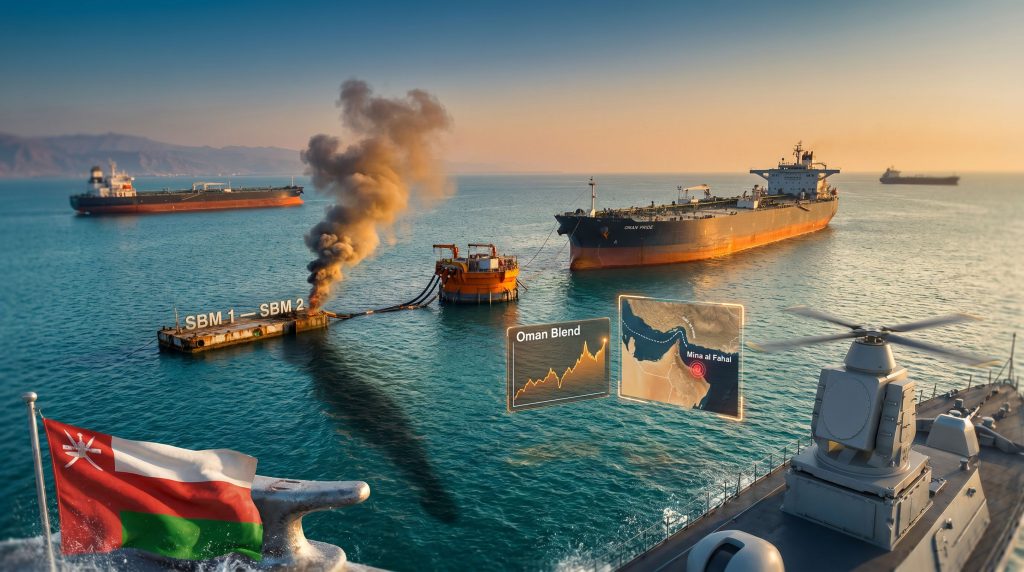
Mina al Fahal occupies a strategically significant position along Oman's Gulf of Oman coastline, positioned close enough to the Strait of Hormuz to benefit from established tanker routing lanes while sitting technically outside the most contested maritime zones. The terminal serves as Oman's primary crude loading facility, connecting upstream production fields via pipeline infrastructure to offshore single-buoy mooring berths designated SBM 1 and SBM 2.
These SBM systems are purpose-built to solve a practical problem: Very Large Crude Carriers (VLCCs) and supertankers draw too much water to berth at conventional onshore port facilities. By anchoring a floating mooring buoy offshore and connecting it via flexible subsea hose to a seabed pipeline, operators can load hundreds of thousands of barrels of crude directly onto vessels sitting in open water. The system is operationally elegant but inherently exposed.
Infrastructure Snapshot: Single-buoy mooring systems allow supertankers to load crude offshore without deep-water port access, combining operational efficiency with structural exposure that conventional port security frameworks were never designed to address.
Oman's crude output sits in the range of approximately 1 million barrels per day, positioning the country as a mid-tier OPEC+ producer whose fiscal position remains significantly tied to oil revenues. Oman Blend crude, the country's primary export grade, is a medium sour crude that commands consistent demand from Asian refiners, particularly in China, India, and Japan. A sustained interruption at Mina al Fahal does not simply affect one facility. It directly constrains Oman's ability to monetise its production and creates scheduling disruptions that ripple through refinery supply chains across Asia.
The Explosion at SBM 1 and SBM 2: What Is Confirmed and What Remains Unclear
According to two people familiar with the situation, as reported by Reuters on June 5, 2026, an explosion occurred in the zone between the SBM 1 and SBM 2 berths at the Mina al Fahal terminal, resulting in the immediate suspension of oil loading operations. Sources attributed the blast to an alleged drone attack, though the precise timing of the incident had not been confirmed at the time of initial reporting.
Shipping data from LSEG confirmed that several supertankers were observed anchored offshore on Friday, a visible signal of the operational standstill. With vessels unable to connect to loading buoys, cargo scheduling entered an open-ended holding pattern. Each day of suspension generates demurrage costs for charterers, typically calculated at daily rates that can reach tens of thousands of dollars per vessel, while buyers face uncertainty over delivery timelines and may need to seek spot cargo alternatives.
The Drone Threat Vector: A Qualitative Shift in Energy Infrastructure Risk
The alleged involvement of a drone in the Mina al Fahal explosion represents something analytically important: it signals a qualitative evolution in how energy infrastructure in the Gulf can be targeted. Previous generations of maritime security frameworks were built around vessel-based threats, including the limpet mine attacks on tankers near Fujairah in 2019 and the conventional missile strikes that defined earlier Gulf conflict episodes.
Furthermore, drone warfare introduces a fundamentally different risk profile:
- Low acquisition cost: Commercial and military-grade drones are accessible to a wide range of non-state and state-aligned actors at a fraction of the cost of conventional munitions.
- High precision: Modern drone systems can be guided to within metres of a target, allowing selective strikes on operationally critical components.
- Radar evasion: Small unmanned aerial systems present extremely low radar cross-sections, complicating detection by vessel-based or coastal radar arrays.
- Minimal attribution: The absence of a visible launch platform makes rapid attribution difficult, creating deliberate ambiguity that complicates diplomatic and military responses.
Policy Gap Alert: Most GCC maritime terminal security frameworks were built around vessel-based and conventional munitions threats. The rapid proliferation of precision drone technology has exposed a structural blind spot in offshore critical infrastructure protection that existing protocols have not yet adequately addressed.
The Ras Tanura facility in Saudi Arabia, one of the world's largest crude export terminals, was targeted by drone and missile attacks in March 2021, attributed to Houthi forces in Yemen. The Abqaiq processing facility attack in September 2019 temporarily knocked approximately 5.7 million barrels per day of Saudi production capacity offline. These precedents establish a clear pattern: offshore and semi-exposed energy infrastructure across the Gulf has become a preferred target category in asymmetric conflict operations. Consequently, crude oil geopolitical factors of this nature are becoming increasingly central to how analysts model supply risk.
Comparative Historical Context: Gulf Terminal Disruptions and Their Market Consequences
| Terminal / Incident | Country | Year | Estimated Duration | Volume Impact | Primary Cause |
|---|---|---|---|---|---|
| Mina al Fahal SBM Explosion | Oman | 2026 | TBD | TBD | Alleged drone attack |
| Ras Tanura Drone Attack | Saudi Arabia | 2021 | Short-term | ~7 mbpd facility at risk | Houthi drone/missile |
| Abqaiq Processing Facility | Saudi Arabia | 2019 | ~2 weeks | ~5.7 mbpd temporarily offline | Drone/missile strike |
| Fujairah Port Tanker Attacks | UAE | 2019 | Days | Multiple vessels damaged | Alleged limpet mines |
| Kharg Island Incidents | Iran | Multiple | Variable | Significant | Military conflict |
Note: Historical data sourced from publicly available energy security records and industry reporting. Volume impacts represent facility-level exposure figures, not confirmed production losses in all cases.
The table above illustrates a critical trend: the frequency and geographic breadth of attacks on Gulf energy export infrastructure has increased, with each successive incident demonstrating the growing operational capability and ambition of actors targeting the region's oil export architecture.
Geopolitical Context: Iran, CENTCOM, and the Attribution Problem
The Mina al Fahal incident did not occur in a geopolitical vacuum. Iranian state media reported on Wednesday, June 4, 2026, that Tehran had carried out a strike on a U.S. military vessel it described as performing a command and control function while approaching Iranian territorial waters in the Gulf of Oman. U.S. Central Command issued a formal denial of this account.
The proximity of these competing narratives to the Mina al Fahal explosion creates a challenging analytical environment:
- No confirmed link between the Iranian state media claims and the terminal explosion has been established in reporting available at time of publication.
- Conflicting official accounts from Iranian and U.S. sources make rapid, reliable attribution of the terminal incident structurally difficult.
- Oman's neutral diplomatic posture historically positions the country as a behind-the-scenes interlocutor between Iran and Western-aligned Gulf states, a role that does not insulate its physical infrastructure from becoming exposed to broader regional hostilities.
However, sanctions on oil trade demonstrate how geopolitical pressure campaigns can reshape the broader energy landscape well beyond a single incident or flashpoint. Oman's geographic reality compounds this challenge. Its coastline directly borders the Gulf of Oman, placing Mina al Fahal and other export facilities within operational range of contested maritime zones.
Oman's Export Infrastructure Resilience: What Alternatives Exist?
A critical question following any major terminal disruption is whether alternative loading capacity can absorb the shortfall. For Oman, the answer is constrained. Mina al Fahal handles the substantial majority of the country's crude exports, making it functionally the primary gateway for Omani oil reaching international markets.
Secondary and contingency infrastructure options include:
- Duqm Port, located on Oman's southeastern coast along the Arabian Sea, which has been developed as part of Oman's broader economic diversification agenda and includes energy infrastructure components. However, its crude loading capacity relative to Mina al Fahal's throughput is limited.
- Pipeline buffer and storage capacity provides upstream producers with a short-term window to continue operating without loading access, though the duration of this buffer is finite before field-level production decisions become necessary.
- Spot market procurement by Asian buyers provides partial demand-side adjustment, though sourcing equivalent volumes of medium sour crude on short notice carries a cost premium.
Oman's Vision 2040 economic diversification programme is designed precisely to reduce the country's fiscal dependence on hydrocarbon revenues. However, in 2026, oil and gas remain the dominant contributor to government budget receipts, meaning a prolonged export disruption carries direct sovereign fiscal consequences.
The next major ASX story will hit our subscribers first
Market Implications: How Energy Traders Price Geopolitical Infrastructure Risk
Energy markets do not respond uniformly to Gulf supply disruptions. The price impact depends heavily on the duration and certainty of the supply constraint, the availability of alternative grades, current global inventory levels, and the prevailing OPEC+ production posture. In addition, oil price movements tied to broader macroeconomic tensions can amplify the effect of individual supply disruptions.
For the Mina al Fahal incident specifically, several moderating factors are relevant:
- OPEC market influence and member spare capacity determine how quickly alternative barrels can reach market.
- Current global crude inventory positions affect how much buffer the system has to absorb a short-duration loading suspension.
- Asian buyers with diversified supplier portfolios have more optionality than those heavily concentrated in Omani Blend.
Disclaimer: This analysis reflects publicly available information and should not be construed as investment advice. Commodity markets involve significant uncertainty, and actual price outcomes will depend on factors that cannot be fully anticipated at time of writing.
Institutional investors and energy traders typically differentiate between geopolitical risk premiums (short-term, event-driven price spikes) and structural supply risk (sustained production or export capacity loss). The former tends to fade within days if the disruption resolves quickly. The latter triggers more persistent repricing across the forward curve, affecting refinery procurement strategies and hedging programmes across Asia. Understanding commodity market volatility in this context is therefore essential for traders managing exposure to Gulf crude.
Scenario Analysis: Possible Trajectories Following the Loading Suspension
| Scenario | Probability Assessment | Key Conditions | Market Impact |
|---|---|---|---|
| Rapid restoration within days | Moderate | Limited SBM damage, swift security clearance | Minimal, short-term price spike absorbed quickly |
| Extended suspension over weeks | Moderate-High | Significant structural damage, ongoing security threat | Elevated Oman Blend premium, Asian buyer diversification |
| Escalation to broader infrastructure targeting | Lower but material | Sustained drone campaign, regional conflict intensification | Significant Gulf risk premium repricing across benchmarks |
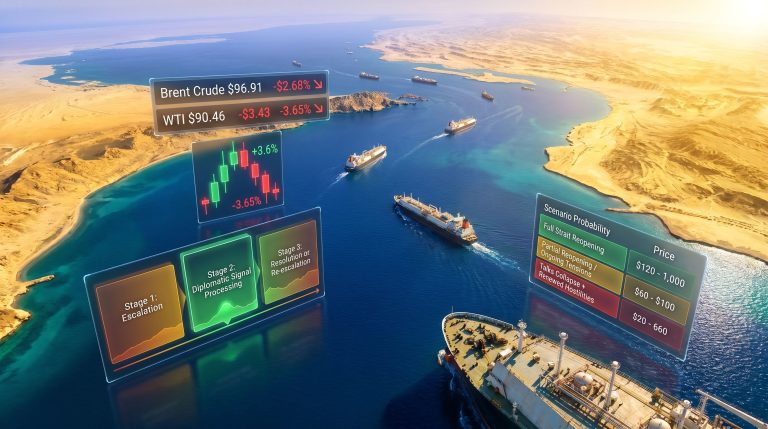
| Diplomatic de-escalation reduces threat environment | Moderate | Iran-U.S. tensions ease, attribution remains ambiguous | Market stabilisation, insurance premiums moderate |
The Policy Imperative: Protecting Offshore Energy Infrastructure from Drone Threats
The Mina al Fahal incident strengthens the case for a fundamental reassessment of offshore energy infrastructure security across the Gulf. The International Maritime Organization's existing port and maritime security frameworks, primarily structured around conventional vessel-based threats and insider risk, were not designed to address the capabilities of modern precision drone systems.
Several response mechanisms are under consideration or active deployment across the GCC:
- Electronic warfare and counter-UAS systems integrated into terminal protection perimeters, capable of detecting and neutralising drone threats at extended ranges.
- Enhanced naval patrol coordination to establish maritime exclusion zones around critical export infrastructure nodes.
- Insurance market repricing, as Lloyd's of London and specialist marine underwriters reassess Gulf of Oman exposure and adjust premium structures accordingly.
- Multilateral policy development under IMO or UN frameworks to establish mandatory counter-drone standards for offshore oil export infrastructure globally.
The precedent set by the Abqaiq attack in 2019 demonstrated that even facilities protected by sophisticated air defence systems are not immune to coordinated drone strikes. For exposed offshore SBM terminals lacking equivalent defence infrastructure, the vulnerability is structurally greater. According to business reporting on the incident, the decision by Oman to suspend oil loading at Mina al Fahal terminal following the explosion reflects not just an immediate operational response, but an acknowledgment that the security calculus around its most critical export asset has materially changed.
What This Incident Reveals About the Future of Gulf Energy Security
The events at Mina al Fahal are analytically significant beyond their immediate supply disruption consequences. They illuminate a broader structural reality: the Gulf's crude export architecture, built around a relatively small number of high-throughput terminal nodes, creates concentrated points of systemic vulnerability that asymmetric actors can target with increasing precision and at decreasing cost.
Key structural takeaways for energy security analysts and market participants include:
- The physical infrastructure through which Gulf crude flows is an understudied component of global energy security risk, receiving less analytical attention than the Strait of Hormuz despite comparable vulnerability.
- Drone proliferation has fundamentally altered the threat landscape for offshore energy terminals in ways that existing security investment and regulatory frameworks have not yet fully absorbed.
- Oman's strategic position as a diplomatic neutral does not translate into infrastructure immunity, a distinction that energy security planners across the Gulf must now explicitly incorporate into contingency frameworks.
- Asian crude importers, who collectively absorb the vast majority of Gulf export volumes, have significant indirect exposure to disruptions at Mina al Fahal through refinery scheduling, spot market costs, and supply security risk premiums.
The incident at Mina al Fahal is neither an isolated event nor simply a regional news story. It is a data point in an accelerating pattern of asymmetric threats targeting the physical foundations of global energy supply, and one that will likely reshape how the industry thinks about offshore terminal security, insurance pricing, and policy coordination for years to come.
Want To Stay Ahead of the Next Major Resource Discovery Before the Market Moves?
Discovery Alert's proprietary Discovery IQ model delivers real-time alerts on significant ASX mineral discoveries, transforming complex resource data into actionable investment insights the moment they hit the exchange — explore historic discoveries and their market returns to understand the opportunity, then begin your 14-day free trial at Discovery Alert to position yourself ahead of the broader market.