June 6, 2026
The Hidden Danger in Plain Sight: Why Workshop Fatalities Expose Mining's Blind Spot
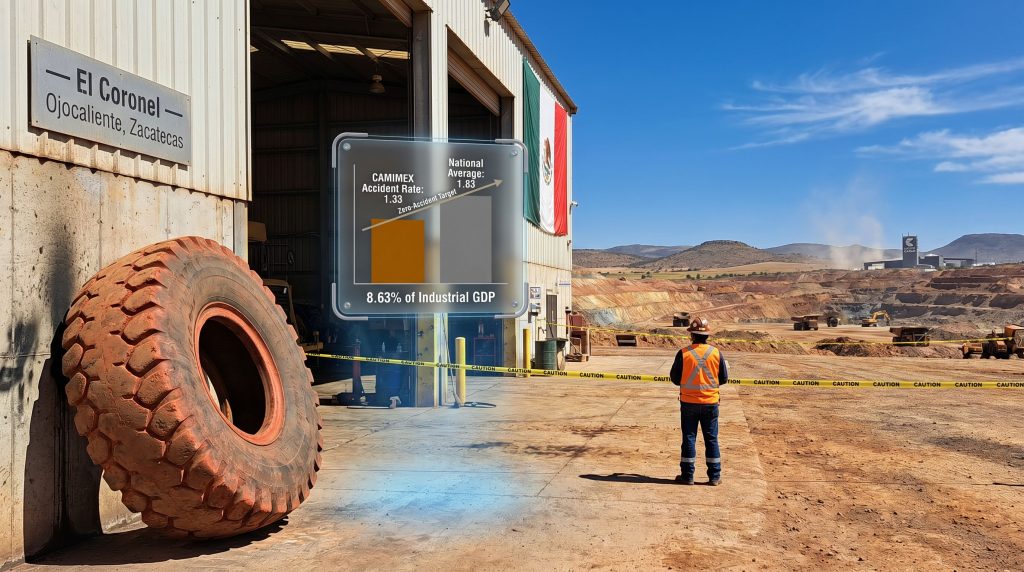
When mining safety conversations arise, attention instinctively moves underground. Tunnel collapses, toxic gas accumulation, rockfalls, and flooding dominate the narrative in occupational safety literature. Yet a persistent and underappreciated category of fatality unfolds in the daylight, inside maintenance workshops, during routine servicing of the enormous machines that define modern large-scale mining. The Minera Frisco worker dies in Zacatecas mine accident at the El Coronel unit in Ojocaliente on June 1, 2026, is a sharp reminder that surface-level operations carry lethal consequences when rigorous safety discipline is absent.
This incident arrives at a particularly consequential moment for Mexico's mining sector, one navigating new regulatory obligations, unresolved labor tensions, and growing strategic importance under the Sheinbaum administration's Plan México framework. Furthermore, understanding mining industry trends helps contextualise why safety culture remains such a persistent challenge across global operations.
When big ASX news breaks, our subscribers know first
What Happened at El Coronel and Why It Matters
At approximately 1:45 p.m. on June 1, 2026, a worker at Minera Frisco's El Coronel mining unit sustained fatal injuries while performing maintenance on a heavy-load truck tire in the facility's workshop. The incident proved fatal almost immediately. Within hours, El Coronel's management activated emergency protocols, suspended all operational activity across the site, and evacuated personnel from the affected area.
The company formally notified the worker's family and extended an invitation to union representatives to participate in the ongoing technical and forensic investigation, which is proceeding in coordination with relevant government authorities.
Critically, Minera Frisco communicated full details of the incident to all of its mining units across Mexico, framing the review as a nationwide safety reassessment rather than a site-specific response.
Key facts at a glance:
| Detail | Information |
|---|---|
| Date of Incident | June 1, 2026 |
| Time | Approximately 1:45 p.m. |
| Location | El Coronel unit, Ojocaliente, Zacatecas |
| Operating Company | Minera Frisco (Grupo Carso subsidiary) |
| Nature of Incident | Fatal injury during heavy-load truck tire maintenance |
| Immediate Response | Full operational suspension, personnel evacuation |
| Investigation Status | Ongoing, coordinated with government authorities and union representatives |
Understanding the Specific Hazard: Tire Servicing on Heavy Mining Equipment
Why Tire Maintenance Kills
To understand why a tire maintenance task can be fatal, some industry-specific context is essential. Mining haul trucks, particularly those used in open-pit and mixed operations, are among the largest land vehicles in existence. Their tires can weigh in excess of five tonnes and operate under extraordinary internal pressures, sometimes exceeding 100 psi in service conditions.
When these tires are serviced, disassembled, or re-inflated incorrectly, the stored energy released during a sudden failure is comparable to an explosive event. A rim separation or bead explosion during inflation can project components at lethal velocities across significant distances. Industry safety standards globally, including guidelines from the International Labour Organization (ILO), classify tire servicing on heavy equipment as a high-risk task requiring specialised protocols.
Recommended safety measures typically include:
- Use of inflation cages or restraining devices during tire inflation
- Remote inflation systems that allow personnel to operate from a safe distance
- Mandatory exclusion zones around any tire under inflation pressure
- Worker certification specific to heavy equipment tire servicing
- Pre-inspection of rims and locking rings for corrosion or mechanical damage before assembly
The absence or failure of any one of these controls can convert a routine maintenance task into a fatal event. Investigators at El Coronel will be examining precisely which of these safeguards were in place and whether they were properly applied.
Surface vs. Underground: A Misallocated Safety Focus
One of the less-discussed dynamics in mining occupational health is the tendency for safety investment and regulatory attention to concentrate on underground environments. This is statistically understandable, given that underground operations historically generate the highest fatality rates. However, this focus can create a relative blind spot in surface and workshop operations, where standards may be applied less rigorously precisely because the environment feels less inherently dangerous.
The El Coronel fatality challenges that assumption directly. A workshop floor can be as lethal as a mine face when the equipment involved stores extraordinary energy and the protocols governing its handling are inadequate or inconsistently followed. In addition, tunnel collapse risks demonstrate just how quickly contained environments can become fatal when procedural failures occur.
The risk is not purely geological. It is mechanical, procedural, and human. Surface maintenance fatalities in mining often reflect systemic gaps in safety culture rather than isolated individual errors.
Minera Frisco's Position and Prior Labor Challenges in Zacatecas
Grupo Carso's Mining Arm
Minera Frisco operates as the primary mining subsidiary of Grupo Carso, the diversified Mexican industrial conglomerate with holdings spanning construction, retail, energy, and infrastructure. The company manages multiple mining units across Mexico, with Zacatecas representing a significant hub of activity. El Coronel, situated in Ojocaliente, is one of several active production units the company operates in the state.
A Labor Relations Backdrop That Adds Complexity
The El Coronel incident does not occur in a vacuum. In 2024, Minera Frisco faced a significant labor stoppage at its Tayahua mine, also located in Zacatecas, where more than 1,000 union members and approximately 350 non-union employees halted operations in a dispute centred on profit-sharing payment obligations. The company characterised that stoppage as unlawful while publicly reaffirming its commitment to worker welfare and statutory compliance.
That history matters because labor trust is a foundational variable in mining safety culture. Workers who feel their grievances are dismissed are statistically less likely to report near-misses or safety concerns before they escalate into fatalities. The intersection of unresolved labor disputes and workplace fatalities creates a particularly difficult environment for operators to manage.
On a more constructive note, Minera Frisco has pursued workforce development in the region through a formal partnership with the Universidad Autónoma de Zacatecas (UAZ), designed to train mining professionals and build local technical capacity. This initiative mirrors similar workforce-education collaborations elsewhere in the sector, such as Orla Mining's partnership with UAF in northern Mexico. Consequently, risk management in mining has become an increasingly critical discipline for operators seeking to balance production demands against workforce wellbeing.
Mexico's Evolving Mining Safety Regulatory Framework
From NOM-032-STPS-2008 to PROY-NOM-032-STPS-2026
Mexico's Labour Ministry approved updated occupational safety standards for underground mining operations in 2026, transitioning from the 2008 framework to PROY-NOM-032-STPS-2026. The revised standard introduces structural and operational requirements that were not previously codified at this level of specificity.
| Regulatory Requirement | Previous Standard | New Standard (2026) |
|---|---|---|
| Minimum gallery height | Not formally specified | 1.8 metres |
| Minimum horizontal gallery width | Not formally specified | 2.5 metres |
| Forced ventilation | General provisions only | Technical standards for breathable oxygen levels |
| Operational scope | Primarily underground coal mines | Broader underground mining operations |
Why the Timing Creates Compliance Pressure
The transition between regulatory standards is rarely seamless. During these periods, operators are simultaneously obligated to meet new requirements while legacy practices remain embedded in daily operational culture. This compliance gap is not unique to Mexico, but it is particularly acute when the new framework raises the baseline significantly and enforcement capacity is still catching up to the new obligations.
The El Coronel fatality, which occurred in a surface workshop rather than an underground environment, falls outside the direct scope of PROY-NOM-032-STPS-2026. However, its timing during this regulatory transition is likely to accelerate calls for extending formal safety standards to workshop and surface maintenance operations, a regulatory gap that safety advocates have long identified. Understanding mining permitting basics also helps illustrate how compliance frameworks shape operational behaviour across all aspects of mine management.
Regulatory Watch: Companies affiliated with CAMIMEX are subject to both updated NOM standards and sector-wide safety benchmarking. A fatality occurring during a compliance transition window will receive heightened scrutiny from both regulators and sector peers.
How Mexico's Mining Safety Record Stacks Up
A Decade of Declining but Persistent Fatalities
Mexico's mining sector recorded more than 270 accidents over the past decade, resulting in 270 fatalities and at least 108 injuries. Despite this cumulative toll, the trajectory is improving. CAMIMEX-affiliated companies currently report an accident rate of 1.33, meaningfully below the national mining industry average of 1.83.
| Safety Metric | Figure |
|---|---|
| Mexico CAMIMEX member accident rate | 1.33 |
| Mexico national mining average accident rate | 1.83 |
| Global mining-related deaths per year (est.) | 15,000+ |
| Mexico mining fatalities over past decade | ~270 |
The sector has formally committed to a zero-accident target. The distance between a rate of 1.33 and zero is not merely numerical. It represents a qualitative shift in safety culture, one that requires systemic procedural transformation, investment in equipment and training, and genuine workforce trust, rather than incremental statistical improvement.
Globally, mining remains among the most hazardous industries on earth. According to World Counts, more than 15,000 mining-related deaths occur worldwide annually, placing Mexico's performance in a sobering international context even as domestic trends improve. Furthermore, mine safety evolution continues to shape how operators approach both regulatory compliance and voluntary safety improvements.
What Investigators Are Specifically Examining
The forensic investigation at El Coronel will focus on several critical questions:
- Whether standard heavy equipment tire servicing protocols were formally established and actively followed at the workshop
- Whether the workshop was equipped with appropriate safety infrastructure, including inflation cages, remote inflation systems, and designated exclusion zones
- Whether the worker had received adequate training and valid certification for the specific task being performed
- Whether the incident reflects a systemic failure in safety culture or an isolated procedural deviation
- Whether cross-site safety reviews reveal similar gaps at other Minera Frisco operations nationally
The answers to these questions will determine not only the regulatory and legal consequences for the company but also the credibility of its broader safety commitments. Reporting on the incident from human rights monitoring bodies further underscores how such events attract scrutiny well beyond the mine gate.
The next major ASX story will hit our subscribers first
Mining's Economic Weight and Why Disruptions Extend Beyond the Mine Gate
Mexico's Mining Sector by the Numbers
The El Coronel incident and its operational consequences unfold within a sector of substantial national economic importance. According to CAMIMEX, mining represented 8.63% of industrial GDP in 2023 and contributed 2.75% to national GDP directly. When the full value chain, encompassing processing, transport, and manufacturing inputs, is included, the sector's contribution rises to 4.5% of national GDP.
The industry generates an estimated MX$269 billion (approximately US$15 billion) in annual economic spillover and has paid more than MX$362 billion in taxes over the past nine years, making it one of the most significant fiscal contributors outside the energy sector.
Strategic Significance Under Plan México
Under President Claudia Sheinbaum's Plan México economic framework, mining is recognised as a strategically critical sector. The industry supplies raw materials to more than 70 industrial sectors, including automotive manufacturing, renewable energy infrastructure, pharmaceuticals, steel production, construction, and agriculture.
Economy Minister Marcelo Ebrard has described mining self-sufficiency as a national resilience priority in the current geopolitical environment, framing proactive industrial policy as essential to preventing supply chain vulnerabilities rather than managing them reactively.
Zacatecas as a High-Stakes Mining State
Zacatecas is one of Mexico's most productive mining states, with significant output across silver, gold, zinc, and copper. The state hosts multiple major operators, making labor relations, safety enforcement, and community engagement particularly consequential for national production figures. Incidents at Zacatecas operations carry disproportionate reputational weight given the state's prominence in Mexico's mining export economy.
For Minera Frisco specifically, the suspension of El Coronel creates immediate production disruption. The duration of that disruption depends entirely on the pace of the forensic investigation and the timeline for regulatory clearance to resume operations.
The Broader Lessons for Mexico's Mining Sector
The Minera Frisco worker dies in Zacatecas mine accident at El Coronel is, above all, a human tragedy. Beyond that human dimension, it surfaces important questions about where safety gaps persist in an industry that has made measurable progress but remains far from its stated zero-accident goal. Official statements from Minera Frisco following the incident confirm the seriousness with which the company is treating the investigation.
Several structural observations emerge from this incident:
- Maintenance operations carry fatality risk that rivals underground hazards when proper protocols are absent, yet they receive comparatively less regulatory attention and safety investment
- Regulatory transition periods create practical compliance uncertainty, particularly when new frameworks are being embedded into legacy operational cultures simultaneously
- Labor relations and safety culture are functionally inseparable in mining environments; eroded workforce trust undermines the informal reporting mechanisms that catch hazards before they become fatalities
- Zero-accident targets require cultural transformation, not just statistical improvement; the gap between 1.33 and zero is qualitative, not quantitative
- Cross-national safety communication, as demonstrated by Minera Frisco's response in notifying all its units nationally, is among the more effective tools for converting a site-specific tragedy into sector-wide learning
Disclaimer: This article is intended for informational purposes only and does not constitute legal, financial, or investment advice. Details regarding the ongoing investigation at El Coronel are based on information available at the time of publication and remain subject to revision as the forensic and regulatory process concludes.
Want to Stay Ahead of Significant ASX Mineral Discoveries as They Happen?
Discovery Alert's proprietary Discovery IQ model delivers real-time alerts the moment significant mineral discoveries are announced on the ASX, transforming complex data across more than 30 commodities into clear, actionable insights for both traders and long-term investors — explore the historic returns major discoveries have generated and begin your 14-day free trial to position yourself ahead of the broader market.