May 22, 2026
Advancements in Mineral Exploration Through Fluorescence Detection
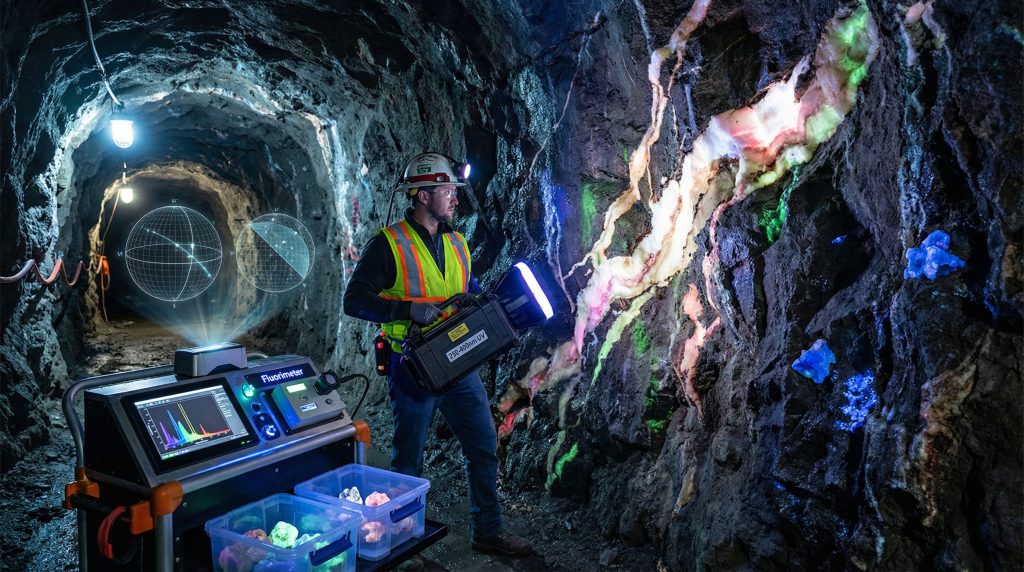
Advanced mineral exploration has evolved beyond traditional surface sampling and geophysical surveys, with sophisticated detection methodologies now capable of identifying subtle geochemical signatures that reveal the presence of buried ore systems. Modern exploration teams increasingly rely on specialized techniques that can differentiate between barren geological formations and mineralized zones through precise analytical approaches. The fugitive calcite black-light technique represents one such innovation, utilising ultraviolet illumination to detect trace element signatures within carbonate minerals that indicate proximity to ore deposits. These methodologies have transformed how geologists approach prospect evaluation, particularly in complex geological terrains where conventional exploration methods may prove inadequate.
Understanding Calcite Fluorescence Mechanisms in Geological Systems
The fluorescent properties of calcite under ultraviolet illumination result from trace element incorporation within the mineral's crystal lattice structure. Manganese ions (Mn²⁺) serve as the primary fluorescence activator, creating distinctive emission patterns when exposed to specific UV wavelengths. The concentration and distribution of these activator elements directly influence both the intensity and colour characteristics of the fluorescent response, making this technique valuable for understanding mineral exploration importance in modern geological investigations.
Lead incorporation within calcite structures contributes additional complexity to fluorescence signatures, often modifying emission wavelengths and creating unique spectral fingerprints. Research indicates that lead concentrations as low as 10-50 parts per million can produce detectable fluorescent responses under optimal viewing conditions. These trace element concentrations frequently correlate with proximity to hydrothermal mineralisation events.
The spectral characteristics of fluorescent calcite typically range from white and cream emissions under long-wave UV (365nm) to pink and green responses under short-wave UV (254nm). This wavelength-dependent behaviour allows geologists to distinguish between different calcite populations and their associated formation environments, providing insights comparable to detailed drilling results interpretation.
Formation Processes and Hydrothermal Associations
Fugitive calcite develops during late-stage hydrothermal processes when cooling mineralising fluids precipitate carbonate minerals along fracture systems and structural discontinuities. These formations represent the final stages of hydrothermal activity, often occurring 50-200 metres from primary mineralisation zones. The term "fugitive" reflects the transient nature of these deposits, which form rapidly during fluid pressure fluctuations within active hydrothermal systems.
Temperature conditions during fugitive calcite formation typically range between 150-300°C, significantly cooler than primary sulphide mineralisation temperatures. This temperature differential creates distinct geochemical signatures that persist within the calcite structure, providing valuable information about the thermal evolution of mineralised systems. Furthermore, these formations can be effectively mapped using 3D geological modelling techniques that incorporate fluorescence data.
When big ASX news breaks, our subscribers know first
UV Detection Equipment and Field Methodology
Modern portable UV equipment designed for geological applications operates across multiple wavelength ranges to maximise detection capabilities. Short-wave UV sources (250-280nm) provide optimal activation of manganese-bearing calcite, while long-wave systems (320-400nm) excel at detecting lead-activated fluorescence. Professional-grade units typically feature dual-wavelength capabilities with output powers ranging from 4-40 watts for adequate field penetration.
Battery technology advancements have extended field operation capabilities, with lithium-ion systems providing 8-12 hours of continuous operation under standard conditions. Equipment durability specifications include:
• IP65 weatherproofing for moisture and dust resistance
• Operating temperature ranges from -20°C to +50°C
• Impact resistance rated for 1.5-metre drop protection
• Weight specifications typically under 2.5 kilograms for portability
Detection protocols require systematic scanning procedures that account for ambient light conditions and surface contamination factors. Underground applications provide optimal conditions due to controlled lighting environments, while surface work necessitates dawn or dusk timing for maximum fluorescence visibility.
Discrimination Techniques and Analytical Procedures
Effective fluorescence discrimination requires understanding the spectral differences between target minerals and potential interferents. Fluorite typically produces blue fluorescence under UV illumination, contrasting sharply with the white-to-pink emissions characteristic of manganese-activated calcite. This spectral separation allows field geologists to rapidly differentiate between mineral types without laboratory confirmation.
Documentation procedures involve systematic photography using UV-pass filters and calibrated exposure settings. Digital imaging techniques capture fluorescence intensity variations that may not be immediately apparent to visual observation, creating permanent records for subsequent analysis and correlation with geochemical data. In addition, these datasets can contribute to understanding the mineral discovery curve for specific deposit types.
Stereonet plotting applications convert fluorescence observations into structural geological data, revealing preferred orientations and spatial relationships within vein systems. This analytical approach transforms qualitative fluorescence observations into quantitative structural datasets suitable for advanced geological analysis.
Trace Element Geochemistry and Activation Mechanisms
The relationship between trace element concentrations and fluorescence intensity follows predictable patterns that vary based on formation conditions and subsequent alteration processes. Manganese concentrations between 100-1,000 ppm typically produce visible fluorescence under standard UV illumination, while higher concentrations may result in fluorescence quenching due to concentration effects.
Sodium and sulphur serve as secondary fluorescence activators, contributing to emission intensity and spectral characteristics. These elements commonly substitute within calcite lattice positions during formation, creating complex fluorescence signatures that reflect the complete geochemical environment during precipitation.
| Trace Element | Concentration Range (ppm) | Fluorescence Colour | Activation Wavelength (nm) |
|---|---|---|---|
| Manganese (Mn²⁺) | 50-1,000 | White to Pink | 254-365 |
| Lead (Pb²⁺) | 10-500 | Cream to Yellow | 280-320 |
| Sodium (Na⁺) | 200-2,000 | Enhancement | Variable |
| Sulphur (S²⁻) | 100-800 | Intensity modifier | Multiple |
Regional compositional variations reflect local geological controls on hydrothermal fluid chemistry. Areas with elevated background lead concentrations may produce enhanced fluorescence responses, while regions with high iron content can suppress fluorescence through competitive absorption mechanisms. These geochemical relationships contribute to data-driven mining operations that rely on systematic analytical approaches.
Applications in Different Deposit Types
Porphyry copper systems benefit significantly from fugitive calcite analysis due to the extensive hydrothermal alteration zones surrounding these deposits. Fluorescent calcite populations typically develop within 500-1,500 metres of porphyry centres, creating exploration halos that extend well beyond primary mineralisation boundaries. These halos provide vectoring information that guides systematic exploration programmes toward economic concentrations.
Carbonate replacement deposits (CRDs) show particularly strong associations with fluorescent calcite due to their formation mechanisms involving carbonate host rocks. The interaction between hydrothermal fluids and pre-existing carbonate formations creates ideal conditions for trace element incorporation during calcite recrystallisation processes. According to research published in Elements magazine, luminescence applications in ore geology are becoming increasingly valuable for understanding deposit formation processes.
Skarn mineralisation environments produce complex fluorescence patterns reflecting multiple hydrothermal episodes and varying temperature conditions. Early high-temperature skarn formation may show limited fluorescence, while later retrograde alteration events commonly produce abundant fluorescent calcite with distinctive trace element signatures.
Underground Access Advantages and Surface Limitations
Underground exploration environments provide optimal conditions for fluorescence detection due to the absence of solar radiation interference. Ambient light levels below 10 lux allow detection of subtle fluorescence that would be invisible under surface conditions. Underground humidity levels, typically 60-80% relative humidity, may enhance fluorescence visibility through reduced dust interference.
Surface applications face significant technical challenges including:
• Solar UV radiation masking weak fluorescence signals
• Atmospheric moisture affecting equipment performance
• Dust and weathering obscuring mineral surfaces
• Temperature fluctuations impacting battery life and equipment stability
Mitigation strategies for surface work include dawn and dusk operation schedules, portable dark chambers for sample examination, and enhanced UV output systems designed to overcome ambient light interference. However, the fugitive calcite black-light technique remains most effective in controlled underground environments where conditions can be optimised for detection.
Integration with Conventional Exploration Methods
Geochemical correlation studies demonstrate strong relationships between fluorescent calcite intensity and pathfinder element concentrations in associated rock samples. Studies indicate correlation coefficients of 0.65-0.85 between fluorescence intensity measurements and copper, lead, and zinc concentrations in nearby mineralised zones. This correlation supports the integration of fluorescence data with traditional geochemical exploration datasets.
X-ray diffraction analysis provides definitive mineral identification for fluorescent phases, confirming calcite versus other carbonate minerals that may exhibit similar fluorescence characteristics. This analytical backup ensures accurate interpretation of field observations and prevents misidentification of target minerals. Furthermore, analytical studies have documented the specific conditions under which calcite exhibits distinctive fluorescence properties.
Electron microprobe analysis reveals detailed trace element distributions within fluorescent calcite grains, providing quantitative data on activator element concentrations and zonation patterns. This high-resolution analytical approach validates field observations and provides calibration data for fluorescence intensity interpretation.
Cost-Effectiveness and Time Efficiency Analysis
Initial equipment investment for professional UV fluorescence systems ranges from $2,000-8,000, significantly lower than most geophysical survey equipment. Operating costs remain minimal due to low power consumption and minimal consumable requirements, making the technique highly cost-effective for reconnaissance exploration programmes.
Time efficiency advantages include immediate field results without laboratory delays, enabling real-time decision-making during exploration programmes. A trained geologist can systematically examine 200-400 metres of underground workings per day using fluorescence techniques, compared to 50-100 metres using conventional detailed mapping approaches.
Sample collection and processing time reductions provide additional economic benefits, with fluorescence screening allowing selective sampling of the most prospective zones rather than comprehensive systematic sampling programmes. Consequently, the fugitive calcite black-light technique offers both technical and economic advantages for exploration companies operating with limited budgets.
Safety Protocols and Equipment Considerations
UV radiation safety requires strict adherence to occupational health guidelines, particularly for short-wave UV applications. Eye protection using UV-blocking safety glasses is mandatory for all personnel working with UV equipment. Prolonged skin exposure to UV radiation can cause photochemical burns, requiring protective clothing and exposure time limitations.
Underground safety protocols include:
- Ventilation assessment before UV work begins
- Emergency communication systems maintained at all times
- Backup lighting equipment independent of UV systems
- Two-person minimum teams for underground fluorescence work
- Regular equipment function checks throughout operations
Power supply considerations for remote underground work include backup battery systems and portable charging solutions. Professional operations typically maintain 200% power capacity to ensure continuous operation throughout planned work periods.
The next major ASX story will hit our subscribers first
Technical Limitations and Interpretational Challenges
Fluorescence intensity variations can result from factors unrelated to mineralisation, including surface weathering, mineral coating, and viewing angle effects. These variables require careful consideration during data interpretation to avoid false positive results. Systematic calibration using known fluorescent and non-fluorescent calcite samples helps establish baseline response levels.
Mineral interference issues arise when multiple fluorescent minerals occur within the same geological environment. Fluorite, scheelite, and certain sulphide minerals may produce overlapping fluorescence responses that complicate interpretation. Spectral analysis using portable fluorometers can resolve some identification ambiguities through wavelength discrimination.
Weathering and surface alteration processes can significantly diminish fluorescence intensity or completely eliminate fluorescent responses in exposed calcite populations.
Environmental constraints include seasonal access limitations, particularly for underground workings subject to flooding or snow blockage. Ground water fluctuations may expose or conceal fluorescent calcite populations, creating temporal variations in detection capabilities that require timing considerations for optimal results. Nevertheless, the fugitive calcite black-light technique continues to provide valuable exploration data when applied systematically.
Emerging Technologies and Future Applications
Automated fluorescence mapping systems utilising robotic platforms show promise for systematic underground surveys. These systems can maintain consistent illumination angles and documentation procedures while reducing personnel exposure to hazardous underground environments. Current development programmes target 95% automation of routine fluorescence surveys by 2027.
Multi-wavelength spectral analysis capabilities enable more sophisticated mineral discrimination through detailed spectral fingerprinting. Advanced systems can simultaneously analyse 8-12 discrete wavelength ranges, providing comprehensive fluorescence characterisation that exceeds human visual detection capabilities.
Machine learning applications for pattern recognition in fluorescence data show potential for automated interpretation of complex fluorescence patterns. Training datasets incorporating thousands of field observations enable artificial intelligence systems to identify subtle patterns that may escape human recognition. These technological advances align with broader trends toward automated geological analysis and interpretation.
Industry standardisation efforts focus on establishing consistent protocols for fluorescence data collection and interpretation. Professional organisations are developing certification programmes for fluorescence-based exploration techniques, ensuring standardised application across different geological environments and exploration programmes.
Integration with digital geology platforms allows real-time incorporation of fluorescence observations into comprehensive geological databases. This technological advancement enables immediate correlation with existing geological, geochemical, and geophysical datasets, enhancing overall exploration efficiency and decision-making capabilities. In addition, these systems support the development of predictive models that can guide future exploration targeting.
The fugitive calcite black-light technique represents a valuable addition to modern mineral exploration methodologies, providing cost-effective reconnaissance capabilities that complement traditional exploration approaches. As equipment technology continues advancing and interpretation methodologies mature, fluorescence-based exploration techniques will likely see expanded application across diverse geological environments and deposit types, contributing to more efficient and successful mineral discovery programmes.
Want to Discover the Next Profitable Mining Opportunity?
Discovery Alert's proprietary Discovery IQ model delivers instant notifications when significant ASX mineral discoveries are announced, transforming complex geological data into clear, actionable investment opportunities. Explore how major mineral discoveries have generated exceptional market returns by visiting Discovery Alert's discoveries page, then begin your 14-day free trial to position yourself ahead of the market with real-time exploration insights.