June 21, 2026
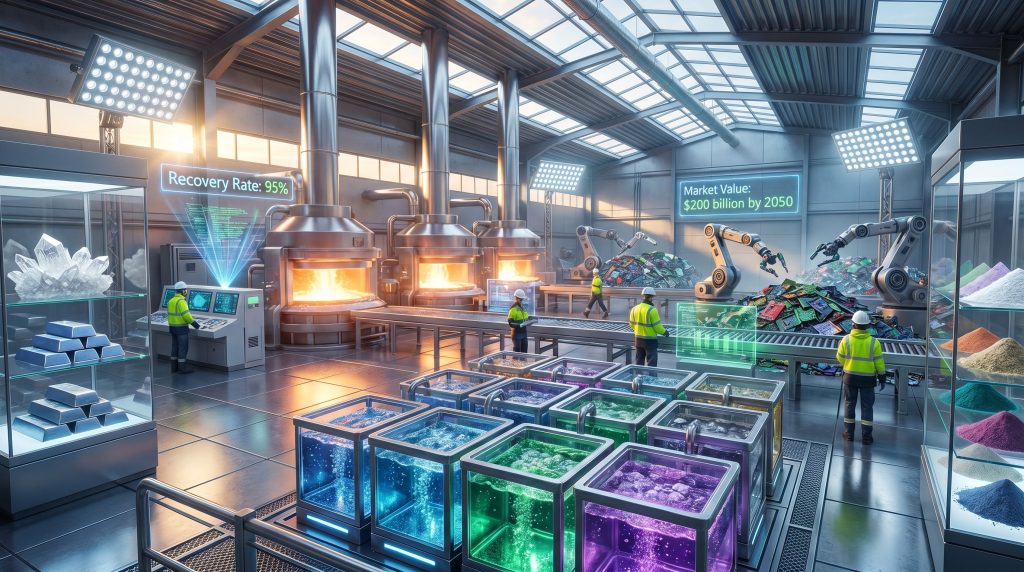
The recovery and reprocessing of secondary mineral resources has emerged as a cornerstone technology for addressing supply chain vulnerabilities in advanced manufacturing sectors. As industries increasingly depend on specialised materials for electric vehicle batteries, renewable energy systems, and defence applications, the development of sophisticated separation and purification technologies represents a fundamental shift toward circular resource utilisation models.
Understanding the technical complexities of mineral recovery from waste streams requires examining both the metallurgical processes involved and the economic drivers reshaping global supply networks. The integration of multiple processing technologies, from high-temperature pyrometallurgical systems to precision hydrometallurgical techniques, demonstrates how engineering innovation can transform industrial waste into valuable feedstock materials.
Defining Critical Materials in Industrial Recovery Systems
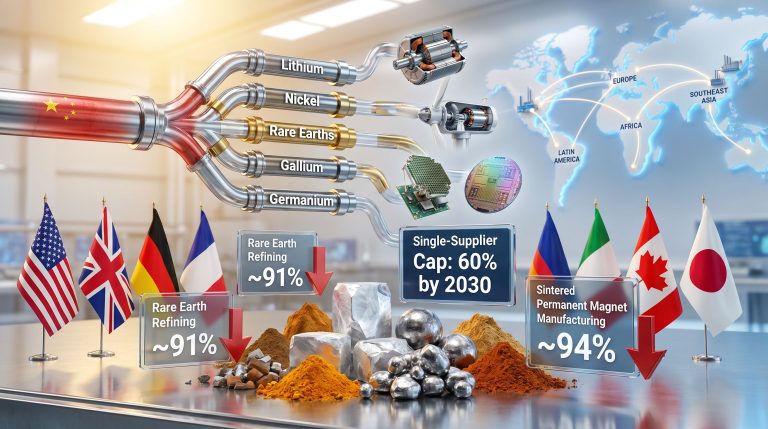
The classification of materials as critical depends on three interconnected factors that determine their strategic importance within supply chain frameworks. Supply risk assessment examines the concentration of global production, political stability of source regions, and availability of substitute materials. Economic importance evaluation considers the total value of applications dependent on specific materials and their role in high-growth industrial sectors.
Materials classified under this framework include lithium for energy storage applications, cobalt for battery cathodes, nickel for stainless steel and battery production, rare earth elements for permanent magnets, tungsten for cutting tools and defence applications, copper for electrical systems, and platinum group metals for catalytic processes.
The strategic significance of secondary recovery becomes apparent when examining import dependency patterns across major economies. Countries with limited domestic mineral resources face particular vulnerabilities to supply disruptions, making the development of robust recycling of critical minerals infrastructure essential for maintaining industrial competitiveness and national security objectives.
Current market projections suggest the secondary materials sector could reach substantial valuations by mid-century, driven by increasing waste stream availability and advancing processing technologies. Furthermore, cost advantages for recycled materials typically range from 25-40% below primary extraction costs, depending on the specific material and processing methodology employed.
When big ASX news breaks, our subscribers know first
Industrial Processing Technologies for Material Recovery
Pyrometallurgical Systems and High-Temperature Processing
High-temperature smelting operations form the backbone of many industrial-scale recovery facilities, particularly for materials extracted from electronic waste and end-of-life battery systems. These processes typically operate at temperatures exceeding 1,500°C, enabling the separation of metallic components through controlled melting and chemical reduction reactions.
The technology proves especially effective for copper and cobalt recovery from mixed electronic waste streams, where complex alloy compositions require thermal separation methods. However, energy consumption patterns vary significantly based on feedstock composition and target materials, with facilities optimising heat recovery systems to improve overall efficiency.
Hydrometallurgical Extraction Methods
Chemical leaching processes offer precise control over material separation through selective dissolution techniques. Acid-based extraction systems utilise sulfuric acid, hydrochloric acid, and specialised organic acids to dissolve target metals while leaving unwanted materials in solid form.
Lithium-ion battery processing represents a primary application area, where hydrometallurgical methods can achieve high purity levels for recovered lithium, cobalt, and nickel compounds. In addition, solvent extraction and precipitation systems further refine these materials to meet manufacturing specifications for new battery production.
The battery recycling process through hydrometallurgical routes typically requires lower energy inputs than pyrometallurgical alternatives but demands sophisticated chemical handling and waste treatment infrastructure. Moreover, these systems enable the recycling of critical minerals with exceptional precision and recovery rates.
Advanced Separation and Sorting Technologies
Artificial intelligence-powered sorting systems represent the latest advancement in waste stream processing, utilising machine learning algorithms to identify and separate materials with unprecedented accuracy. These systems combine optical recognition, density measurement, and electromagnetic property analysis to sort complex waste streams automatically.
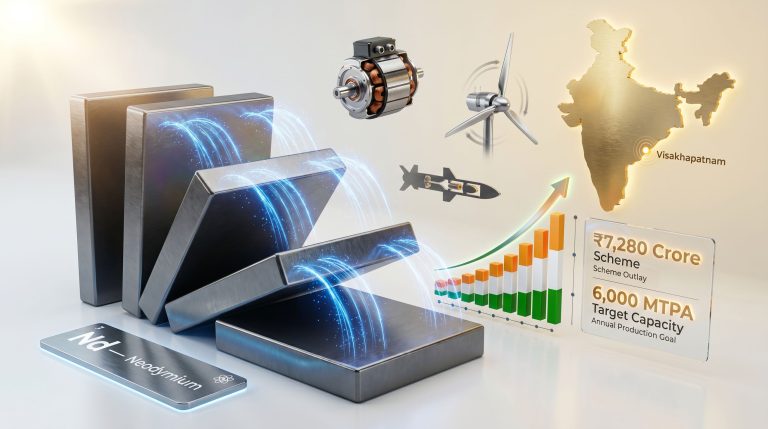
Magnetic separation technologies prove particularly valuable for rare earth permanent magnet recovery from electronic devices and electric vehicle motors. For instance, specialised magnetic field configurations can separate different rare earth elements based on their distinct magnetic properties.
Flotation and gravity concentration methods supplement these technologies by providing additional separation mechanisms for materials with similar electromagnetic properties but different physical characteristics.
Waste Stream Categories and Recovery Potential
Battery Systems and Energy Storage Applications
End-of-life battery processing represents one of the highest-value waste streams in the recycling of critical minerals sector. Electric vehicle batteries contain substantial quantities of lithium, cobalt, nickel, and manganese, with individual battery packs potentially yielding dozens of pounds of recoverable materials.
The Amermin-Ulterra partnership demonstrates practical implementation of this approach, having processed over 1.4 million pounds of material from multiple waste streams in 2025. Their expanded operations now cover materials from Argentina, Canada, and the United States, indicating the cross-border nature of efficient recovery networks.
Processing infrastructure for battery materials requires specialised handling equipment due to safety concerns related to residual energy storage and potentially hazardous chemical compositions. Consequently, collection networks must coordinate with automotive manufacturers, energy storage system operators, and consumer electronics companies to ensure steady feedstock supplies.
Industrial Manufacturing Byproducts and Scrap Materials
Production waste from manufacturing facilities often contains high-grade materials suitable for direct recycling without extensive processing. Semiconductor fabrication generates residues containing precious metals, while battery manufacturing produces scrap materials with known compositions and minimal contamination.
The processing of 21 different waste streams by companies like Amermin illustrates the diversity of recoverable materials available from industrial operations. These streams include:
- Tungsten from cutting tool manufacturing
- Cobalt from superalloy production
- Copper from electrical equipment manufacturing
- Nickel from stainless steel fabrication
- Zinc from galvanising operations
- Silver from electronic component production
- Carbon materials from various industrial processes
- Iron and manganese from metallurgical operations
- Industrial abrasives and synthetic diamonds
Electronic Waste Processing and Component Recovery
Electronic waste streams provide access to a concentrated mix of valuable materials, though extraction requires sophisticated separation techniques due to the complexity of modern electronic devices. Printed circuit boards contain precious metals including gold, silver, and platinum, while hard drives yield rare earth magnets suitable for reprocessing.
Mobile device recycling has emerged as a particularly important source category, with billions of devices reaching end-of-life status annually. Furthermore, the materials recovered from these devices can substitute for primary mining in many applications, reducing environmental impact and supply chain risk.
Technical Challenges in Recovery Operations
Material Complexity and Contamination Management
Modern electronic devices and battery systems contain increasingly complex material combinations that challenge traditional separation methods. Multi-element alloys require sophisticated extraction techniques to achieve the purity levels demanded by manufacturing applications.
Contamination from plastic components, adhesives, and organic materials must be removed before metallurgical processing can begin effectively. However, cross-contamination between different metal streams during processing can significantly reduce the value of recovered materials, requiring careful process control and monitoring systems.
Infrastructure Scaling and Capital Requirements
The development of industrial-scale recycling of critical minerals facilities requires substantial capital investment, often exceeding tens of millions of dollars for comprehensive processing capabilities. The $11.5 million Department of Energy grant received by Amermin for expanding tungsten carbide recycling capacity illustrates the scale of investment needed for specialised processing infrastructure.
Transportation networks for waste collection represent an additional infrastructure challenge, particularly for processing facilities serving multiple geographic markets. In addition, quality control systems must ensure recovered materials meet specifications for use in demanding applications like aerospace, defence, and renewable energy systems.
Recovery Efficiency Optimisation
Current recovery rates vary significantly across different materials and processing methods. While mechanical processing of copper and aluminium can achieve recovery rates exceeding 90%, more complex materials like lithium and rare earth elements present greater technical challenges.
Research priorities focus on improving extraction efficiency while reducing energy consumption and environmental impact. For instance, direct lithium extraction methods that preserve material structure show promise for achieving higher recovery rates with lower processing requirements.
Comparative Analysis of Recovery Technologies
| Technology Category | Primary Materials | Typical Recovery Rate | Energy Requirements | Infrastructure Investment |
|---|---|---|---|---|
| Pyrometallurgical Processing | Copper, Nickel, Cobalt, PGMs | 85-95% | High | Medium-High |
| Hydrometallurgical Systems | Lithium, Cobalt, Nickel, REEs | 70-90% | Medium | Medium |
| Mechanical Separation | Aluminium, Copper, Steel | 90-98% | Low | Low-Medium |
| Biological Extraction | Copper, Nickel, Zinc | 60-80% | Very Low | Low |
| Direct Material Recovery | Li-ion Components | 95%+ | Low | High |
The selection of appropriate technology depends on feedstock composition, target material specifications, and economic constraints. Integrated facilities often employ multiple technologies in sequence to maximise recovery rates and material purity.
Pyrometallurgical methods excel at processing complex waste streams but require significant energy inputs. However, hydrometallurgical approaches offer precise control over material separation but generate chemical waste streams requiring treatment. Mechanical processing provides cost-effective separation for homogeneous materials but cannot address complex alloy compositions.
Policy Frameworks Supporting Recovery Infrastructure
Government Financial Support and Strategic Investment
The U.S. Department of Energy's $11.5 million grant to Amermin through the Office of Fossil Energy and Carbon Management demonstrates concrete government commitment to developing domestic recycling of critical minerals capacity. This funding specifically targets tungsten carbide recycling expansion, addressing strategic material supply requirements for defence and industrial applications.
Such investments reflect broader recognition that secondary material recovery contributes to national security objectives by reducing dependency on potentially unstable international supply chains. Furthermore, the timing of this grant, announced shortly before Amermin's international expansion announcement, suggests coordinated strategic planning between private sector capabilities and government priorities.
Regulatory Environment and Standards Development
Extended Producer Responsibility programmes create economic incentives for manufacturers to design products with end-of-life recovery in mind. These frameworks require companies to assume responsibility for product disposal and recycling, driving investment in recovery infrastructure and technology development.
Battery recycling mandates establish minimum collection and processing targets, creating guaranteed feedstock volumes for recovery facilities. Consequently, import and export regulations for processed secondary materials influence the geographic distribution of processing capacity and international trade flows.
International Cooperation and Technology Transfer
Cross-border material processing agreements enable efficient utilisation of processing capacity across different regions. The Amermin-Ulterra expansion to include Argentine and Canadian waste streams exemplifies how international partnerships can optimise recovery networks and resource utilisation.
Technology transfer programmes facilitate the development of processing capabilities in regions with limited existing infrastructure. In addition, standardisation initiatives ensure recycled materials meet consistent quality specifications across different markets and applications.
The next major ASX story will hit our subscribers first
Geographic Distribution of Recovery Infrastructure
North American Processing Capabilities
Texas has emerged as a significant hub for integrated recycling and refining operations, with companies like Amermin and Ulterra establishing substantial processing capabilities in the state. The geographic concentration reflects favourable regulatory environments, existing industrial infrastructure, and proximity to major waste generation sources.
The expansion of processing capabilities to handle materials from Argentina and Canada demonstrates the development of regional supply networks that can optimise material flows across national borders. This approach reduces transportation costs while improving processing efficiency through increased facility utilisation.
International Facility Development
European facilities have developed specialised capabilities in battery recycling and electronic waste processing, supported by aggressive recycling mandates and extended producer responsibility programmes. Belgium's integrated processing complexes handle materials from across the European Union, achieving economies of scale through centralised processing.
Asian processing centres, particularly in China, Japan, and South Korea, have established dominant positions in rare earth element recovery and precision electronics processing. For instance, this battery recycling breakthrough demonstrates how advanced facilities benefit from proximity to major manufacturing centres and established supply chain relationships with electronic device manufacturers.
Technology Evolution and Future Development Pathways
Emerging Processing Innovations
Direct lithium extraction technologies that bypass traditional smelting processes show promise for reducing energy consumption while improving material recovery rates. These methods preserve the chemical structure of battery materials, enabling their reuse with minimal additional processing.
Biotechnology applications for metal recovery utilise microorganisms to selectively extract target materials from complex waste streams. While currently limited to specific applications, biological processing methods offer extremely low energy requirements and minimal environmental impact.
However, automated disassembly systems represent a significant advancement in waste stream preprocessing, using robotic systems and AI guidance to efficiently separate components for optimised material recovery. These technologies address labour cost concerns while improving processing consistency.
Market Development and Feedstock Availability
The retirement of first-generation electric vehicles will provide substantial feedstock volumes for battery recycling operations starting in the early 2030s. Solar panel end-of-life scenarios will similarly generate large quantities of silver, silicon, and other materials requiring processing infrastructure.
Urban mining strategies focus on recovering materials from metropolitan waste streams, including construction materials, infrastructure components, and consumer goods. These approaches can provide steady material flows while reducing traditional mining requirements, as highlighted in critical research on recycling critical minerals.
Investment Landscape and Commercial Opportunities
Technology Development and Innovation Sectors
Startups developing novel extraction and separation processes represent significant investment opportunities, particularly companies addressing specific technical challenges in recycling applications. Equipment manufacturers for processing facility automation benefit from growing demand for turnkey recycling solutions.
Software companies creating supply chain tracking and material flow optimisation systems address critical needs in waste stream management and quality assurance. Furthermore, these technologies enable more efficient matching of waste sources with processing capabilities.
Infrastructure Development and Operations
The Amermin example illustrates how recycling facility development projects can achieve substantial scale with appropriate government support and strategic partnerships. The company's ability to process 1.4 million pounds annually from a single client demonstrates the potential for significant throughput volumes.
Transportation and logistics networks specialised in waste materials handling represent essential components of successful recovery operations. Quality assurance and certification services ensure recovered materials meet manufacturing specifications and regulatory requirements.
Integrated Supply Chain Development
Mining companies increasingly view secondary recovery as complementary to traditional extraction operations, providing opportunities for diversification and risk reduction. This approach aligns with broader mining innovation trends that emphasise sustainability and resource efficiency.
Battery manufacturers implementing closed-loop systems can reduce raw material costs while improving supply security. Electronics companies establishing take-back programmes create controlled waste streams with known material compositions, improving processing efficiency and material recovery rates.
Performance Measurement and Success Indicators
Technical Performance Metrics
Recovery rates by material type provide fundamental measures of processing effectiveness, with industry leaders achieving rates exceeding 90% for many applications. Energy consumption per unit of recovered material enables comparison between different processing technologies and optimisation of facility operations.
Material purity levels determine the suitability of recovered materials for high-value applications, with some sectors requiring purity specifications equivalent to primary materials. Consequently, processing yield optimisation requires careful balance between recovery rates and material quality.
Economic and Environmental Impact Assessment
Processing costs compared to primary extraction provide clear economic justification for recovery operations, with successful facilities achieving significant cost advantages over traditional mining. Market prices for recycled materials reflect supply and demand dynamics specific to secondary material markets.
Environmental impact assessments demonstrate the benefits of recycling of critical minerals through reduced greenhouse gas emissions, water consumption, and land use requirements compared to primary production. These metrics support sustainability initiatives and regulatory compliance objectives, as detailed in Australia's circular economy approach.
The development of comprehensive recovery networks requires coordinated investment in technology, infrastructure, and regulatory frameworks. As waste stream volumes increase and processing technologies advance, secondary material recovery will play an increasingly important role in global supply chains for critical materials. However, this transformation demands both a robust critical minerals strategy and sustained commitment to technological innovation.
This analysis is based on publicly available information and industry developments. Investment decisions should consider individual risk tolerance and conduct independent research on specific opportunities and technologies.
Want to Capitalise on Critical Minerals Supply Chain Opportunities?
Discovery Alert's proprietary Discovery IQ model delivers real-time alerts on significant critical minerals discoveries across the ASX, instantly empowering subscribers to identify actionable opportunities in companies developing recycling technologies and secondary recovery operations. Begin your 14-day free trial today to position yourself ahead of market movements in this rapidly evolving sector.