May 21, 2026
What Are Mining Avoidance Zones and Why Do They Matter?
The mining industry faces unprecedented pressure to balance resource extraction with environmental stewardship, creating new frameworks for corporate land use decisions. Mining Avoidance Zones represent a strategic evolution in how companies approach territorial management, offering a mechanism to voluntarily withdraw prospective areas from development consideration while maintaining operational flexibility across broader portfolios. Furthermore, this approach demonstrates how the mining industry evolution continues to adapt to changing stakeholder expectations.
Defining Corporate Environmental Exclusion Areas
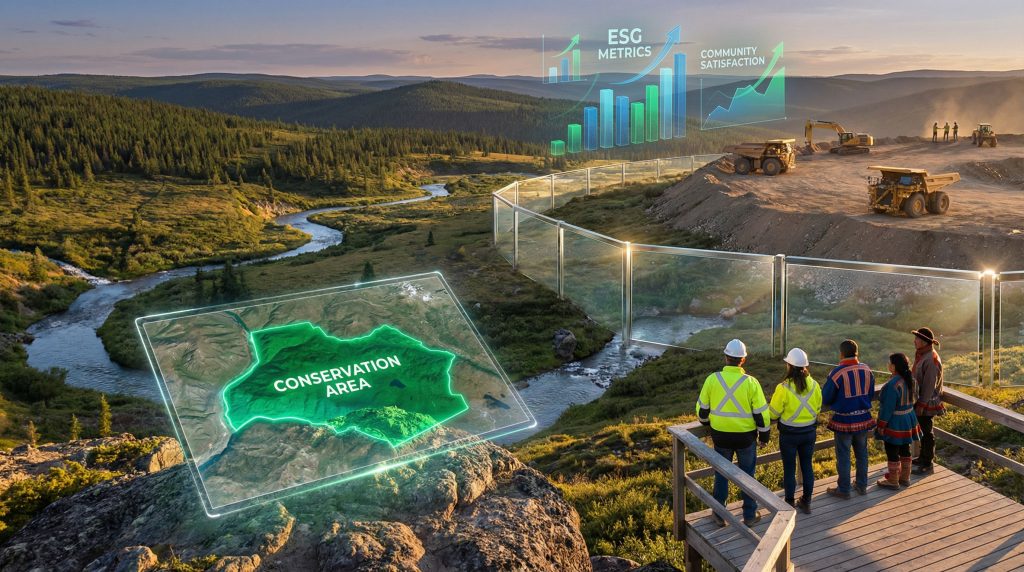
Mining Avoidance Zones function as voluntary corporate commitments to exclude specific geographic areas from future exploration or extraction activities. Unlike government-mandated protected areas, these zones reflect company-initiated decisions to prioritise environmental, cultural, or community values over potential resource development.
The recent expansion demonstrates this principle in practice. Alcoa doubles no-mining zone from 8,344 hectares to approximately 18,168 hectares, creating a combined protected area of 26,000 hectares. To contextualise this scale, the expanded zone equals approximately 860 Optus stadiums worth of permanently protected land.
This expansion builds upon earlier conservation commitments, including the withdrawal of approximately 47,000 hectares from proposed exploration footprint in Perth Hills during November 2025. The sequential nature of these announcements suggests a deliberate corporate strategy rather than reactive environmental management.
Strategic land withdrawal mechanisms serve multiple functions beyond environmental protection. They provide companies with tools to demonstrate community responsiveness, reduce regulatory risk, and position operations for long-term sustainability in jurisdictions where social licence requirements continue evolving.
The Business Case for Proactive Environmental Stewardship
Corporate environmental exclusion areas represent calculated investments in operational security rather than purely altruistic conservation gestures. Companies implementing these strategies typically assess trade-offs between immediate resource access and longer-term operational advantages.
The economic rationale centres on risk mitigation through community relationship management. When companies voluntarily protect areas of high community value, they reduce the probability of future conflicts that could delay or derail development projects. This approach transforms potential opposition into stakeholder support through proactive conservation positioning.
Regulatory pre-emption strategies constitute another core business driver. By establishing voluntary conservation commitments, companies can influence the regulatory landscape before government agencies impose mandatory restrictions. This positioning allows corporations to maintain some control over conservation boundaries rather than accepting externally imposed limitations.
Long-term operational security emerges through stakeholder alignment mechanisms. As Kane Moyle, Alcoa Australia's regulatory approvals director, emphasised, the company seeks to minimise impacts and protect cultural values and sense of place that makes communities special. This approach builds community trust that supports future operational activities in adjacent areas.
The business case extends beyond local community relations to encompass ESG positioning for capital markets. Investment funds increasingly evaluate mining companies through environmental, social, and governance lenses, making conservation commitments valuable signals to ESG-focused capital providers.
When big ASX news breaks, our subscribers know first
How Do Companies Balance Resource Access with Conservation Commitments?
Successful resource companies develop sophisticated portfolio management strategies that accommodate both conservation commitments and extraction requirements. This balance requires geographic diversification, timeline flexibility, and systematic stakeholder engagement across multiple operational theatres. Moreover, effective waste management solutions become crucial in optimising operations across remaining development areas.
Strategic Land Use Planning in Resource Operations
Portfolio optimisation across multiple tenement holdings enables companies to make conservation commitments without compromising overall resource access. Rather than viewing conservation zones as pure opportunity costs, strategic companies position these areas as components of broader land use portfolios that include diverse development options.
Geographic diversification of extraction activities provides the foundation for this approach. Companies with holdings across multiple geographic regions or geological formations can afford to exclude specific areas from development without constraining overall production capacity. This diversification strategy reduces dependence on any single geographic zone.
Timeline flexibility in resource development schedules creates additional strategic options. Resources withdrawn from immediate development consideration through conservation commitments may retain long-term optionality if community attitudes or regulatory frameworks evolve. Companies can position conservation zones as temporally flexible rather than permanently sterilised assets.
The Dwellingup expansion illustrates this principle in practice. Despite acknowledging that the expanded zone includes areas of mineral prospectivity, Alcoa stated no immediate financial impact from the conservation commitment. This positioning suggests that alternative development pathways exist within the company's broader operational portfolio.
Community Consultation Integration Models
Structured feedback incorporation processes transform community consultation from compliance obligations into strategic intelligence gathering mechanisms. Companies implementing sophisticated consultation models use stakeholder input to optimise conservation zone boundaries while identifying development areas with higher community acceptance.
The Dwellingup consultation process demonstrates systematic stakeholder mapping and influence assessment. The final conservation zone specifically protects:
-
Recreational infrastructure: Munda Biddi Trail, Bibbulmun Track, and Nyingarn Bidi Loop sections
-
Community geographic zones: New protective boundary around Inglehope community east of Dwellingup
-
Natural heritage areas: Lane Poole Reserve components and adjacent old growth forest
-
Conservation continuity: Areas adjacent to designated conservation zones already classified as never to be mined
This comprehensive approach reflects cultural and recreational value preservation frameworks that systematically identify and protect community priorities. By addressing multiple stakeholder categories simultaneously, companies can build broad-based support for both conservation commitments and alternative development areas.
Effective consultation integration requires transparent communication regarding development boundaries and realistic timeline management. Communities must understand which areas remain available for future development to maintain trust in the consultation process and support for balanced land use approaches.
What Financial and Operational Impacts Result from Expanded Conservation Areas?
Conservation commitments generate complex financial implications that extend beyond immediate opportunity costs to encompass long-term strategic value creation. Companies must evaluate trade-offs between near-term resource access constraints and multi-year operational benefits including enhanced social licence, reduced regulatory risk, and improved capital market positioning. Additionally, the integration of renewable energy solutions can offset operational costs across remaining development sites.
Immediate vs. Long-Term Economic Considerations
Table: Conservation Commitment Impact Analysis
| Impact Category | Short-Term Effect | Long-Term Strategic Value |
|---|---|---|
| Resource Access | Withdrawal of 73,000 hectares from development pipeline | Enhanced community trust enabling operations in alternative locations |
| Operational Costs | No immediate financial impact stated | Reduced regulatory approval delays and associated project costs |
| Community Relations | Protection of valued recreational and cultural areas | Decreased conflict probability and enhanced stakeholder support |
| Market Position | ESG signal demonstrating environmental leadership | Premium valuation potential reflecting lower social and regulatory risk |
The temporal dimension of impact assessment proves critical for understanding conservation commitment economics. Alcoa's explicit statement of no immediate financial impact despite acknowledging mineral prospectivity within protected zones suggests sophisticated corporate evaluation frameworks that distinguish between short-term operational constraints and longer-term strategic positioning.
This approach indicates companies assess conservation commitments through multi-horizon planning models rather than simple opportunity cost calculations. Near-term operational flexibility may be preserved through geographic portfolio diversification while long-term competitive advantages accrue through enhanced stakeholder relationships.
Opportunity Cost Assessment in Resource Planning
Alternative development site evaluation criteria become increasingly sophisticated when companies maintain large geographic footprints across multiple jurisdictions. Resource companies can afford to exclude specific high-value community areas when alternative sites offer comparable or superior extraction economics.
Resource grade and accessibility trade-offs require systematic analysis across entire portfolio holdings. Companies may voluntarily protect areas with moderate resource prospectivity to maintain community support for development in zones with superior geological characteristics or infrastructure access.
Infrastructure development pathway adjustments create additional strategic flexibility. Companies can optimise infrastructure investments to serve multiple development sites while avoiding areas of highest community sensitivity. This approach maximises capital efficiency while accommodating conservation commitments.
The sequential timing of Alcoa's conservation announcements over November and December 2025 suggests deliberate strategic positioning rather than reactive environmental management. The compressed timeframe for committing approximately 73,000 hectares across multiple geographic zones indicates systematic portfolio reassessment rather than opportunistic conservation gestures.
How Do Conservation Commitments Influence Regulatory and Investment Landscapes?
Mining companies increasingly recognise conservation commitments as strategic tools for reshaping regulatory relationships and accessing ESG-focused capital. These voluntary environmental measures function as signalling mechanisms that can accelerate regulatory approvals while attracting premium investment capital from funds prioritising sustainable resource development. Consequently, companies are also exploring how natural capital strategies can enhance their environmental credentials.
Proactive Environmental Positioning Strategies
Regulatory relationship building through voluntary commitments creates opportunities for mining companies to influence policy development before mandatory requirements emerge. Companies that voluntarily establish conservation zones often gain preferential treatment in subsequent regulatory processes, as agencies recognise proactive environmental stewardship.
The strategic timing of conservation announcements can optimise regulatory positioning. Alcoa's November withdrawal of 47,000 hectares from Perth Hills exploration followed by December's 26,000-hectare Dwellingup expansion creates a pattern of sustained environmental commitment that regulatory agencies view favourably when evaluating future project applications.
Industry leadership positioning in sustainability metrics provides competitive advantages in jurisdictions where regulatory agencies increasingly evaluate companies through environmental performance lenses. Companies with documented conservation track records often experience expedited approval processes and reduced regulatory scrutiny for new development proposals.
Investment community ESG scoring improvements create tangible financial benefits for companies implementing comprehensive conservation strategies. ESG rating agencies specifically evaluate voluntary environmental commitments when assessing mining company sustainability profiles, directly influencing capital costs and investor access.
Competitive Advantage Through Environmental Leadership
Differentiation in crowded resource sector markets becomes increasingly important as investors and regulators demand higher environmental standards. Companies that establish industry-leading conservation commitments can distinguish themselves from peers while potentially influencing sector-wide standards.
Premium access to ESG-focused investment capital represents a measurable financial advantage for environmentally proactive companies. Investment funds with ESG mandates often accept lower returns from companies with superior environmental profiles, effectively reducing capital costs for conservation-committed operators.
Reduced regulatory scrutiny and approval timeframes create operational advantages that compound over time. Companies with established conservation track records typically experience streamlined permitting processes, enabling faster project development and reduced regulatory risk across their operational portfolios.
The Dwellingup expansion's explicit protection of recreational infrastructure including named trails and community areas demonstrates how the initiative where Alcoa doubles no-mining zone can address multiple stakeholder categories simultaneously, building broad-based support for company operations while establishing positive regulatory precedents.
What Broader Industry Trends Drive Corporate Conservation Strategies?
The mining industry faces fundamental shifts in stakeholder expectations, technological capabilities, and regulatory frameworks that collectively drive increased corporate conservation commitments. Understanding these macro-level trends provides context for why companies like Alcoa are voluntarily expanding mining avoidance zones despite potential resource opportunity costs. Furthermore, mine reclamation innovation continues to advance sustainable practices across the sector.
Evolving Stakeholder Expectations in Resource Sectors
Community empowerment in development decision-making represents a fundamental shift from historical top-down mining development models. Modern resource projects require sustained community support throughout operational lifecycles, creating incentives for companies to integrate stakeholder preferences into land use planning from project inception.
Indigenous rights recognition and consultation requirements continue expanding across major mining jurisdictions. Companies must navigate complex cultural and legal frameworks while maintaining operational flexibility, making voluntary conservation commitments valuable tools for demonstrating respect for traditional land use patterns.
Tourism and recreation industry intersection considerations add complexity to resource development planning. Areas with high recreational value generate economic benefits for local communities through tourism, creating competing land use priorities that mining companies must address through conservation commitments or alternative development approaches.
The protection of Munda Biddi Trail, Bibbulmun Track, and Nyingarn Bidi Loop sections within Alcoa's expanded zone illustrates how companies must balance resource extraction opportunities against recreational infrastructure that supports regional economic development through tourism and outdoor recreation activities.
Technology and Alternative Development Approaches
Remote sensing and precision extraction methodologies enable companies to optimise resource recovery while minimising environmental footprints. Advanced geological mapping technologies allow more precise identification of high-value mineral concentrations, reducing the land area required for equivalent resource extraction.
Underground development versus surface mining trade-offs become increasingly important as companies seek to maintain resource access while accommodating conservation commitments. Underground extraction techniques may enable resource recovery from areas adjacent to conservation zones without surface impact on protected environments.
Rehabilitation and restoration technology advancement creates opportunities for companies to demonstrate environmental stewardship through post-extraction landscape restoration. Companies can position conservation zones as components of broader environmental management strategies that include active restoration of previously impacted areas.
These technological developments enable companies to make larger conservation commitments while maintaining resource development capacity through more efficient extraction methods and reduced environmental impact per ton of resource recovered.
How Do Large-Scale Conservation Commitments Shape Future Development Models?
Major conservation commitments by industry leaders create precedents that influence sector-wide development standards and regulatory expectations. When established companies voluntarily protect significant acreage, they establish new benchmarks for environmental stewardship that competitors and regulators use as reference points for evaluating industry practices.
Industry-Wide Precedent Setting and Competitive Responses
Peer company conservation commitment benchmarking occurs rapidly when industry leaders establish new environmental standards. Alcoa's recent commitment of approximately 73,000 hectares across multiple conservation initiatives creates pressure for competitors to demonstrate comparable environmental leadership or risk regulatory and stakeholder disadvantage.
Regional development standard elevation results when multiple companies operating in similar geographic areas adopt conservation strategies. The cumulative effect of multiple corporate conservation zones can fundamentally alter regional land use patterns and create new expectations for resource sector environmental performance.
Government policy influence through voluntary industry action enables companies to shape regulatory development rather than merely responding to imposed requirements. When companies voluntarily establish conservation standards that exceed regulatory minimums, they create opportunities to influence future policy development through demonstrated feasibility of enhanced environmental protection.
This dynamic suggests that early adopters of comprehensive conservation strategies may gain sustained competitive advantages through their ability to influence regulatory frameworks while building superior stakeholder relationships ahead of industry-wide requirement changes.
Integrated Landscape Management Approaches
Multi-stakeholder conservation corridor development represents an evolution toward regional environmental planning that integrates resource extraction, conservation, and community development objectives. Companies increasingly participate in landscape-level planning initiatives that coordinate conservation efforts across multiple land uses and ownership patterns.
Tourism and resource extraction coexistence models emerge as companies recognise opportunities to support regional economic development through both resource development and environmental tourism. Conservation zones can enhance regional tourism appeal while resource extraction in appropriate areas provides employment and economic base diversification.
Biodiversity offset and enhancement programme integration creates opportunities for companies to demonstrate net positive environmental impact through strategic conservation investments. Companies may voluntarily protect high-value ecosystems while conducting restoration activities in previously impacted areas, achieving overall environmental enhancement.
The adjacency of Alcoa's expanded zone to designated conservation areas including old growth forest classified as never to be mined demonstrates how corporate conservation commitments can complement and enhance existing protected area networks rather than operating as isolated environmental measures.
The next major ASX story will hit our subscribers first
What Strategic Lessons Emerge for Resource Sector Environmental Management?
The evolution of corporate conservation strategies reveals fundamental shifts in how successful resource companies approach environmental management as a core business function rather than regulatory compliance obligation. These emerging practices provide frameworks for integrating conservation commitments with operational sustainability and stakeholder relationship management.
Best Practice Framework Development
Key Strategic Considerations for Corporate Conservation Programs:
-
Early stakeholder engagement in project planning phases: Integration of community consultation and cultural value assessment into initial project scoping reduces downstream conflict and enables proactive conservation zone identification
-
Transparent communication regarding development boundaries: Clear delineation between conservation areas and potential development zones builds stakeholder trust and enables informed community participation in land use planning
-
Flexible resource development timeline management: Temporal flexibility in project scheduling accommodates conservation commitments while maintaining long-term resource access options
-
Cultural and recreational value integration in decision-making: Systematic assessment of non-mineral values enables companies to optimise conservation impact while preserving operational flexibility
The implementation of these framework elements requires sophisticated corporate capabilities that extend beyond traditional mining expertise. Companies must develop competencies in stakeholder engagement, environmental science, and regional economic analysis to effectively balance conservation and development objectives.
Successful conservation strategy implementation depends on companies' ability to view environmental commitments as strategic investments rather than operational constraints. This perspective shift enables more sophisticated evaluation of conservation trade-offs and identification of opportunities for competitive advantage through environmental leadership.
Future-Proofing Resource Operations Through Environmental Leadership
Climate change adaptation in long-term planning creates additional incentives for corporate conservation strategies as companies prepare for evolving environmental regulations and stakeholder expectations. Conservation commitments established today may provide operational advantages as climate policy requirements intensify across major mining jurisdictions.
Biodiversity conservation as operational risk management represents an emerging corporate strategy for reducing regulatory uncertainty and stakeholder conflict probability. Companies that voluntarily protect high-value ecosystems may experience reduced scrutiny for development activities in areas with lower conservation significance.
Community partnership models for sustainable development enable companies to position conservation commitments within broader regional development strategies that generate shared value for multiple stakeholder groups. These approaches create stakeholder alignment that supports both conservation objectives and resource development where appropriate.
The initiative where Alcoa doubles no-mining zone exemplifies how companies are expanding protective zones to demonstrate environmental commitment whilst maintaining operational viability. The strategic integration of environmental leadership with operational planning suggests that future resource sector success will increasingly depend on companies' abilities to optimise across multiple value dimensions including resource extraction, environmental stewardship, community development, and stakeholder relationship management.
Important Note: This analysis is based on publicly available information and company announcements as of December 2025. Mining industry conservation strategies continue evolving rapidly, and readers should verify current company policies and regulatory requirements when making investment or operational decisions. Future conservation commitments and their financial implications remain subject to company discretion and changing market conditions.
The transformation of mining industry environmental management through voluntary conservation commitments reflects broader shifts toward stakeholder capitalism and sustainable resource development. Companies that successfully integrate these approaches may establish sustained competitive advantages in an increasingly ESG-focused investment environment.
Ready to Discover the Next Major Mining Breakthrough?
Discovery Alert's proprietary Discovery IQ model delivers real-time notifications on significant ASX mineral discoveries, instantly empowering subscribers to identify actionable opportunities ahead of the broader market. Understand why historic discoveries can generate substantial returns by exploring major mineral finds that have transformed investor portfolios, then begin your 30-day free trial today to position yourself ahead of evolving industry developments.