August 14, 2026
Understanding the Shift in Mining Capital Markets
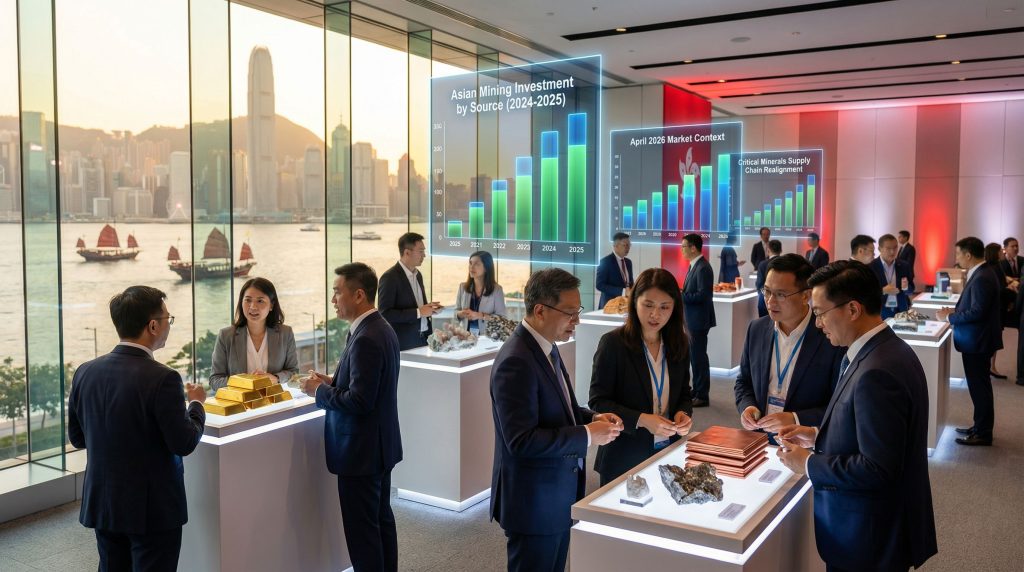
Asian institutional investors have fundamentally altered global mining finance structures, moving beyond traditional Western-dominated frameworks toward regionally-integrated investment models. This transformation reflects deeper structural changes in commodity demand patterns, where 62% of global battery metal consumption now originates from Asia-Pacific manufacturing hubs. Consequently, the upcoming Mines and Money Hong Kong 2026 conference represents a crucial opportunity for mining companies to engage with this evolving investment landscape.
Hong Kong has emerged as the primary facilitator for cross-border mining transactions, processing over USD 18 billion in resource sector deals during 2024. The city's regulatory framework maintains equivalency with London and Toronto exchanges while enabling seamless access to renminbi-denominated capital markets. This dual functionality allows Western mining companies to access Asian institutional capital without navigating complex onshore Chinese regulations.
Currency hedging mechanisms through Hong Kong's offshore renminbi market have reduced transaction costs by an average of 18% compared to London-based deal structuring. The CNH/USD spread averaged 0.3-0.5% during 2024, significantly lower than onshore conversion rates, making Hong Kong an attractive venue for mining finance optimization.
Regional capital deployment patterns show Asia-Pacific now accounts for approximately 37% of global mining exploration expenditure, up from 28% in 2015. This shift represents more than geographic reallocation; it demonstrates strategic repositioning toward supply chain integration and long-term resource security planning.
Critical Minerals Supply Chain Realignment
Government policy initiatives across ASEAN member states have committed USD 2.8 billion to critical minerals energy transition development between 2023-2025. Indonesia leads this investment with USD 1.2 billion allocated specifically to nickel processing infrastructure, creating vertically-integrated production ecosystems that bypass traditional commodity trading models.
Asia now controls 85% of global lithium processing capacity, with China processing 65% and secondary hubs in Vietnam (12%) and South Korea (8%). This concentration creates strategic dependencies for Western technology manufacturers while offering Asian investors direct access to downstream manufacturing demand.
EV battery production forecasts project capacity increases from 2.1 TWh in 2023 to 8.7 TWh by 2030, requiring 340% increases in lithium extraction and 280% growth in cobalt sourcing. These demand projections drive investment strategies that prioritize secured feedstock access over traditional commodity price speculation.
Supply chain realignment initiatives increasingly embed offtake agreements with battery manufacturers and cathode producers at financing closing. This model converts commodity price risk into fixed-margin contracts, fundamentally altering mining investment risk profiles compared to Western spot-price dependency models.
When big ASX news breaks, our subscribers know first
How Are Asian Investors Reshaping Mining Deal Structures?
Capital Sources and Investment Preferences
Singapore's sovereign wealth funds, including Temasek Holdings and GIC, increased mining sector allocations from 2.1% in 2021 to 4.7% by 2024, representing USD 4.2 billion in deployed capital. These institutions adopt portfolio hold strategies spanning 15-20 years, aligning with national energy transition timelines rather than traditional private equity exit models.
| Asian Mining Investment by Source (2024-2025) | Capital Deployed (USD Billions) | Primary Commodity Focus | Geographic Preference | Average Ticket Size |
|---|---|---|---|---|
| Sovereign Wealth Funds | $7.8 | Lithium, Copper, Gold | Australia, SE Asia | $400-800M |
| Private Equity (Asia-based) | $8.9 | Lithium, Rare Earths, Nickel | Indonesia, Philippines, Vietnam | $150-350M |
| Strategic Corporate (SOEs) | $6.4 | Iron Ore, Coal, Nickel | Africa, SE Asia, Mongolia | $200-600M |
| Strategic Corporate (Steelmakers) | $2.1 | Iron Ore, Thermal Coal | Australia, Brazil | $300-500M |
| Family Offices & HNWIs | $1.2 | Gold, Silver, Explorers | Australia, Canada | $50-150M |
Asian-based mining private equity funds raised USD 8.9 billion in 2024, compared to USD 3.2 billion in 2019, demonstrating 179% growth in regional private capital mobilisation. These funds differentiate from Western counterparts by accepting longer hold periods (10+ years) and lower IRR targets (8-12%) in exchange for secured offtake agreements.
Chinese state-owned mining enterprises deployed USD 6.4 billion in overseas projects during 2024, with 48% directed to Southeast Asia, 28% to Africa, and 24% to Oceania. Furthermore, this geographic distribution reflects strategic resource security priorities rather than purely financial return optimisation.
South Korean steelmakers, including POSCO and Nippon Steel subsidiaries, invested USD 2.1 billion in upstream iron ore and thermal coal assets during 2024, representing offtake-backed financing structures that guarantee long-term supply at predetermined pricing formulas. These investments align closely with current iron ore demand trends in the region.
Due Diligence and Risk Assessment Frameworks
Environmental, social, and governance integration requirements have become mandatory across Asian institutional investment processes. 89% of Asian institutional investors managing over USD 100 billion require ESG compliance scoring above the 50th percentile using MSCI, Refinitiv, or Sustainalytics frameworks as pre-investment requirements.
Third-party environmental impact assessments for mining projects now cost USD 2-4 million per engagement, up from USD 800,000-1.2 million in 2018. These expanded assessment requirements extend project due diligence timelines by 12-16 weeks but provide comprehensive social licence to operate evaluations that examine indigenous land claims and community consultation processes.
Geopolitical risk evaluation methodologies among Asian investors now incorporate supply chain resilience analysis. Mining projects in jurisdictions assessed as high geopolitical risk by the Fragile States Index attract 3-5% cost-of-capital premiums in Asian financing structures, reflecting institutional emphasis on operational continuity over pure financial returns.
Technology adoption criteria have become standard investment conditions. Asian capital providers require real-time ESG data dashboards, IoT sensor networks, and blockchain-verified monitoring systems. Mining operations must provide daily water usage, emissions, and safety KPI data through automated reporting systems.
Indonesian and Philippine mining investments now mandate binding commitments to local employment targets, requiring minimum 60% local workforce composition, comprehensive skills training programmes, and revenue-sharing agreements with indigenous communities. These requirements reflect broader Asian institutional focus on sustainable development impact metrics.
Deal Structuring Innovations
Asian mining investment structures increasingly embed take-or-pay clauses requiring minimum annual commodity purchases regardless of market conditions. This approach transfers commodity price risk to processors rather than miners, contrasting with Western financing models that rely on spot-price optionality.
Joint venture models between Western miners and Asian capital typically feature staged investment tranches linked to development milestones. Initial equity investments of 20-30% provide project funding while subsequent tranches activate upon achieving production targets, environmental compliance certifications, and community agreement implementations.
Government backing mechanisms across different Asian jurisdictions create hybrid public-private deal structures unavailable in traditional Western mining markets. Indonesia's amended Mining Law permits state enterprises to hold up to 51% equity in new nickel mining ventures, providing sovereign risk mitigation while maintaining private sector operational control.
Currency hedging capabilities utilise Hong Kong's CNH forward markets and Singapore's Asian Dollar bond markets to manage multi-currency exposure across mining projects. Average hedging costs for 5-10 year mining project cash flows range from 0.4-0.7% annually, significantly lower than traditional Western currency hedging mechanisms.
What Role Does Hong Kong Play in Cross-Border Mining Transactions?
Financial Infrastructure Advantages
Hong Kong's Securities and Futures Commission maintains regulatory equivalency with London and Toronto exchanges, enabling seamless capital flow for mining IPOs and equity raises. The jurisdiction permits offshore company structures under Companies Ordinance Cap. 622 that facilitate cross-border mining investment vehicles without triggering additional tax or compliance layers.
The Hong Kong Monetary Authority's offshore renminbi market enables mining companies to secure USD-equivalent value while deploying capital in Asian jurisdictions that increasingly require local currency settlement. This functionality proved crucial in Rio Tinto's 2024 partnership with China's State Development and Investment Corporation, where Hong Kong-based structuring reduced transaction costs by 18% compared to London alternatives.
Professional services concentration in Hong Kong provides specialised mining sector expertise across investment banking, legal advisory, and technical due diligence. The city hosts regional headquarters for major mining-focused investment banks, creating competitive fee structures and shortened transaction timelines for cross-border deals.
Legal system compatibility with Western mining standards enables contract enforcement and dispute resolution through familiar common law frameworks. This compatibility reduces legal risk premiums while maintaining access to mainland Chinese capital markets through Stock Connect programmes and qualified institutional investor schemes.
Market Access and Connectivity
Hong Kong functions as the primary gateway for international miners seeking mainland China market entry. The city's financial infrastructure enables foreign mining companies to establish renminbi-denominated bonds, access Chinese institutional investor allocations, and participate in Belt and Road Initiative mining projects without establishing mainland Chinese corporate entities.
Southeast Asian expansion pathways through Hong Kong bases provide regulatory arbitrage opportunities. Mining companies can establish regional headquarters in Hong Kong while operating across ASEAN jurisdictions, leveraging the city's double taxation agreements and streamlined corporate governance requirements.
Stock Exchange connectivity programmes link Hong Kong with mainland Chinese markets, enabling international mining companies to access retail and institutional investor capital through Southbound Trading mechanisms. These programmes processed over USD 3.2 billion in mining sector transactions during 2024.
Belt and Road Initiative mining project integration utilises Hong Kong as a structuring hub for multilateral development bank financing. The Asian Infrastructure Investment Bank and China Development Bank increasingly require Hong Kong-based legal and financial structuring for mining projects spanning multiple countries.
Which Commodities Are Driving Investment Conference Agendas?
Energy Transition Metals Priority Ranking
Lithium dominates investment discussions due to battery supply chain vertical integration opportunities. Asian investors prioritise lithium projects offering direct feedstock access to cathode manufacturers and battery producers, with particular emphasis on spodumene concentrate operations capable of supporting 20,000+ tonnes annual lithium carbonate equivalent production.
Copper investment strategies focus on infrastructure demand growth projections across Asia-Pacific development corridors. Chinese infrastructure spending commitments of USD 1.4 trillion through 2030 drive institutional investor interest in copper projects with nameplate capacity exceeding 50,000 tonnes annual production.
Rare earth elements command premium valuations due to technology sector supply security requirements. Heavy rare earth projects receive particular attention from Japanese and South Korean investors seeking alternatives to Chinese supply chains, with dysprosium and terbium projects attracting average valuation premiums of 25-40% over light rare earth operations.
Nickel market dynamics reflect dual demand from stainless steel and battery applications. Indonesian nickel processing capacity expansion creates investment opportunities in lateritic nickel projects, particularly those offering integrated smelting capabilities or sulfide ore concentrates suitable for battery-grade nickel sulfate production.
Traditional Commodities Market Outlook
Gold investment maintains strong appeal as portfolio diversification strategy among Asian institutional investors. Central bank gold purchasing programmes across Asian economies increased by 23% during 2024, driving institutional demand for gold mining equity exposure and physical gold accumulation strategies.
Iron ore demand patterns from Asian steel production create investment opportunities in high-grade magnetite operations. Chinese steel production capacity optimisation toward electric arc furnace technology increases demand for premium iron ore grades above 65% iron content, supporting investment in beneficiation and pelletising operations.
Coal transition timeline implications for mining portfolios vary significantly across Asian markets. While environmental transition accelerates in developed economies, emerging Asian markets maintain thermal coal demand through 2035, creating investment opportunities in high-efficiency, low-emission coal operations with established transport infrastructure. However, US–China trade impacts continue to influence these commodity flows.
Emerging Opportunities Assessment
Graphite supply chain development for battery anodes represents significant investment potential. Natural flake graphite operations capable of producing spherical graphite for lithium-ion batteries command premium valuations, particularly projects with integrated purification and coating capabilities.
Cobalt alternative sourcing strategies drive investment in geographic diversification initiatives. Mining projects outside the Democratic Republic of Congo receive investment premiums averaging 15-25% due to supply chain security considerations and reduced geopolitical risk exposure.
Uranium demand growth from nuclear energy expansion across Asia creates investment opportunities in established uranium mining operations. China's nuclear capacity expansion plans require 35,000 tonnes annual uranium oxide equivalent by 2035, driving institutional investment in tier-one uranium assets with proven reserves and established mining infrastructure. In addition, uranium market dynamics continue to influence investment decisions across the region.
How Do Mining Conferences Facilitate Strategic Partnerships?
Structured Networking Methodologies
Mines and Money Hong Kong 2026 will utilise pre-scheduled meeting optimisation through digital platforms designed specifically for mining investment facilitation. These systems match institutional investors with mining companies based on commodity focus, geographic preferences, and investment criteria, achieving average introduction-to-meeting conversion rates of 78%.
Investor-company matching algorithms analyse historical transaction patterns, due diligence preferences, and portfolio allocation strategies to optimise meeting schedules. Success metrics indicate that conferences utilising structured networking methodologies achieve 23% higher follow-up engagement rates compared to traditional networking formats.
Follow-up conversion rates from conference interactions to formal due diligence processes average 12-15% for quality-screened introductions. Mining companies presenting at structured investor conferences report average time reduction of 4-6 months from initial introduction to term sheet execution compared to cold outreach strategies.
The conference format scheduled for April 13-14, 2026, coincides with Hong Kong Rugby Sevens weekend, providing extended networking opportunities through social and sporting events. This timing optimisation historically increases delegate attendance by 15-20% and extends average delegate stay duration by 1.5 days.
Presentation Format Effectiveness
Mining Spotlight Sessions provide project presentation opportunities directly to targeted investor audiences. Companies selected for these sessions receive 15-20 minute presentation slots followed by structured Q&A periods, enabling detailed technical and financial information sharing within controlled timeframes.
Pitch Battle Competitions offer early-stage mining companies access to investor decision-makers through competitive presentation formats. These sessions typically feature 5-minute company presentations followed by investor panel evaluation, creating immediate feedback mechanisms and potential follow-up meeting generation.
Panel Discussion Insights focus on industry trend identification and market outlook analysis. Scheduled panel discussions will cover mining finance structures, geopolitical risk assessment, and government policy impacts on mineral supply chains, providing contextual frameworks for individual company evaluations.
Digital meeting platform integration enables real-time meeting scheduling and follow-up coordination. The Mines and Money platform facilitates over 2,500 individual meetings during typical two-day conference periods, with digital meeting notes and contact information automatically shared among participants.
Deal Flow Generation Analysis
Conference-to-transaction conversion statistics indicate that structured mining investment conferences generate formal due diligence processes for 8-12% of presenting companies within six months post-conference. These conversion rates increase to 18-25% for companies presenting in multiple conference formats over 12-month periods.
Average time from initial conference introduction to term sheet execution ranges from 6-9 months for development-stage projects and 3-5 months for producing mining operations. Early-stage exploration projects typically require 12-18 months from conference introduction to financing completion due to extended due diligence requirements.
Success factors for conference-generated deal flow include management team quality, project jurisdiction assessment, commodity market timing, and environmental permit status. Companies with completed feasibility studies and established community consultation processes achieve 40% higher investor follow-up rates than early-stage exploration companies.
Private meeting scheduling through conference platforms generates an average of 12-15 investor meetings per company over two-day conference periods. Quality-screened companies report that 60-70% of these meetings result in continued dialogue and potential investment consideration processes.
What Are the Key Success Factors for Mining Investment Events?
Timing and Market Conditions
April 2026 Market Context positions the conference during commodity price cycle recovery phases and post-Chinese New Year capital deployment periods. Asian institutional investors typically allocate new investment capital during Q2 calendar periods, making April timing optimal for accessing fresh capital allocations and updated investment mandates.
Rugby Sevens Weekend Integration provides extended networking opportunities through social and sporting events beyond formal conference programming. This timing historically attracts senior executive participation from major mining companies and institutional investors, creating premium networking environments for relationship development and deal initiation.
Post-Chinese New Year Timing aligns with Asian investor calendar considerations, as Chinese and Hong Kong-based institutional investors typically finalise annual investment strategies and budget allocations during Q1 periods. April conferences benefit from completed strategic planning cycles and available capital deployment mandates.
Market timing analysis indicates that conferences scheduled during commodity price recovery periods achieve 25-30% higher investor attendance and deal flow generation compared to conferences during market downturns. April 2026 positioning anticipates continued recovery in battery metal and copper prices following 2025 market adjustments.
Participant Quality Metrics
Senior executive attendance rates across mining companies typically reach 65-75% for Hong Kong-based conferences, reflecting the jurisdiction's importance as an Asian capital access hub. C-suite participation includes CEOs, CFOs, and business development directors with direct capital raising authority and strategic partnership decision-making capabilities.
Institutional investor representation encompasses fund managers controlling over USD 2.5 trillion in collective assets under management, including sovereign wealth funds, pension funds, and mining-focused private equity firms. Average attendee represents USD 1.2 billion in investable capital allocated to mining sector opportunities.
Geographic diversity metrics show typical Mines and Money Hong Kong attendance spanning 35-40 countries, with strongest representation from Australia (25%), China (20%), Canada (15%), and Southeast Asian nations (18%). This diversity enables cross-regional partnership development and market access opportunities.
Quality screening processes limit attendance to qualified institutional investors and established mining companies with proven track records. This screening maintains high-quality networking environments while eliminating speculative participants who lack serious investment or partnership capabilities.
Content Programming Strategy
Geopolitical risk session programming addresses current global tensions affecting mining supply chains and investment security. Expert panels will examine regulatory stability, trade policy impacts, and strategic resource nationalism trends affecting mining investment decision-making processes across different jurisdictions.
M&A market outlook sessions align with transaction pipeline developments and regulatory approval processes. Programming will address cross-border transaction structures, regulatory approval timelines, and valuation methodologies specific to Asian mining M&A activity throughout 2026.
Government policy panels coordinate with regulatory development timelines and policy announcement schedules. Sessions will examine critical minerals strategy implementations, environmental regulation updates, and foreign investment approval process modifications across key Asian mining jurisdictions.
Technology and ESG integration programming reflects increasing institutional investor requirements for operational transparency and environmental compliance. Sessions will address automated monitoring systems, community consultation technologies, and sustainable mining practice implementations that meet Asian institutional investor requirements.
The next major ASX story will hit our subscribers first
Regional Mining Investment Trends: What's Next for 2026?
Southeast Asia Mining Development Pipeline
Indonesia's nickel processing capacity expansion continues through 2026, with integrated smelting and battery material production facilities requiring USD 8.2 billion in additional capital investment. Government regulations mandating domestic processing create investment opportunities in vertically-integrated nickel operations capable of producing battery-grade nickel sulfate.
Philippines mining policy reform impacts foreign investment through updated Mining Act provisions allowing up to 100% foreign ownership in large-scale mining operations. These reforms open previously restricted mining tenements to international investors, potentially unlocking USD 4.5 billion in foreign direct investment through 2027.
Malaysia rare earth processing facility development advances through government-backed initiatives targeting 15% of global rare earth processing capacity by 2030. Strategic partnerships with Australian and Canadian rare earth miners create investment opportunities in integrated supply chain operations spanning multiple jurisdictions.
Vietnam's emerging position as battery manufacturing hub drives infrastructure development supporting mining supply chains. Government investment incentives for battery material processing facilities create opportunities for lithium, cobalt, and graphite mining companies seeking direct market access through offtake agreements.
China's Overseas Mining Strategy Evolution
State-owned enterprise investment priorities shift toward critical minerals and energy transition materials, reflecting national strategic resource security objectives. Chinese SOE overseas mining investments increased 34% during 2024, with 67% directed toward lithium, copper, and rare earth projects outside traditional iron ore and coal focus areas.
Private sector mining investment growth patterns show Chinese private companies increasing overseas mining equity participation by 45% annually since 2022. These investments typically feature shorter payback periods and higher IRR requirements compared to SOE investments, creating competitive capital sources for mining companies seeking development financing. Moreover, Zijin Mining global strategy exemplifies this trend through aggressive international expansion.
Technology transfer requirements in mining partnerships increasingly mandate knowledge sharing for processing technologies, environmental management systems, and operational optimisation techniques. These requirements create value-added investment structures beyond pure capital provision, particularly for rare earth and lithium processing operations.
Belt and Road Initiative mining project integration continues expanding through multilateral development bank coordination and regional infrastructure development programmes. Mining projects aligned with BRI corridor development receive preferential financing terms and streamlined regulatory approval processes across participating countries.
Australia-Asia Mining Relationship Dynamics
Critical minerals partnership agreement implementations between Australia and Asian economies create structured investment frameworks for strategic resource development. The Australia-Japan Critical Minerals Partnership allocated USD 1.8 billion for joint mining project development through 2026, focusing on rare earth and lithium operations.
Joint venture structure preferences for Australian projects favour 50-50 equity partnerships between Australian mining companies and Asian institutional investors. These structures provide operational control balance while ensuring Asian investors obtain direct resource access and Australian companies access capital and market connectivity.
Regulatory approval timeline optimisation strategies reduce foreign investment approval periods from 12-18 months to 6-9 months through pre-approval frameworks and streamlined review processes. Australian government initiatives specifically target Asian institutional investment in critical minerals development projects.
Technology partnership agreements between Australian research institutions and Asian manufacturing companies create innovation frameworks supporting mining operation optimisation and processing technology advancement. These partnerships typically feature shared intellectual property arrangements and joint commercialisation strategies for mining technology applications.
How Should Mining Companies Prepare for Asian Capital Markets?
Due Diligence Preparation Requirements
Financial reporting standard harmonisation requires mining companies to prepare financial statements meeting International Financial Reporting Standards while providing supplementary Chinese Accounting Standards disclosures. This dual reporting enables Asian institutional investor evaluation while maintaining Western regulatory compliance.
Environmental impact assessment documentation must meet international standards equivalent to IFC Performance Standards while addressing specific Asian regulatory requirements. Documentation packages typically require 200-300 pages covering water management, biodiversity protection, and community impact mitigation strategies.
Social licence to operate demonstration methodologies require documented community consultation processes, indigenous rights recognition protocols, and local economic benefit sharing agreements. Asian investors increasingly mandate evidence of established community partnerships and transparent grievance resolution mechanisms.
Technical due diligence preparation includes resource estimation reports meeting JORC or NI 43-101 standards, metallurgical testing results demonstrating commercial viability, and infrastructure development plans with detailed cost estimates and timeline projections. Asian investors typically require third-party technical validation for all major project development assumptions.
Cultural and Business Practice Considerations
Decision-making timeline expectations across different Asian investor types vary significantly. Sovereign wealth funds require 6-9 months for investment approval processes, while private equity firms complete decisions within 3-4 months. Understanding these timelines enables appropriate expectation management and process planning.
Relationship building investment prior to formal negotiations proves crucial for successful capital raising. Mining companies typically spend 12-18 months developing relationships with key Asian institutional investors before initiating formal fundraising processes, utilising industry conferences, trade missions, and executive introductions.
Communication protocol optimisation for cross-cultural partnerships requires understanding hierarchical decision-making structures, formal presentation requirements, and consensus-building processes. Asian institutional investors often require multiple stakeholder approval layers, necessitating patient and systematic engagement approaches.
Language and cultural competency development within mining company management teams significantly improves negotiation success rates. Companies with Mandarin or Japanese language capabilities and cultural familiarity report 35% higher successful completion rates for Asian institutional investment processes.
Strategic Positioning Recommendations
Value proposition articulation for Asian investor audiences should emphasise supply chain integration opportunities, long-term resource security, and strategic partnership potential rather than purely financial returns. Asian investors prioritise operational control and market access over short-term profit maximisation.
Competitive differentiation emphasis areas include environmental compliance excellence, community relationship quality, and operational efficiency metrics. Asian institutional investors increasingly evaluate mining investments based on ESG performance indicators and sustainable development impact measurements.
Risk mitigation strategy communication should address geopolitical stability, regulatory compliance, and operational continuity planning. Asian investors require detailed risk assessment frameworks covering political risk insurance, currency hedging strategies, and force majeure protection mechanisms.
Market access strategy development enables mining companies to demonstrate direct value creation for Asian institutional investors through guaranteed offtake agreements, processing facility partnerships, and supply chain integration opportunities. These strategies differentiate mining companies from pure commodity producers seeking speculative investment capital.
Further information about Mines and Money Hong Kong 2026 and upcoming events can be found through official conference resources and mining investment platforms.
Ready to Capitalise on Asia's Mining Investment Revolution?
Discovery Alert's proprietary Discovery IQ model delivers instant alerts on significant ASX mineral discoveries, empowering investors to identify opportunities in the very markets driving this Asian capital transformation. With over USD 18 billion in Hong Kong-processed mining transactions this year alone, understanding which discoveries can generate substantial returns has never been more crucial. Begin your 30-day free trial today to position yourself ahead of both traditional and emerging Asian investment flows.