May 17, 2026
The modern mining sector faces unprecedented pressure to demonstrate mining company social responsibility through comprehensive environmental stewardship, community development, and transparent governance. Industry stakeholders increasingly recognise that sustainable mineral extraction requires systematic integration of environmental protection, community development, and transparent governance frameworks that extend far beyond traditional operational boundaries. This evolution reflects fundamental shifts in capital markets, regulatory environments, and community expectations that collectively reshape how extractive operations define operational success and long-term viability.
The transformation from profit-focused extraction models toward comprehensive stakeholder value creation represents one of the most significant structural changes in modern resource development. Mining company social responsibility now encompasses measurable environmental outcomes, quantifiable community benefits, and verifiable governance standards that directly influence operational licenses, capital access, and market positioning.
Understanding the Modern Mining Social Responsibility Framework
Contemporary mining operations navigate increasingly complex stakeholder ecosystems where traditional compliance approaches prove insufficient for maintaining social licence to operate. Regulatory frameworks across major mining jurisdictions now mandate comprehensive environmental impact assessments, community consultation protocols, and ongoing monitoring requirements that create enforceable accountability mechanisms.
Environmental regulatory complexity has expanded exponentially since 2020, with jurisdictions implementing overlapping requirements for water management, biodiversity protection, and carbon emissions reduction. Operations must simultaneously comply with national environmental legislation, international trade agreement provisions, and investor-mandated ESG performance standards that create multi-layered compliance obligations.
Community consultation requirements vary significantly across jurisdictions but increasingly mandate substantive engagement processes rather than procedural notification systems. Indigenous rights recognition, particularly Free Prior Informed Consent (FPIC) protocols, creates binding consultation requirements that can delay or prevent project advancement without genuine community support.
Investor mandates from institutional shareholders now directly influence operational decisions through ESG screening criteria, sustainability-linked financing terms, and shareholder activism campaigns that target companies with inadequate social responsibility programs. Major pension funds and sovereign wealth funds have implemented mining-specific ESG requirements that affect capital availability and borrowing costs.
When big ASX news breaks, our subscribers know first
Core Components of Responsible Mining Operations
Environmental Stewardship Beyond Compliance
Mining company social responsibility requires environmental management systems that exceed regulatory minimums while demonstrating measurable improvement trajectories across key environmental indicators. Water conservation protocols implemented by leading operators achieve recycling rates exceeding 85%, significantly reducing freshwater consumption and minimising discharge volumes.
Furthermore, advanced waste minimisation technologies enable resource recovery from previously discarded materials while reducing long-term environmental liabilities. Dry stacking tailings systems eliminate traditional tailings dam risks while enabling progressive rehabilitation of processed areas. Closed-loop water recycling systems reduce environmental water consumption by up to 90% compared to conventional processing methods.
Biodiversity protection initiatives increasingly integrate habitat restoration requirements directly into operational planning rather than treating conservation as separate compliance obligation. Leading operations establish biodiversity offset programs that protect equivalent ecosystems elsewhere when mining impacts prove unavoidable, creating net positive environmental outcomes through strategic conservation investments.
Carbon footprint reduction strategies focus on operational efficiency improvements and renewable energy integration rather than relying solely on offset purchases. Solar and wind power integration reduces operational emissions while improving long-term cost structures, particularly in remote locations where diesel generation creates significant environmental and economic costs.
Community Development and Economic Integration
Sustainable mining operations create shared economic value through systematic community development programs that address local priorities while supporting operational objectives. Infrastructure development investments include road construction, healthcare facility establishment, and educational institution creation that provide lasting community benefits beyond operational timelines.
Local employment programs extend beyond direct operational hiring to include comprehensive skills training initiatives that create transferable capabilities for post-mining economic development. Leading companies implement apprenticeship programs, technical training partnerships with educational institutions, and small business development initiatives that diversify local economic opportunities.
Key Community Investment Areas:
- Healthcare infrastructure: Primary care facilities, emergency medical services, specialised treatment capabilities
- Educational development: Primary and secondary school construction, vocational training centres, university partnerships
- Economic diversification: Small business incubation programs, agricultural development initiatives, tourism infrastructure
- Cultural preservation: Indigenous heritage protection programs, traditional knowledge documentation, cultural facility development
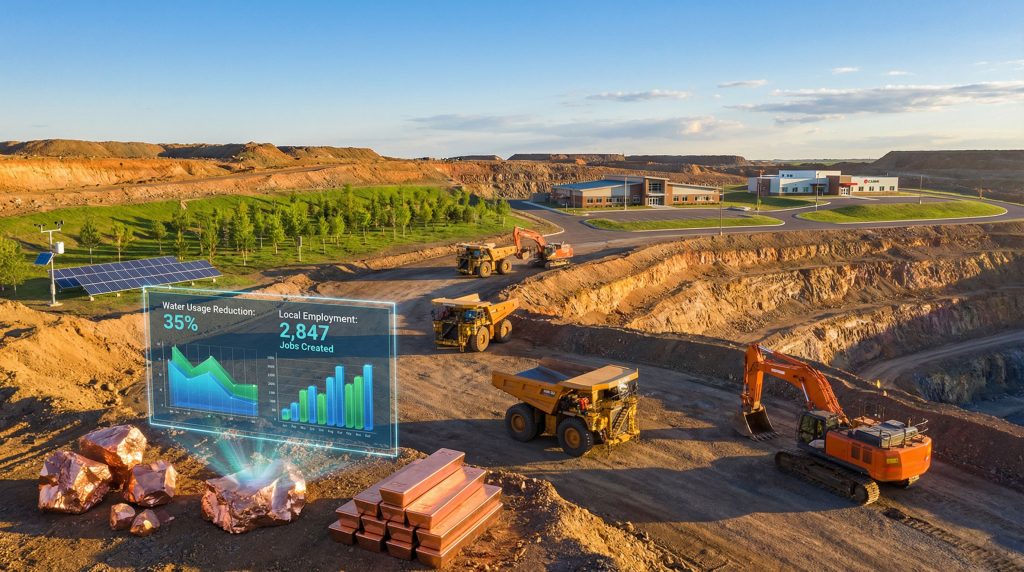
Economic multiplier effects from responsible mining operations typically generate 2-3 indirect jobs for each direct employment position while creating substantial local procurement opportunities. Successful operations implement preferential procurement policies that prioritise local suppliers while providing business development support to ensure competitive service delivery.
International Standards and Certification Requirements
Global Framework Implementation
Mining company social responsibility increasingly operates within structured international frameworks that provide systematic approaches to environmental management, community engagement, and governance transparency. International Council on Mining and Metals (ICMM) membership requires adherence to comprehensive performance standards covering environmental stewardship, social responsibility, and transparent governance.
Extractive Industries Transparency Initiative (EITI) participation mandates systematic disclosure of mining revenues, resource ownership structures, and environmental impact information that enables public accountability. Countries implementing EITI standards require mining companies to provide detailed financial and operational information that supports transparent resource governance.
Essential Certification Systems:
| Standard | Focus Area | Key Requirements | Audit Frequency |
|---|---|---|---|
| ISO 14001 | Environmental Management | Systematic environmental impact management | Annual |
| OHSAS 18001 | Occupational Safety | Workplace safety protocols and incident prevention | Bi-annual |
| GRI Standards | Sustainability Reporting | Comprehensive ESG performance disclosure | Annual |
| Voluntary Principles | Security and Human Rights | Ethical security practices and human rights protection | Ongoing |
Free Prior Informed Consent (FPIC) protocols create binding consultation requirements for operations affecting indigenous territories. FPIC implementation requires meaningful engagement processes that provide communities with comprehensive information about proposed operations, genuine decision-making authority, and ongoing consultation throughout operational phases.
Regional Implementation Variations
Developed market requirements typically emphasise sophisticated reporting standards, third-party verification protocols, and advanced environmental protection measures that reflect established regulatory capacity and institutional frameworks. Operations in these jurisdictions face detailed permit conditions, regular compliance auditing, and substantial penalties for non-compliance.
Emerging market considerations often require direct infrastructure investment and capacity building initiatives that address fundamental development challenges. Mining companies operating in these contexts frequently become primary healthcare providers, infrastructure developers, and educational service providers for remote communities with limited government service capacity.
Technology Integration for Enhanced Responsibility
Digital Innovation and Transparency
Real-time monitoring technologies enable continuous tracking of environmental indicators, community engagement metrics, and operational performance data that provide stakeholders with unprecedented operational visibility. Satellite monitoring systems track land use changes, water quality parameters, and vegetation health indicators that create independent verification of environmental impact claims.
Blockchain supply chain systems provide transparent tracking of mineral extraction, processing, and distribution that enables verification of ethical sourcing claims. These technologies create immutable records of mineral origin, processing chain custody, and compliance verification that support responsible sourcing requirements from downstream manufacturers.
Community feedback platforms facilitate direct communication between operations and affected communities while providing systematic documentation of concerns, responses, and resolution outcomes. Digital platforms enable real-time grievance reporting, consultation scheduling, and information access that improves stakeholder engagement effectiveness.
Key Technology Applications:
- Environmental monitoring: Automated water quality testing, air emissions tracking, noise level monitoring
- Safety enhancement: Predictive maintenance systems, automated equipment shutdown protocols, worker location tracking
- Community engagement: Multi-language digital platforms, mobile consultation systems, transparent reporting dashboards
- Supply chain transparency: Mineral tracking systems, ethical sourcing verification, compliance documentation
Operational Efficiency and Environmental Performance
Smart mining technologies simultaneously improve operational efficiency and environmental performance through automated systems that optimise resource utilisation while minimising waste generation. Autonomous equipment reduces fuel consumption per ton extracted while improving worker safety through reduced exposure to hazardous conditions.
In addition, AI mining technology enables predictive maintenance protocols that prevent equipment failures which could cause environmental incidents while improving operational reliability and reducing resource consumption. Advanced analytics identify potential equipment problems before failure occurs, enabling preventive maintenance that reduces environmental risk and operational downtime.
Performance Measurement and Impact Assessment
Comprehensive Metrics Framework
Effective data-driven operations require systematic measurement of environmental, social, and economic impacts across all operational phases. Key Performance Indicators (KPIs) enable stakeholders to evaluate performance against established benchmarks while identifying areas requiring improvement focus.
Environmental Performance Metrics:
| Indicator | Measurement Unit | Reporting Frequency | Industry Benchmark |
|---|---|---|---|
| Water Usage Efficiency | Litres per ton processed | Monthly | 85% recycling rate |
| Carbon Intensity | CO2 tons per production ton | Quarterly | 15% annual reduction |
| Land Rehabilitation Rate | Hectares restored annually | Annual | 100% within 5 years |
| Waste Recovery | Percentage recycled/reused | Monthly | 60% waste diversion |
Community Impact Assessment encompasses employment generation, local procurement spending, infrastructure development investments, and cultural preservation initiatives. Leading operations implement comprehensive social impact monitoring that tracks community development indicators beyond direct operational metrics.
Economic Contribution Analysis:
- Direct employment: Full-time equivalent positions created across skill levels
- Local procurement: Percentage of operational spending directed to local suppliers
- Tax contributions: Corporate taxes, royalty payments, and indirect tax generation
- Infrastructure investment: Capital expenditure on community-benefit infrastructure
Stakeholder Engagement and Feedback Systems
Systematic consultation processes create ongoing dialogue between mining operations and affected communities rather than limiting engagement to permitting phases. Regular community meetings, advisory committee participation, and grievance resolution mechanisms enable continuous stakeholder input into operational decisions.
Third-party verification provides independent assessment of social responsibility performance through external auditing, community satisfaction surveys, and environmental impact monitoring. Independent verification enhances credibility while identifying improvement opportunities that internal assessment might overlook.
Important Note: Mining company social responsibility performance varies significantly across operations and jurisdictions. Stakeholders should evaluate specific company track records rather than assuming uniform industry standards.
Business Benefits and Competitive Advantages
Risk Mitigation and Operational Continuity
Comprehensive social responsibility programs significantly reduce operational risks by building community support, ensuring regulatory compliance, and minimising potential conflicts that could disrupt operations. Companies with strong CSR track records experience fewer permitting delays, reduced regulatory scrutiny, and enhanced access to new development opportunities.
Insurance cost reductions reflect improved risk profiles from environmental management systems, community engagement programs, and safety protocol implementation. Insurers increasingly offer premium discounts for operations demonstrating measurable risk reduction through comprehensive social responsibility initiatives.
Regulatory relationship benefits include expedited permitting processes, collaborative problem-solving approaches, and advance notice of regulatory changes that enable proactive compliance planning. Operations with positive regulatory relationships avoid adversarial enforcement actions while accessing technical assistance for compliance improvement.
Investment Attractiveness and Capital Access
ESG-focused institutional investors increasingly prioritise Environmental, Social, and Governance performance when making allocation decisions. Mining companies with demonstrated social responsibility track records attract lower-cost capital, achieve higher valuations, and maintain better access to international capital markets.
Sustainability-linked financing provides access to reduced borrowing costs tied to specific environmental and social performance targets. Leading financial institutions offer interest rate discounts for operations meeting predetermined ESG milestones while providing additional capital for social responsibility program expansion.
Financial Benefits Include:
- Reduced insurance premiums through improved risk management
- Lower borrowing costs from sustainability-linked financing
- Premium valuations from ESG-focused investors
- Enhanced access to international capital markets
- Reduced regulatory compliance costs through proactive management
Credit rating improvements reflect reduced operational and reputational risks from comprehensive social responsibility programs. Rating agencies increasingly incorporate ESG factors into credit assessments, with strong performers receiving positive rating adjustments that reduce borrowing costs and improve market access.
The next major ASX story will hit our subscribers first
Regional Variations in Social Responsibility Implementation
Emerging Market Dynamics
Mining operations in emerging markets face unique social responsibility challenges related to limited government service capacity, infrastructure gaps, and community development needs. Direct infrastructure investment often becomes essential for operational viability while creating lasting community benefits that extend beyond operational timelines.
Healthcare service provision frequently requires mining companies to establish primary care facilities, emergency medical services, and specialised treatment capabilities for remote communities with limited government healthcare access. These investments create significant operational goodwill while addressing critical community needs.
Educational infrastructure development includes primary and secondary school construction, teacher training programs, and vocational education initiatives that provide long-term community development benefits. Mining companies often become primary education providers in remote locations while creating workforce development pipelines for operational needs.
Developed Market Expectations
Sophisticated stakeholder expectations in developed markets require advanced reporting standards, third-party verification processes, and innovative environmental protection measures that exceed basic regulatory requirements. Operations face detailed scrutiny from environmental groups, community organisations, and regulatory agencies with substantial enforcement capabilities.
Advanced technology requirements include real-time environmental monitoring, comprehensive data sharing, and sophisticated impact mitigation measures that demonstrate continuous improvement rather than simple compliance maintenance. Stakeholders expect access to detailed performance data and independent verification of environmental claims.
Regulatory sophistication creates complex compliance obligations with substantial penalties for violations while providing clearer guidance on acceptable performance standards. Developed market operations benefit from predictable regulatory frameworks but face higher compliance costs and more intensive oversight requirements.
Future Trends in Mining Social Responsibility
Climate Change Integration and Net-Zero Commitments
Carbon neutrality targets increasingly drive operational planning decisions as mining companies commit to net-zero emissions across operational phases. This transition requires fundamental changes to energy systems, processing technologies, and transportation methods while maintaining operational viability and community benefits.
Renewable energy integration becomes essential for achieving emissions reduction targets while improving long-term cost structures. Solar and wind power installations at remote mining locations reduce operational emissions while providing energy cost predictability that improves project economics.
Climate adaptation planning addresses operational resilience to changing weather patterns, water availability fluctuations, and extreme weather events that could disrupt operations or affect community welfare. Adaptation strategies include drought-resistant water systems, flood protection infrastructure, and emergency preparedness protocols.
Circular Economy Principles and Resource Recovery
Waste-to-value conversion technologies enable recovery of previously discarded materials while creating additional revenue streams and reducing environmental liabilities. Advanced processing techniques extract valuable minerals from tailings while enabling progressive land rehabilitation through waste volume reduction.
Furthermore, mine reclamation innovation creates opportunities for sustainable land use transition that benefits local communities. Successful reclamation projects demonstrate how mining sites can become productive assets for agriculture, renewable energy generation, or conservation purposes.
Supply chain integration with recycling operations creates closed-loop systems that reduce primary extraction requirements while supporting circular economy objectives. Mining companies increasingly invest in downstream processing capabilities that enable mineral recovery from end-of-life products.
Emerging Circular Economy Applications:
- Urban mining initiatives for electronic waste processing
- Construction material production from processed mining waste
- Renewable energy component manufacturing using recycled minerals
- Advanced battery material recovery and reprocessing
Technology innovation drives development of new extraction and processing methods that maximise resource recovery while minimising environmental impacts. However, corporate governance challenges in implementing these technologies require careful stakeholder engagement and transparent reporting protocols.
Community Partnership Evolution
Equity participation models enable communities to become direct stakeholders in mining operations through ownership structures that provide ongoing revenue sharing rather than simple employment or procurement benefits. These partnerships create aligned interests between operations and communities while providing sustainable funding for long-term development initiatives.
Traditional knowledge integration recognises indigenous expertise in environmental management, sustainable resource use, and ecosystem protection that can improve operational practices while supporting cultural preservation. Collaborative approaches combine traditional knowledge with modern technology to develop innovative solutions for environmental and social challenges.
Post-mining transition planning addresses community sustainability after operational completion through economic diversification initiatives, infrastructure legacy planning, and ongoing environmental monitoring that ensures lasting community benefits rather than economic dependency on extraction activities.
Consequently, the global mining innovation expo showcases emerging technologies and best practices that support comprehensive social responsibility implementation across diverse operational contexts.
Mining company social responsibility has evolved from voluntary corporate initiatives into essential operational requirements that directly influence project viability, capital access, and long-term sustainability. Operations that integrate comprehensive environmental stewardship, genuine community partnership, and transparent governance create competitive advantages while contributing to sustainable development in host regions.
The convergence of investor expectations, regulatory requirements, and community demands creates both challenges and opportunities for mining operations willing to embrace transformative social responsibility approaches. Companies that view CSR as strategic investment rather than compliance cost position themselves for sustained success in an increasingly complex global marketplace where social licence to operate becomes as important as geological resources for determining operational viability.
Disclaimer: This analysis provides general information about mining industry social responsibility trends and should not be considered as specific investment advice or operational guidance. Mining operations vary significantly in their social responsibility implementation, and stakeholders should conduct independent due diligence when evaluating specific companies or projects.
Ready to Capitalise on Responsibly-Operated Mining Companies?
Discovery Alert's proprietary Discovery IQ model delivers real-time alerts on significant mineral discoveries from ASX-listed companies, including those leading the industry in environmental stewardship and community development. Explore why major mineral discoveries can generate substantial returns whilst supporting sustainable mining practices, then begin your 30-day free trial today to position yourself ahead of the market.