June 23, 2026

Understanding Mining Company Valuations in the Global Economic Context
The market value of mining companies has emerged as one of the most sophisticated indicators of global economic sentiment, transcending traditional asset valuation frameworks to become barometers of monetary policy effectiveness, currency stability, and infrastructure investment confidence. These valuations reflect complex interactions between resource scarcity, technological advancement, and structural economic transitions that extend far beyond conventional earnings multiples.
Modern mining valuations incorporate multidimensional risk assessments that traditional equity analysis frameworks struggle to capture. Reserve quality assessments examine not merely tonnage figures but extraction economics, processing complexity, and environmental compliance costs. Geopolitical stability evaluations consider jurisdictional risk premiums, taxation policy trajectories, and regulatory framework evolution. Technology adoption metrics measure automation implementation, digital optimization capabilities, and operational efficiency improvements that create sustainable competitive advantages.
The sector's valuation methodology requires specialized cost analysis frameworks. All-in sustaining costs (AISC) calculations encompass mining, processing, transportation, and environmental compliance expenses while excluding exploration and development capital. When commodity spot prices substantially exceed AISC values, mining operations generate exceptional free cash flow enabling significant dividend distributions and share repurchase programs that support premium valuation multiples.
Reserve replacement ratios provide critical insight into valuation sustainability. Companies demonstrating annual reserve replacement rates exceeding 100% signal sustainable long-term value creation, while those with declining reserve bases face valuation compression despite maintaining current production volumes. Reserve life calculations, expressed as total resource quantity divided by annual production rates, offer investors visibility into future capital requirements and operational sustainability.
When big ASX news breaks, our subscribers know first
How Do Precious Metals Command Premium Valuations?
Precious metals companies command distinctive valuation premiums driven by fundamental differences in investor psychology compared to industrial commodity producers. Gold and silver function as global financial collateral and systemic hedges, whereas base metals depend on cyclical economic performance and industrial demand fluctuations. Consequently, gold market performance demonstrates unique resilience during economic uncertainty periods.
The precious metals sector demonstrated extraordinary valuation expansion during recent market cycles. Gold prices reached historic levels near $5,100 per ounce while silver advanced to approximately $112 per ounce, creating substantial valuation appreciation for sector participants. These price movements reflect multiple structural factors including central bank purchasing patterns, currency debasement concerns, and geopolitical tension escalation.
Central bank demand provides fundamental support independent of retail investor sentiment. Official sector purchasing creates price floors through institutional buying programs that operate independently of traditional supply-demand cycles. Exchange-traded fund (ETF) inflow dynamics generate additional demand as capital flowing into precious metals ETFs creates physical buying requirements across multiple contract delivery months.
The valuation expansion demonstrates measurable wealth creation across major precious metals producers. Newmont Corporation's market capitalisation surged from $47.3 billion to $138.6 billion, generating approximately $91.3 billion in shareholder value over a twelve-month period. Zijin Mining Group recorded the largest absolute capitalisation gain, adding nearly $105.0 billion with market value rising from $56.9 billion to approximately $161.9 billion.
Technical Valuation Factors for Precious Metals Mining Companies
Mining cost structures for precious metals differ substantially from base metals operations. Many gold and silver mines operate as byproduct facilities within polymetallic deposits, where precious metal extraction occurs alongside copper, zinc, or molybdenum production. This operational structure creates cost allocation advantages where precious metals benefit from cost sharing with higher-volume base metal extraction.
Key Precious Metals Valuation Metrics:
- Reserve grade quality and metallurgical recovery rates
- Byproduct credit calculations reducing effective production costs
- Political risk assessments for international operations
- Environmental permitting timelines and compliance costs
- Currency hedging strategies and foreign exchange exposure
The gold-to-silver ratio provides technical analysis framework for relative valuation assessment. Historical ratios varying between 40:1 and 80:1 create potential valuation expansion scenarios should ratio normalisation occur toward historical lows. Silver demonstrates higher price volatility relative to gold, generating amplified valuation swings for silver-focused mining operations.
Why Does Copper Hold Strategic Value in Mining Sector Assessments?
Copper occupies a unique position within mining sector valuations due to the metal's indispensable role in electrification infrastructure and renewable energy deployment. The metal's electrical conductivity and malleability create irreplaceable applications ranging from power transmission systems to electric motor windings, generating inelastic demand characteristics that support sustained pricing floors. Furthermore, copper investment insights reveal significant growth potential across North American markets.
Recent market performance validates copper's strategic positioning. During fourth quarter periods, copper prices demonstrated 22% appreciation according to industry data, reflecting structural demand dynamics extending beyond cyclical economic patterns. Southern Copper Corporation achieved exceptional valuation performance with market capitalisation reaching $162.3 billion, representing an increase of $88.4 billion from prior year levels.
The energy transition creates multidecade copper demand growth extending beyond traditional cyclical patterns. Electric vehicle manufacturing requires approximately 3-4 times more copper content per unit compared to internal combustion engine vehicles due to motor windings, charging infrastructure requirements, and battery management system complexity.
Copper Demand Growth Vectors:
| Application Sector | Copper Intensity Increase | Timeline |
|---|---|---|
| Electric Vehicle Manufacturing | 300-400% vs. ICE vehicles | 2026-2035 |
| Grid Modernisation Infrastructure | 150-250% vs. legacy systems | 2026-2040 |
| Renewable Energy Systems | 200-300% vs. fossil fuel plants | 2026-2050 |
Supply-demand dynamics create structural copper deficits supporting valuation multiples. Current mining production capacity remains constrained relative to projected demand growth through 2030-2035. New greenfield copper mine development requires 7-10 years from initial exploration through production commencement, creating supply inflexibility favouring existing producers with established operations.
Operational Excellence in Copper Mining Valuations
Grupo México's operational performance demonstrates how efficiency translates into valuation premium positioning. The company's quarterly net earnings reached approximately $1.43 billion, exceeding consensus expectations of $1.32 billion. Copper output increased 2% while gold production surged 14%, reflecting improved throughput and enhanced recovery rates.
Market conditions amplified operational results during comparable periods. Copper prices climbed 22%, silver surged 74%, and gold advanced 56% according to company operational data. Consolidated revenue expanded 34% year-over-year to $5.15 billion, substantially beating analyst expectations of $4.87 billion.
Rio Tinto's diversified exposure across copper and iron ore markets generated substantial value creation, adding approximately $83.2 billion in market value with capitalisation lifting from $103.2 billion to $186.4 billion over annual measurement periods. BHP Group posted comparable gains of $55.7 billion in market value reflecting copper exposure combined with diversified commodity positioning.
Market Capitalisation Rankings and Operational Excellence
Market capitalisation rankings among mining companies reveal operational efficiency differentials, strategic positioning advantages, and management execution quality. The largest mining operations typically demonstrate superior capital allocation disciplines and risk management capabilities distinguishing them from smaller sector participants. However, understanding the broader landscape requires examining global mining companies by market cap across various jurisdictions.
The combined market capitalisation of the world's ten largest mining companies reached approximately $1.333 trillion as of measurement periods, compared to $678.6 billion during prior year comparisons. This represented a 96.5% increase equivalent to roughly $654.6 billion in value creation, demonstrating exceptional sector performance relative to broader equity markets.
Top Mining Company Valuation Changes:
- Zijin Mining Group: Added $105.0 billion (from $56.9B to $161.9B)
- Newmont Corporation: Gained $91.3 billion (from $47.3B to $138.6B)
- Southern Copper Corporation: Increased $88.4 billion (reaching $162.3B)
- Rio Tinto: Added $83.2 billion (from $103.2B to $186.4B)
- Agnico Eagle Mines: Gained $67.1 billion (reaching $112B)
What Distinguishes Top-Tier Mining Operations?
Leading mining companies demonstrate several characteristic advantages creating sustainable valuation premiums. Diversified commodity exposure reduces single-metal dependency while providing natural hedging against cyclical price volatility. Low-cost production capabilities maintain profit margins throughout commodity price cycles, enabling consistent cash flow generation.
Balance sheet management excellence distinguishes premium mining operations through disciplined capital allocation and conservative debt-to-equity ratios. ESG compliance leadership encompasses environmental stewardship, community relationship management, and corporate governance best practices that reduce regulatory risk and improve stakeholder relationships.
Operational scale advantages create procurement efficiencies, financing cost reductions, and technological implementation capabilities unavailable to smaller operations. Large-scale mining companies negotiate favourable equipment pricing, secure attractive financing terms, and implement advanced automation systems generating sustainable competitive advantages.
Geographic Risk Assessment Impact on Mining Valuations
Jurisdictional risk evaluation significantly influences mining company valuations, with operations in stable regulatory environments commanding premium multiples compared to higher-risk jurisdictions. Political stability, regulatory framework predictability, and infrastructure quality create measurable valuation differentials across geographic regions.
Tier 1 Jurisdictions including Australia, Canada, and the United States provide stable regulatory frameworks supporting premium valuations. These jurisdictions offer established mining infrastructure, skilled workforce availability, and transparent permitting processes reducing operational uncertainty. Rule of law consistency and contract sanctity protection create investor confidence supporting higher valuation multiples.
Tier 2 Jurisdictions encompassing Chile, Peru, and Mexico demonstrate generally stable conditions with periodic policy uncertainty. These regions feature developing infrastructure systems and evolving regulatory frameworks requiring moderate risk premium adjustments in valuation models. Political risk factors remain manageable but require ongoing monitoring and risk management protocols.
Tier 3 Jurisdictions across various African and some South American territories present higher political and regulatory uncertainty demanding significant valuation discounts. Infrastructure limitations, security concerns, and potential nationalisation risks create substantial uncertainty requiring comprehensive risk assessment and mitigation strategies.
"Mining companies operating exclusively in Tier 1 jurisdictions typically trade at 15-30% premium to comparable operations in Tier 2 jurisdictions, while Tier 3 exposure may result in 20-40% valuation discounts."
Environmental, Social, and Governance Impact on Modern Mining Valuations
ESG considerations increasingly influence mining company valuations as institutional investors integrate sustainability criteria into investment decision frameworks. Environmental compliance costs, social licence maintenance, and governance quality directly impact operational costs and regulatory risk profiles. Moreover, mining sustainability transformation initiatives demonstrate measurable impact on long-term valuation frameworks.
Carbon footprint reduction initiatives affect long-term cost structures through renewable energy adoption, energy efficiency improvements, and carbon offset purchasing requirements. Water management practices and tailings facility safety create both compliance costs and reputation risk factors influencing investor perception and valuation multiples.
Community engagement programmes and indigenous rights respect generate social licence benefits reducing permitting delays and operational disruptions. Board diversity and executive compensation alignment demonstrate governance quality affecting institutional investor allocation decisions and analyst recommendation frameworks.
ESG Valuation Impact Measurements:
- Companies with strong ESG ratings trade at 10-20% premium to weaker sustainability profiles
- Environmental incident costs average 5-15% of annual operating cash flow
- Social licence disruptions cause 25-40% production delays during permitting phases
- Governance failures result in 20-35% valuation discounts during crisis periods
The next major ASX story will hit our subscribers first
How Is Technology Creating Mining Valuation Differentiation?
Technological advancement adoption rates create substantial valuation differentials among mining companies, with early automation and digital technology adopters commanding higher trading multiples compared to traditional operational approaches. In particular, AI transforming mining operations demonstrates significant potential for operational optimisation.
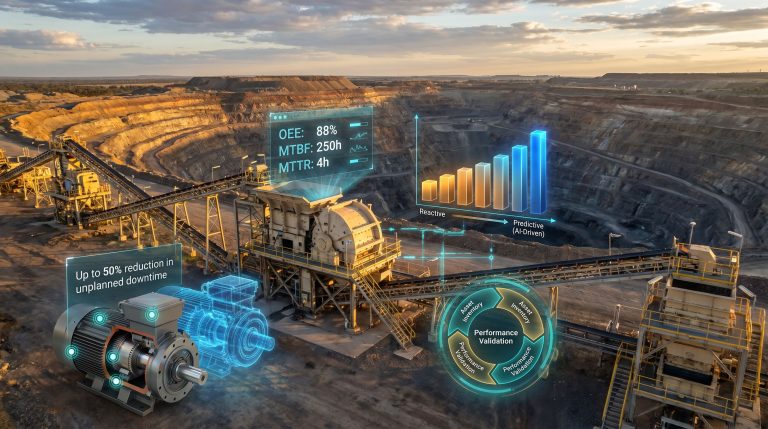
Autonomous equipment deployment reduces labour costs while improving safety performance and operational consistency. Predictive maintenance systems enhance asset utilisation through reduced unplanned downtime and optimised replacement scheduling. Real-time ore grade optimisation increases metallurgical recovery rates generating improved revenue per ton processed.
Digital twin modelling enables operational efficiency gains through virtual testing, process optimisation, and scenario planning capabilities. Advanced data analytics provide operational insights supporting cost reduction, throughput optimisation, and resource allocation improvements creating sustainable competitive advantages.
Technology Implementation Value Creation:
- Autonomous mining systems reduce 20-30% operational labour costs
- Predictive maintenance improves 15-25% equipment utilisation rates
- Real-time optimisation increases 5-10% metallurgical recovery
- Digital integration generates 10-20% overall cost structure improvements
Merger and Acquisition Activity Shaping Sector Valuations
M&A activity within the mining sector establishes valuation benchmarks while driving sector-wide rerating as companies pursue consolidation strategies and portfolio optimisation initiatives. Strategic premium payments for high-quality assets create valuation floor expectations across comparable operations. Additionally, mining consolidation strategies reveal increasing focus on joint ventures and strategic partnerships.
Consolidation benefits through operational synergies include procurement cost reductions, administrative expense elimination, and duplicated infrastructure rationalisation. Scale advantages in financing enable lower cost of capital through improved credit ratings and enhanced bank relationship negotiations.
Portfolio optimisation strategies reduce operational complexity while concentrating management focus on core competencies and highest-return assets. Asset divestiture programmes generate cash proceeds for debt reduction or growth investment while eliminating non-core operational distractions.
Strategic acquisition premiums typically range 25-50% above pre-announcement trading prices for high-quality mining assets, establishing valuation benchmarks for sector participants. Defensive merger activity during commodity price weakness creates floor valuation support through private equity and strategic buyer interest.
Future Mining Valuation Trend Analysis
Emerging trends in global economics, environmental policy, and technological development will reshape mining company valuation frameworks over the coming decade. Critical mineral designation policies and strategic stockpiling initiatives create demand stability supporting long-term valuation sustainability.
Carbon border adjustment mechanisms will affect international cost structures through carbon content taxation on imported materials. Circular economy development may reduce primary mineral demand through enhanced recycling and material reuse technologies, creating complex demand projections for traditional mining operations.
Space mining technology development presents speculative valuation implications through potential asteroid mineral extraction capabilities. While commercial viability remains uncertain, technological advancement toward space-based resource extraction could fundamentally alter terrestrial mining economics and valuation frameworks.
Emerging Valuation Considerations:
- Critical mineral strategic importance supporting 15-25% valuation premiums
- Carbon pricing integration adding 5-15% cost structure complexity
- Recycling technology advancement creating 10-30% demand uncertainty
- Space mining development introducing speculative valuation volatility
Investment Strategy Framework for Mining Company Evaluation
Successful mining company investment requires comprehensive analysis integrating traditional financial metrics with forward-looking strategic considerations. Asset quality assessment encompasses reserve grade analysis, metallurgical characteristics, and extraction cost projections across commodity price scenarios. Furthermore, investors seeking detailed guidance can explore comprehensive mining investment analysis to understand valuation methodologies.
Management track record evaluation examines capital allocation discipline, operational execution consistency, and strategic vision implementation. Historical performance during commodity price cycles provides insight into management capability and financial discipline during challenging market conditions.
Operational efficiency benchmarking against industry peers reveals competitive positioning through cost structure analysis, production volume trends, and technological implementation progress. Geographic diversification assessment evaluates jurisdictional risk balance and regulatory exposure across operational portfolios.
"Mining companies demonstrating operational excellence, strategic commodity positioning, and ESG leadership capabilities will continue commanding premium valuations as global economic transitions accelerate critical materials demand growth."
Investment Evaluation Checklist:
- Reserve life exceeding 15+ years at current production rates
- All-in sustaining costs below 50th percentile of industry benchmarks
- Geographic exposure weighted toward Tier 1-2 jurisdictions
- ESG performance ranking within top quartile of sector peers
- Technology adoption demonstrating measurable efficiency gains
- Balance sheet strength supporting investment-grade credit metrics
The market value of mining companies reflects fundamental recognition that natural resource companies provide essential materials supporting global economic infrastructure while offering portfolio diversification benefits during periods of monetary policy uncertainty and geopolitical tension escalation. Additionally, the sector's exceptional valuation performance demonstrates substantial wealth creation potential across diversified commodity exposure strategies.
Investment decisions should be based on individual financial circumstances and risk tolerance. Past performance does not guarantee future results. Commodity investments involve substantial price volatility and loss of principal risk.
Looking to Capitalise on Mining Sector Opportunities?
Discovery Alert's proprietary Discovery IQ model instantly identifies significant ASX mineral discoveries, transforming complex mining announcements into actionable investment insights that could position investors ahead of major market movements. Whether you're tracking precious metals, copper developments, or emerging commodities, explore how historic discoveries have generated exceptional returns and begin your 14-day free trial today to gain immediate access to real-time discovery alerts.