July 15, 2026
Why Every Mining Professional Needs a Structured Environmental Reading Practice
The relationship between resource extraction and ecological systems has never been more scrutinised. Across every major mining jurisdiction, the convergence of tightening biodiversity regulation, net-zero commitments, and nature-related financial disclosure requirements is fundamentally reshaping what it means to operate responsibly. Yet despite this pressure, the knowledge base underpinning environmental decision-making in mining remains uneven, fragmented across disciplines, and often siloed between technical specialists and sustainability generalists.
A well-constructed mining environment and sustainability reading list does something no single training course or conference can replicate: it builds the connective tissue between policy theory, scientific evidence, and operational reality. For professionals navigating this rapidly evolving landscape, structured reading is not a luxury. It is a professional survival tool.
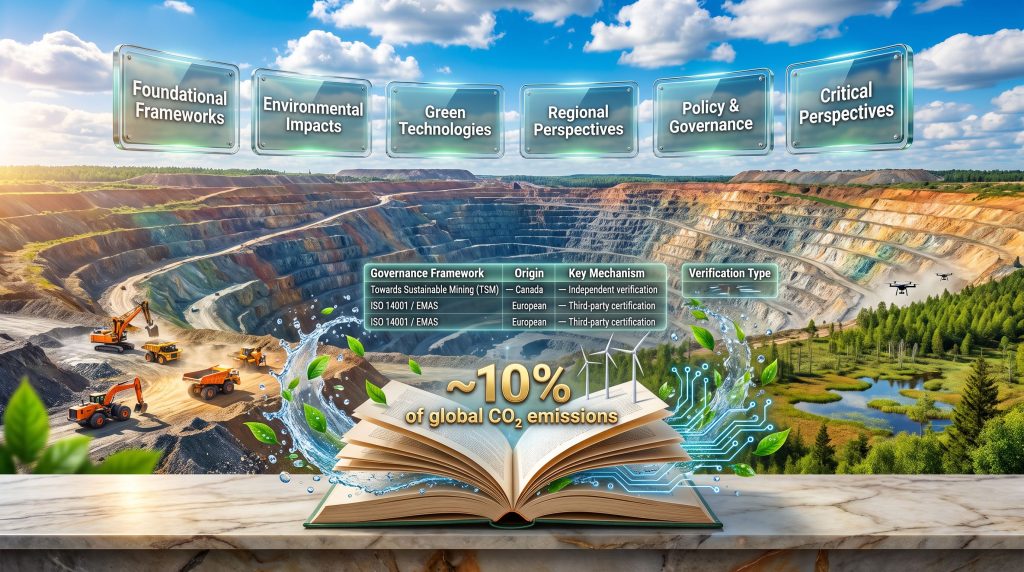
This guide organises the most important ideas, frameworks, and knowledge domains into six thematic pillars, designed to take readers from foundational understanding through to advanced critical analysis of mining's sustainability trajectory.
When big ASX news breaks, our subscribers know first
Pillar 1: Foundational Frameworks for Sustainable Mining
The Triple Bottom Line as an Operational Reality
Sustainable development in mining is no longer a philosophical aspiration layered over commercial objectives. It is increasingly embedded into financing conditions, operating licences, and shareholder expectations. The triple bottom line model, integrating economic performance, social equity, and ecological stewardship, now functions as a baseline requirement rather than a differentiator.
Institutions such as the International Council on Mining and Metals (ICMM) and the United Nations Development Programme (UNDP) have been instrumental in translating these principles into codified standards. The UNDP's sourcebook on integrating sustainability into mining policy frameworks offers applied case studies from Asia and Australasia, providing practitioners with both conceptual grounding and real-world application points. Furthermore, the broader mining sustainability transformation agenda demands that professionals engage with these foundational texts as a starting point.
Lifecycle Thinking: From Exploration to Post-Closure
One of the most consequential shifts in environmental practice is the move toward full lifecycle accountability. Environmental obligations no longer begin at the point of ore extraction and end at mine closure. Modern frameworks require operators to consider:
- Ecological baseline assessment during exploration phases
- Habitat offset planning before construction commences
- Progressive rehabilitation starting during active operations
- Long-term post-closure land use aligned with community and ecological needs
This lifecycle lens is now central to investor due diligence, social licence retention, and regulatory compliance across most major mining jurisdictions.
Pillar 2: Environmental Impacts — Quantifying the Real Cost of Extraction
Land, Biodiversity, and the Financial Risk of Ecosystem Loss
The scale of land transformation associated with global mining operations is difficult to overstate. Open-cut operations in particular generate extensive habitat fragmentation, with vegetation clearing affecting not just the immediate footprint but surrounding ecosystems through edge effects and hydrological disruption.
What has changed in recent years is the mainstreaming of biodiversity loss as a material financial risk. Institutional investors and lenders are increasingly pricing ecosystem impact into capital allocation decisions, a shift accelerated by frameworks such as the Taskforce on Nature-related Financial Disclosures (TNFD). Understanding natural capital in mining operations has consequently become essential reading for any serious practitioner.
Analysis of mining's environmental impacts published through leading academic sources provides one of the most rigorous cross-dimensional assessments available, spanning land use, water quality, air pollution, and biodiversity dimensions.
Water, Tailings, and the Hidden Scale of Contamination Risk
Mining is consistently ranked among the most water-intensive industries on Earth, competing with agricultural and municipal users in many of the regions where major mineral deposits are concentrated. Beyond consumption, the management of process water and tailings represents one of the sector's most significant environmental liability profiles.
Tailings storage facilities contain billions of tonnes of chemically complex waste material annually. The failure of these structures, as documented in events at Brumadinho and Mount Polley, has demonstrated that the consequences extend far beyond operational disruption to permanent ecosystem damage and community harm.
Key environmental impact categories facing the global mining sector include the following estimated contributions:
| Environmental Impact Category | Estimated Global Contribution |
|---|---|
| CO₂ Emissions (direct + indirect) | Approximately 10% of global total |
| Freshwater Consumption | Among top 5 industrial users globally |
| Land Disturbance (active operations) | Millions of hectares worldwide |
| Tailings Volume Generated Annually | Billions of tonnes |
Climate Exposure: Physical and Transition Risk
The UNEP Finance Initiative has documented in detail how metals and mining companies face a dual climate risk profile. Physical risks include water scarcity, extreme weather events affecting infrastructure, and permafrost thaw undermining northern operations. Transition risks include carbon pricing, demand shifts driven by electrification, and the potential for stranded assets as low-carbon policy tightens.
Understanding both dimensions is now considered essential knowledge for anyone involved in mine planning, capital allocation, or ESG reporting functions.
Pillar 3: Green Technologies and Circular Economy Innovation
Precision Extraction and the Technology Frontier
The environmental footprint of mining is not fixed. Peer-reviewed environmental and mineral processing research documents a growing suite of green mining technologies either in deployment or advanced development:
- In-situ leaching and bio-hydrometallurgy, which reduce surface disturbance significantly compared to conventional open-pit methods
- Sensor-based ore sorting, which uses X-ray transmission and laser-based detection to separate ore from waste at the source, reducing energy and water use per tonne processed
- Precision drilling guided by AI-integrated geological models, minimising blast damage and overburden generation
- Remote sensing and satellite monitoring for real-time environmental impact tracking
A particularly underappreciated development is the application of machine learning to geometallurgical modelling, which allows operators to predict ore variability with greater accuracy and optimise processing conditions continuously. This reduces reagent consumption and tailings generation beyond what traditional sampling methods can achieve.
Circular Economy Applications in Tailings and Waste Rock
The reframing of tailings and waste rock from environmental liability to potential resource streams represents one of the more significant conceptual shifts in sustainable mining practice. Tailings reprocessing, where advances in sensor-based sorting and fine particle flotation are enabling economic recovery of previously unextractable values, is gaining commercial traction in South African platinum group metal operations and Chilean copper circuits.
Circular economy frameworks applied to extractive industries also encompass by-product valorisation. Scandinavian mining companies have pioneered approaches where silicate gangue from iron ore processing is converted into construction aggregates, eliminating disposal costs while generating secondary revenue. In addition, mine reclamation innovation is increasingly central to how operators conceptualise end-of-life site management.
Renewable Energy Integration and the Diesel Dependency Problem
Diesel consumption remains one of the largest contributors to direct greenhouse gas emissions at mine sites, particularly in remote operations without grid access. The transition toward renewable mine power systems is advancing rapidly, with case studies from the Atacama region in Chile demonstrating solar-diesel hybrid systems achieving diesel displacement rates exceeding 60% in some open-pit operations.
Progressive rehabilitation methodologies, including drone-based seed dispersal over large rehabilitated areas and microbial soil inoculation to accelerate vegetation establishment, are being deployed across Indian coal mining sites and Australian iron ore operations, reducing the time required to achieve stable ecological function post-closure.
Pillar 4: Regional and Sector-Specific Sustainability Perspectives
European Regulatory Leadership and Voluntary Certification
Spain's adoption of ISO 14001, the EU Eco-Management and Audit Scheme (EMAS), and the UNE 22480 sustainable mining standard represents one of the most mature voluntary environmental governance ecosystems in the global mining sector. University research examining certification adoption patterns across European mining companies has found a measurable correlation between voluntary standard uptake and improved ESG scoring by institutional rating agencies.
This has direct investment implications. Companies with independently verified environmental management certifications are increasingly preferred counterparties for project financing from European development finance institutions.
Frontier Resource Debates: Deep-Sea and Space Mining
The extraction of polymetallic nodules from abyssal seafloor environments remains one of the most contested sustainability debates in the minerals sector. These nodules contain significant concentrations of manganese, nickel, cobalt, and copper — metals central to battery technology supply chains. The deep-sea mining controversy is, however, deepening as research reveals that disturbance events at depths exceeding 4,000 metres disperse sediment plumes across hundreds of square kilometres.
The International Seabed Authority (ISA) governs deep-sea mineral rights in international waters, but regulatory frameworks for commercial extraction remain unresolved. Space resource extraction, while a longer-horizon consideration, is increasingly discussed within planetary boundary literature as a mechanism for decoupling terrestrial mineral demand from Earth system pressures.
Pillar 5: Governance Frameworks and Best Practice Standards
Comparing the Major Global Mining Governance Frameworks
Multiple frameworks now compete for adoption as the primary governance architecture for responsible mining. Understanding the differences between them is critical for practitioners, investors, and policymakers:
| Governance Framework | Origin | Key Mechanism | Verification Type |
|---|---|---|---|
| ICMM Responsible Mining | International | Principles-based commitments | Self-assessment + third-party |
| ISO 14001 / EMAS | European | Environmental management systems | Third-party certification |
| Towards Sustainable Mining (TSM) | Canada | Standardised performance indicators | Independent verification |
| Leading Practice Guides | Australia | Operational handbooks by mining phase | Government-endorsed guidance |
| MIT Green Mining Framework | Academic | Six-point analytical model | Conceptual and research-based |
Australia's Leading Practice Framework
The Australian Government's suite of practical handbooks covering environmental management, community engagement, economic performance, and mine closure is among the most operationally detailed guidance available anywhere in the world. The framework's value lies in its phase-specific structure, providing targeted guidance from exploration through to post-closure monitoring rather than generic principles applicable across all stages.
Canada's Towards Sustainable Mining Program
Natural Resources Canada's TSM program functions as a performance certification system requiring facilities to be assessed against standardised indicators spanning energy use, water stewardship, biodiversity, and crisis management. Independent verification and mandatory public reporting distinguish TSM from self-reported sustainability frameworks, and the program's adoption has expanded beyond Canada to mining associations in Finland, Botswana, Argentina, and the Philippines.
MIT's Six-Point Green Mining Proposal
The Massachusetts Institute of Technology's structured framework for green mining transformation identifies six core interventions applicable to any operation:
- Elimination of illegal and unregulated extraction activity
- Adoption of environmentally preferable extraction methodologies
- Deployment of clean and green processing technology
- Comprehensive site remediation with measurable ecological outcomes
- Reassessment of economic cut-off grades to reduce overall ore volume processed
- Sustained investment in mining-specific environmental research and development
This framework functions as a practical diagnostic checklist as much as a policy document, making it a useful analytical lens for evaluating the sustainability positioning of any individual operation.
The next major ASX story will hit our subscribers first
Pillar 6: Critical Perspectives and Emerging Frontiers in Mining Sustainability
Biodiversity Accounting: The Disclosure Frontier
Traditional environmental impact assessment evaluates discrete, project-level effects on defined study areas at specific points in time. Biodiversity accounting, advanced through frameworks like TNFD, takes a fundamentally different approach:
- It operates at portfolio and value chain scale, not just site level
- It is forward-looking, capturing future dependencies and nature-related risks
- It quantifies positive biodiversity outcomes alongside impacts, enabling net gain calculation
- It connects directly to financial reporting, creating accountability mechanisms familiar to capital markets
Biodiversity net gain is transitioning from a voluntary disclosure practice to a regulatory expectation in the UK, EU, and increasingly in Australian state-level planning frameworks. Mining companies that have not begun building internal biodiversity accounting capability are likely to face material compliance pressure within the next regulatory cycle.
Planetary Boundaries as a Systems Lens for Mining Impact
The Stockholm Resilience Centre's planetary boundaries framework identifies nine Earth system processes within which human civilisation must operate to maintain stable conditions. Mining intersects with at least five of these boundaries in measurable ways:
- Climate change, through direct and indirect greenhouse gas emissions
- Biosphere integrity, through habitat loss and species impact
- Freshwater use, through consumptive demand and contamination
- Land-system change, through large-scale surface disturbance
- Biogeochemical flows, through nutrient and chemical discharge into waterways
Operating within planetary boundaries is increasingly framed not as an ethical aspiration but as a prerequisite for long-term social licence, with major institutional investors beginning to screen against planetary boundary exceedance at portfolio level.
Historical Assessment: Genuine Progress or Structural Continuity?
Retrospective analysis published in ACS Environmental Science and Technology documents meaningful improvements in environmental practice since the industrial era, including significant reductions in per-tonne energy consumption, advances in dust suppression, and improvements in water recycling rates. However, the same body of literature identifies a persistent gap between site-level technical improvement and aggregate ecosystem impact, driven by the continued expansion of global production volumes offsetting efficiency gains.
This dynamic, sometimes referred to as the Jevons paradox applied to mining efficiency, is a critical insight for anyone evaluating sustainability claims at the industry level. Efficiency improvements that reduce impact per unit of production do not necessarily reduce total impact if production scales simultaneously.
Building a Progressive Reading Practice for Mining Sustainability Professionals
Constructing a meaningful mining environment and sustainability reading list is not a one-time activity. It requires a structured, progressive approach that evolves with both professional development and the rapidly changing policy and scientific landscape.
A practical learning pathway might be structured as follows:
- Beginner level: UNDP sourcebook on mining and sustainable development, ICMM principles documentation, and the Australian Government's leading practice guides provide accessible, authoritative entry points
- Intermediate level: Peer-reviewed environmental impact analyses from ACS and ScienceDirect, UNEP Finance Initiative climate risk reports, and regional case studies from European and Latin American operations
- Advanced level: Planetary boundary literature from the Stockholm Resilience Centre, TNFD technical guidance documents, ISA regulatory proceedings on deep-sea mining, and critical retrospective analyses of mining's sustainability trajectory
Complement reading with live data sources including IEA energy transition datasets, World Bank mining sector indicators, and the Global Tailings Portal. Quantitative performance data applied against qualitative frameworks produces a far more complete analytical picture than either source alone.
A sustainable reading cadence of one foundational text per month, supplemented by policy updates and peer-reviewed articles, builds genuine expertise progressively without overwhelming professional schedules.
Frequently Asked Questions: Mining Environment and Sustainability Reading List
What topics should a mining environment and sustainability reading list always include?
At minimum, a comprehensive reading list should span foundational sustainability frameworks, environmental impact analysis, green and clean technology, regional and sector-specific case studies, governance and policy instruments, and critical academic perspectives on the industry's sustainability trajectory.
Which international organisations produce the most authoritative literature?
Key producers include the UNDP, ICMM, UNEP Finance Initiative, Natural Resources Canada, the Australian Government's Department of Industry, the Stockholm Resilience Centre, and academic journals including ACS Environmental Science and Technology and ScienceDirect-indexed publications.
How does biodiversity accounting differ from traditional environmental impact assessment?
Traditional EIA evaluates discrete project-level impacts at defined study areas. Biodiversity accounting operates at portfolio and value chain scale, takes a forward-looking approach to nature-related dependencies, and connects directly to financial reporting frameworks. It measures net outcomes, not just impacts.
What is the planetary boundaries framework and why does it matter for mining?
Developed by the Stockholm Resilience Centre, the planetary boundaries framework identifies nine Earth system processes that define a safe operating space for human activity. Mining directly intersects with at least five of these boundaries, making the framework an important diagnostic tool for evaluating aggregate industry impact beyond site-level metrics.
Are there resources covering deep-sea and space mining sustainability?
Yes. Peer-reviewed literature on deep-sea polymetallic nodule extraction, ISA regulatory proceedings, and academic analyses of space resource economics represent the primary sources for frontier resource sustainability debate.
Readers seeking ongoing editorial coverage of mining environment and sustainability topics can explore curated content published by The Intelligent Miner at theintelligentminer.com, which covers environment, technology, and innovation across the global mining industry on a continuing basis.
Want to Stay Ahead of Significant ASX Mineral Discoveries as They Happen?
Discovery Alert's proprietary Discovery IQ model delivers real-time alerts on significant ASX mineral discoveries, instantly translating complex data across more than 30 commodities into clear, actionable insights for both traders and long-term investors. Explore Discovery Alert's discoveries page to understand the historic returns major mineral discoveries have generated, and begin your 14-day free trial to position yourself ahead of the broader market.