June 16, 2026
Understanding Mining Equipment Distribution Infrastructure Requirements
Modern mining operations depend on sophisticated supply chain networks that extend far beyond traditional parts storage facilities. The evolution from basic inventory depots to integrated distribution centers represents a fundamental shift in how mining equipment manufacturers approach customer support and operational continuity. Furthermore, this transformation is closely linked to broader data-driven mining initiatives that optimise operational performance.
The transformation of distribution infrastructure reflects broader trends in industrial logistics, where proximity-driven service models have become critical competitive differentiators. Advanced distribution centers now function as nerve centres connecting global manufacturing capabilities with localised customer needs, enabling unprecedented response times and service levels.
Strategic facility positioning allows manufacturers to reduce inventory carrying costs while simultaneously improving customer response times. This dual benefit emerges from sophisticated warehouse management systems that optimise storage locations, automate order processing, and integrate seamlessly with enterprise resource planning platforms across multiple continents.
Modern Distribution Center Capabilities
Contemporary mining equipment distribution facilities incorporate several key technological and operational elements:
• Real-time inventory tracking across multiple global locations
• Automated order routing and fulfilment systems
• Climate-controlled storage for temperature-sensitive hydraulic components
• Cross-docking capabilities for time-sensitive parts requiring immediate forwarding
• Integration with telematics data from operating equipment
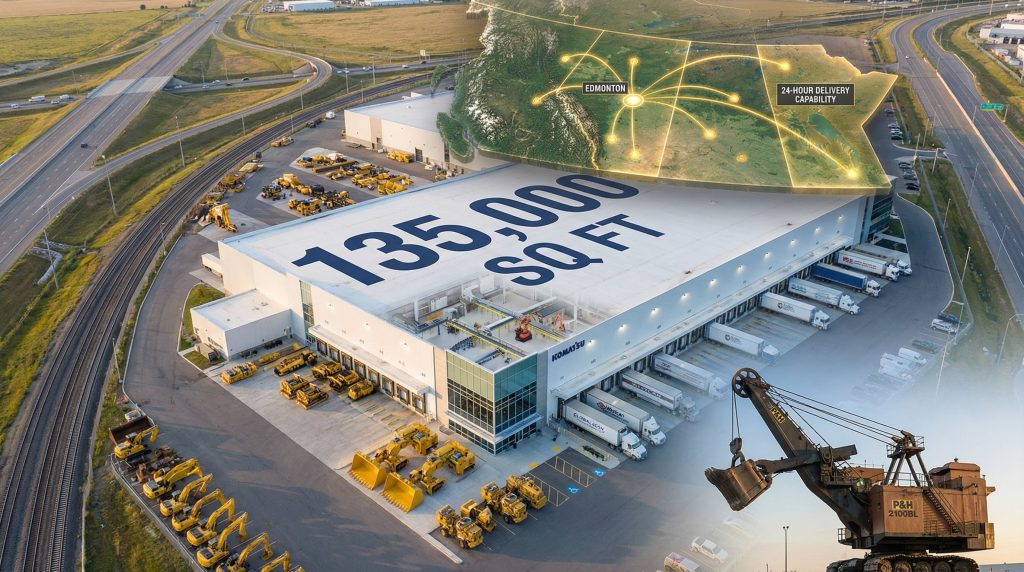
The scale of modern facilities reflects the complexity of mining equipment supply chains. When Komatsu revamps Edmonton distribution center to 135,000 square feet, this doubling of capacity represents more than simple storage expansion. According to Danny Murtagh, Komatsu's Vice President of Parts and Infrastructure, bringing parts closer to where customers operate enables significant reductions in lead times while boosting availability and improving customer service.
Operational Excellence Through Technology Integration
Distribution centres serving mining equipment markets must accommodate unique operational requirements that distinguish them from general industrial facilities. Mining operations typically occur in remote locations with challenging environmental conditions, making parts availability and delivery speed critical factors in maintaining production continuity.
The integration of warehouse management systems with global planning platforms creates visibility across the entire supply chain, from manufacturing facilities in Japan and Indonesia through regional distribution hubs to local dealer networks. This connectivity enables predictive inventory management, where demand forecasting algorithms analyse historical usage patterns, seasonal variations, and equipment maintenance schedules to optimise stock levels.
Key Performance Metrics for Modern Distribution Centers:
| Metric Category | Traditional Approach | Advanced Distribution Hub |
|---|---|---|
| Order Processing | Manual verification and routing | Automated system integration |
| Inventory Accuracy | Periodic physical counts | Real-time RFID tracking |
| Delivery Coordination | Phone-based scheduling | Integrated logistics platforms |
| Demand Forecasting | Historical averages | Predictive analytics algorithms |
When big ASX news breaks, our subscribers know first
Automation Technologies Transforming Parts Availability
The implementation of automated warehouse systems in mining equipment distribution represents a significant technological advancement that directly impacts customer operations. These systems address the unique challenges of managing thousands of distinct part numbers, each with varying demand patterns, storage requirements, and criticality levels. In addition, automation in mining operations continues to drive the need for more sophisticated parts management systems.
Machine learning algorithms analyse equipment usage patterns, maintenance schedules, and failure rates to predict parts demand with increasing accuracy. This predictive capability enables distribution centres to maintain optimal inventory levels, reducing both carrying costs and stockout risks that could result in costly mining operation delays.
Warehouse Management Platform Architecture
Modern warehouse management platforms integrate multiple technological components to create comprehensive parts availability solutions:
Inventory Synchronisation Systems:
• Global manufacturing facility connectivity
• Regional assembly plant coordination
• Distribution node real-time visibility
• Dealer inventory integration
Automated Processing Technologies:
• Zone picking optimisation for efficiency
• Wave picking coordination for order batching
• Automated sorting and routing systems
• Integration with shipping logistics platforms
The technical sophistication of these systems enables mining equipment manufacturers to achieve service levels that were previously impossible with manual processes. Automated picking systems typically reduce order processing time by 40-50% compared to manual methods, while simultaneously improving accuracy rates and reducing labour costs.
Supply Chain Visibility Enhancement
Advanced distribution centres provide unprecedented visibility into global supply chain operations. Real-time tracking capabilities extend from initial component manufacturing through final customer delivery, creating transparency that enables proactive problem resolution and customer communication.
Modern distribution systems enable mining operators to access real-time parts availability information, delivery schedules, and alternative sourcing options through integrated customer portals, fundamentally changing the relationship between equipment suppliers and mining operations.
This visibility proves particularly valuable during supply chain disruptions, when alternative sourcing strategies and inventory reallocation can maintain service levels despite manufacturing delays or transportation challenges.
Strategic Geographic Positioning in Mining Equipment Support
The selection of distribution centre locations requires careful analysis of multiple factors beyond simple transportation costs. Mining equipment support networks must consider proximity to active mining operations, access to transportation infrastructure, climate considerations for equipment storage, and regional economic factors that influence long-term operational viability.
Edmonton's position as a strategic distribution hub reflects several converging advantages that make it optimal for serving Western Canadian mining operations. The city's central location provides access to major mining districts across Alberta, Saskatchewan, and Manitoba, while its established transportation corridors enable efficient connections to broader North American markets. However, this positioning must also align with the evolving global mining landscape trends.
Transportation Infrastructure Advantages
Strategic location analysis for mining equipment distribution centres must evaluate multiple transportation modalities:
Highway Network Access:
• Direct connections to Trans-Canada Highway system
• Regional highway access to mining districts
• Year-round operational capability despite weather conditions
• Proximity to major urban centres for workforce access
Rail Transportation Integration:
• Canadian National Railway and Canadian Pacific Railway connections
• Intermodal facility access for international shipments
• Bulk freight capabilities for large equipment components
• Integration with North American rail network
The combination of highway and rail access enables distribution centres to optimise transportation costs based on shipment size, delivery urgency, and destination requirements. Large, heavy components may utilise rail transportation for cost efficiency, while urgent parts requirements can leverage expedited trucking services.
Climate Considerations for Equipment Storage
Western Canadian climate conditions present both challenges and opportunities for mining equipment distribution operations. Cold weather storage capabilities enable testing of equipment performance under extreme conditions, while temperature-controlled environments protect sensitive components from degradation.
Environmental Management Requirements:
• Temperature control systems for hydraulic components (-20°C to +40°C operational range)
• Humidity management for corrosion prevention
• Specialised storage for electronic components and control systems
• Climate-neutral zones for calibration and testing equipment
These environmental management capabilities prove essential for serving mining operations that frequently operate in extreme weather conditions, where equipment reliability becomes critical for safety and productivity.
Economic Impact of Parts Availability on Mining Operations
The financial implications of equipment downtime in mining operations create compelling economic justification for advanced distribution centre investments. Mining equipment represents significant capital investments, often exceeding millions of dollars per unit, making operational availability a critical factor in project economics.
Equipment downtime costs extend beyond simple hourly operating rates to include opportunity costs from lost production, labour inefficiencies during repair periods, and potential contractual penalties for delayed deliveries. These compounding effects make rapid parts availability a strategic competitive advantage for equipment manufacturers.
Mining Equipment Downtime Cost Analysis
The financial impact of equipment unavailability varies significantly based on equipment type, mine characteristics, and operational context:
Large Mining Excavators:
• Hourly operating costs: $800-1,200
• Daily production impact: 2,000-3,000 tons capacity
• Secondary equipment affected: Haul trucks, conveyors, processing equipment
• Total daily downtime cost: $19,200-28,800 (direct costs only)
Heavy Haul Trucks:
• Hourly operating costs: $600-900
• Daily hauling capacity: 1,200-2,000 tons
• Fleet utilisation impact: Affects entire transportation system
• Total daily downtime cost: $14,400-21,600 (direct costs only)
Drilling and Blasting Equipment:
• Hourly operating costs: $400-700
• Production sequence impact: Delays affect entire mining cycle
• Safety considerations: Alternative equipment deployment challenges
• Total daily downtime cost: $9,600-16,800 (direct costs only)
Note: These figures represent conservative estimates of direct costs and do not include indirect impacts such as lost production value, labour inefficiencies, or contractual penalties.
Inventory Optimisation Strategies
Effective parts inventory management requires sophisticated analysis of usage patterns, lead times, and criticality factors. Distribution centres must balance carrying costs against stockout risks while considering the unique characteristics of mining equipment parts.
Fast-Moving Parts Strategy:
High-turnover components including filters, belts, seals, and wear plates typically represent 60-70% of parts requests. Stocking these components locally can reduce emergency ordering requirements by 30-40% while providing same-day or next-day availability for routine maintenance operations.
Strategic Reserve Management:
Critical components with long manufacturing lead times, such as drive motors, hydraulic cylinders, and specialised electrical systems, require strategic inventory positioning. These components may have 6-12 week manufacturing lead times, making safety stock essential for preventing extended downtime situations.
Predictive Maintenance Integration:
Modern mining equipment incorporates telematics systems that monitor component performance and predict failure patterns. This data enables proactive parts ordering and replacement scheduling, reducing emergency service requirements and associated downtime costs.
Global Supply Chain Integration with Regional Distribution
Mining equipment manufacturers operate complex global supply chains that must coordinate manufacturing activities across multiple continents with regional distribution requirements. This coordination requires sophisticated planning systems that can balance manufacturing efficiency with customer service objectives. Furthermore, these networks must incorporate investment strategy components that ensure long-term sustainability.
Komatsu's global operations exemplify this integration challenge, with primary manufacturing facilities in Japan, regional assembly operations in Indonesia, and final configuration capabilities in North America. Each location serves specific functions within the broader supply chain architecture while contributing to overall system responsiveness.
Manufacturing Network Coordination
The integration of global manufacturing with regional distribution requires careful coordination of production planning, inventory management, and logistics operations:
Japanese Manufacturing Centres:
• Primary production of core components and assemblies
• Advanced manufacturing technologies and quality control
• Engineering and design capabilities for new product development
• Global supply chain coordination and planning functions
Indonesian Regional Operations:
• Component assembly and integration services
• Regional customisation capabilities
• Lower-cost manufacturing for specific component categories
• Southeast Asian market support and distribution
North American Final Assembly:
• Customer-specific configuration and customisation
• Final testing and quality assurance procedures
• Integration with local dealer networks
• Regional technical support and service capabilities
Supply Chain Flow Optimisation
Effective supply chain integration requires coordination across multiple organisational levels and geographic regions:
Global Manufacturing → Regional Distribution → Local Dealers → Mining Operations
        ↓                       ↓                    ↓              ↓
Quality Assurance        Bulk Inventory        Rapid Response   On-Site Support
Component Integration    Demand Forecasting    Local Expertise   Emergency Service
Cost Optimisation       Logistics Coordination Customer Relations Maintenance Planning
This multi-tier approach enables manufacturers to achieve both cost efficiency and service responsiveness by optimising functions at each level of the distribution network.
International Logistics Coordination
Cross-border supply chain management introduces additional complexity through customs procedures, trade regulations, and currency fluctuations. Distribution centres must coordinate with international shipping providers, customs brokers, and regulatory agencies to ensure smooth parts flow.
Shipping Route Optimisation:
• Pacific shipping lanes from Asian manufacturing facilities
• West Coast port entry through Vancouver or Prince Rupert
• Intermodal transportation to interior distribution centres
• Integration with North American trucking networks
Investment Economics and Competitive Positioning
Distribution centre investments represent significant capital commitments that require careful economic analysis and strategic positioning considerations. The decision to expand facilities like the Komatsu revamps Edmonton distribution center reflects confidence in long-term market growth and competitive positioning opportunities.
Capital investment analysis for distribution facilities must consider multiple financial factors including facility costs, technology investments, workforce development, and market positioning benefits. These investments typically require 3-5 year payback periods through improved customer retention, market share growth, and operational efficiency gains.
Return on Investment Factors
Distribution centre investments generate returns through multiple channels:
Customer Retention Enhancement:
Improved service levels reduce customer defection rates and strengthen dealer relationships. Mining operators increasingly evaluate equipment purchases based on service support capabilities, making distribution centre performance a competitive differentiator.
Market Share Growth:
Enhanced service capabilities enable manufacturers to compete more effectively for new business opportunities. Rapid parts availability becomes a key factor in equipment selection decisions, particularly for mining operations with aggressive production schedules.
Operational Efficiency Gains:
Automated systems reduce labour costs while improving accuracy and speed of order processing. These efficiency gains provide ongoing cost advantages that improve profit margins over time.
Revenue Acceleration:
Faster parts delivery enables higher equipment utilisation rates for customers, creating indirect revenue benefits through increased equipment sales and service revenue opportunities.
Competitive Advantage Development
Strategic distribution investments create sustainable competitive advantages that are difficult for competitors to replicate quickly:
| Advantage Category | Traditional Approach | Advanced Distribution Strategy |
|---|---|---|
| Service Speed | 48-72 hour standard delivery | 24-hour emergency parts availability |
| Inventory Depth | Basic stock levels | Comprehensive parts inventory |
| Technical Support | Remote assistance only | Co-located technical expertise |
| Customisation | Limited local capability | Regional adaptation services |
These advantages compound over time as customers become dependent on superior service levels and competitors struggle to match investment levels and service capabilities.
The next major ASX story will hit our subscribers first
Mining Equipment Heritage and Technological Evolution
The mining equipment industry builds upon decades of technological advancement and operational experience, with manufacturers like Komatsu preserving important historical connections while advancing modern capabilities. This heritage provides valuable context for understanding current distribution strategies and future development directions.
The preservation of historic equipment, such as the P&H 2100BL electric rope shovel relocated to Komatsu's Elko facility, represents more than symbolic value. These machines embody engineering principles and operational knowledge that continue to influence modern equipment design and support strategies.
Historical Context for Modern Operations
Mining equipment manufacturers have evolved from traditional mechanical engineering companies to integrated technology providers offering comprehensive lifecycle support services. This evolution reflects changing customer expectations and competitive dynamics within the mining industry.
P&H Mining Equipment Legacy:
• 45+ years of electric rope shovel innovation
• Technical expertise in large-scale mining operations
• Integration of mechanical and electrical systems
• Evolution from purely mechanical to digital control systems
The P&H 2100BL electric rope shovel, manufactured in 1979 and operational for more than four decades, demonstrates the durability and longevity expectations for mining equipment. This operational lifespan creates unique requirements for parts availability and technical support that span multiple decades.
Technology Integration Evolution
Modern mining equipment incorporates sophisticated electronic control systems, telematics capabilities, and predictive maintenance technologies that require different support approaches compared to traditional mechanical systems:
Technological Advancement Timeline:
• 1970s-1980s: Mechanical systems with basic electrical controls
• 1990s-2000s: Introduction of computerised control systems
• 2010s-Present: Integrated telematics and predictive maintenance
• Future Development: Autonomous operations and artificial intelligence integration
Each technological generation requires specialised parts inventory, technical expertise, and service capabilities, creating complexity for distribution centre operations that must support equipment across multiple decades of technological evolution.
Environmental Factors in Distribution Design and Operations
Mining equipment distribution centres must address unique environmental challenges related to climate conditions, energy efficiency, and sustainability requirements. These factors influence facility design, operational procedures, and long-term viability considerations. Consequently, these considerations must align with broader mining sustainability trends shaping the industry.
Western Canadian climate conditions present specific challenges for mining equipment storage and distribution operations. Temperature extremes, seasonal variations, and environmental regulations require specialised facility design and operational procedures.
Climate Adaptation Requirements
Distribution centres serving mining operations must accommodate extreme environmental conditions:
Temperature Management Systems:
• Winter heating for facilities operating in -40°C conditions
• Summer cooling for electronic component storage
• Thermal cycling protection for hydraulic systems
• Climate-controlled zones for calibration equipment
Moisture and Corrosion Control:
• Humidity management systems for steel component storage
• Corrosion prevention treatments for long-term inventory
• Ventilation systems for chemical storage areas
• Specialised packaging for moisture-sensitive components
Sustainability Integration Opportunities
Modern distribution centres incorporate sustainable design principles that reduce environmental impact while improving operational efficiency:
Energy Efficiency Measures:
• LED lighting systems with motion sensors
• High-efficiency HVAC systems with zone control
• Insulation systems optimised for extreme climate conditions
• Energy management systems with real-time monitoring
Renewable Energy Integration:
• Solar panel installations on warehouse roofing
• Wind power generation for remote facility locations
• Geothermal heating systems where geologically feasible
• Battery storage systems for peak demand management
Waste Reduction Programmes:
• Packaging optimisation to reduce material waste
• Recycling programmes for metal components and packaging materials
• Reverse logistics for component refurbishment and remanufacturing
• Digital documentation systems to reduce paper consumption
Future Technology Trends Shaping Distribution Networks
The mining equipment distribution industry continues to evolve through technological advancement and changing customer expectations. Emerging technologies will reshape how parts are manufactured, stored, transported, and installed over the coming decades.
Understanding these technological trends enables distribution centre operators to make informed investment decisions and prepare for future operational requirements. The integration of new technologies requires careful planning and phased implementation to avoid disrupting current service levels while building future capabilities.
Emerging Technology Integration
Several technological trends will significantly impact mining equipment distribution operations:
Internet of Things (IoT) Connectivity:
Connected equipment will provide real-time performance data, enabling predictive maintenance scheduling and automated parts ordering. This connectivity will transform distribution centres from reactive inventory management to proactive service provision.
Additive Manufacturing (3D Printing):
On-demand manufacturing capabilities will enable distribution centres to produce specialised components locally, reducing inventory requirements for low-volume parts while improving availability for critical components.
Drone Delivery Systems:
Autonomous aerial vehicles will enable rapid parts delivery to remote mining locations, reducing transportation costs and delivery times for small, high-value components.
Blockchain Supply Chain Tracking:
Immutable transaction records will provide complete transparency for parts sourcing, quality control, and warranty tracking throughout the supply chain.
Market Expansion Opportunities
Distribution centre investments position manufacturers to capture growth opportunities in emerging market segments:
Arctic Mining Operations:
Increasing mineral exploration in northern regions requires specialised equipment support capabilities adapted to extreme cold conditions and limited transportation infrastructure.
Renewable Energy Infrastructure:
Wind and solar project development creates demand for specialised construction equipment and associated parts support services.
Infrastructure Development Projects:
Transportation, utility, and urban development projects require heavy equipment support that leverages mining equipment distribution capabilities.
International Expansion:
Successful regional distribution models can be replicated in other geographic markets with similar mining industry characteristics.
Strategic Impact and Future Outlook
The transformation of mining equipment distribution represents a fundamental shift from reactive parts supply to proactive operational enablement. This evolution reflects broader trends in industrial service provision, where manufacturers increasingly compete on service capabilities rather than product features alone.
Distribution centre investments like the Komatsu revamps Edmonton distribution center demonstrate the strategic importance of service infrastructure in maintaining competitive positioning within the mining equipment industry. These investments create sustainable competitive advantages while enabling manufacturers to capture greater value from existing customer relationships.
The success of advanced distribution strategies depends on integration across multiple organisational functions, from manufacturing planning through customer service delivery. This integration requires sophisticated information systems, coordinated processes, and cultural alignment around customer service objectives.
Critical Success Factors:
• Technology Integration: Seamless connectivity between global systems and local operations
• Workforce Development: Specialised training for complex equipment and systems
• Customer Collaboration: Deep understanding of mining operation requirements
• Continuous Improvement: Regular evaluation and optimisation of service delivery processes
The mining equipment industry will continue evolving through technological advancement and changing customer expectations. Distribution centres that successfully adapt to these changes while maintaining operational excellence will create lasting competitive advantages and support the growth of mining operations throughout their service territories.
Advanced distribution strategies represent more than operational improvements; they embody a fundamental transformation in how mining equipment manufacturers create value for customers through integrated service delivery and operational support.
As mining operations become increasingly sophisticated and demanding, the importance of responsive, efficient parts distribution will only continue to grow, making strategic investments in distribution infrastructure essential for long-term competitive success. Moreover, the expansion of distribution centre operations continues to set new industry benchmarks for service excellence.
Ready to Capitalise on Mining Equipment Distribution Growth?
Discovery Alert's proprietary Discovery IQ model delivers real-time alerts on significant ASX mining equipment and services discoveries, enabling subscribers to identify actionable investment opportunities ahead of the broader market. Discover how major mineral discoveries can lead to substantial returns by exploring historic discovery outcomes and begin your 30-day free trial today to secure your market-leading advantage.