June 10, 2026
The global mining industry stands at a transformative crossroads where technological advancement, environmental accountability, and supply chain security converge to reshape strategic priorities. As traditional mining powerhouses face mounting pressure from geopolitical tensions, environmental regulations, and resource depletion, the sector increasingly seeks diversified partnerships and innovative approaches to meet unprecedented demand for energy transition security. This fundamental shift creates opportunities for emerging mining jurisdictions to establish themselves as reliable alternatives while established operations must reinvent their operational frameworks to remain competitive.
The accelerating pace of renewable energy deployment, electric vehicle adoption, and grid modernization has created an entirely new category of critical mineral requirements that challenge existing supply chain architectures. Where historical mining focused primarily on bulk commodities and traditional metals, today's industry must simultaneously scale production of specialized materials while implementing sustainability practices that satisfy increasingly sophisticated stakeholder expectations.
Strategic Convergence of Global Mining Leadership
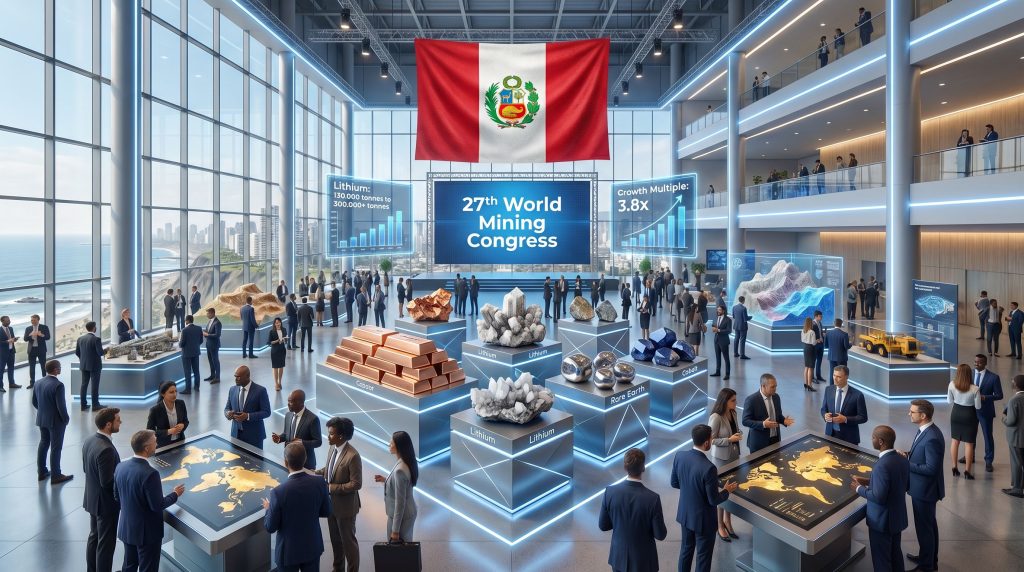
The mineral extraction sector's most influential decision-makers are preparing for a pivotal gathering that represents far more than industry networking. The 27th World Mining Congress scheduled for Lima, Peru, from June 24-26, 2026, brings together leadership from over 50 nations during a period of unprecedented industry transformation. Organized by Peru's Instituto de Engenheiros de Minas (IIMP) with official government designation as a matter of national interest, this congress operates within a fundamentally different context than previous editions.
Furthermore, mid-2026 timing positions this gathering at the intersection of critical industry cycles. Capital allocation decisions for 2027-2030 investment periods coincide with renewable energy deployment targets that require immediate mineral supply commitments. The International Energy Agency reports that global renewable energy capacity additions reached 423 gigawatts in 2023, representing a 50% acceleration in deployment pace that demands corresponding mineral supply chain responses.
Key Congress Parameters:
- Confirmed participation: Representatives from more than 50 countries
- Government endorsement: Official recognition as national interest by Peruvian authorities
- Organizing institution: Instituto de Engenheiros de Minas do Peru (IIMP)
- Strategic focus areas: Critical minerals, environmental sustainability, energy transition mining
The congress agenda directly addresses interconnected challenges that emerged from 2022-2024 market disruptions. Critical mineral price volatility ranging from 40-300% for specific commodities, according to the U.S. Geological Survey's 2024 Critical Mineral Assessment, demonstrated the fragility of current supply chains. However, industry consensus recognizes that traditional sourcing strategies create unacceptable vulnerability for energy transition commitments.
Unlike previous gatherings focused on operational optimization and technological advancement, the 27th World Mining Congress operates under time-sensitive urgency. Consequently, energy transition acceleration creates immediate pressure for supply chain diversification, while geopolitical tensions highlight the strategic importance of mineral resource control. This convergence transforms routine industry dialogue into strategic national security discussions.
When big ASX news breaks, our subscribers know first
Peru's Strategic Positioning in Global Mineral Governance
Peru's selection as host nation signals recognition of South America's evolving role as a critical mineral supplier to global markets. The country ranks among the world's top producers across multiple commodities: second globally in copper production with approximately 2.3 million tonnes annually, second in silver, and third in zinc production according to the U.S. Geological Survey's 2024 Mineral Commodity Summaries.
In addition, this represents Peru's second opportunity to host the World Mining Congress since 1974, demonstrating the nation's institutional development over the past five decades. The 52-year interval between hosting opportunities reflects Peru's sustained investment in mining sector infrastructure, regulatory framework development, and technical expertise that now positions the country as a reliable partner for international mineral supply agreements.
Peru's Mining Sector Fundamentals:
- Copper exports: Represent approximately 45% of merchandise exports
- GDP contribution: Mining sector contributes roughly 10% of national GDP
- Operational scale: Approximately 40 major mining operations with combined annual production valued above $20 billion USD
- Infrastructure advantage: Callao Port serves as South America's largest container facility providing Pacific access
The geographic positioning creates strategic advantages for regional supply chain integration. For instance, Peru's copper focus complements Chile's lithium dominance, Bolivia's critical mineral reserves, and Argentina's emerging lithium production to form a contiguous South American mineral corridor. This regional complementarity enables coordinated logistics, shared processing infrastructure, and integrated environmental management systems.
Furthermore, Peru operates a mining concession system that supports both large-scale and mid-tier operations through established environmental assessment protocols managed by the Dirección General de Asuntos Ambientales Mineros (DGAAM). This regulatory framework provides investment-grade certainty while maintaining environmental standards that satisfy international sustainability requirements.
The country's proven track record includes successful large-scale operations such as Southern Copper Corporation's Toquepala and Cuajone facilities, the Yanacocha gold complex, and emerging lithium exploration projects in the Puno region. These operations demonstrate Peru's capacity to manage complex, capital-intensive mining projects while maintaining operational continuity over multiple decades.
Critical Minerals Supply Chain Transformation
The energy transition has fundamentally altered mineral demand patterns, creating new categories of strategic materials that require entirely different supply chain approaches. Traditional bulk commodity logistics prove inadequate for critical minerals that demand specialised handling, processing, and quality control systems.
Current Supply Concentration Vulnerabilities:
| Mineral | Primary Producer | Market Share | 2023 Production | 2030 Projected Demand |
|---|---|---|---|---|
| Lithium | Lithium Triangle (Argentina, Bolivia, Chile) | 85% | 95,000-100,000 tonnes | 500,000+ tonnes |
| Cobalt | Democratic Republic of Congo | 70% of reserves, 60% of production | 170,000-180,000 tonnes | 320,000+ tonnes |
| Nickel | Indonesia (processing dominance) | 40% of production | 2.7 million tonnes | 4.2 million tonnes |
| Rare Earth Elements | China | 75-80% production, 85% processing | Classified | Increasing |
Lithium carbonate price volatility exemplifies the challenges facing critical mineral supply chains. However, prices fluctuated from $5,000 to $18,000 USD per tonne between 2022-2024 according to Benchmark Mineral Intelligence data, creating planning uncertainty for battery manufacturers and electric vehicle producers who require long-term price stability for product development cycles.
Moreover, cobalt supply concentration in the Democratic Republic of Congo presents both volume and ethical sourcing challenges. Approximately 20% of cobalt supply originates from artisanal mining operations with documented child labour concerns, forcing battery manufacturers to implement blockchain-based supply chain tracking systems that increase costs by 3-5% but provide necessary transparency for ESG compliance.
The congress will address diversification strategies that extend beyond geographic distribution to include technological redundancy and strategic reserves development. Industry leaders recognise that supply chain resilience requires multiple sourcing options, alternative processing methodologies, and stockpile management systems that can buffer short-term disruptions.
Technology Metals Critical Applications:
- Lithium applications: Battery energy density optimisation requiring 150-300 Wh/kg for next-generation vehicle batteries
- Rare earth permanent magnets: Wind turbine generators requiring neodymium and dysprosium for high-efficiency operation
- Cobalt battery cathodes: Energy density and thermal stability optimisation for electric vehicle applications
- Copper renewable infrastructure: 3-5 times higher copper requirements per megawatt compared to fossil fuel infrastructure
Recovery and recycling systems represent emerging opportunities for supply chain diversification. Furthermore, recycled copper production requires 85% less energy than primary production according to International Copper Association data, while end-of-life battery processing could supply 25-30% of lithium demand by 2030 if proper collection and processing infrastructure develops.
Environmental Performance as Competitive Strategy
Environmental sustainability has evolved from regulatory compliance to competitive differentiation as mining companies recognise that superior environmental performance creates measurable business advantages. Additionally, ESG-compliant operations now access capital at preferential rates, avoid regulatory delays that plague non-compliant competitors, and maintain community relationships essential for operational continuity.
Mining Sector Environmental Impact Baseline:
- Global carbon footprint: 4-7% of anthropogenic CO₂ emissions
- Water consumption: 37 billion cubic metres annually worldwide
- Landscape disruption: 25 million hectares cumulative footprint
- ESG compliance cost: 10-20% additional capital expenditure for environmental infrastructure
Carbon footprint reduction strategies now integrate directly with operational efficiency optimisation. Copper mining carbon intensity ranges from 1.5-3.5 tonnes CO₂ per tonne of refined copper depending on ore grade and processing methodology. Consequently, operations implementing renewable energy systems, process electrification, and concentrate optimisation technologies achieve measurable cost reductions while reducing environmental impact.
Water management represents both environmental responsibility and operational resilience. Copper mining requires 500-1,000 cubic metres per tonne of production, while lithium extraction demands 500,000-2,000,000 litres per tonne depending on methodology. Closed-loop water systems reduce freshwater consumption by 40-60% while eliminating discharge permit requirements and community water competition conflicts.
Advanced Environmental Management Technologies:
- Process electrification: Replacing diesel equipment with electric systems powered by renewable energy
- Ore concentration optimisation: Pre-processing through density separation reducing energy intensity by 15-30%
- Real-time monitoring systems: Sensor networks enabling predictive environmental management
- Tailings storage facility evolution: Impermeable liners and leachate recovery preventing contamination
Biodiversity protection protocols increasingly integrate ecosystem services valuation with operational planning. High Andes mining regions contain critical biodiversity hotspots with endemic species requiring specialised protection measures. For instance, successful operations implement habitat offset programmes, wildlife corridor maintenance, and ecosystem restoration that often exceed regulatory requirements but provide long-term operational security.
Environmental remediation bonding requirements typically range 15-40% of project capital cost, creating financial incentives for proactive environmental management. However, operations demonstrating superior environmental performance often negotiate reduced bonding requirements while building competitive advantages for future project approvals.
Energy Transition Mining Investment Acceleration
Capital markets have fundamentally repositioned toward mining investments aligned with energy transition themes, creating preferential access to financing for projects that supply critical minerals. This shift reflects institutional investor recognition that climate change mitigation requires massive mineral resource mobilisation over the next decade.
Moreover, private equity and institutional capital flows increasingly evaluate mining investments through energy transition impact frameworks rather than traditional commodity price cycles. Projects demonstrating clear linkages to renewable energy infrastructure, electric vehicle supply chains, or grid modernisation access capital at rates 2-3% below traditional mining project financing according to industry evolution trends.
Investment Capital Repositioning Indicators:
- ESG-focused funds: Representing over $30 trillion in assets under management globally
- Climate-linked financing: Preferential rates for verified low-carbon operations
- Critical mineral premiums: 15-25% valuation premiums for strategic mineral projects
- Technology adoption incentives: Accelerated depreciation for digital mining infrastructure
Risk-adjusted return frameworks now incorporate geopolitical stability assessments, environmental compliance ratings, and community engagement success metrics as primary evaluation criteria. Consequently, projects in jurisdictions with established mining law frameworks, transparent regulatory processes, and stable political environments command premium valuations regardless of commodity price volatility.
Institutional Investment Priority Matrix:
| Investment Criteria | Weight Factor | Evaluation Methodology |
|---|---|---|
| ESG Compliance | 25% | Third-party sustainability ratings |
| Geopolitical Stability | 20% | Political risk insurance availability |
| Technology Adoption | 20% | Digital transformation implementation |
| Community Engagement | 15% | Social licence maintenance track record |
| Commodity Strategic Value | 20% | Energy transition mineral classification |
The congress will facilitate closed-door sessions examining how institutional capital allocation decisions influence project development timelines. Furthermore, industry sources indicate that ESG-compliant critical mineral projects can access development capital 18-24 months faster than traditional mining projects, creating competitive advantages for operations that implement sustainability frameworks from project inception.
Cross-industry collaboration increasingly links mining companies with battery manufacturers, automotive companies, and renewable energy developers through offtake agreements that guarantee market access in exchange for supply security. These partnerships often include technology sharing, sustainability standards alignment, and joint infrastructure development that reduces capital requirements for individual operators.
Technology Integration and Operational Excellence
Digital mining technologies have reached an inflection point where early adopters gain insurmountable operational advantages over competitors relying on traditional methods. The technology gap between leaders and laggards now translates directly to cost structure differences that determine long-term viability.
Autonomous equipment deployment demonstrates measurable productivity improvements across multiple operational parameters. Underground autonomous hauling systems achieve 15-25% productivity increases while reducing labour costs and improving safety metrics. In addition, surface autonomous drilling programmes increase precision while reducing environmental impact through optimised blast patterns.
What Technologies Are Transforming Mining Operations?
Digital Mining Technology Implementation Status:
- Autonomous equipment: 40% of major operations piloting or implementing autonomous systems
- AI in mining operations: Machine learning reducing exploration timelines by 30-50%
- Predictive maintenance: IoT sensor networks reducing unplanned downtime by 20-35%
- Remote operations capability: Enabling operations in previously inaccessible locations
Real-time ore grade analysis through sensor technology eliminates traditional assay delays while optimising processing parameters. This capability enables dynamic blending strategies that maintain consistent product quality while maximising resource recovery from variable ore bodies.
Furthermore, predictive maintenance systems using IoT sensors and machine learning algorithms identify equipment failure patterns before breakdown occurs. Implementation reduces unplanned downtime by 20-35% according to industry case studies, while extending equipment life cycles and reducing replacement capital requirements.
Technology Adoption ROI Metrics:
| Technology Category | Implementation Cost | Payback Period | Productivity Improvement |
|---|---|---|---|
| Autonomous Hauling | $50-100M per operation | 3-5 years | 15-25% |
| Predictive Maintenance | $10-25M per operation | 18-36 months | 20-35% downtime reduction |
| Real-time Ore Analysis | $5-15M per operation | 12-24 months | 10-20% recovery optimisation |
| Remote Operations Centres | $20-50M per operation | 2-4 years | 30-50% labour efficiency |
Remote operations centres enable centralised control of multiple mining sites from single locations, reducing labour costs while improving operational consistency. This capability proves particularly valuable for operations in remote locations where workforce availability and housing infrastructure present ongoing challenges.
The next major ASX story will hit our subscribers first
Regional Development and Strategic Infrastructure
Latin American mining corridor development represents a generational opportunity to create coordinated infrastructure that unlocks previously uneconomical deposits through shared logistics and processing facilities. Moreover, regional governments increasingly recognise that coordinated development strategies provide competitive advantages over fragmented national approaches.
Cross-border infrastructure coordination enables cost-sharing for transportation networks, processing facilities, and environmental monitoring systems. The Andean region contains an estimated 58% of global lithium reserves according to the U.S. Geological Survey, but optimal development requires regional coordination rather than competing national strategies.
Regional Integration Opportunities:
- Shared transportation networks: Rail and port infrastructure serving multiple countries
- Regional processing hubs: Economies of scale for mineral concentration and refining
- Coordinated environmental monitoring: Cross-border ecosystem protection
- Joint workforce development: Technical training programmes serving regional industry needs
Peru's Callao Port serves as South America's largest container facility, providing Pacific access that complements Chile's mineral export infrastructure. Coordinated port development enables specialised mineral handling capabilities while reducing per-tonne logistics costs through volume optimisation.
Furthermore, regional processing hub development creates opportunities for value-added manufacturing that captures processing margins currently exported to overseas facilities. For instance, Australia lithium innovations in processing technology could be adapted to serve Argentina, Bolivia, and Chile deposits, reducing transportation costs while maintaining quality control standards required by battery manufacturers.
Environmental monitoring coordination enables ecosystem-scale protection programmes that satisfy international sustainability standards while reducing per-operation compliance costs. Transboundary watershed management, biodiversity corridor maintenance, and carbon offset coordination create regional competitive advantages for sustainable mining practices.
Strategic Planning and Capital Allocation Frameworks
Industry leaders will utilise congress networking opportunities to model various global scenarios including trade disruptions, accelerated energy transition timelines, and regulatory changes that could fundamentally alter operating environments over the next decade.
Scenario planning workshops will examine multiple future pathways: baseline energy transition continuation, accelerated decarbonisation driven by climate policy, supply chain regionalisation following geopolitical tensions, and technology breakthrough scenarios that could alter mineral demand patterns entirely.
Strategic Planning Variables Under Assessment:
- Geographic diversification strategies: Multi-jurisdiction risk mitigation
- Commodity portfolio optimisation: Balancing traditional and critical minerals
- Technology investment prioritisation: Digital transformation ROI optimisation
- Partnership structure evaluation: Joint venture vs. acquisition strategies
Capital allocation decision frameworks increasingly incorporate optionality preservation alongside traditional net present value calculations. However, projects that provide expansion options, commodity switching capability, or strategic positioning advantages command premium valuations even when base case returns appear marginal.
Market consolidation discussions will address industry structure evolution as smaller operators struggle with capital requirements for technology adoption and environmental compliance. Consequently, successful consolidation strategies require combining complementary assets, eliminating redundant infrastructure, and achieving scale economies in specialised technical capabilities.
Expected Strategic Outcome Categories:
| Commitment Type | Projected Volume | Investment Range | Implementation Timeline |
|---|---|---|---|
| Technology Partnerships | 15-20 agreements | $2-5 billion total | 2026-2028 |
| Regional Infrastructure | 8-12 initiatives | $10-15 billion total | 2026-2030 |
| Sustainability Programmes | 25+ commitments | $3-8 billion total | 2026-2029 |
| Research Collaborations | 30+ partnerships | $500M-1 billion total | 2026-2031 |
Cross-industry partnership development links mining companies with technology providers, financial institutions, and end-user industries through strategic alliances that share development risks while accelerating implementation timelines. These partnerships often include intellectual property sharing, market access guarantees, and joint infrastructure development.
Distinguishing Factors from Previous Editions
The 27th World Mining Congress operates within a fundamentally different industry context than previous editions, reflecting the confluence of energy transition urgency, supply chain security concerns, and environmental accountability requirements that have emerged over the past five years.
Unlike previous congresses focused on incremental operational improvements and technological advancement, the 2026 edition addresses existential industry transformation. The mining sector faces simultaneous pressure to scale production of critical minerals while implementing sustainability practices that satisfy increasingly sophisticated stakeholder expectations.
Urgency Factors Differentiating 2026 Congress:
- Time-sensitive supply commitments: Energy transition timelines require immediate mineral supply security
- Geopolitical risk acceleration: Trade tensions highlighting strategic mineral control importance
- Capital market transformation: ESG criteria determining project financing access
- Technology adoption imperative: Digital transformation separating industry leaders from laggards
Previous congress editions occurred during relatively stable commodity cycles where long-term planning horizons enabled gradual adaptation to changing market conditions. However, the current environment demands rapid decision-making under uncertainty, with strategic choices made in 2026 determining competitive positioning for the next decade.
Stakeholder integration expansion reflects the mining industry's growing interconnection with financial markets, technology providers, government policy makers, and civil society organisations. Success requires coordination across multiple stakeholder categories rather than traditional industry-focused networking.
Furthermore, Brazil's recent hosting of the 24th World Mining Congress in Rio de Janeiro, organised by the Instituto Brasileiro de Mineração (IBRAM), focused on sustainability, innovation, and underground mining. Peru's 2026 congress builds on these themes while addressing critical mineral supply chain development and regional infrastructure coordination specific to Latin American mining opportunities.
The shift from operational optimisation to strategic positioning reflects industry recognition that traditional competitive advantages based on resource quality and operational efficiency prove insufficient when facing supply chain disruption risks and rapidly evolving customer requirements for sustainability verification.
Long-term Industry Structure Evolution
Market consolidation acceleration appears inevitable as smaller operators struggle with capital requirements for technology adoption, environmental compliance, and critical mineral development. Consequently, successful industry structure evolution requires strategic positioning that combines complementary assets while achieving scale economies in specialised capabilities.
Large-scale operators gain competitive advantages through their ability to implement enterprise-wide digital transformation, maintain dedicated sustainability teams, and negotiate favourable financing terms for capital-intensive projects. These advantages compound over time, creating market dynamics that favour consolidation over fragmentation.
Industry Consolidation Drivers:
- Technology adoption costs: Digital mining infrastructure requiring significant capital investment
- Environmental compliance complexity: Specialised expertise and systems implementation
- Critical mineral development: High-risk exploration and development capital requirements
- Supply chain integration: Vertical coordination advantages for guaranteed market access
New partnership models emerge to address industry structure evolution without traditional merger and acquisition approaches. Technology-mining company joint ventures enable capability sharing while preserving operational independence. Moreover, government-private sector strategic alliances provide infrastructure coordination without direct ownership transfer.
Academic-industry research partnerships accelerate innovation development while sharing intellectual property costs across multiple operators. These collaborations often focus on pre-competitive research areas such as environmental monitoring technologies, workforce development programmes, and fundamental geological research.
Cross-industry collaboration extends mining company partnerships into battery manufacturing, automotive production, and renewable energy development. For instance, partnerships with battery-grade lithium refinery operators create integrated value chains that capture processing margins while guaranteeing market access for mining operations willing to meet strict sustainability and quality standards.
The evolution toward platform-based industry structures enables smaller operators to access advanced technologies, financing capabilities, and market access through participation in larger ecosystems rather than direct consolidation. This approach preserves operational diversity while achieving scale advantages in critical support functions.
Performance Measurement and Strategic Accountability
Success metrics for the 27th World Mining Congress extend beyond traditional attendance figures to encompass concrete commitments for collaborative projects, technology adoption timelines, and capital allocation announcements that demonstrate tangible industry transformation progress.
Strategic outcome measurement focuses on implementation commitments rather than aspirational statements. Technology partnership announcements include specific deployment timelines, performance metrics, and accountability mechanisms that enable progress tracking over multi-year implementation periods.
Measurable Commitment Categories:
- Capital deployment commitments: Verified funding allocations with implementation schedules
- Technology adoption timelines: Specific deployment milestones with performance targets
- Sustainability target achievement: Quantified environmental improvement commitments
- Regional development participation: Infrastructure investment coordination agreements
Regional project announcements demonstrate coordinated development approaches that unlock previously uneconomical deposits through shared infrastructure investment. These initiatives require multi-party coordination that extends beyond individual company capabilities to include government policy alignment and international development finance participation.
Furthermore, research collaboration establishment creates ongoing relationships that extend congress networking into sustained technical development partnerships. These arrangements often include intellectual property sharing protocols, joint funding mechanisms, and publication commitments that advance industry knowledge while building competitive capabilities.
Performance Tracking Framework:
| Metric Category | Measurement Methodology | Reporting Timeline | Accountability Mechanism |
|---|---|---|---|
| Investment Commitments | Third-party verification | Quarterly progress reports | Public disclosure requirements |
| Technology Deployment | Performance milestone tracking | Annual capability assessments | Industry benchmark comparisons |
| Sustainability Targets | Independent audit verification | Bi-annual compliance reporting | ESG rating agency evaluation |
| Partnership Development | Legal agreement documentation | Annual partnership reviews | Joint performance reporting |
Long-term industry transformation measurement requires baseline establishment and progress tracking across multiple dimensions: operational efficiency improvement, environmental performance enhancement, technology adoption acceleration, and supply chain resilience development.
Future Strategic Implications for Global Mining
Industry transformation timelines established during the congress create accountability mechanisms for strategic commitments while providing coordination frameworks for complex multi-party initiatives. The mining sector's ability to meet energy transition mineral requirements depends on coordinated action across multiple jurisdictions and operating companies.
Competitive landscape evolution favours organisations that effectively leverage congress networking and strategic planning sessions to build technological capabilities, secure financing access, and establish market positioning for critical mineral development. These advantages compound over time through enhanced capability development and preferential partnership access.
Strategic Positioning Advantages:
- Technology leadership: Early adoption creating operational efficiency advantages
- Capital access: ESG compliance enabling preferential financing terms
- Market positioning: Critical mineral focus commanding premium valuations
- Partnership development: Strategic alliances providing supply chain security
The 27th World Mining Congress in Peru represents a strategic inflection point where industry leaders establish frameworks for navigating unprecedented transformation requirements. Consequently, success requires coordination across traditional competitive boundaries while maintaining individual organisational competitive advantages.
Companies that implement strategic commitments developed during congress networking sessions position themselves for sustained competitive advantages in an industry undergoing fundamental restructuring. These advantages include preferential capital access, enhanced technology capabilities, and strategic partnership development that create defensive moats around core operations.
Regional development coordination emerging from congress initiatives could establish Latin America as the preferred alternative to traditional mining powerhouses, providing supply chain diversity that satisfies energy transition security requirements while delivering competitive returns for international investment capital.
The mining industry's ability to meet global energy transition requirements ultimately depends on strategic coordination achieved through forums like the World Mining Congress, where individual company capabilities combine with regional infrastructure development and international partnership formation to create integrated supply chain solutions.
Investment Disclaimer: This analysis contains forward-looking statements based on current industry trends and available data. Mining investments involve significant risks including commodity price volatility, regulatory changes, environmental liabilities, and geopolitical instability. Past performance does not guarantee future results. Investors should conduct thorough due diligence and consider professional advice before making investment decisions.
Looking to capitalise on emerging mining opportunities?
Discovery Alert's proprietary Discovery IQ model delivers real-time alerts on significant ASX mineral discoveries, instantly empowering subscribers to identify actionable opportunities ahead of the broader market. Understand why historic discoveries can generate substantial returns by visiting Discovery Alert's dedicated discoveries page, showcasing exceptional outcomes from transformative mineral finds.