August 22, 2026
Understanding the Mining Industry’s Energy Revolution
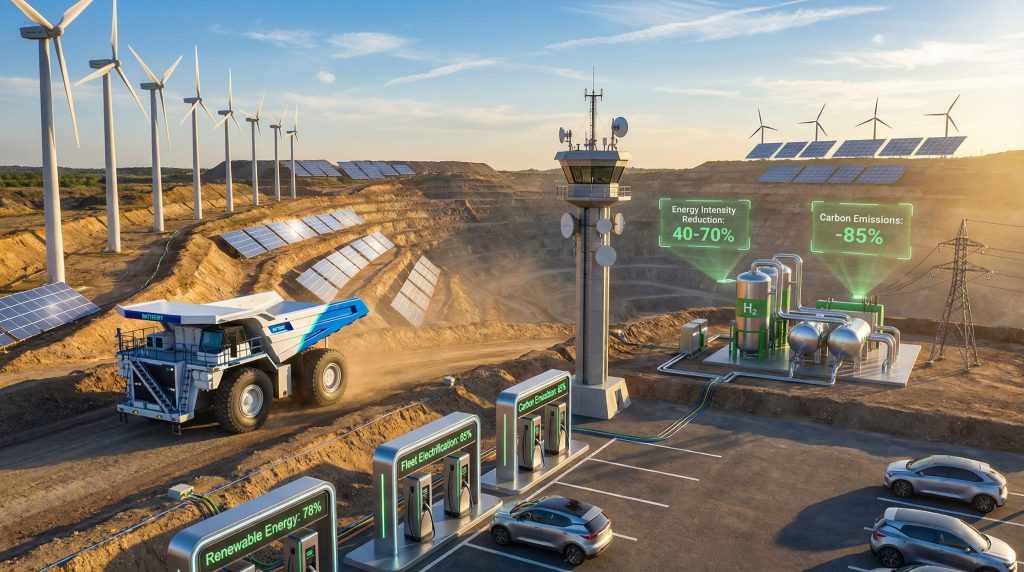
The global mining sector stands at a pivotal technological crossroads where traditional fossil fuel dependencies are rapidly giving way to sophisticated energy alternatives. This transformation encompasses a complex ecosystem of renewable power systems, electrified equipment, and advanced process optimization technologies that collectively promise to reshape how mineral extraction operations function. Rather than viewing decarbonization as merely a compliance exercise, forward-thinking mining companies are discovering that net-zero technologies in mining represent fundamental operational improvements that enhance efficiency, reduce costs, and create competitive advantages.
When big ASX news breaks, our subscribers know first
Defining Net-Zero Technology Implementation in Modern Mining
Core Technology Categories Driving Decarbonization
The implementation of green iron sustainability operations encompasses five critical technology categories that work synergistically to eliminate carbon emissions. Renewable energy infrastructure deployment represents the foundation, with solar, wind, and hybrid systems providing clean power generation capabilities specifically designed for industrial-scale mining operations.
Fleet electrification programs focus on converting mobile equipment from diesel-powered systems to battery-electric alternatives, whilst process optimization through digital automation leverages artificial intelligence and machine learning to minimise energy consumption across all operational stages. Furthermore, alternative fuel integration explores hydrogen, biomass, and synthetic fuel applications, particularly for high-temperature processes where electrification remains technically challenging.
Energy storage and grid stabilisation solutions complete the technology framework by ensuring continuous power supply despite the intermittent nature of renewable energy sources. These battery energy storage systems, pumped hydro installations, and emerging storage technologies enable mining operations to maintain 24/7 productivity while maximising renewable energy utilisation.
Operational Metrics for Net-Zero Assessment
The Greenhouse Gas Protocol Corporate Standard defines three emission scopes that mining companies use to measure decarbonisation progress. Scope 1 emissions represent direct emissions from owned or controlled sources, typically accounting for 40-60% of total mining emissions and including mobile equipment, explosives, and on-site fuel combustion.
Scope 2 emissions encompass indirect emissions from purchased electricity, while Scope 3 emissions cover the entire value chain, including transportation, processing, and end-of-life considerations. Energy intensity per tonne of material processed serves as a key performance indicator, allowing operations to benchmark efficiency improvements over time.
Equipment electrification ratios across fleet operations provide tangible metrics for measuring transition progress, with many mining companies establishing targets for complete underground equipment electrification by 2030 and surface fleet conversion by 2035.
Renewable Energy Solutions Delivering Maximum Mining ROI
Solar Integration Strategies for 24/7 Operations
Mining operations require continuous power supply, creating unique challenges for solar energy integration that differ significantly from residential or commercial applications. Hybrid solar-battery systems address this challenge by combining photovoltaic installations with large-scale energy storage, achieving capacity factors of 60-80% compared to solar-only systems that typically achieve 25-35% capacity factors in optimal mining locations.
Peak demand management during daylight processing hours allows mining operations to reduce grid electricity purchases during high-cost periods while utilising solar generation for energy-intensive processes such as grinding, crushing, and materials handling. Grid-tie configurations enable surplus energy monetisation, with mining operations selling excess renewable generation back to regional electricity networks during periods of reduced operational demand.
Australian mining operations particularly benefit from exceptional solar irradiance levels, with regions like Western Australia and the Northern Territory achieving 5-7 kWh/m²/day in optimal locations, making solar integration economically attractive even without government incentives.
Wind Power Implementation in Remote Mining Locations
Remote mining locations often feature consistent wind resources that enable micro-grid development for isolated operations. These systems reduce dependency on diesel fuel transportation, which can represent significant logistical costs and supply chain vulnerabilities for operations in distant locations.
Wind-diesel hybrid systems provide immediate fuel cost reductions of 40-70% whilst maintaining operational reliability through integrated backup generation. Capacity factor optimisation for variable wind resources requires sophisticated forecasting and energy management systems that predict wind patterns and adjust mining operations to maximise renewable energy utilisation.
Chilean mining operations in the Atacama Desert and Patagonian regions have demonstrated exceptional wind resource utilisation, with onshore wind installations achieving 35-45% capacity factors in favourable locations.
Renewable Energy Performance Benchmarks
| Technology Type | Typical Capacity Factor | Implementation Timeline | Key Advantages |
|---|---|---|---|
| Solar PV | 25-35% | 12-18 months | High predictability, modular scaling |
| Wind Power | 30-45% | 18-24 months | Excellent remote location performance |
| Hybrid Systems | 60-80% | 24-36 months | Continuous power, grid stability |
Cost reduction trends from 2020-2025 have accelerated renewable adoption across the mining sector. Solar photovoltaic costs decreased by approximately 40-50% during this period, whilst wind power experienced 25-35% cost reductions through improved turbine efficiency and installation techniques.
Equipment Electrification Reshaping Mining Fleet Management
Battery-Electric Vehicle Deployment Strategies
Underground mining equipment conversion represents the highest priority for electrification programmes due to immediate safety and operational benefits. Electric equipment eliminates exhaust emissions in confined underground spaces, reducing ventilation requirements and improving air quality for workers.
However, surface fleet electrification for haul trucks and loaders faces greater technical challenges due to battery capacity requirements for large mobile equipment. Current battery-electric haul trucks carry 20-40% higher capital costs compared to diesel alternatives, but this premium is offset by 20-30% maintenance cost reductions and significant fuel savings.
Charging infrastructure development requires careful integration with existing electrical systems and consideration of peak demand impacts on mine power grids. Fast-charging systems enable equipment rotation strategies that minimise downtime while maximising asset utilisation.
Operational Efficiency Gains from Electric Equipment
Electric motors provide instantaneous torque control, improving material handling efficiency and enabling precise load management that enhances overall operational productivity. Reduced maintenance requirements result from fewer moving parts, elimination of oil changes, and regenerative braking systems that reduce brake component wear.
Enhanced operator safety through elimination of exhaust emissions creates healthier working environments, particularly in underground operations where air quality directly impacts worker health and productivity. Electric equipment also produces significantly less vibration and noise, reducing operator fatigue and improving working conditions.
Fleet Electrification Implementation Roadmap
Phase 1: Light vehicles and auxiliary equipment (6-12 months)
- Service vehicles, personnel transport, and utility equipment
- Lower complexity integration with immediate operational benefits
- Shortest payback periods due to high utilisation rates
Phase 2: Underground mobile equipment (12-24 months)
- Load-haul-dump vehicles, drilling equipment, and support machinery
- Medium technical complexity with significant safety advantages
- Ventilation cost savings provide additional economic benefits
Phase 3: Large haul trucks and primary movers (24-48 months)
- Surface mining haul trucks, shovels, and primary processing equipment
- Highest technical challenges requiring advanced battery management
- Longest implementation timeline but greatest emissions reduction impact
Process Optimization’s Role in Mining Decarbonization
Digital Twin Technology for Energy Management
Real-time energy consumption monitoring across all mining operations enables data-driven operations strategies that identify inefficiencies and waste patterns previously invisible to operators. Digital twin systems create virtual replicas of physical operations, allowing engineers to test energy optimisation scenarios without disrupting production.
Predictive maintenance capabilities reduce equipment downtime whilst optimising energy consumption during maintenance cycles. Machine learning algorithms analyse equipment performance patterns to predict failures before they occur, enabling proactive maintenance scheduling during planned downtimes.
Moreover, process parameter optimisation through artificial intelligence continuously adjusts operational variables to minimise energy consumption whilst maintaining production targets. These systems can reduce overall energy intensity by 15-25% through improved process control and equipment efficiency.
Comminution and Material Handling Efficiency
High-pressure grinding roll (HPGR) technology demonstrates 20-30% energy savings compared to conventional ball mills, making it particularly attractive for energy-intensive grinding operations. HPGR systems create microcracks in ore particles that improve downstream processing efficiency whilst reducing overall energy requirements.
Sensor-based ore sorting minimises processing volumes by removing waste material before energy-intensive processing stages. This technology typically achieves 10-25% reductions in processing volumes, directly translating to proportional energy savings across downstream operations.
Variable frequency drives for conveyor optimisation enable precise speed control that matches material flow rates to processing requirements, eliminating energy waste from over-speed operation during periods of reduced throughput.
Water and Waste Management Integration
Closed-loop water systems significantly reduce pumping energy requirements by minimising fresh water intake and wastewater discharge volumes. These systems also reduce environmental compliance costs and improve operational resilience during drought conditions.
Paste backfill tailings management eliminates the need for traditional tailings dams whilst enabling underground void filling that improves ground stability and reduces long-term environmental liabilities.
Heat recovery from processing operations captures waste heat from smelting, roasting, and other high-temperature processes for use in facility heating, water heating, and other thermal applications.
Alternative Fuels Addressing High-Temperature Mining Processes
Green Hydrogen Applications in Mining Operations
Fuel cell technology for mobile equipment in underground environments offers zero-emission operation without the weight penalties associated with large battery systems. Hydrogen fuel cells provide extended operating ranges particularly suitable for large underground equipment that operates continuously.
Hydrogen-based reduction processes for metal refining represent a transformative approach to steelmaking and other metallurgical processes. Hydrogen direct reduction of iron ore eliminates carbon dioxide emissions from traditional coke-based reduction whilst producing high-quality metallic iron. Furthermore, seasonal energy storage through hydrogen production enables mining operations to store surplus renewable energy during high-generation periods for use during low renewable output periods, effectively solving the intermittency challenge of renewable energy systems.
Biomass and Synthetic Fuel Integration
Waste-to-energy systems utilising mining byproducts convert organic waste streams into useful energy whilst reducing waste disposal costs and environmental impacts. These systems are particularly effective for mining operations with significant organic waste generation.
Synthetic diesel production from renewable electricity offers a transitional solution for equipment that cannot be immediately electrified. Whilst currently carrying cost premiums of 150-200% over conventional diesel, synthetic fuels enable emissions reductions without requiring equipment replacement.
Additionally, carbon capture integration with alternative fuel production creates circular carbon systems where captured CO₂ becomes feedstock for synthetic fuel production, creating closed-loop carbon cycles.
Alternative Fuel Deployment Timeline and Costs
| Fuel Type | Current Cost Premium | Commercial Readiness | Key Applications |
|---|---|---|---|
| Green Hydrogen | 250-1500% | Pilot scale | Underground equipment, metal refining |
| Synthetic Diesel | 150-200% | Demonstration | Heavy mobile equipment, remote operations |
| Biomass | 50-100% | Commercial | Power generation, process heating |
Current green hydrogen costs range from $5-15 per kg compared to gray hydrogen at $1-2 per kg, representing significant cost premiums that require continued technology development and scale economies to achieve commercial viability.
The next major ASX story will hit our subscribers first
Energy Storage Solutions Supporting Mining’s Continuous Operations
Battery Energy Storage System Integration
Grid-scale lithium-ion systems provide renewable energy smoothing capabilities that enable mining operations to maintain consistent power quality despite variable renewable generation. These systems typically require 2-8 hours of duration for effective renewable integration.
Behind-the-meter installations reduce peak demand charges by providing power during high-cost periods whilst charging during low-cost or high renewable generation periods. Power capacity requirements range from 10-100 MW depending on operation size and energy profile.
Frequency regulation services enable mining operations to generate additional revenue streams by providing grid stability services to electricity networks, creating economic benefits beyond direct operational savings.
Innovative Storage Technologies for Mining Applications
Pumped hydro using mine infrastructure leverages existing mine shafts, tailings facilities, and water management infrastructure to create large-scale energy storage systems. These installations can provide 6-12 hours of storage duration at lower costs than battery systems.
Compressed air energy storage in underground caverns utilises excess renewable energy to compress air in sealed underground chambers, later releasing the compressed air to drive turbines during peak demand periods.
Thermal energy storage for process heat applications captures excess renewable energy as heat in molten salt, concrete, or other thermal storage media for later use in high-temperature industrial processes.
Storage System Performance Metrics
Modern battery energy storage systems achieve 85-95% round-trip efficiency, meaning that 85-95% of stored energy can be recovered for use. Pumped hydro systems typically achieve 70-85% round-trip efficiency but offer much longer duration capabilities and lower lifecycle costs.
Capacity degradation represents a critical consideration for battery systems, with lithium-ion installations typically maintaining 80% of original capacity after 10-15 years of operation under proper management protocols.
Leading Mining Companies in Net-Zero Technology Adoption
Major Miners’ Decarbonisation Investments
BHP’s renewable energy procurement strategies span global operations with commitments to achieve net-zero operational emissions by 2030. The company has established renewable energy partnerships across Australia, Chile, and Brazil that collectively represent over 3 GW of renewable capacity.
Rio Tinto’s autonomous and electric vehicle fleet development includes partnerships with equipment manufacturers to develop battery-electric haul trucks and autonomous mining systems that optimise energy consumption through AI mining transformation route planning and load optimisation.
Fortescue is decarbonising its mining operations through the large-scale adoption of electrification and zero-emissions technologies, supported by global partnerships with equipment and technology leaders including XCMG, Liebherr, BYD, LONGi and Envision.
Mid-Tier Operators Driving Innovation
Mid-tier mining companies often demonstrate greater agility in implementing emerging technologies due to simpler decision-making processes and fewer legacy infrastructure constraints. Partnership strategies with technology providers enable smaller operators to access cutting-edge solutions without requiring large internal R&D investments.
Demonstration projects at mid-tier operations often prove commercial viability for technologies that larger mining companies subsequently adopt at scale. These projects provide valuable real-world performance data that accelerates industry-wide technology adoption.
Technology Provider Ecosystem
Original equipment manufacturers increasingly focus on electric alternatives to traditional diesel equipment, with companies like Caterpillar, Komatsu, and Epiroc developing comprehensive electric equipment portfolios specifically designed for mining applications.
Energy service companies provide renewable infrastructure development, operation, and maintenance services that enable mining companies to focus on core mining operations whilst accessing renewable energy expertise through specialised partnerships.
Digital technology providers enable optimisation solutions through IoT sensors, data analytics platforms, and machine learning algorithms that continuously improve energy efficiency across all mining operations.
Economic Drivers Behind Net-Zero Mining Technology
Capital Expenditure Analysis for Net-Zero Transitions
Renewable energy infrastructure typically requires $1-3 million per MW of installed capacity, varying significantly based on technology type, location, and grid integration requirements. Remote mining locations often face higher installation costs but benefit from reduced ongoing fuel transportation expenses.
Equipment electrification carries capital cost premiums of 20-40% over diesel alternatives, but these premiums continue declining as battery technology improves and manufacturing scales increase. Digital optimisation systems require initial investments of $5-15 million per operation but typically achieve payback periods of 2-4 years through efficiency improvements.
Operational Cost Savings and Payback Periods
Fuel cost reductions of 40-70% through renewable energy adoption provide immediate operational savings, particularly for remote operations with high fuel transportation costs. Maintenance savings of 20-30% with electric equipment result from fewer moving parts, reduced lubrication requirements, and lower component wear rates.
Typical payback periods range from 3-7 years depending on technology mix, operation scale, and local energy costs. Operations in regions with high electricity costs or significant fuel transportation expenses often achieve shorter payback periods.
Risk Mitigation Through Technology Diversification
Reduced exposure to volatile fossil fuel prices provides operational cost predictability that improves financial planning and reduces exposure to commodity price volatility. Enhanced regulatory compliance reduces risks associated with carbon pricing mechanisms and environmental regulations.
Improved access to sustainable financing options includes green bonds, sustainability-linked loans, and ESG-focused investment capital that often carries lower interest rates and more favourable terms than conventional financing.
Regional Factors Influencing Net-Zero Technology Selection
Geographic Advantages for Renewable Energy Deployment
Australian operations benefit from exceptional solar irradiance levels, with the continent receiving some of the world’s highest solar energy potential. Desert regions in Western Australia, South Australia, and the Northern Territory provide ideal conditions for large-scale solar installations.
Chilean mines utilise consistent wind resources in Patagonia combined with exceptional solar resources in the Atacama Desert. This combination enables hybrid renewable systems that achieve very high capacity factors and energy security.
Canadian operations leverage abundant hydroelectric power resources whilst exploring integration opportunities with existing provincial electrical grids that already feature significant renewable energy penetration.
Regulatory Environment Impact on Technology Adoption
Carbon pricing mechanisms in various jurisdictions create economic incentives for emissions reduction that improve the business case for net-zero technologies. Australia’s Safeguard Mechanism, the EU’s Emissions Trading System, and similar programmes directly impact mining company operational costs.
The Minerals Council of Australia has outlined comprehensive pathways for mining towards net-zero, emphasising the importance of regulatory frameworks in supporting technological deployment. Furthermore, renewable energy mandates in several jurisdictions accelerate deployment timelines by requiring specific renewable energy percentages in total consumption. These mandates often include implementation deadlines that drive technology adoption schedules.
Environmental permitting considerations for new technologies require regulatory approval processes that vary significantly between jurisdictions. Some regions offer expedited permitting for renewable energy and emissions reduction projects.
Infrastructure Constraints and Solutions
Remote location challenges for equipment transportation require specialised logistics planning for large renewable energy components and electric mining equipment. Grid connection limitations often necessitate microgrid development rather than grid-connected renewable installations.
Skills development requirements for new technology operation and maintenance create workforce training needs that must be addressed through partnerships with educational institutions and technology providers.
Implementation Challenges for Mining Operations
Technical Integration Complexities
Intermittent renewable energy must be matched with continuous mining operations through sophisticated energy management systems that balance supply and demand in real-time. Equipment compatibility across mixed technology fleets requires careful planning to ensure interoperability between electric and conventional equipment.
However, grid stability management with high renewable energy penetration requires advanced power electronics and energy storage systems that maintain power quality and frequency regulation despite variable generation sources.
Operational Transition Management
Workforce training for new technology operation and maintenance requires comprehensive programmes that develop technical skills whilst maintaining operational safety standards. Supply chain adaptation for electric equipment components and renewable energy systems may require new vendor relationships and inventory management approaches.
Emergency response protocol updates ensure operational safety during power system failures or equipment malfunctions. These protocols must address unique characteristics of electric equipment and renewable energy systems.
Financial and Risk Management Considerations
Technology obsolescence risks with rapidly evolving solutions require flexible procurement strategies that balance early adoption benefits with technology maturity considerations. Insurance implications for new equipment and energy systems may require updated coverage policies and risk assessments.
Performance guarantee structures with technology providers help manage implementation risks whilst ensuring that promised performance levels are achieved throughout equipment lifecycles.
Future Outlook for Net-Zero Mining Technology
Emerging Technology Development Pipelines
Next-generation battery technologies promise improved energy density and reduced costs for extended range applications in large mining equipment. Solid-state batteries and alternative chemistry systems may enable electric operation of the largest haul trucks and shovels.
Advanced hydrogen production and storage systems continue improving efficiency whilst reducing costs toward commercial viability. Electrolysis technology improvements and economy of scale effects are gradually reducing green hydrogen production costs.
Artificial intelligence optimisation for integrated energy management enables autonomous systems that continuously optimise energy consumption across entire mining operations without human intervention.
Industry Collaboration and Standards Development
Cross-industry partnerships for technology development leverage shared research and development costs whilst accelerating innovation timelines. Standardisation efforts for equipment interoperability ensure that mining operations can integrate technologies from multiple vendors without compatibility issues.
Furthermore, knowledge sharing platforms for best practice dissemination enable smaller mining operations to benefit from lessons learned at larger operations, accelerating industry-wide technology adoption. The mining industry evolution towards greater collaboration supports comprehensive sustainability transformation initiatives across the sector.
Investment Trends and Market Projections
Current research by the Minerals Research Institute of Western Australia has identified approximately 510 pre-commercial technology designs and components across the energy system for mining decarbonisation, indicating substantial innovation activity currently in development phases.
University of Western Australia chemical engineering researcher Phoebe Tran notes that this represents a huge opportunity for strategic technology investments that will assist the industry in taking a least-cost pathway to decarbonisation whilst building new low-emissions economy capabilities.
Technology cost reduction curves continue accelerating adoption timelines as renewable energy and electric equipment achieve economic parity with conventional alternatives. The World Resources Institute emphasises that integration with broader industrial decarbonisation initiatives creates synergies between mining sector investments and other heavy industry transformation efforts.
The research emphasises that understanding current technological capabilities is essential before strategic investment can be allocated effectively, with findings expected to be published by the end of 2025 following comprehensive industry participation and data collection.
Investment Disclaimer: The information presented in this article is for educational purposes only and should not be construed as financial or investment advice. Technology deployment timelines, cost projections, and performance estimates are subject to change based on technological developments, market conditions, and regulatory changes. Readers should conduct their own research and consult with qualified professionals before making investment decisions related to net-zero technologies in mining.
Technology Disclaimer: Performance specifications and implementation timelines for emerging technologies are based on current industry data and may vary significantly based on specific operational conditions, geographic factors, and technology maturity levels. Actual results may differ from projected outcomes due to technical, economic, or regulatory factors.
Ready to Identify the Next Mining Technology Breakthrough?
Discovery Alert’s proprietary Discovery IQ model delivers instant notifications on significant ASX mineral discoveries, including breakthroughs in sustainable mining technologies and clean energy mineral projects. With the mining sector undergoing this unprecedented transformation, staying ahead of technological leaders and resource discoveries becomes crucial for maximising investment opportunities in the evolving energy landscape.