May 20, 2026
The New Architecture of Mining Innovation: Why Brazil Has Become the Industry's Strategic Classroom
The most consequential shifts in industrial strategy rarely announce themselves through a single event. They accumulate through a convergence of forces, each reinforcing the other, until a tipping point becomes visible in retrospect. For the global mining sector, that convergence is increasingly legible in the form of structured knowledge exchanges where operators, technologists, capital allocators, and researchers occupy the same room and confront the same fundamental question: how do you close the gap between what is technically possible and what is operationally deployed at scale?
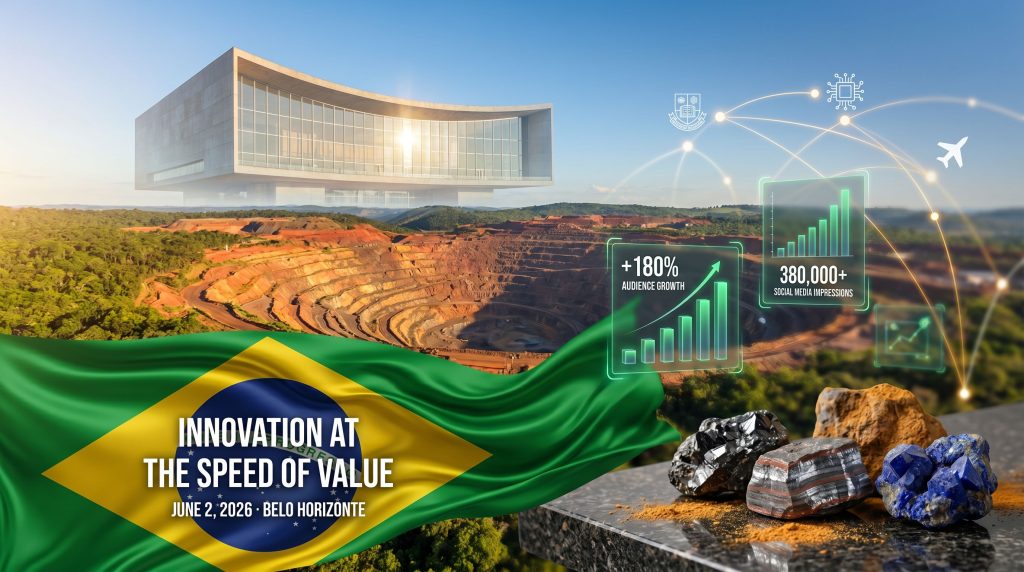
This tension between innovation potential and execution reality sits at the centre of Brazil's rapidly expanding role as a global mining thought leadership destination. The Mining Innovation Summit 2026, scheduled for June 2, 2026 in Belo Horizonte, represents one of the clearest expressions of this dynamic, gathering executive leadership, cross-sector thinkers, academic researchers, and capital market participants to interrogate the mechanisms through which mining companies can translate technological advancement into measurable competitive outcomes.
When big ASX news breaks, our subscribers know first
Belo Horizonte as a Global Convergence Point for the Mineral Industry
Geography matters in mining, not just for the location of ore bodies but for the concentration of strategic intelligence. Belo Horizonte, the capital of Minas Gerais state, occupies a singular position in this context. The region represents approximately 65% of Brazil's total mineral production value and serves as the world's dominant source of niobium, a critical mineral used in high-strength steel alloys, superconducting technologies, and emerging battery chemistries. Brazil accounts for roughly 90% of global niobium production, a concentration of supply that makes Minas Gerais uniquely positioned as a reference point for discussions about critical minerals demand and value chain development.
The strategic density of the region becomes even more pronounced when considering the proximity of two major events within the same city across a single month. The Mining Innovation Summit 2026 on June 2 precedes the Brazil Critical Minerals Summit 2026, scheduled for June 17-18, creating a concentrated two-week window of high-level industry engagement that few other global cities can match in terms of mineral sector significance. This clustering effect is not coincidental; it reflects the growing recognition that Minas Gerais is not simply a production hub but an intellectual centre for mineral strategy in an era defined by supply chain reorientation.
What the Mining Innovation Summit 2026 Actually Is
The Mining Innovation Summit 2026 is organised by Mining Hub, established as Brazil's first open innovation hub dedicated exclusively to the mining and mineral resources sector. The event takes place at the Sala Minas Gerais, the home venue of the Minas Gerais Philharmonic Orchestra in Belo Horizonte, a setting that combines cultural prestige with logistical suitability for a high-profile professional gathering.
Attendance at the 2026 edition requires paid registration, and the summit operates across both presential and hybrid formats, enabling international participants who cannot travel to Belo Horizonte to access proceedings through live-streamed digital channels. This dual-format approach reflects both practical accessibility considerations and a deliberate strategy to expand the event's influence beyond the immediate physical audience into a broader global industry conversation.
The 2026 theme, Innovation at the Speed of Value, signals a deliberate emphasis on execution over ideation. The framing implicitly critiques a common industry failure mode wherein innovation initiatives generate intellectual activity and promising pilot results but stall before reaching operational scale, consuming capital without producing competitive returns. This distinction between innovation as a concept and innovation as a measurable value creation mechanism is central to the summit's programming philosophy.
Confirmed Sponsors for the 2026 Edition
The summit's commercial backing reflects the breadth of the mineral sector ecosystem, spanning equipment providers, producers, and downstream processors:
| Sponsor | Tier |
|---|---|
| Sotreq | Master Sponsor |
| Nexa | Premium Sponsor |
| Samarco | Premium Sponsor |
| Alcoa | Standard Sponsor |
| IBRAM | Institutional Support |
How the Summit Compares With the Global Mining Events Landscape
Positioning the Mining Innovation Summit within the broader calendar of global mining conferences reveals both its distinctive identity and its strategic positioning relative to competing events. The table below provides a comparative view of major mining innovation gatherings in 2026:
| Event | Location | Date | Primary Focus |
|---|---|---|---|
| Mining Innovation Summit 2026 | Belo Horizonte, Brazil | June 2, 2026 | Innovation execution, capital, strategic value |
| Brazil Critical Minerals Summit 2026 | Belo Horizonte, Brazil | June 17-18, 2026 | Critical minerals regulation and strategy |
| Discoveries 2026 Mining Conference | Hermosillo, Mexico | 2026 | Technical exploration, Latin America |
| Africa Mining Summit 2026 | Botswana | 2026 | Sustainability, technology, regional collaboration |
| SME Technical Conferences 2026 | United States | Various | Engineering, safety, applied innovation |
What distinguishes the Mining Innovation Summit from many of its counterparts is its deliberate cross-sector design philosophy. While most mining conferences draw their speaker rosters almost exclusively from within the mineral industry, the 2026 edition incorporates voices from aviation, software development, materials science, economics, and diplomacy. This structural decision reflects a conviction that mining's most transformative innovations are unlikely to originate entirely within the sector's established intellectual traditions.
The inclusion of a Google technical director and an MIT materials science professor alongside executives from Vale and CBMM represents an architectural choice, not a novelty booking strategy. It is a statement about where the organizers believe productive disruption will originate.
The event's physical attendance has grown by more than 180% between 2023 and 2025, a metric that substantially outpaces typical growth rates for established professional conferences in capital-intensive industries, suggesting genuine market demand for its particular approach to knowledge curation.
The Speaker Roster: A Deliberate Cross-Sector Architecture
The confirmed speaker lineup for the Mining Innovation Summit 2026 is perhaps the clearest expression of its programming philosophy. Understanding the distinct vantage point each speaker brings illuminates why the organizers assembled this particular combination of perspectives.
Mining Sector Executive Leadership
-
Ana Sanches, President of Anglo American Brazil and Chair of the Board of Directors at IBRAM, brings a dual perspective on corporate operational leadership and industry-wide governance, making her uniquely positioned to address the relationship between company-level innovation and sector-level competitiveness.
-
Ricardo Lima, CEO of CBMM (Companhia Brasileira de Metalurgia e Mineração), oversees the world's largest niobium producer and is positioned to speak authoritatively on how a single mineral's strategic importance can reshape global supply chain architecture and investment priorities.
-
Rafael Bittar, Executive Vice President of Technical Operations at Vale, brings direct operational experience from one of the world's largest diversified mining companies, where large-scale technical transformation initiatives are a continuous operational reality rather than a future ambition.
-
Pablo Cesário, Director-President of IBRAM, represents the institutional and regulatory dimensions of Brazil's mineral sector, offering a systemic view of how innovation occurs within the context of evolving governance frameworks and industry advocacy.
Cross-Sector and Academic Perspectives
-
Elsa Olivetti, Professor at the Massachusetts Institute of Technology, specialises in materials science and sustainable resource use, bringing academic rigour to questions of circular economy design and the long-term material efficiency of mining value chains.
-
Karin Breitman, Technical Director at Google, represents the digital infrastructure dimension of industrial innovation, with particular relevance to discussions about AI mining efficiency, data architecture, and computational approaches to operational decision-making.
-
Abhi Shah, President of Azul Brazilian Airlines, offers what may be the summit's most counterintuitive speaker selection, but his presence reflects a sophisticated borrowing of operational excellence frameworks from aviation, an industry that has confronted the challenge of managing complex, safety-critical, high-volume operations with exceptional efficiency.
-
Marcos Troyjo, political scientist, economist, and diplomat, provides geopolitical framing for discussions about where critical mineral supply chains are heading and how Brazil positions itself strategically within the competing interests of major mineral-consuming economies.
Summit Performance Metrics Across Previous Editions
The summit's track record across previous editions provides quantitative context for evaluating its 2026 ambitions:
| Metric | Cumulative / Growth Figure |
|---|---|
| Specialised content hours delivered | 30+ hours across all editions |
| National and international speakers featured | 50+ speakers |
| Total in-person attendees (all editions) | 1,300+ participants |
| Social media views and impressions | 380,000+ |
| Physical attendance growth (2023 to 2025) | More than 180% |
Notably, more than 50% of participants hold senior decision-making roles, including CEOs, directors, managers, and senior specialists. This audience composition is significant because it means the summit's discussions are occurring within a room where a substantial proportion of attendees have the organisational authority to act on what they hear, rather than merely report it upward.
The next major ASX story will hit our subscribers first
The Four Core Thematic Pillars of the 2026 Agenda
The 2026 programming architecture is built around four interconnected thematic domains, each addressing a distinct but related dimension of the innovation-to-value challenge facing the mining industry.
Strategy and Capital Allocation
Mining companies face increasing pressure to demonstrate disciplined capital deployment frameworks that can accommodate both short-term operational demands and longer-term innovation investments. The summit addresses how executives are restructuring these frameworks to shorten innovation cycles without compromising return expectations. Furthermore, the intersection of green finance instruments, ESG-linked capital, and traditional project financing is creating new complexity in investment decision-making that requires sophisticated analytical frameworks.
Applied Research and the Science of Scale
One of the least-discussed failures in mining innovation is not the absence of good ideas but the structural inability to move validated concepts from pilot stage to full operational integration. The presence of MIT-affiliated academic research within the summit's programming reflects a deliberate focus on the translation mechanisms that bridge laboratory discovery and industrial deployment. This process typically requires dedicated organisational infrastructure rather than emerging organically from operational teams already managing complex production environments.
Organisational Culture and High Performance
The mining sector has historically underinvested in the organisational culture dimensions of innovation capability. Capital-intensive industries tend to frame innovation as a technical and financial challenge, often overlooking the cultural preconditions that determine whether new ideas survive contact with entrenched operational practices. The summit's inclusion of culture, reputation, and high-performance frameworks within its agenda represents an acknowledgment that structural barriers to innovation are as often human as they are technological.
Green Finance and Sustainable Value Creation
The relationship between institutional capital and the mining sector is being actively renegotiated through ESG frameworks, sustainability-linked financing instruments, and evolving governance standards. Sessions on green finance within the 2026 agenda position the summit as a forum where the financial architecture of renewable mining solutions can be examined alongside the operational and technological dimensions, providing a more complete picture of what innovation investment actually requires.
The Industry Forces Demanding a Different Kind of Mining Conference
The Mining Innovation Summit 2026 does not exist in a vacuum. Three converging industry forces make the questions it addresses urgently relevant in 2026 specifically.
Critical Minerals and the Supply Chain Realignment
The global energy transition has fundamentally altered the strategic calculus for mineral production. Lithium, niobium, cobalt, rare earths, and copper are no longer assessed purely on industrial demand metrics; they are now evaluated through the lens of national security, supply chain diversification, and geopolitical competition. Energy transition minerals are reshaping how capital flows into Brazilian mining operations and how companies within the sector must communicate their strategic positioning to institutional investors.
Brazil's position as a dominant niobium producer and significant iron ore exporter gives it unusual strategic relevance to mineral-importing economies seeking to reduce supply concentration risks. This elevated geopolitical visibility is consequently driving renewed interest in frameworks such as Australia's critical materials strategy, which provides a useful comparative reference point for how major mineral-producing nations are responding to these pressures.
Digitalisaton and the AI Integration Imperative
The productivity divergence between digitally advanced mining operations and those still operating on legacy systems is widening at a pace that creates genuine competitive risk for laggard companies. Autonomous haulage systems, AI-driven ore body modelling, predictive maintenance architectures, and real-time operational monitoring platforms are transitioning from competitive differentiators to baseline operational requirements in mature mining jurisdictions. The gap between knowing these tools exist and having the organisational capability to deploy them at scale represents exactly the execution challenge that the summit's programming is designed to address.
ESG Accountability and the Social Licence Dimension
Institutional investor ESG mandates have moved from advisory preference to financing condition in many capital markets, fundamentally altering the terms on which mining projects access development capital. The Towards Sustainable Mining (TSM) framework, which IBRAM has been actively promoting within Brazil's mining sector, represents one structured response to this shift, providing a verifiable governance and environmental management standard. Community engagement quality, environmental performance metrics, and governance transparency are increasingly functioning as determinants of project financing terms rather than merely reputational considerations.
Mining Hub and the Open Innovation Framework
Understanding the Mining Innovation Summit requires understanding the organisational philosophy of its convener. Mining Hub was established specifically to function as an ecosystem connector for Brazil's mineral industry, operating at the intersection of mining companies, academic institutions, technology startups, and investment capital. The open innovation model it employs differs fundamentally from traditional internal R&D approaches in that it deliberately creates structured pathways for external solution providers to engage with mining companies' operational challenges.
This model has gained traction in the mining sector as operators recognise that the pace of technological development across AI, materials science, energy systems, and digital infrastructure exceeds what any single company's internal research capability can track, let alone develop independently. The summit functions as the most visible expression of Mining Hub's year-round ecosystem building activity, concentrating the network effects of open innovation collaboration into a single high-density engagement event.
Frequently Asked Questions About the Mining Innovation Summit 2026
When and where is the Mining Innovation Summit 2026 held?
The event takes place on June 2, 2026, at the Sala Minas Gerais in Belo Horizonte, Brazil, the home venue of the Minas Gerais Philharmonic Orchestra. Both in-person and hybrid attendance formats are available.
Who organises the Mining Innovation Summit?
The summit is organised by Mining Hub, Brazil's first open innovation hub dedicated to the mining and mineral resources sector.
What is the theme of the 2026 edition?
The 2026 edition carries the theme Innovation at the Speed of Value, focusing on how the mining industry can accelerate the conversion of technological innovation into tangible competitive and financial outcomes.
Who are the confirmed sponsors for the 2026 edition?
Confirmed sponsors include Sotreq (Master Sponsor), Nexa and Samarco (Premium Sponsors), and Alcoa (Standard Sponsor), with institutional support from IBRAM.
How do I register for the Mining Innovation Summit 2026?
Registration is available through the official event platform. Attendance is ticketed and requires advance registration.
Is the event open to international participants?
Yes. The hybrid format enables global participation regardless of physical location, and the event has a documented history of attracting both national and international speakers and attendees.
Why the 2026 Edition Represents More Than a Conference
The Mining Innovation Summit 2026 arrives at a moment when three trajectories — technological acceleration, critical mineral demand growth, and ESG accountability — are intersecting in ways that create both significant opportunity and genuine strategic risk for mining operators who fail to navigate the transition effectively. Events designed to facilitate the exchange of execution intelligence across these dimensions serve a function that internal strategy teams and industry publications cannot replicate.
They create conditions for the kind of lateral thinking and cross-sector knowledge transfer that generates non-obvious solutions to persistent operational challenges. The summit's documented growth trajectory, its deliberate speaker architecture, its institutional backing from IBRAM, and its location within Brazil's most strategically significant mineral region all suggest an event that has moved beyond novelty into genuine industry relevance.
For executives, capital allocators, researchers, and technology developers with a material interest in where Brazil's mineral sector and the global mining industry are directing their intellectual and financial energy, the Mining Innovation Summit 2026 represents a concentrated opportunity to engage with those questions at the highest level of operational authority.
Disclaimer: This article contains forward-looking statements and projections regarding industry trends, event programming, and market dynamics. These reflect current expectations and available information as of the publication date and should not be construed as investment advice. Attendance figures, growth metrics, and speaker information are sourced from publicly available IBRAM communications dated May 20, 2026. Readers are encouraged to verify current event details directly through official channels at mininginnovationsummit.com.br and ibram.org.br.
Want to Know Which ASX Mineral Discoveries Could Deliver Extraordinary Returns?
Discovery Alert's proprietary Discovery IQ model scans ASX announcements in real time, instantly identifying significant mineral discoveries across more than 30 commodities — from niobium to copper — and delivering actionable insights before the broader market has time to react. Explore historic discoveries and their exceptional market outcomes, then begin your 14-day free trial to position yourself ahead of the next major find.