May 20, 2026
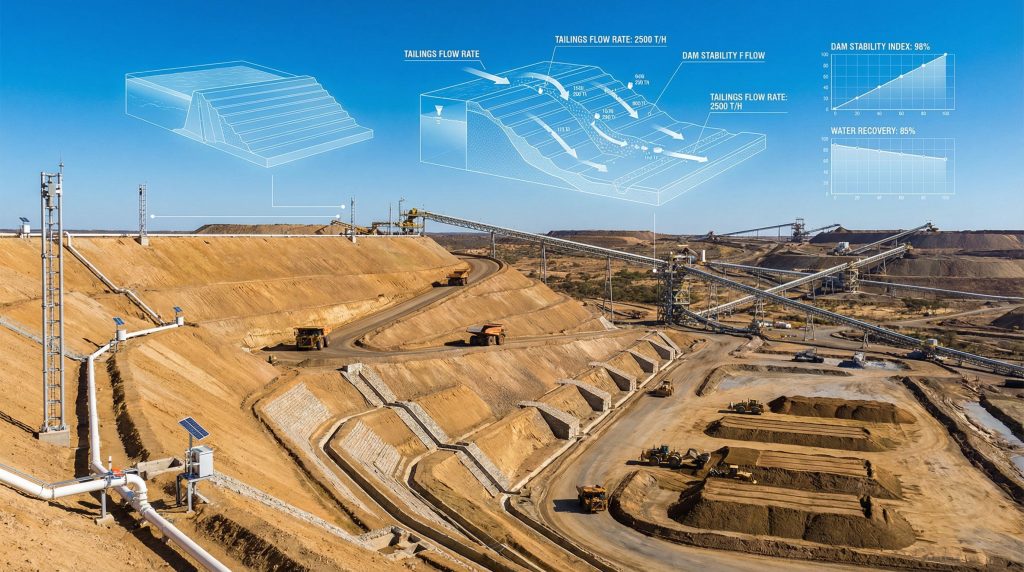
The complexity of modern mining operations demands comprehensive service delivery frameworks that integrate technical expertise, financial structuring, and long-term operational accountability. The mining industry evolution toward sophisticated contract architectures represents a strategic shift from fragmented project delivery toward holistic asset lifecycle management. Furthermore, the STRACON integrated services contract Pérez Caldera Tailings Dam exemplifies this transformation, where service providers assume responsibility for engineering excellence, construction quality, financing optimisation, and sustained operational performance across decades-long operational cycles.
Advanced contract architectures now enable mining companies to transfer significant technical and financial risks to specialised service providers while maintaining operational control over core mining activities. These integrated delivery models create alignment between service provider incentives and mining operator objectives through performance-based compensation structures. In addition, shared risk allocation frameworks and collaborative technology development initiatives drive continuous improvement across asset lifecycles.
Understanding Integrated Mining Services Contract Architecture
Modern mining operations require sophisticated service delivery frameworks that transcend traditional engineering, procurement, and construction boundaries. The STRACON integrated services contract Pérez Caldera Tailings Dam exemplifies this evolution, where service providers assume comprehensive responsibility for conditioning, removing, and transporting tailings material through integrated engineering, construction, financing, and operations frameworks.
Engineering, Procurement, Construction, Financing, and Operations (EPCFO) models represent the convergence of traditionally separate service functions under unified accountability structures. This integration eliminates phase-gate handover risks that historically created performance gaps between project delivery and operational execution. Consequently, service providers maintain technical responsibility from initial design through decades of operational performance, creating powerful incentives for robust engineering solutions and optimised lifecycle cost management.
Risk allocation frameworks distribute technical, financial, and operational risks between mining operators and specialised service providers based on each party's core competencies and risk management capabilities. Mining operators retain control over ore production, marketing, and strategic asset development while transferring infrastructure delivery and operational risks to service providers. Furthermore, this approach leverages demonstrated expertise in complex engineering and sustained operations management.
The STRACON contract demonstrates this integrated approach through comprehensive scope covering tailings material conditioning, extraction methodology, transport logistics, and long-term operations management. According to STRACON CEO Steve Dixon, this framework "enables us to support mining clients from project development through long-term operations, while maintaining a strong focus on safety, execution discipline and sustainable value creation."
Performance-based contracting mechanisms replace traditional cost-plus models with outcome-focused compensation structures. Service providers assume financial responsibility for achieving specific operational targets including safety performance, environmental compliance, production throughput, and cost efficiency metrics. This alignment creates powerful incentives for continuous improvement and operational excellence across extended contract periods.
Financial Structuring and Capital Optimisation
Integrated service contracts enable sophisticated financial structuring that optimises capital allocation for both mining operators and service providers. The financing component of EPCFO models allows mining companies to preserve capital for core mining investments while accessing specialised infrastructure development. However, this approach requires careful consideration of the critical minerals strategy context and market conditions.
Build-Own-Operate-Transfer (BOOT) structures enable service providers to assume initial capital investment responsibilities while recovering costs through long-term operational revenue streams. This approach transforms large capital expenditures into predictable operational expenses for mining companies while creating stable, long-term revenue opportunities for service providers.
Performance-based payment mechanisms tie service provider compensation directly to operational outcomes rather than input costs. These structures create powerful incentives for efficiency optimisation, technology innovation, and continuous improvement throughout contract duration. Moreover, payment frameworks typically include base service fees plus performance bonuses linked to safety, environmental, productivity, and cost targets.
The Pérez Caldera project received environmental approval in April 2025, enabling STRACON to proceed with integrated delivery utilising "its engineering resources, local project teams, and experienced operations staff." This multi-disciplinary approach reflects the technical complexity requiring specialised expertise across engineering design, construction execution, and sustained operations management.
When big ASX news breaks, our subscribers know first
Tailings Management Infrastructure Complexity
Tailings management represents one of mining's most technically challenging infrastructure requirements, demanding sophisticated engineering solutions, environmental compliance frameworks, and long-term operational excellence. The technical complexity of tailings material handling necessitates integrated service approaches that maintain consistent expertise across project phases. Furthermore, this complexity often drives industry consolidation trends as companies seek specialised capabilities.
Geotechnical engineering challenges in tailings management include dam stability analysis during material extraction, foundation engineering for processing equipment, and long-term structural integrity monitoring. The Pérez Caldera Tailings Dam Removal and Water Resource Adaptation Project demonstrates this complexity through integration of water resource management requirements alongside tailings extraction operations.
Environmental compliance frameworks for tailings projects encompass multiple regulatory domains including water quality protection, air emission controls, soil contamination prevention, and ecosystem impact mitigation. The Pérez Caldera project's environmental approval process, completed in April 2025, reflects the comprehensive regulatory analysis required for major tailings infrastructure modifications.
Material processing methodologies vary significantly based on tailings composition, moisture content, chemical characteristics, and ultimate disposal requirements. Effective tailings conditioning requires specialised knowledge of materials science, chemical treatment processes, and mechanical processing technologies optimised for specific geological conditions.
STRACON's commitment to implementing "set standards for health and safety, environmental management, and operational procedures throughout the contract's duration" reflects the sustained technical expertise required for successful tailings management operations. This long-term accountability ensures consistent application of best practices across changing operational conditions and regulatory requirements.
Water Resource Integration and Hydrological Management
Modern tailings management projects increasingly integrate water resource management with material extraction operations. The Pérez Caldera project's designation as a "Tailings Dam Removal and Water Resource Adaptation Project" reflects this integrated approach to infrastructure development. In addition, this integration aligns with broader mining sustainability transformation initiatives across the sector.
Hydrological modelling requirements include water balance analysis, drainage system design, and environmental impact assessment for altered watershed conditions. Tailings dam modification projects must account for changed water flow patterns, groundwater interactions, and downstream ecological impacts throughout extended operational periods.
Water treatment and recycling systems enable mining operations to minimise fresh water consumption while managing process water quality for operational and environmental requirements. Integration of tailings processing with water resource management creates operational synergies that reduce overall environmental impact and operational costs.
Regional Mining Development and Strategic Coordination
The Chilean copper mining sector demonstrates advanced approaches to multi-operator coordination and shared infrastructure development. The September 2025 binding agreement between Anglo American Sur and Codelco to execute coordinated mine planning for Los Bronces and Andina operations illustrates strategic coordination opportunities in mature mining regions.
Coordinated mine planning frameworks enable neighbouring operations to optimise shared infrastructure, coordinate environmental management, and achieve operational synergies impossible through independent development. The AAS-Codelco agreement received unanimous board approval from both companies, indicating strong strategic commitment to collaborative development approaches.
Infrastructure sharing opportunities include transportation networks, processing facilities, tailings management systems, and utility infrastructure. Coordinated development enables capital cost optimisation, operational efficiency improvements, and enhanced environmental performance through shared best practices and consolidated management systems.
The Los Bronces operation, where the STRACON integrated services contract Pérez Caldera Tailings Dam is located, operates within this coordinated planning framework. This regional coordination context creates opportunities for integrated service providers to deliver solutions spanning multiple operations and achieving greater operational synergies.
Regulatory coordination strategies enable mining companies to streamline permitting processes, coordinate environmental impact assessments, and develop unified community engagement approaches. Regional coordination reduces regulatory complexity while improving stakeholder relationships through consolidated planning and communication.
Technology Integration Across Regional Operations
Multi-operator coordination enables technology standardisation and knowledge sharing that drives innovation adoption across regional mining clusters. Shared technology platforms create economies of scale for digital infrastructure, autonomous systems deployment, and data analytics capabilities. However, this coordination requires careful implementation of data-driven mining operations strategies.
Autonomous systems deployment benefits significantly from standardised operational protocols and shared infrastructure investments. Regional coordination enables mining companies to implement autonomous haulage, processing control, and monitoring systems with greater efficiency and lower risk through shared learning and standardised approaches.
Digital twin technologies for infrastructure monitoring and optimisation achieve greater value through regional data integration. Shared modelling platforms enable comparative analysis, predictive maintenance optimisation, and collaborative problem-solving across multiple operations.
The MOU announced between AAS and Codelco in February 2025, which led to the September binding agreement, demonstrates the extended planning timeframes required for effective regional coordination. This deliberate approach ensures thorough integration of operational, environmental, and community considerations.
Performance Management and Operational Excellence
Integrated service contracts require sophisticated performance management frameworks that track outcomes across multiple operational domains. Success measurement extends beyond traditional project metrics to encompass long-term operational performance, environmental compliance, and stakeholder satisfaction indicators.
Safety performance indicators represent fundamental success metrics for integrated mining services. Service providers assume comprehensive responsibility for safety outcomes across construction and operational phases, requiring robust safety management systems, continuous training programmes, and proactive hazard identification processes.
Environmental compliance tracking encompasses regulatory adherence, environmental impact monitoring, and continuous improvement in environmental performance. The Pérez Caldera project's integration of water resource adaptation with tailings management creates complex environmental monitoring requirements spanning hydrology, water quality, ecosystem impacts, and air quality management.
Operational efficiency measurements include equipment availability, throughput optimisation, cost performance relative to targets, and quality consistency across operational cycles. Integrated service providers optimise these metrics through predictive maintenance, process optimisation, and technology deployment strategies.
STRACON's execution approach utilising "engineering resources, local project teams, and experienced operations staff" reflects the multi-disciplinary expertise required for sustained operational excellence. Local team integration ensures cultural compatibility, regulatory compliance understanding, and community relationship management aligned with regional operational requirements.
Technology-Enabled Performance Optimisation
Digital technologies increasingly enable real-time performance monitoring, predictive analytics, and automated optimisation across integrated mining services operations. Advanced data platforms integrate operational data from multiple sources to drive continuous improvement initiatives.
Predictive maintenance protocols utilise sensor data, historical performance patterns, and machine learning algorithms to optimise maintenance schedules and prevent unplanned equipment failures. This approach minimises operational disruptions while optimising maintenance costs and equipment lifecycle performance.
Artificial intelligence applications in operations management include process optimisation, quality prediction, and resource allocation optimisation. AI-enabled systems continuously analyse operational data to identify improvement opportunities and implement automated adjustments to operational parameters.
Data analytics platforms integrate information from engineering systems, operational equipment, environmental monitoring networks, and safety management systems. Comprehensive data integration enables holistic performance analysis and evidence-based decision-making across all operational domains.
Sustainability Integration and ESG Performance
Modern integrated mining services contracts increasingly incorporate environmental, social, and governance (ESG) performance requirements that extend beyond traditional operational metrics. Service providers must demonstrate measurable improvements in sustainability performance while maintaining operational excellence and cost competitiveness.
Carbon footprint reduction through optimised operations represents a growing performance requirement for integrated service contracts. Efficient logistics, energy optimisation, equipment modernisation, and process improvement initiatives contribute to measurable emissions reductions across contract duration.
Circular economy principles in tailings management include material recovery opportunities, waste minimisation strategies, and resource recycling initiatives. The conditioning and transport of tailings material from the Pérez Caldera dam creates opportunities for beneficial reuse applications and resource recovery that reduce overall environmental impact.
Social impact measurement encompasses local employment generation, skills development programmes, community investment initiatives, and stakeholder engagement quality. Integrated service providers increasingly assume responsibility for positive community impact creation alongside technical and operational performance delivery.
Governance frameworks for integrated service providers include transparency requirements, ethical business practices, regulatory compliance systems, and performance reporting standards. These governance structures ensure accountability and enable continuous improvement in service delivery quality and stakeholder satisfaction.
The next major ASX story will hit our subscribers first
Future Evolution of Integrated Mining Services
The mining services sector continues evolving toward greater integration, technology deployment, and sustainability focus. Future contract models will likely incorporate additional services, advanced technology requirements, and enhanced sustainability performance targets that reflect evolving industry priorities and stakeholder expectations.
Technology integration requirements will expand to include autonomous systems deployment, artificial intelligence applications, and digital platform integration as standard contract components. Service providers will assume greater responsibility for technology implementation, optimisation, and ongoing development throughout contract periods.
Sustainability performance integration will become increasingly central to contract success metrics, with service providers required to deliver measurable improvements in environmental performance, social impact creation, and governance quality alongside traditional operational objectives.
The STRACON integrated services contract Pérez Caldera Tailings Dam represents current industry best practices in comprehensive service delivery. This integrated approach creates value for mining operators through risk transfer, expertise access, and performance optimisation while enabling service providers to develop long-term relationships and demonstrate sustained value creation capabilities.
Regional coordination opportunities will expand as mining companies recognise the benefits of collaborative approaches to infrastructure development, environmental management, and community engagement. Integrated service providers will increasingly operate across multiple adjacent operations to achieve greater operational synergies and cost optimisation.
The transformation toward integrated mining services reflects the industry's maturation and increasing sophistication in balancing operational excellence with environmental stewardship and community engagement. This evolution creates opportunities for specialised service providers while enabling mining companies to focus resources on core extraction and production activities where they maintain competitive advantages.
Ready to Capitalise on Integrated Mining Services Opportunities?
Discovery Alert's proprietary Discovery IQ model delivers real-time alerts on significant mining and exploration discoveries, instantly empowering subscribers to identify actionable opportunities ahead of the broader market. Begin your 30-day free trial today and position yourself to capitalise on the next major breakthrough in mining services innovation.