
June 29, 2026
Understanding Mining Lease Frameworks in Australia's Regulated Environment
Australian mining operations function within complex regulatory frameworks that determine operational viability and investment attractiveness. Tasmania's mining lease system operates through structured renewal periods that typically require companies to demonstrate continued resource reserves, environmental compliance, and operational capacity before securing tenure extensions. Understanding mining permitting basics becomes essential for operators navigating these frameworks, which create inherent uncertainty for major capital projects requiring extended planning horizons.
Mining lease tenure security becomes particularly critical when operations contemplate significant transitions, such as converting from open-cut to underground mining methodologies. Traditional lease structures often align with existing operational parameters rather than accommodating major technological or methodological transitions. Furthermore, the regulatory gap emerges when companies require certainty for multi-year capital deployment while operating under standard lease renewal timeframes.
Key Components of Mining Lease Assessment:
• Resource verification through geological reporting and reserve statements
• Environmental compliance including water management and rehabilitation planning
• Operational capacity demonstrated through production history and technical capability
• Financial assurance through bonds and insurance coverage for environmental obligations
• Community engagement including stakeholder consultation and impact mitigation
Tasmania's Alternative Application Period mechanism represents regulatory innovation designed to compress decision timelines without restructuring fundamental tenure principles. This approach enables early renewal applications for specific projects where standard timelines create financing barriers or operational uncertainty.
| Mining Lease Component | Standard Process | Alternative Application Impact |
|---|---|---|
| Application Timeline | Fixed renewal periods | Early application permitted |
| Assessment Criteria | Standard regulatory review | Expedited technical assessment |
| Stakeholder Consultation | Full consultation period | Compressed consultation framework |
| Financial Requirements | Standard bonds and assurance | Enhanced financial validation |
When big ASX news breaks, our subscribers know first
Government Policy Mechanisms for Mining Investment Support
State governments possess various policy tools for supporting mining sector investments beyond direct financial subsidies. These mechanisms typically focus on regulatory efficiency, tenure certainty, and infrastructure coordination rather than capital participation. The approach reflects public sector philosophy that emphasises enabling private investment through regulatory certainty rather than direct economic intervention.
Tasmania's legislative response to the Savage River situation demonstrates targeted policy intervention designed to address specific investment barriers. The Alternative Application Period Bill 2026 functions as a regulatory tool that operates within existing frameworks while providing exceptional processing for qualifying projects. This mechanism suggests government assessment that regulatory certainty represents the primary barrier to investment decision-making.
Policy Tools Available to State Mining Authorities:
• Tenure modification through lease extension or early renewal mechanisms
• Regulatory coordination across multiple approval agencies
• Infrastructure planning alignment with mining operational requirements
• Environmental framework integration for complex operational transitions
• Economic development coordination with regional planning objectives
The economic justification for government intervention in mining lease certainty extends beyond direct revenue considerations. Operations like Savage River generate substantial regional employment, estimated at hundreds of direct positions, creating economic multiplier effects throughout northwest Tasmania. Consequently, government intervention becomes economically justified when the cost of regulatory certainty provision remains minimal compared to potential economic losses from operational cessation.
Investment decision frameworks in regulated industries require clear risk assessment regarding sovereign and regulatory stability. Mining projects involving capital expenditure exceeding $890 million over multi-year deployment periods necessitate confidence in regulatory continuity. The synchronisation between legislative action and financing timelines indicates government recognition that regulatory uncertainty represents material project risk affecting capital markets participation.
Technical Regulatory Requirements for Underground Mining Transitions
Converting mining operations from open-cut to underground methodologies requires comprehensive regulatory reassessment across multiple technical domains. Underground block cave mining involves fundamentally different operational parameters compared to surface mining, necessitating updated safety protocols, environmental management systems, and technical validation procedures.
Block cave mining operates through controlled subsidence and gravity-induced ore flow, requiring specialised geotechnical assessment to ensure operational safety and environmental protection. In addition, the regulatory framework must address subsidence impact on surface infrastructure, groundwater flow modification, and underground safety protocols including ventilation, emergency egress, and ground support systems.
Technical Assessment Requirements for Underground Transition:
• Geotechnical analysis of rock mass stability and cave design parameters
• Hydrogeological assessment of groundwater impact and acid drainage potential
• Environmental impact evaluation for subsidence and surface disturbance
• Safety system design including ventilation, emergency response, and monitoring
• Production methodology validation through independent technical expert assessment
The projected 30 percent reduction in life-of-mine operating costs represents a primary economic driver supporting underground transition. This cost improvement reflects operational efficiencies from gravity-assisted ore movement, reduced material handling requirements, and optimised processing pathways. However, realising these benefits requires regulatory approval of technical specifications and operational methodologies.
Environmental regulatory considerations shift substantially between mining methods. Open-cut operations generate environmental impact through surface disturbance, while underground mining creates different impact profiles through subsidence and underground water management. Tasmania backs Savage River mine future through regulatory frameworks that accommodate these technical transitions while maintaining environmental protection standards.
How Does Advanced Mining Technology Impact Operations?
Modern mining operations increasingly rely on advanced mining technology to optimise performance and safety outcomes. Furthermore, acid rock drainage management represents a critical regulatory consideration for magnetite mining operations.
Underground mining requires different ARD management approaches compared to open-cut operations, involving underground water collection systems, treatment protocols, and long-term monitoring requirements. The regulatory framework must address these technical differences through updated environmental management plans and monitoring protocols.
Financial Regulatory Frameworks and Investment Decision Models
Mining project financing operates under international capital market standards that assess sovereign risk, regulatory stability, and asset tenure security as fundamental due diligence criteria. Projects involving capital deployment of $890 million across multi-year timeframes require lender confidence in regulatory continuity and operational certainty before advancing financing commitments.
The relationship between mining lease tenure security and financing availability reflects standard industry practice where lenders treat regulatory uncertainty as material project risk. Financial institutions typically require demonstration of secure mining rights for periods extending beyond loan repayment schedules before structuring project finance facilities. This requirement creates direct linkage between government policy decisions and private sector capital availability.
The government's provision of lease certainty through legislation directly addresses financing prerequisites that enable capital markets participation for major mining transitions.
Capital Allocation Assessment Criteria:
• Tenure security over projected operational lifespan
• Regulatory stability across multiple government jurisdictions
• Technical feasibility validated through independent expert assessment
• Economic viability demonstrated through detailed financial modelling
• Environmental compliance including long-term management obligations
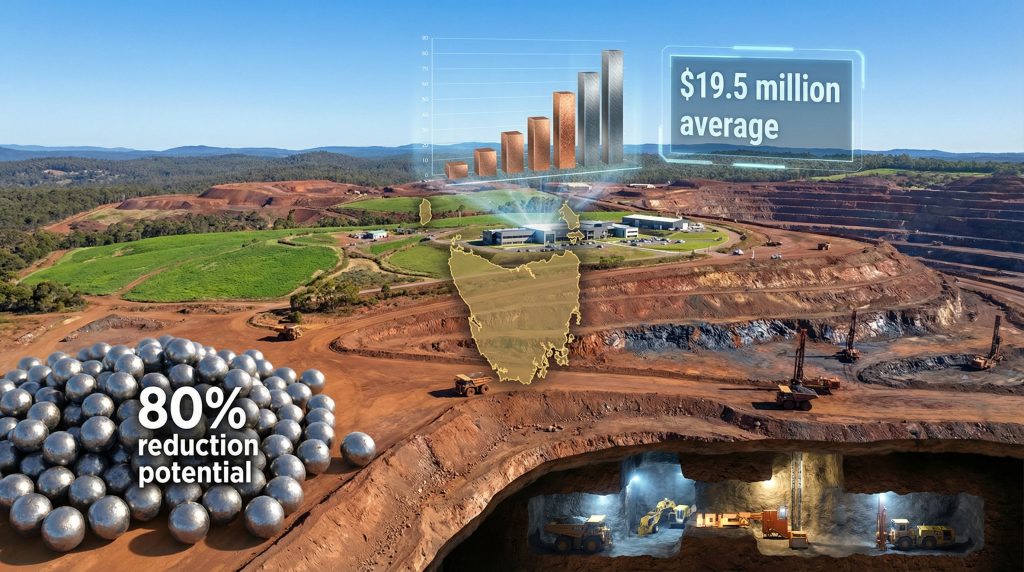
Effective investment strategy components must consider royalty revenue implications for underground mining transitions. The current $19.5 million annual royalty stream represents baseline government revenue that underground operations are projected to sustain or potentially enhance through extended operational lifespan. Tasmania backs Savage River mine future by ensuring regulatory frameworks support continued revenue generation rather than accepting closure scenarios.
Financial regulatory considerations extend beyond immediate project financing to encompass long-term asset management and decommissioning obligations. Underground mining requires different financial assurance structures compared to open-cut operations, reflecting varied environmental rehabilitation requirements and closure procedures.
Regional Economic Impact Assessment and Development Strategy
Mining operations in regional economies generate direct employment effects and broader economic multiplier impacts through supply chain relationships and household income distribution. The Savage River operation supports hundreds of direct employment positions in northwest Tasmania, representing significant economic activity in a region with limited industrial diversification options.
Regional economic dependency on major mining operations creates policy considerations regarding economic stability and community sustainability. Government intervention in mining lease certainty reflects assessment that operational cessation would generate unacceptable regional economic consequences relative to the policy cost of providing regulatory certainty.
Regional Economic Impact Components:
• Direct employment in mining operations and processing activities
• Supply chain employment through goods and services procurement
• Household income effects supporting regional consumer demand
• Infrastructure utilisation including port facilities and transportation networks
• Government revenue through royalties and taxation across multiple levels
The geographic relationship between the Savage River operation and northwest Tasmania's economic structure extends beyond immediate mining activities. The integrated system connecting mining operations with Port Latta processing facilities creates broader regional supply chain dependencies involving transportation, logistics, and supporting services throughout the northwest region.
Tasmania backs Savage River mine future through recognition that mining operations represent anchor economic activities that support broader regional development patterns. The loss of major mining operations typically generates cascading economic effects through reduced employment, decreased consumer demand, and infrastructure underutilisation that extend well beyond direct mining employment.
| Economic Indicator | Current Impact | Underground Transition Projection |
|---|---|---|
| Direct Employment | Hundreds of positions | Sustained through extended operations |
| Annual Royalties | $19.5 million | Maintained or enhanced revenue stream |
| Regional Supply Chain | Northwest Tasmania | Continued integration and development |
| Infrastructure Usage | Port Latta system | Optimised utilisation through longevity |
Environmental Legacy Management and Sustainability Compliance
Environmental regulatory frameworks for mining operations encompass immediate operational compliance and long-term legacy management obligations. Underground mining transitions create opportunities for substantial environmental improvement through reduced surface disturbance and optimised resource utilisation methodologies.
The projected 80 percent reduction in carbon emissions from underground operations compared to open-cut mining represents significant environmental benefit supporting corporate ESG initiatives and regulatory compliance objectives. This improvement reflects operational efficiencies from gravity-driven ore extraction, reduced heavy equipment utilisation, and optimised processing pathways.
Environmental Performance Improvements from Underground Transition:
• Carbon emissions reduction up to 80 percent through operational efficiency
• Surface disturbance minimisation through underground extraction methodologies
• Resource utilisation optimisation through enhanced ore recovery techniques
• Waste management improvement through integrated processing systems
• Long-term rehabilitation planning for sustainable land use outcomes
Environmental compliance frameworks require comprehensive assessment of acid rock drainage potential and management systems. Magnetite mining operations generate ARD through exposure of sulfide minerals to oxygen and water, requiring long-term monitoring and treatment systems. Underground mining creates different ARD management requirements compared to open-cut operations, necessitating updated environmental management plans and regulatory compliance protocols.
Tasmania backs Savage River mine future through environmental regulatory frameworks that accommodate technical transitions while maintaining protection standards. The alignment between operational efficiency improvements and environmental performance enhancement creates policy support for mining method transitions that deliver both economic and environmental benefits.
What Are the Benefits of Green Iron Production?
Green iron production capabilities represent advanced environmental performance initiatives that integrate with underground mining efficiency improvements. These technologies enable production of higher-grade iron ore products with reduced environmental impact, supporting global steel industry decarbonisation objectives while maintaining competitive market positioning.
The next major ASX story will hit our subscribers first
Investment Framework Analysis and Strategic Positioning
Strategic resource development requires coordination between government policy frameworks and private sector investment capabilities. Tasmania's approach to mining sector support reflects broader resource development philosophy that prioritises enabling private investment through regulatory certainty rather than direct government capital participation.
The scale of private sector investment contemplated for the Savage River underground transition, estimated at $1.2 billion total investment with $890 million capital expenditure, represents substantial economic commitment requiring government policy support for successful implementation. This investment magnitude establishes the project as regionally significant economic development with implications extending beyond immediate mining operations.
Strategic Investment Considerations:
• Capital deployment across multi-year development timeline requiring regulatory certainty
• Technology implementation through advanced underground mining methodologies
• Market positioning in global magnetite iron ore supply chains
• Economic development integration with regional industry and infrastructure
• Environmental performance enhancement through operational optimisation
Tasmania backs Savage River mine future through strategic recognition that mining operations represent critical components of regional economic development and state revenue generation. The government's legislative intervention demonstrates assessment that policy support for private sector investment generates positive economic returns through sustained employment, revenue generation, and regional economic activity.
How Do Industry Evolution Trends Affect Mining Competitiveness?
International competitiveness in magnetite iron ore markets requires operational cost structures that support long-term market participation. The projected 30 percent operating cost reduction from underground transition directly addresses competitiveness requirements while extending operational lifespan through access to additional ore reserves. Understanding industry evolution trends becomes crucial for maintaining market position. This economic improvement supports sustained market participation and government revenue generation over extended timeframes.
Mining sector competitiveness increasingly incorporates environmental performance criteria as investment decision factors. The substantial carbon emission reductions achievable through underground mining transition align with global trends toward environmental performance enhancement in resource extraction industries. Consequently, this supports both market positioning and regulatory compliance objectives while maintaining competitive advantage in global markets.
The Tasmanian government's commitment to securing the mine's future reflects broader recognition of the operation's strategic importance to the region's economic stability and development.
Disclaimer: This analysis is based on publicly available information and should not be considered as investment advice. Mining operations involve substantial risks including commodity price volatility, regulatory changes, and operational challenges. Readers should conduct independent research and consult qualified professionals before making investment decisions.
Ready to Invest in the Next Major Mining Discovery?
Discovery Alert instantly alerts investors to significant ASX mineral discoveries using its proprietary Discovery IQ model, turning complex mineral data into actionable insights. Understand why major mineral discoveries can lead to substantial market returns by exploring Discovery Alert's dedicated discoveries page, showcasing historic examples of exceptional outcomes, and begin your 14-day free trial today to position yourself ahead of the market.