June 24, 2026
The Mining Magazine Awards 2026 Shortlist Announced: Every Nominee, Category, and What It Signals About Where Mining Technology Is Headed
Every year, independent recognition programmes serve a function that goes well beyond handing out trophies. They function as a high-resolution snapshot of where an industry's most serious capital, intellect, and operational energy is actually being deployed. In a sector as capital-intensive and operationally complex as mining, the nominations that survive a rigorous judging process reveal which technologies have graduated from proof-of-concept to measurable, real-world performance. The Mining Magazine Awards shortlist announced on 22 June 2026 does exactly that, and the picture it paints is one of an industry undergoing structural, not cosmetic, technological transformation.
When big ASX news breaks, our subscribers know first
Key Facts at a Glance
Before examining the nominees in detail, it is worth grounding the analysis in the core data points that define this year's cycle:
| Feature | 2025 Awards | 2026 Awards |
|---|---|---|
| Shortlist Announcement Date | Prior cycle | June 22, 2026 |
| Total Entries Reviewed | 172 | 100+ |
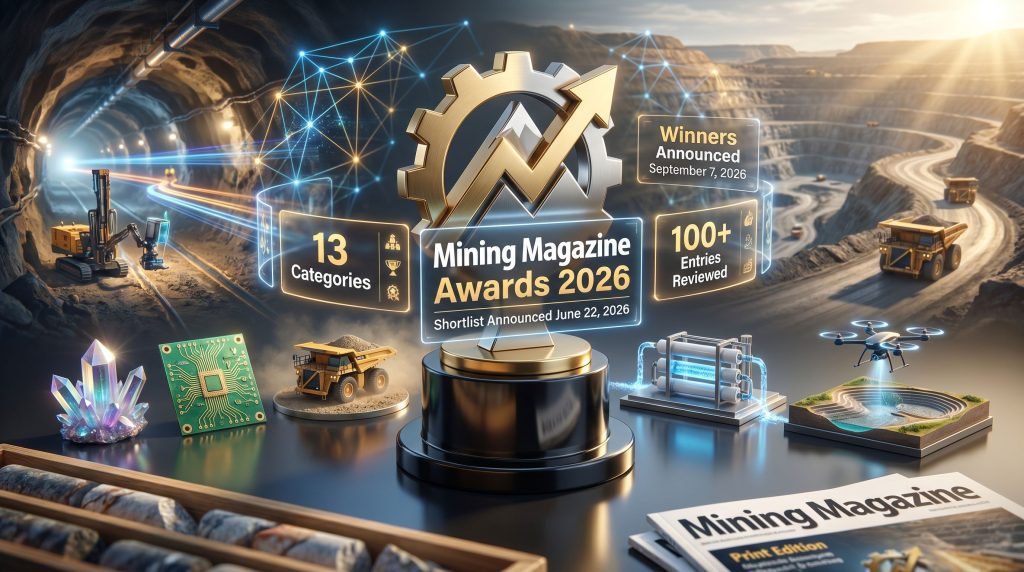
| Number of Categories | 12 | 13 |
| Winner Announcement Date | November 3, 2025 | September 7, 2026 |
| Publication Edition | November 2025 | September 2026 |
| New Category Introduced | None | Drill and Blast (with GeoDrilling International) |
| Dominant Innovation Themes | CAHM platforms, satellite mineral imaging | AI prospectivity, zero-tailings, collision avoidance |
The addition of a dedicated Drill and Blast category, developed in collaboration with GeoDrilling International, reflects editorial recognition that blasting precision, flyrock management, and digital twin blast modelling have matured into a distinct innovation discipline worthy of standalone evaluation.
How the Judging Process Works
The 2026 awards are judged by a panel chaired by Mining Magazine editor Beth McLoughlin, alongside four independent experts: Professor Ismet Canbulat, Dr Kate Thornton, Kim Morrison, and Paul Freeman. Together, this panel evaluated more than 100 entries across all 13 categories.
The judging framework is built on three core pillars:
- Evidence-based innovation – submissions must demonstrate measurable, verifiable outcomes rather than projected or theoretical benefits.
- Real-world operational impact – results must be observable within an active mining environment, not limited to laboratory or pilot conditions.
- Originality and scalability – solutions are assessed on whether they represent a genuine advance on existing practice and whether that advance can be replicated across other operations.
The panel's assessment concluded that the quality of entries in 2026 was exceptionally strong across a wide range of categories, with verifiable results forming the core basis of shortlisting decisions.
AI in Action: From Pilot Programme to Production Reality
Artificial intelligence has featured in mining discussions for nearly a decade, but the 2026 shortlist signals a decisive shift: AI tools are no longer in trial phases at major operations. Furthermore, they are now embedded in core workflows, with mining automation trends illustrating just how rapidly this transition has accelerated.
The five nominees in this category represent a cross-section of AI application types:
- Mariana Minerals – AI-driven operational framework deployed concurrently at two active project sites: Copper One in Utah and Lithium One in Texas.
- PETRA Data Science – the MAXTA platform, which applies machine learning to optimise operational performance across mining value chains.
- Schneider Electric – a fully integrated, industrial-grade data and analytics ecosystem that bridges plant-level operations with enterprise AI infrastructure.
- VerAI Discoveries – a proprietary platform that identifies, generates, and secures high-probability mineral projects at scale using AI-driven geological assessment.
- VRIFY – DORA, an AI prospectivity mapping platform that processes multi-layer geological, geophysical, and geochemical datasets to identify high-probability exploration targets.
What Is AI Prospectivity Mapping?
It is the application of machine learning algorithms to simultaneously analyse geological, geophysical, and geochemical datasets, identifying zones with statistically elevated mineral discovery potential. By cross-referencing variables that human analysts would struggle to correlate at scale, these platforms significantly reduce exploration risk and unnecessary drilling expenditure. This is not merely an efficiency gain; it is a structural reduction in the capital required to make a discovery.
The dual nomination of VRIFY across both the AI in Action and Exploration Excellence categories underscores how tightly AI capability and exploration methodology are now intertwined. The same pattern holds for PETRA Data Science, nominated in both AI in Action and the new Drill and Blast category. AI in drilling and blasting is, consequently, becoming one of the most closely watched innovation frontiers in the sector.
Climate and Environment: Decarbonisation as a Competitive Differentiator
The five nominees in the Climate and Environment category collectively illustrate a meaningful evolution in how mining companies approach environmental performance. Rather than compliance-oriented reporting, the 2026 entrants demonstrate proactive operational changes with measurable environmental outcomes. Indeed, the mining decarbonisation benefits are increasingly being recognised as a genuine competitive differentiator, not merely a regulatory obligation.
- CETOS Water – the Temperature Swing Solvent Extraction (TSSE) platform eliminates membranes and evaporation-based processes entirely, operating effectively at extreme salinities where conventional water treatment systems fail.
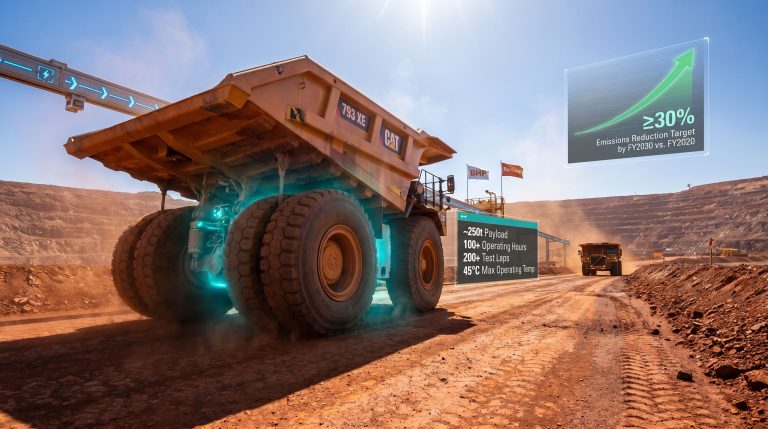
- Cummins and First Mode – jointly nominated for delivering the first commercially viable hybrid retrofit system for ultra-class haul trucks, a category of vehicle responsible for a disproportionate share of diesel consumption at large open-pit operations.
- Hexagon (R-evolution division) – the Green Cubes technology integrates LiDAR sensors, satellite imagery, AI-driven analytics, and environmental monitoring into a unified platform for site-level environmental intelligence.
- Mineral Recovery Research Centre at Edith Cowan University – advancing membrane-enabled greener mineral processing methodologies at an academic research level with direct industry application pathways.
- Schneider Electric – the EcoStruxure Resource Advisor delivers a unified, multi-site environmental footprint monitoring capability, enabling operators to quantify and manage their environmental impact across geographically dispersed portfolios.
The Cummins and First Mode nomination is particularly notable from a strategic perspective. Ultra-class haul trucks typically consume between 200 and 400 litres of diesel per hour under heavy load conditions. A commercially viable hybrid retrofit that materially reduces that consumption profile represents both a significant emissions reduction and a compelling total cost of ownership argument for operators managing fleets of dozens of these vehicles.
Drill and Blast: A New Category Recognising an Overlooked Innovation Frontier
The introduction of the Drill and Blast category, co-developed with GeoDrilling International, acknowledges that blasting precision and risk management have undergone genuine technological advancement that warranted dedicated evaluation. The three nominees in this inaugural category are:
- PETRA Data Science – a digital twin optimisation application that models blast design and performance before physical execution.
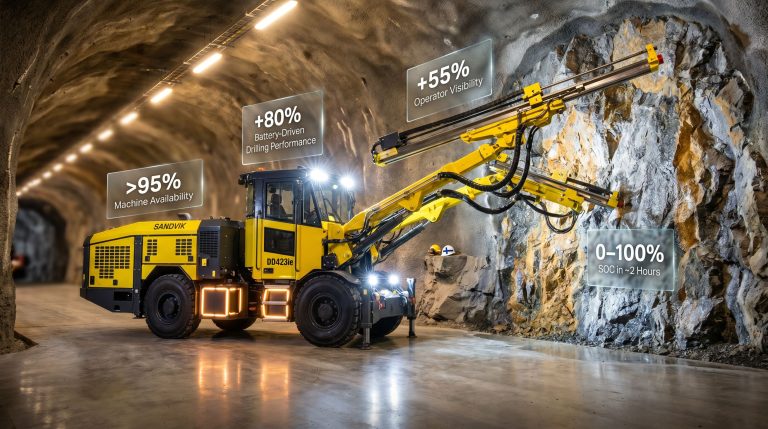
- OptiClino – a vision-based navigation and drill alignment system that spatially positions underground drills relative to the mine grid, reducing collar deviation and improving blast geometry.
- Anglo American – the Quantitative Flyrock Risk Management Framework, which applies statistical and physical modelling to flyrock hazard quantification, moving blast safety from qualitative risk assessment to measurable risk control.
Flyrock, the uncontrolled projection of rock fragments during blasting, has historically been one of the most difficult blast-related hazards to quantify. Anglo American's framework represents an important development in converting a hazard that has traditionally been managed through exclusion zones and experience-based rules into a quantifiable, modelable risk parameter.
The next major ASX story will hit our subscribers first
Exploration Excellence: Redefining How Deposits Are Found
The five nominees in Exploration Excellence span conventional drilling programmes, AI-driven targeting, and frontier lithium exploration:
- Greatland Resources – the exploration and drilling programme at the Telfer project.
- Hycroft Mining – discovery of two new high-grade silver systems at Brimstone and Vortex, a result led by CEO Diane R. Garrett, who is also a Woman of the Year nominee.
- Lilac Solutions – an exploration campaign at Salar de Jama, Argentina, applying direct lithium extraction methods to a brine environment. Lilac Solutions also holds a dual nomination in Mineral Processing Excellence for its Gen 5 IX technology.
- Seequent – its integrated exploration technologies platform.
- VRIFY – DORA AI prospectivity mapping software, making VRIFY one of the most widely nominated organisations across the 2026 awards.
The presence of Lilac Solutions in both Exploration and Mineral Processing reflects an important characteristic of direct lithium extraction (DLE) technology: it compresses the distance between geological discovery and processing-ready product relative to conventional hard rock mining.
What Is Direct Lithium Extraction (DLE)?
DLE selectively removes lithium ions from brine or lithium-bearing solutions using ion exchange, adsorption, or membrane-based approaches. Compared with evaporation pond methods, which require 12 to 24 months of brine concentration in large surface ponds, DLE can produce lithium-ready solutions within hours, with substantially lower water consumption and a significantly smaller land footprint.
Mineral Processing Excellence: Critical Minerals and the Recovery Imperative
Six nominees populate the Mineral Processing Excellence category, and their diversity reflects just how broad the processing innovation landscape has become:
| Nominee | Technology |
|---|---|
| Gold Fields | Crushing and screening circuit upgrade at Agnew Gold Mine |
| Lilac Solutions | Gen 5 direct lithium extraction (IX) technology |
| Momentum Technologies | Membrane Solvent Extraction (MSX) technology |
| Major | OPTIMUMWIRE Thermo Screen |
| RZOLV Technologies | Water-based, non-cyanide leaching platform |
| Sofi Filtration | Alchemist self-cleaning filtration technology |
The RZOLV Technologies nomination is strategically significant. Cyanide leaching remains the dominant gold and silver recovery method globally, but it carries substantial environmental liability, regulatory risk in certain jurisdictions, and community opposition. A commercially viable water-based, non-cyanide alternative would represent a genuinely disruptive development for the precious metals processing industry.
Momentum Technologies' Membrane Solvent Extraction (MSX) technology addresses critical mineral recovery from secondary and complex feeds, an area receiving increasing attention as high-grade, easily processable deposits become harder to develop.
Safety Excellence: Predictive Systems Replace Reactive Protocols
Seven nominees compete in Safety Excellence, and the structural pattern across this group is unmistakable: the industry is moving from incident response frameworks to pre-emptive risk elimination using sensor networks, predictive analytics, and automation. In this context, predictive maintenance in mining is increasingly converging with broader safety culture programmes to deliver integrated risk reduction outcomes.
- Aris Mining – Vision Zero safety programme across Colombian underground operations.
- Austin Powder – remote and automated explosives manufacturing combined with lead-free detonator technology, removing personnel from high-hazard proximity during charging operations.
- Fortescue – Collision Avoidance System (CAS) for surface operations, designed to prevent interactions between light vehicles and heavy equipment.
- Harita Nickel – Zero Failure Framework, applying predictive process safety analytics to prevent equipment failures before they generate hazard events.
- Sindh Engro Coal Mining Company (SECMC) – the Goal Zero safety culture programme.
- TATA Chemicals Soda Ash Partners – ISO 45001-certified safety management system.
- Whitehaven Coal and Hexagon – collision avoidance and operator alertness technology at the Tarrawonga operation.
The co-nomination of Whitehaven Coal and Hexagon, alongside Fortescue's independent CAS entry, signals that vehicle interaction management has become one of the most active areas of safety technology investment in surface mining. Globally, vehicle and mobile plant interactions remain among the leading causes of fatality at open-pit operations.
Partnership of the Year: Broadening What Partnership Means
The Partnership of the Year category in 2026 contains one of the most structurally interesting nominee sets in the entire shortlist:
- Aclara and Virginia Tech – a rare earth separation demonstration facility partnership.
- Codelco and Hexagon – a five-year strategic technology co-development partnership.
- Kal Tire and Pitcrew AI – integrated tyre monitoring and predictive maintenance.
- Selkirk Copper – the Selkirk First Nation and Fiore Group partnership at Minto Mine.
- Tahltan Central Government and Newmont Red Chris Mine – an Indigenous community and major miner collaboration in British Columbia.
- United Nations Just Transitions Taskforce – cross-sector collaboration focused on equitable transition pathways.
The inclusion of two distinct Indigenous partnership arrangements, one in the Yukon and one in British Columbia, alongside a UN-linked social transition initiative, represents a qualitative shift in how the awards programme itself defines the concept of partnership. Technology vendor relationships now share the shortlist with co-governance models that centre land stewardship and social licence as primary partnership outcomes.
Tailings Innovation: Addressing the Industry's Most Consequential Legacy Challenge
Tailings management carries both the highest reputational risk and some of the most compelling innovation potential in the entire mining sector. Three nominees represent meaningfully different approaches:
- Bactech Environmental Corporation – the Zero Tailings bioleaching and recovery process.
- Fab5 GeoSolutions – a lifecycle tailings governance and risk-management framework.
- Harita Nickel – the application of nickel slag as a soil ameliorant for post-mining land reclamation.
What Is Bioleaching in Tailings Management?
Bioleaching uses naturally occurring microorganisms, typically acidophilic bacteria from genera such as Acidithiobacillus, to oxidise sulphide minerals within tailings material, solubilising residual metals and enabling their recovery. This simultaneously reduces the volume of long-term waste storage and recovers additional economic value from previously discarded material.
Harita Nickel's approach of using nickel slag as a soil ameliorant is particularly unconventional and technically interesting. By converting a processing waste stream into a soil conditioning input for post-mining revegetation, the company is attempting to close a materials loop that most operations leave open.
Underground Excellence and Software: Automation Reaches the Stope
The Underground Excellence category showcases automation and sensing technologies operating in some of the most demanding physical environments in industry:
- Advanced Navigation – the Chimera Laser Velocity Sensor (Chimera LVS), validated in partnership with BHP.
- Emesent – the Hovermap autonomous drone-based LiDAR mapping platform, enabling survey of voids and stopes that are inaccessible or unsafe for personnel.
- IBT Robotic Systems Group – OptiClino vision-based drill alignment.
- Major Drilling – a semi-automated rod handling robot for underground exploration drilling.
- Micromine – Pitram fleet management implementation at Çayeli Bakır İşletmeleri (CBI) in Turkey.
- Mine Tech Services – integration across MineStar, Newtrax, Pitram, Meglab, and VANTAGE systems.
Lifetime Achievement and Woman of the Year: Honouring Sustained Contribution
Five individuals are shortlisted for Lifetime Achievement, recognising careers that have demonstrably shaped mining practice, safety culture, or technological development over decades:
| Nominee | Affiliation |
|---|---|
| Dr Sandra Close AM | Independent |
| Peter Freissle | Polydeck |
| Dave Goddard | Hexagon Mining |
| Alan Seery | Independent |
| R. Todd Swinderman | Martin Engineering |
The Woman of the Year shortlist features five nominees whose leadership spans chief executive roles, academic programme development, geotechnical research, sustainability leadership, and entrepreneurial company building:
| Nominee | Role |
|---|---|
| Diane R. Garrett | Chief Executive, Hycroft Mining |
| Dr Maria Sinche Gonzalez | Founder/Coordinator, EMJM-PROMISE |
| Julia Potter | Director, UA Geotechnical Center of Excellence; President, Women in Mining USA |
| Giovanna Romero | SVP Corporate Affairs and Sustainability, Aris Mining |
| Riina Salmimies | Chief Executive, Sofi Filtration |
The Dominant Themes Shaping the 2026 Shortlist
Stepping back from individual categories, five overarching themes run through the 2026 shortlist:
| Innovation Theme | Categories Where It Appears |
|---|---|
| Artificial Intelligence | AI in Action, Exploration Excellence, Software Excellence, Underground Excellence |
| Decarbonisation and Environment | Climate and Environment, Tailings Innovation, Surface and Vehicle Excellence |
| Predictive Safety Technology | Safety Excellence, Drill and Blast, Underground Excellence |
| Critical Minerals Processing | Mineral Processing Excellence, Exploration Excellence, Tailings Innovation |
| Indigenous and Social Partnerships | Partnership of the Year |
| Automation and Robotics | Underground Excellence, Surface and Vehicle Excellence, Drill and Blast |
Multiple organisations received nominations across more than one category, reflecting the breadth of their technology deployment. Hexagon appears across Climate and Environment, Safety Excellence, Software Excellence, and Partnership of the Year. Schneider Electric is shortlisted in three categories. VRIFY, Seequent, PETRA Data Science, Mine Tech Services, and Harita Nickel each hold dual nominations.
Frequently Asked Questions
When Will the 2026 Mining Magazine Awards Winners Be Announced?
Winners across all 13 categories will be publicly revealed on Monday, 7 September 2026, coinciding with publication in the September 2026 print edition of Mining Magazine.
How Many Categories Feature in the 2026 Awards?
There are 13 categories in the 2026 cycle, up from 12 in 2025. The new addition is the Drill and Blast category, introduced in collaboration with GeoDrilling International.
Who Chairs the Judging Panel?
The panel is chaired by Mining Magazine editor Beth McLoughlin and includes independent judges Professor Ismet Canbulat, Dr Kate Thornton, Kim Morrison, and Paul Freeman.
How Are Entries Evaluated?
Nominations are assessed against a framework prioritising evidence-based innovation, verifiable and measurable operational outcomes, and demonstrated real-world impact. Theoretical projections or unproven pilot results are not sufficient for shortlisting.
Further coverage of mining technology, innovation, and industry awards can be found at Mining Magazine and the Mining Magazine Awards platform. This article is intended for informational purposes only and does not constitute financial or investment advice. Readers should conduct their own research before making decisions based on any technology or company referenced herein.
Want to Spot the Next Transformative Mineral Discovery Before the Broader Market Does?
While the Mining Magazine Awards spotlight the technologies reshaping how deposits are found and processed, Discovery Alert's proprietary Discovery IQ model delivers real-time alerts the moment significant ASX mineral discoveries are announced — translating complex geological data into actionable insights for investors at every experience level. Explore Discovery Alert's discoveries page to see how historic finds have generated substantial returns, and begin your 14-day free trial today to position yourself ahead of the market.