May 21, 2026
How Mining Operations Transform Through Advanced Infrastructure Monitoring
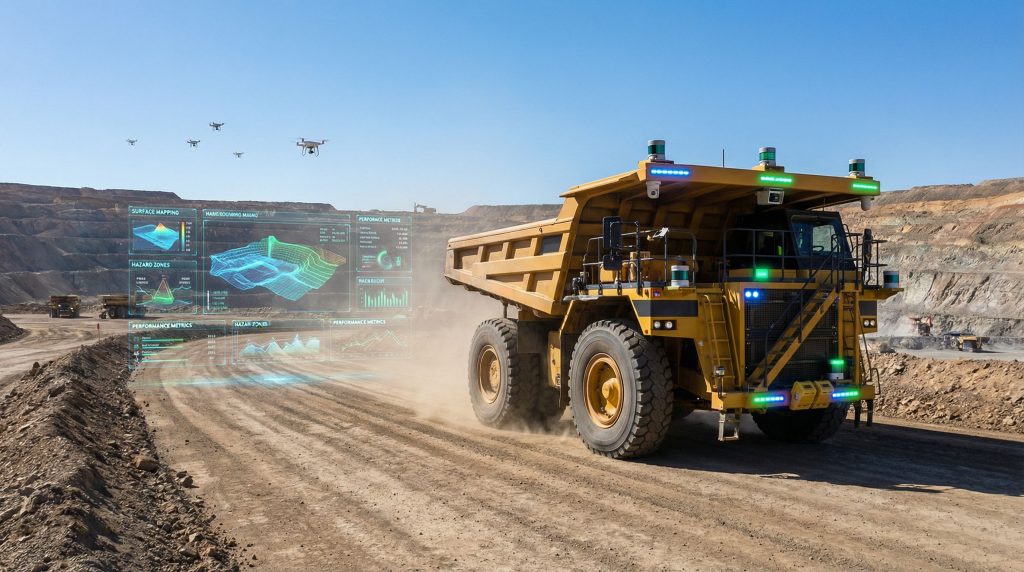
Mining infrastructure represents one of the most challenging engineering environments on Earth, where traditional inspection methodologies create critical gaps between scheduled assessments and actual operational conditions. The evolution toward continuous monitoring systems reflects a fundamental shift in how mining operations approach infrastructure management, moving from reactive responses to predictive intelligence. This transformation is particularly evident in data-driven mining operations where real-time haul road hazard detection serves as a cornerstone technology.
Modern mining operations face unprecedented pressure to optimise equipment longevity whilst maintaining safety standards across vast haul networks. Furthermore, the integration of autonomous monitoring technologies addresses these challenges by providing continuous assessment capabilities that traditional methods cannot match.
When big ASX news breaks, our subscribers know first
The Technology Foundation Behind Continuous Monitoring
Contemporary real-time haul road hazard detection systems represent a convergence of multiple technological disciplines. Light Detection and Ranging sensors work in conjunction with high-resolution imaging systems to create comprehensive three-dimensional mapping of road surfaces. These sensors, when combined with edge computing processors, enable immediate data analysis without the delays associated with cloud-based processing.
The architectural approach emphasises on-board processing capabilities that deliver instant hazard identification. This technological framework eliminates transmission bottlenecks that could compromise response times during critical operational moments. Additionally, the integration of ai in mining processes enhances the analytical capabilities of these systems significantly.
Multi-Sensor Integration Strategies
Advanced monitoring platforms incorporate diverse sensor types to create comprehensive assessment capabilities:
- Accelerometer networks detect vehicular stress patterns and surface irregularities
- Gyroscopic sensors identify stability variations and alignment issues
- GPS integration provides precise location correlation for hazard mapping
- Environmental monitoring accounts for weather-related surface changes
- Vibration analysis distinguishes between normal operational variance and genuine hazards
This sensor fusion approach enables systems to differentiate between routine operational conditions and legitimate safety concerns, reducing false alert rates whilst maintaining high detection accuracy.
Comprehensive Hazard Detection Capabilities
Modern monitoring systems address a broad spectrum of operational hazards that traditional inspection methods often miss between assessment cycles. These systems excel at identifying both immediate threats and developing conditions that could escalate into major operational disruptions. In addition, they complement advanced 3d geological modelling techniques to provide comprehensive site analysis.
Surface Condition Assessment
| Hazard Category | Detection Method | Operational Impact | Prevention Benefit |
|---|---|---|---|
| Material spillage | Computer vision analysis | Tyre damage, reduced traction | Immediate cleanup protocols |
| Surface undulations | LiDAR depth mapping | Suspension stress, load shifting | Route optimisation |
| Developing potholes | Depth measurement sensors | Tyre failure, axle damage | Proactive maintenance |
| Loose aggregate zones | Vibration pattern recognition | Vehicle instability | Surface treatment |
Structural Integrity Monitoring
Beyond surface conditions, advanced systems monitor critical infrastructure elements including safety berm compliance, drainage effectiveness, and slope stability indicators. These capabilities ensure regulatory compliance whilst preventing operational shutdowns due to infrastructure failures.
High-Impact Event Detection
Accelerometer networks identify locations where vehicles experience excessive gravitational forces, indicating suboptimal road geometry or urgent maintenance requirements. These measurements correlate directly with increased fuel consumption and accelerated component wear across fleet operations.
Integrated Platform Optimisation
Contemporary monitoring systems extend beyond hazard detection to encompass comprehensive operational optimisation. These platforms integrate seamlessly with existing mine management infrastructure to automate response protocols and enhance decision-making processes. However, this represents just one aspect of broader industry evolution & innovation transforming mining operations.
Automated Workflow Integration
Modern detection platforms connect directly with mine management systems to generate prioritised maintenance requests automatically. According to industry implementations, this automation ensures critical hazards receive immediate attention whilst routine maintenance follows optimised scheduling protocols that maximise operational efficiency.
According to Australian Mining, technology services director Christian Erdelyi noted that systems now enable mines to prevent tyre damage through early hazard detection rather than responding after damage occurs. This represents a fundamental shift from reactive to preventative maintenance strategies.
Predictive Intelligence Capabilities
Machine learning algorithms analyse historical hazard patterns to forecast future road deterioration with increasing accuracy. These predictive models enable maintenance teams to schedule interventions before major infrastructure failures occur, significantly reducing emergency repair costs and operational disruptions.
Fleet Performance Correlation
Advanced platforms establish connections between road condition metrics and vehicle performance indicators. This analysis supports data-driven investment decisions regarding infrastructure upgrades and helps optimise routing strategies for maximum efficiency. For instance, integration with electric vehicles in mining requires sophisticated monitoring to ensure optimal battery performance across varying terrain conditions.
Quantifiable Operational Improvements
The implementation of real-time haul road hazard detection systems generates measurable improvements across multiple operational domains. These benefits compound over time as systems learn operational patterns and refine detection algorithms.
Equipment Longevity Enhancement
Continuous hazard detection contributes to extended component lifecycles through early identification of damaging road conditions. Tyre performance improvements represent one of the most immediately visible benefits, with smooth road surfaces maintained through real-time monitoring supporting optimal rubber compound performance.
Similar improvements occur across suspension systems, drive trains, and structural components exposed to road-induced stresses. Consequently, the cumulative effect of reduced component replacement frequency generates substantial cost savings across large-scale mining operations.
Operational Efficiency Gains
Executive general manager George Spink, as reported by Australian Mining, emphasised that platforms delivering critical data visualisation enable operations to achieve measurable improvements including faster circuit times and reduced downtime from implementation day one.
Well-maintained road surfaces support optimal vehicle performance characteristics, reducing energy consumption and enabling higher average speeds across haul networks. These efficiency gains become particularly significant in operations with extensive haul distances or high-frequency traffic patterns.
Strategic Implementation Approaches
Successful deployment of monitoring technologies requires careful consideration of coverage strategies, cost optimisation, and operational integration requirements. Different implementation approaches offer distinct advantages depending on operational characteristics and infrastructure requirements.
Vehicle-Mounted Sensor Networks
Installing sensor arrays directly on haul vehicles provides comprehensive network coverage as equipment traverses operational routes. This approach ensures no road segments remain unmonitored whilst distributing technology costs across existing fleet assets.
The vehicle-mounted strategy offers continuous monitoring capabilities that adapt automatically to changing traffic patterns and route modifications. Integration with existing vehicle systems enables seamless data collection without requiring additional infrastructure development.
Aerial Surveillance Integration
Unmanned aerial systems equipped with specialised sensors enable rapid assessment of entire haul networks without operational interruption. These systems excel at identifying large-scale infrastructure issues including slope instability, drainage complications, and comprehensive network condition assessment.
Drone-based monitoring provides unique perspectives on infrastructure conditions that ground-based sensors cannot achieve, particularly for elevated roadways and complex geometric configurations.
Hybrid Monitoring Architectures
Optimal implementations combine continuous vehicle-based monitoring with periodic aerial assessments to create comprehensive coverage strategies. This hybrid approach balances monitoring completeness with cost optimisation whilst ensuring no operational areas remain unassessed.
The next major ASX story will hit our subscribers first
Performance Evaluation Standards
Effective monitoring system evaluation requires comprehensive metrics that address both technical performance and operational integration success. These standards ensure technology investments deliver expected returns whilst maintaining operator confidence.
Response Time Benchmarks
| Performance Metric | Target Standard | Measurement Protocol |
|---|---|---|
| Hazard identification speed | Under 5 seconds | Sensor-to-detection timing |
| Alert transmission | Under 2 seconds | Network communication analysis |
| Operator notification | Under 10 seconds total | Complete system response |
Accuracy and Reliability Metrics
Successful implementations maintain false positive rates below 5% whilst achieving detection accuracy exceeding 95% for genuine hazards. These performance standards ensure operational teams maintain confidence in system alerts without experiencing alert fatigue that could compromise response effectiveness.
Integration Success Indicators
Effective deployments demonstrate seamless integration with existing operational workflows, requiring minimal additional training whilst enhancing existing capabilities rather than replacing established procedures.
Implementation Challenges and Solutions
Mining environments present unique technological challenges that require specialised solutions and robust system designs. Understanding these challenges enables better technology selection and implementation planning.
Environmental Adaptation Requirements
Mining operations expose monitoring equipment to extreme conditions including persistent dust, constant vibration, temperature variations, and electromagnetic interference from heavy machinery. Detection systems must demonstrate reliable performance across these demanding parameters whilst maintaining calibration accuracy.
The Kal Tire and Decoda partnership resulted in HaulSight systems undergoing 18 months of field testing at Canadian mine sites, including sub-zero environmental conditions, according to Australian Mining. This extensive validation demonstrates the importance of comprehensive environmental testing before full-scale deployment.
Data Management Architecture
Continuous monitoring generates substantial data volumes requiring efficient storage, processing, and analytical capabilities. Edge computing architectures address these requirements by processing information locally whilst transmitting only relevant insights to central management systems.
Cloud-based solutions provide scalable infrastructure for large mining operations whilst ensuring data accessibility across multiple operational sites and management levels.
Operational Integration Requirements
Successful implementation requires comprehensive training programmes that help operators understand system capabilities, interpret alerts effectively, and integrate new technologies into established operational procedures without disrupting proven workflows.
Future Technology Evolution
The trajectory of monitoring technology development points toward increasingly sophisticated analytical capabilities and deeper integration with autonomous operational systems.
Artificial Intelligence Advancement
Next-generation systems will incorporate machine learning algorithms capable of predicting hazard development before physical symptoms become apparent. These predictive capabilities will enable truly proactive maintenance strategies that prevent infrastructure problems rather than responding to existing conditions.
Autonomous Fleet Integration
As mining operations adopt autonomous vehicle technologies, hazard detection systems will integrate directly with vehicle control systems. This integration enables automatic route adjustments, speed modifications, and operational decisions based on real-time road condition assessment.
Enhanced Connectivity Solutions
Improved satellite networks and Internet of Things connectivity will enable comprehensive remote monitoring capabilities, allowing specialised experts to assess road conditions and coordinate maintenance activities from any location.
Investment Analysis Framework
Technology selection requires comprehensive evaluation that extends beyond initial acquisition costs to encompass total operational impact and long-term value generation.
Total Ownership Cost Evaluation
Comprehensive analysis includes initial hardware investments, installation requirements, ongoing maintenance costs, and training expenditures. The integration capabilities with existing systems, as demonstrated by the Tire & Operations Management System (TOMS) connection mentioned in Australian Mining, significantly influence long-term value realisation.
Scalability and Future-Proofing
Successful technology implementations consider long-term operational growth and technological evolution. Modular systems accommodating additional sensors and enhanced analytical capabilities provide superior long-term investment value compared to fixed-configuration alternatives.
Vendor Partnership Evaluation
Selecting technology partners with proven mining industry experience and comprehensive support capabilities ensures successful implementation and ongoing optimisation. The 18-month testing period referenced in industry reporting demonstrates the importance of thorough validation and support throughout implementation phases.
Advanced System Architecture Components
Modern real-time haul road hazard detection platforms incorporate sophisticated technological elements that enable comprehensive monitoring and analysis capabilities across diverse operational environments.
Edge Computing Implementation
Processing sensor data directly on mining equipment eliminates transmission delays critical for immediate hazard response. This architectural approach ensures that detection algorithms operate independently of network connectivity whilst maintaining real-time response capabilities during high-speed operations.
Local processing also reduces bandwidth requirements and ensures system functionality during communication disruptions that can occur in remote mining locations.
Long-Range Analytical Capabilities
Beyond immediate hazard alerts, advanced systems provide strategic insights for infrastructure planning and maintenance optimisation. According to Australian Mining, these platforms offer long-range insights that help operators make informed maintenance and road upgrade decisions, extending value proposition from immediate response to strategic planning support.
Furthermore, these systems integrate with autonomous haul road technologies to create comprehensive monitoring networks that enhance both safety and operational efficiency across mining sites.
Disclaimer: The performance metrics, cost savings, and implementation timelines discussed in this article may vary significantly based on specific operational conditions, system configurations, and site characteristics. Mining operations considering technology investments should conduct comprehensive assessments with qualified technical specialists and request detailed case studies from technology providers before making implementation decisions. Actual results may differ from industry estimates and manufacturer claims.
Ready to Capitalise on Mining Innovation Opportunities?
Technological advances transforming mining operations, like real-time hazard detection systems, often create significant investment opportunities for forward-thinking investors. Discovery Alert's proprietary Discovery IQ model delivers instant notifications on breakthrough ASX mineral discoveries, ensuring subscribers identify actionable opportunities in innovative mining companies before broader market recognition. Begin your 14-day free trial today to position yourself ahead of technological disruption in the mining sector.