June 13, 2026
Understanding Mining Operations' Energy Dependencies
Modern mining equipment operates within precisely calibrated fuel consumption frameworks that determine operational viability across remote extraction sites. The mechanical systems powering these operations consume diesel at rates that make fuel supply chain disruptions in mining industry a fundamental business concern rather than a logistical consideration. Furthermore, the dependency on reliable fuel access creates vulnerabilities that can significantly impact production schedules and operational continuity.
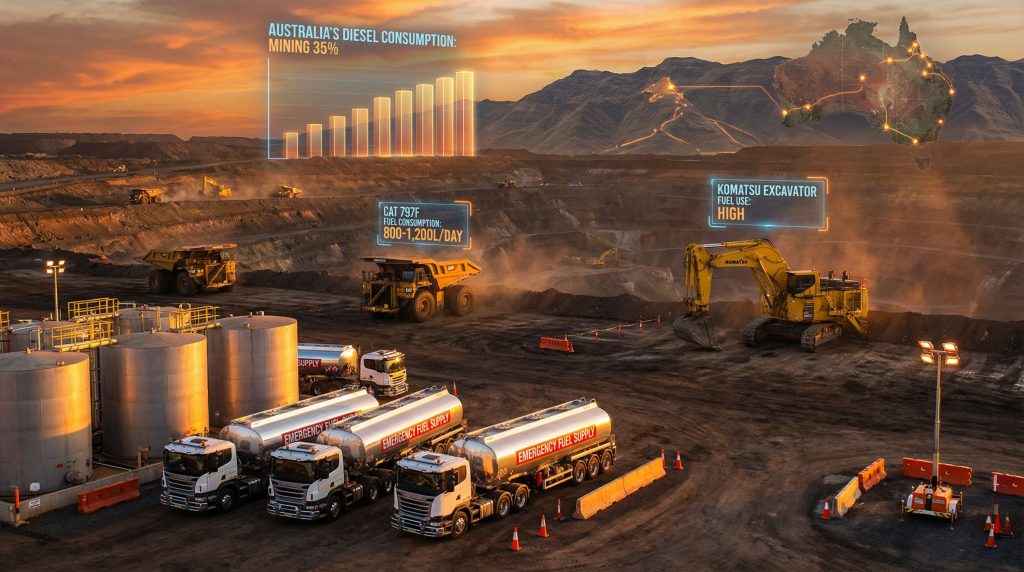
Heavy machinery deployed in mining operations demonstrates specific consumption patterns that directly correlate with production output. Large-scale haul trucks with 400-tonne capacity consume between 800-1,200 litres of diesel daily during standard operations. Excavators handling primary extraction require 400-600 litres per day, while drilling rigs maintaining exploration programs utilise 300-500 litres during active drilling cycles.
Diesel Consumption Patterns Across Mining Sectors
The Australian mining sector's energy requirements reveal significant dependencies on imported fuel supplies. According to Australian Bureau of Statistics data, mining operations accounted for 35 per cent of Australia's total diesel consumption during the 2023-24 period. The Institute for Energy Economics and Financial Analysis estimates the resources industry consumes approximately 10 billion litres annually across all operational categories.
Remote site operations face exponentially higher logistics costs compared to urban industrial facilities. Transport expenses for fuel delivery to remote mining locations typically range from 2-5 times higher than standard industrial supply contracts due to distance factors, infrastructure limitations, and specialised handling requirements.
Equipment-Specific Fuel Requirements and Critical Dependencies
| Equipment Type | Daily Fuel Consumption | Operational Impact of Shortage |
|---|---|---|
| Haul Trucks (400t capacity) | 800-1,200L | Complete production halt |
| Excavators (large-scale) | 400-600L | Extraction bottlenecks |
| Drilling Rigs | 300-500L | Exploration delays |
| Processing Plants (diesel backup) | 2,000-5,000L | Plant shutdown risk |
Processing facilities maintain backup diesel generators that can consume between 2,000-5,000 litres daily when primary power sources become unavailable. This backup capacity proves essential for maintaining continuous operations in regions where grid electricity remains unreliable or unavailable.
When big ASX news breaks, our subscribers know first
Supply Chain Vulnerabilities in Global Energy Markets
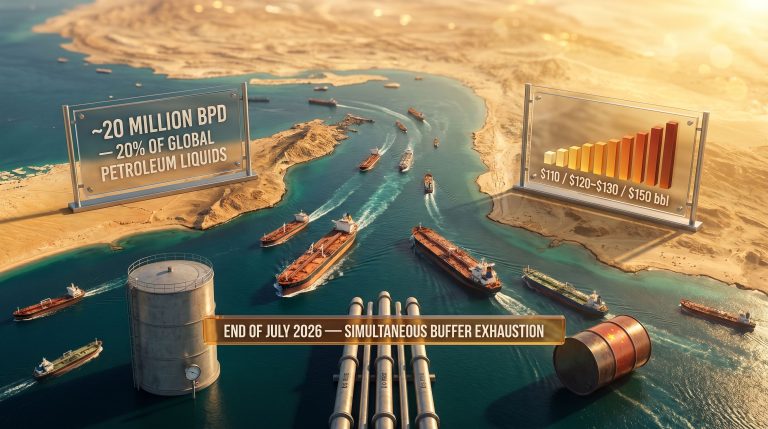
International shipping routes and refinery dependencies create cascading vulnerability patterns that affect Australian mining operations through multiple transmission mechanisms. These dependencies become particularly evident during geopolitical disruptions affecting major oil transit corridors, as demonstrated by recent oil price dynamics affecting global markets.
Regional supply chain analysis reveals that Australian mining operations maintain relatively limited fuel inventory reserves compared to international energy security recommendations. Mining companies typically operate with fuel storage capacity designed for 23 days of operational requirements, substantially below the 90-day strategic reserve levels recommended by international energy agencies.
Distribution Network Bottlenecks and Wholesale Control
The Australian fuel distribution system operates through concentrated wholesale control exercised by three major suppliers: BP, Chevron, and Viva Energy. These wholesale operations control allocation protocols for independent distributors who service remote mining and exploration sites throughout regional Australia.
Warren Pearce, Chief Executive Officer of the Association of Mining and Exploration Companies, explained that distribution challenges arise from allocation decisions made by wholesale suppliers. According to AMEC analysis, independent operators understand delivery requirements for remote sites but face rationing constraints imposed by major wholesalers.
"Transparency in fuel supply chain management remains critical for directing supplies to operational areas requiring consistent delivery schedules," Pearce stated. The current distribution system creates uncertainty for smaller operators across mineral and agricultural sectors who depend on reliable fuel access for maintaining operational continuity.
Case Study: Blue Cap Mining Operational Suspension
Western Australia-based Blue Cap Mining recently suspended gold mining operations due to insufficient fuel supply guarantees. This operational halt demonstrates how fuel supply constraints directly impact active mining projects, regardless of commodity prices or market demand for extracted materials.
The Blue Cap Mining case illustrates broader supply chain challenges affecting junior mining operations throughout Australia. Smaller companies typically lack long-term supply contracts and strategic inventory capacity that larger operators utilise to maintain operational continuity during supply disruptions.
Operational Impact Analysis and Production Consequences
Fuel supply chain disruptions in mining industry trigger immediate operational consequences that propagate through multiple systems within mining operations. Understanding these cascading effects enables companies to develop appropriate mitigation strategies and contingency planning frameworks. In addition, these disruptions often compound existing challenges from declining oil production trends affecting global markets.
Immediate Impact Assessment (0-48 Hours)
Primary equipment immobilisation occurs within hours of fuel shortage onset. Haul truck fleets cannot maintain extraction-to-processing transport schedules, creating immediate bottlenecks in material flow systems. Mining companies face difficult decisions regarding shift cancellations and equipment prioritisation when fuel supplies become constrained.
Maintenance schedules require adjustment when fuel availability becomes uncertain. Equipment operators must balance continued operation against potential mechanical damage from operating under suboptimal conditions or emergency shutdown protocols.
Short-term Operational Disruption (3-7 Days)
Processing plant operations face shutdown risks when backup generator systems exhaust available fuel reserves. These facilities typically maintain limited diesel storage for emergency power generation, making them vulnerable to extended supply disruptions.
Logistics coordination becomes increasingly complex as companies implement emergency procurement protocols. Standard delivery schedules cannot accommodate urgent fuel requirements, forcing operations to source supplies through emergency procurement channels at significantly higher costs.
Medium-term Strategic Impact (2-4 Weeks)
Contract performance obligations may become difficult to fulfil when production schedules face extended disruption periods. Mining companies with delivery commitments to processing facilities or export terminals must communicate potential delays to downstream partners.
Supply chain partner relationships experience strain when mining operations cannot maintain expected material delivery schedules. Processing facilities, transport operators, and export terminals must adjust their operational planning to accommodate upstream disruptions.
Financial Impact Quantification and Cost Analysis
Emergency fuel procurement requires premium pricing that significantly impacts operational cost structures. Understanding these financial implications helps mining companies develop appropriate risk management strategies and contingency funding arrangements. However, the impact of trade war oil markets conditions further complicates pricing mechanisms.
Emergency Procurement Cost Premiums
Emergency fuel purchases typically command premiums ranging from 40-80 per cent above standard procurement rates. These elevated costs reflect expedited delivery requirements, alternative sourcing arrangements, and supplier risk premiums for non-contracted deliveries.
Medium-scale mining operations face production loss calculations ranging from $50,000-$200,000 per day during extended fuel shortages. These costs encompass direct production losses, fixed cost allocation to reduced output, and emergency procurement premiums for available fuel supplies.
Insurance Claim Complexities
Force majeure insurance coverage for fuel supply disruptions presents complex claim evaluation procedures. Insurance providers must determine whether supply shortages constitute covered events under existing policy frameworks, particularly when broader supply chain disruptions affect multiple operators simultaneously.
Mining companies should review insurance policy language regarding supply chain disruptions and fuel availability coverage. Understanding policy limitations helps companies develop appropriate self-insurance strategies for managing fuel supply risks.
Risk Assessment Framework for Mining Operations
Company size and operational scale directly influence vulnerability to fuel supply chain disruptions in mining industry. Developing risk assessment frameworks enables mining operations to identify specific vulnerabilities and implement appropriate mitigation measures. Furthermore, understanding industry supply concerns helps companies prepare adequate response strategies.
Company Size and Vulnerability Analysis
Junior mining operations typically maintain average fuel inventory levels of approximately 5 days of operational requirements. Limited procurement capacity restricts their ability to negotiate long-term supply agreements or maintain strategic inventory levels.
Mid-tier operators generally sustain fuel reserves covering 10-15 days of operational requirements. These companies often maintain moderate supply agreements with regional distributors but lack the procurement leverage available to major mining companies.
Major mining companies listed within the ASX Top 200 typically maintain strategic fuel reserves covering 30+ days of operational requirements. These organisations utilise diversified supply chain agreements and maintain multiple procurement relationships to ensure operational continuity.
Geographic Risk Distribution Assessment
| Region | Risk Level | Primary Vulnerabilities | Mitigation Capacity |
|---|---|---|---|
| Western Australia | High | Import dependency, remote locations | Moderate |
| Queensland | Medium | Infrastructure access, weather events | High |
| Northern Territory | Very High | Extreme remoteness, limited suppliers | Low |
Northern Territory mining operations face the highest vulnerability levels due to extreme remoteness and limited supplier networks. Transport infrastructure limitations and extended delivery distances create additional risk factors for maintaining consistent fuel supplies.
Queensland operations benefit from relatively developed transport infrastructure and proximity to coastal import facilities. However, weather events and seasonal access restrictions can create temporary supply disruptions affecting remote mining sites.
Advanced Fuel Management Technologies and Optimisation
Modern fuel management systems integrate predictive analytics and real-time monitoring capabilities to optimise consumption patterns and improve supply planning accuracy. These technological solutions help mining operations reduce vulnerability to supply disruptions while improving operational efficiency.
Predictive Analytics Integration
Weather-integrated delivery scheduling systems enable mining companies to anticipate potential transport delays and adjust inventory management accordingly. These systems analyse meteorological data, road conditions, and historical delivery patterns to optimise supply scheduling.
Real-time consumption monitoring provides operational managers with detailed fuel usage data across different equipment categories. This information enables optimisation of equipment deployment and identification of consumption inefficiencies that increase overall fuel requirements.
Demand forecasting systems integrate production planning data with geological models to predict future fuel requirements based on planned extraction activities. This capability improves procurement planning and enables more accurate inventory management.
Storage Infrastructure Optimisation
Bulk storage tank capacity calculations should target 14-30 day supply coverage based on operational requirements and geographic risk factors. Remote operations require higher inventory levels to compensate for extended delivery cycles and potential supply disruptions.
Mobile refuelling unit deployment strategies enable mining companies to maintain flexibility in fuel distribution across large operational areas. These systems reduce dependency on fixed infrastructure while providing rapid response capabilities for equipment operating in remote locations.
Fuel quality management becomes critical in extreme climate conditions where temperature variations and storage duration can affect fuel performance characteristics. Modern storage systems incorporate temperature control and additive management to maintain fuel quality over extended storage periods.
"Modern fuel management systems can reduce consumption by 8-15% through optimised equipment scheduling and real-time efficiency monitoring."
The next major ASX story will hit our subscribers first
Building Supply Chain Resilience and Redundancy
Mining operations can develop resilience against fuel supply disruptions through diversification strategies and alternative energy integration approaches. These solutions require strategic planning and capital investment but provide significant protection against supply chain vulnerabilities. Consequently, many companies are exploring renewable energy solutions to reduce fuel dependencies.
Multi-Modal Supply Chain Diversification
Road, rail, and pipeline transport redundancy provides mining companies with alternative delivery options when primary transport modes become unavailable. Developing relationships with multiple transport providers reduces dependency on single logistics suppliers.
Regional supplier network development enables mining companies to source fuel from multiple distributors across different geographic areas. This approach reduces vulnerability to localised supply disruptions while providing procurement leverage through competitive sourcing.
Cross-border fuel sharing agreements between mining companies operating in similar geographic regions can provide mutual support during supply emergencies. These arrangements require careful planning to ensure compatibility with operational requirements and regulatory frameworks.
Alternative Energy Integration Strategies
Hybrid diesel-electric systems for stationary equipment can reduce overall diesel consumption while maintaining operational flexibility. These systems utilise renewable energy sources when available while maintaining diesel backup capability for continuous operation requirements.
Solar-plus-storage solutions for auxiliary operations provide energy independence for lighting, communications, and administrative functions. Reducing diesel consumption for non-critical applications preserves fuel supplies for essential mining equipment operations.
Grid connection feasibility analysis for processing facilities can identify opportunities to reduce diesel generator dependency. Where electrical grid access becomes available, mining companies can significantly reduce fuel consumption requirements while improving operational cost structures. Additionally, the electric vehicle shift in mining transportation offers further opportunities for reducing fuel dependencies.
Regulatory Frameworks and Government Response Mechanisms
Government policy frameworks and industry coordination initiatives provide support mechanisms for managing fuel supply disruptions. Understanding these resources helps mining companies develop appropriate response strategies and access available support during supply emergencies.
Strategic Fuel Reserve Access Protocols
Government response mechanisms typically include strategic fuel reserve policies that provide industry access during national supply emergencies. Mining companies should understand eligibility criteria and activation procedures for accessing these strategic reserves.
Emergency procurement frameworks established by government agencies can provide alternative sourcing options during widespread supply disruptions. These frameworks often include price stabilisation measures and coordinated procurement activities.
Infrastructure investment priorities for remote mining regions focus on improving transport capacity and storage capabilities. Government investment in regional infrastructure can reduce vulnerability for mining operations in remote locations.
Industry Association Coordination
The Association of Mining and Exploration Companies provides supply chain monitoring services and facilitates information sharing during supply disruptions. AMEC coordinates with government agencies and industry stakeholders to address systemic supply chain challenges.
Collaborative fuel purchasing initiatives enable smaller mining companies to aggregate procurement volumes and negotiate improved supply agreements. These collaborative approaches provide smaller operators with enhanced procurement leverage typically available only to major mining companies.
Information sharing protocols during crisis events enable rapid communication of supply availability, transport constraints, and alternative sourcing options. Industry associations coordinate these communication networks to ensure effective information distribution.
Future-Proofing Strategies and Technology Adoption
Long-term planning for fuel independence requires consideration of emerging technologies and alternative energy systems. Mining companies should evaluate technology adoption timelines and investment strategies for reducing fuel dependencies over time.
Technology Roadmap for Energy Independence
Battery-electric mining equipment adoption timelines indicate gradual transition possibilities for certain equipment categories. Heavy haul trucks and large excavators require continued technological development before widespread adoption becomes feasible.
Hydrogen fuel cell pilot programs for heavy equipment show promise for reducing diesel dependency in specific applications. These technologies require continued development and infrastructure investment before achieving commercial viability for mining operations.
Renewable energy microgrids for mine site operations can provide comprehensive energy independence for integrated mining facilities. These systems require significant capital investment but offer long-term protection against fuel supply disruptions.
Strategic Investment Planning
Strategic fuel storage facility development requires careful analysis of cost-benefit relationships and optimal storage capacity levels. Mining companies must balance inventory carrying costs against supply disruption risks.
Long-term supply contract structuring should incorporate flexibility provisions for volume adjustments and alternative sourcing arrangements. Contract terms should address force majeure conditions and provide mechanisms for emergency procurement.
Risk assessment methodologies for fuel supply planning should integrate multiple scenario analyses including geopolitical disruptions, infrastructure failures, and market volatility factors. Comprehensive risk assessment enables appropriate contingency planning and investment decision-making.
Strategic Conclusions for Mining Operations
Fuel supply chain resilience requires comprehensive planning that addresses immediate operational needs while developing long-term energy security strategies. Mining companies must balance current operational requirements against evolving technology options and changing regulatory frameworks.
Implementation Framework for Resilience
Fuel vulnerability assessment frameworks should evaluate company-specific risk factors including geographic location, operational scale, existing supply agreements, and storage capacity. Regular assessment updates ensure continued relevance as operational conditions change.
Cost-benefit analysis of resilience investments must consider both direct financial impacts and indirect operational benefits. Investment decisions should account for risk reduction value and potential cost avoidance during supply disruption events.
Industry best practices for crisis management emphasise proactive planning, diversified supply relationships, and coordinated response protocols. Companies implementing comprehensive fuel supply risk management demonstrate improved operational resilience and reduced vulnerability to external supply shocks.
The mining industry's fuel supply chain disruptions represent systemic challenges requiring coordinated responses from government agencies, industry associations, and individual companies. Effective mitigation strategies combine immediate operational adjustments with long-term strategic planning for energy security and operational independence.
Ready to Capitalise on the Next Major Mining Discovery?
Discovery Alert provides instant notifications on significant ASX mineral discoveries, powered by its proprietary Discovery IQ model, helping investors identify opportunities in the evolving energy landscape affecting mining operations. Begin your 14-day free trial today to gain actionable insights into mining companies adapting to supply chain challenges and energy transitions.